
Martial Arts for Kids: Karate, Judo, and Kendo

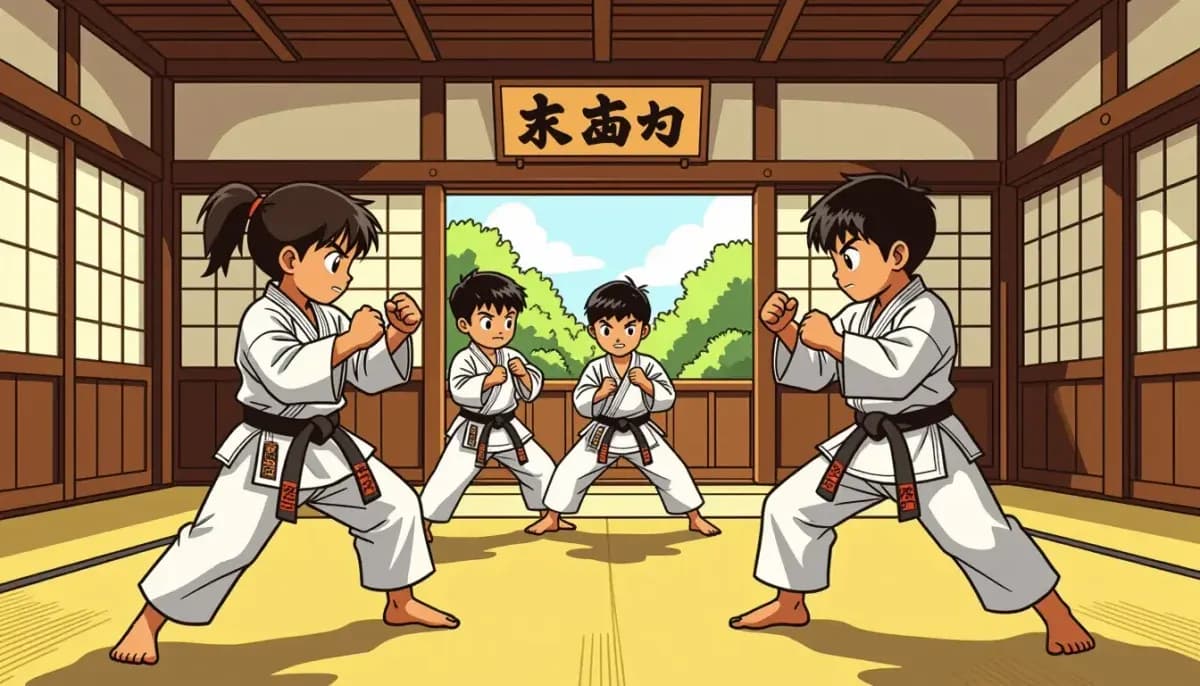
Complete guide to enrolling your child in karate, judo, or kendo in Japan. Learn about dojo costs, styles, English-friendly options, and what to expect as a foreign family.
Martial Arts for Kids: Karate, Judo, and Kendo in Japan
Japan is the birthplace of some of the world's most respected martial arts. For foreign families raising children in Japan, enrolling your child in karate, judo, or kendo offers far more than just physical training — it's a doorway into Japanese culture, discipline, and community. Whether you're an expat looking for a meaningful extracurricular activity or a parent curious about your child's school PE curriculum, this guide covers everything you need to know about martial arts for kids in Japan.
Why Enroll Your Child in Martial Arts in Japan?
Japan is arguably the best place in the world for a child to learn traditional martial arts. The infrastructure is unmatched — neighborhood dojos (training halls) are found in virtually every city and town, and many are led by teachers who have trained for decades. The teaching philosophy emphasizes respect, perseverance, and self-improvement alongside physical technique.
According to the SSF National Sports-Life Survey (2021), 58.3% of Japanese children aged 4 to 11 participate in organized sports clubs. Martial arts consistently rank among the top choices, with judo and karate especially popular due to widespread dojo availability and the cultural prestige they carry.
For foreign children, martial arts classes also offer an excellent way to integrate into Japanese peer groups, practice the language in a structured setting, and develop confidence in navigating a new culture.
Benefits at a glance:
- Discipline and focus — structured training instills routine and goal-setting
- Physical fitness — builds strength, coordination, balance, and agility
- Cultural integration — shared language of etiquette (bowing, respect for sensei) levels the playing field
- Self-confidence — belt progression gives visible milestones
- Language immersion — training in Japanese helps children pick up vocabulary naturally
Karate: The Most Accessible Martial Art for Kids
Karate, which originated in Okinawa and means "empty hand," is the most globally practiced Japanese martial art — approximately 60 million people practice karate worldwide. In Japan, you'll find karate dojos in almost every neighborhood, often run by local community centers or private clubs.
Styles of Karate for Children
There are two main styles you'll encounter:
Okinawan/Traditional Karate (e.g., Shotokan, Shito-ryu): Emphasizes controlled strikes, blocks, and katas (forms). It's excellent for personal development, discipline, and etiquette. Recommended for children who are more introverted or who need to build patience and focus.
Kyokushin Karate: A full-contact style with a strong presence across Japan. It has the most dojo locations and the most accessible timetables — important for working parents. It's energetic, physical, and builds real-world toughness, but involves more sparring with contact.
Finding Karate Classes
- Community center (公民館, kominkan) karate clubs — Often the cheapest option, run by volunteers. Search your local city office website.
- Private dojos — Typically ¥3,000–¥8,000 per month with better instruction consistency.
- English-friendly options in Tokyo: HERO KARATE GIRLS (women and children, English instruction), several Kyokushin dojos in central Tokyo.
| Feature | Okinawan Karate | Kyokushin Karate |
|---|---|---|
| Contact level | Minimal (controlled) | High (full contact) |
| Best for | Discipline, etiquette | Fitness, toughness |
| Dojo availability | High | Very high |
| English dojo options | Limited | Some in major cities |
| Typical starting age | 4–5 years | 5–6 years |
Judo: Japan's Top Pick for Self-Defense
Judo, which means "the gentle way," is arguably Japan's most institutionalized martial art. Since April 2012, budo (traditional martial arts) became mandatory in Japanese junior high school physical education — and judo was chosen as the primary art in 60% of schools, compared to kendo's 30%.
Judo focuses exclusively on throws, takedowns, and ground pins. Strikes are entirely forbidden, making it one of the safer contact martial arts. It's widely considered the top recommendation for practical self-defense, particularly for smaller children learning to manage opponents larger than themselves.
Judo for Foreign Kids
The Kodokan Judo Institute in Tokyo is the world headquarters for judo and has an international department with at least one English-speaking instructor. It welcomes children and adult beginners alike.
For younger children (ages 5 and up), many neighborhood judo clubs affiliated with the All Japan Judo Federation (全日本柔道連盟) operate at extremely low cost, sometimes ¥1,000–¥3,000 per month, often held in school gymnasiums on weekends.
Important note: Dojo selection is critical with judo because of injury risk. Always observe a class before enrolling your child — look for a sensei who emphasizes ukemi (falling technique) thoroughly before any randori (sparring).
For more on children's physical activities in Japan, see our guide on Sports and Physical Activities for Children in Japan.
Kendo: The Way of the Sword
Kendo ("Way of the Sword") is a uniquely Japanese martial art that uses bamboo practice swords (shinai) and protective armor (bogu) — including helmets (men), chest guards (do), gloves (kote), and a waist protector (tare). Children practice striking defined target points while calling out the strike name, training both physical precision and mental presence.
Kendo comprises about 30% of mandatory budo classes in Japanese middle schools. Despite the armor, properly supervised kendo is quite safe for children. The protective gear is a significant upfront cost (expect ¥30,000–¥80,000 for a full set), but many dojos have loaner sets for beginners.
English-Friendly Kendo in Tokyo
Tokyo Kyumeikan Kendo Dojo is well known for offering English instruction and explicitly welcoming beginners and children. For families outside Tokyo, look for kendo clubs (剣道クラブ) at school gymnasiums or local sports associations — these often practice on weekday evenings and Saturday mornings.
Kendo's focus on mental composure, correct etiquette, and the "one strike, certain kill" (一本) philosophy makes it particularly popular with children who want a more cerebral, disciplined training environment.
For families thinking about the broader context of education and extracurricular activities in Japan, our Elementary School in Japan Guide covers school-based sports clubs in detail.
Comparing the Three Martial Arts: Which Is Right for Your Child?
| Karate | Judo | Kendo |
|---|---|---|
| Physical demand | Medium–High | High |
| Contact level | Low–High (style dependent) | |
| Moderate (padded strikes) | Equipment cost | |
| Low (uniform ¥3,000–¥8,000) | High (armor ¥30,000–¥80,000) | |
| Moderate | High (Kodokan) | Moderate |
| Best age to start | 4–5 | 5–6 |
| School PE integration | Some | |
| Yes (mandatory) | Top benefit |
Decision guide:
- For personal development and etiquette: Okinawan/Traditional Karate
- For practical self-defense: Judo or Kyokushin Karate
- For childcare-compatible scheduling (most dojo locations): Kyokushin Karate
- For a uniquely Japanese experience: Kendo
How to Find a Dojo and What to Expect
Finding a Dojo
- Ask at your local ward/city office (市役所) — Community sports associations maintain lists of local clubs.
- Check neighborhood notice boards — Many dojos post flyers at train stations, supermarkets, and schools.
- Use Google Maps — Search "空手道場" (karate dojo), "柔道場" (judo dojo), or "剣道道場" (kendo dojo) + your neighborhood.
- Contact your child's school — Many elementary and middle schools have after-school martial arts clubs (部活動, bukatsudo).
What to Expect as a Foreign Family
Most dojos operate primarily in Japanese. A few important cultural points:
- Arrive on time and bow upon entering. Punctuality and the bow (礼, rei) are fundamental.
- Bring a white training uniform (gi/dogi) — Most dojos will sell or recommend one for ¥3,000–¥8,000.
- Expect some Japanese-language instruction — This is often a feature, not a bug; immersion helps language learning.
- Monthly fees vary: community clubs ¥1,000–¥3,000; private dojos ¥4,000–¥10,000.
- Grading exams (審査) are held periodically and cost ¥1,000–¥3,000 each.
For broader guidance on supporting your child's wellbeing and social integration in Japan, see our article on Mental Health and Emotional Wellbeing for Foreign Children in Japan.
Additional Resources for Expat Families
For expats navigating life in Japan with children, several excellent resources exist:
- Living in Nihon offers practical guides on daily life in Japan for foreigners, including sports and community activities.
- For Work in Japan covers life and work in Japan for international residents.
- Chuukou Benkyou provides resources for families with children studying in Japan.
- For a parent's detailed comparison of martial arts styles in Japan, see Which Martial Arts in Japan is Good for My Child?
- Expat-focused dojo recommendations in Tokyo: Learning Japanese Martial Arts in Tokyo – PLAZA HOMES
Summary: Starting Martial Arts for Your Child in Japan
Enrolling your child in karate, judo, or kendo in Japan is one of the most rewarding extracurricular decisions you can make. Beyond the physical benefits, these arts teach children how to lose gracefully, how to persist through difficulty, and how to earn respect through demonstrated effort — values that transcend culture and language.
Start by attending a trial class (体験入門, taiken nyumon) — most dojos offer one for free. Watch how the sensei interacts with children, how safety is managed, and whether your child responds to the atmosphere. The right dojo will feel welcoming even if you don't speak Japanese.
Japan's martial arts tradition has been refined over centuries. Your child now has the rare opportunity to learn it at its source.
For more on supporting your child's life in Japan, explore our Raising Bilingual Children in Japan guide and our complete overview of Government Benefits and Subsidies for Families in Japan.

Originally from Vietnam, living in Japan for 16+ years. Graduated from Nagoya University, with 11 years of professional experience at Japanese and international companies. Sharing practical information for foreign parents raising children in Japan.
View Profile →Related Articles
Sports Injuries and Safety for Children in Japan
A complete guide for foreign parents on sports injuries, heat illness, abuse in sports, and medical care for children in Japan. Includes bukatsu safety tips and insurance advice.
Read more →
Physical Fitness Testing in Japanese Schools
Everything foreign parents need to know about Japan's annual Shin-tairyoku Test: 8 test items, scoring, results, and tips to help your child prepare for school fitness testing.
Read more →
Team Sports Culture in Japanese Schools
Discover how team sports work in Japanese schools — from bukatsudo clubs and senpai-kohai hierarchy to undokai sports festivals. A complete guide for foreign and expat families in Japan.
Read more →
Track and Field for Kids in Japan
Everything expat families need to know about track and field for kids in Japan — school clubs, private athletics clubs, costs, competitions, and how to enroll your child.
Read more →
Winter Sports for Families: Skiing and Snowboarding in Japan
Complete guide to skiing and snowboarding in Japan with kids. Best family resorts, costs, children's lessons, onsen tips, and how to get there. Niseko, Hakuba, Rusutsu and more.
Read more →
Gymnastics and Dance Classes for Kids in Japan
Find the best gymnastics and dance classes for your child in Japan. Costs, enrollment tips, English-friendly programs, and what foreign families need to know.
Read more →