
Team Sports Culture in Japanese Schools

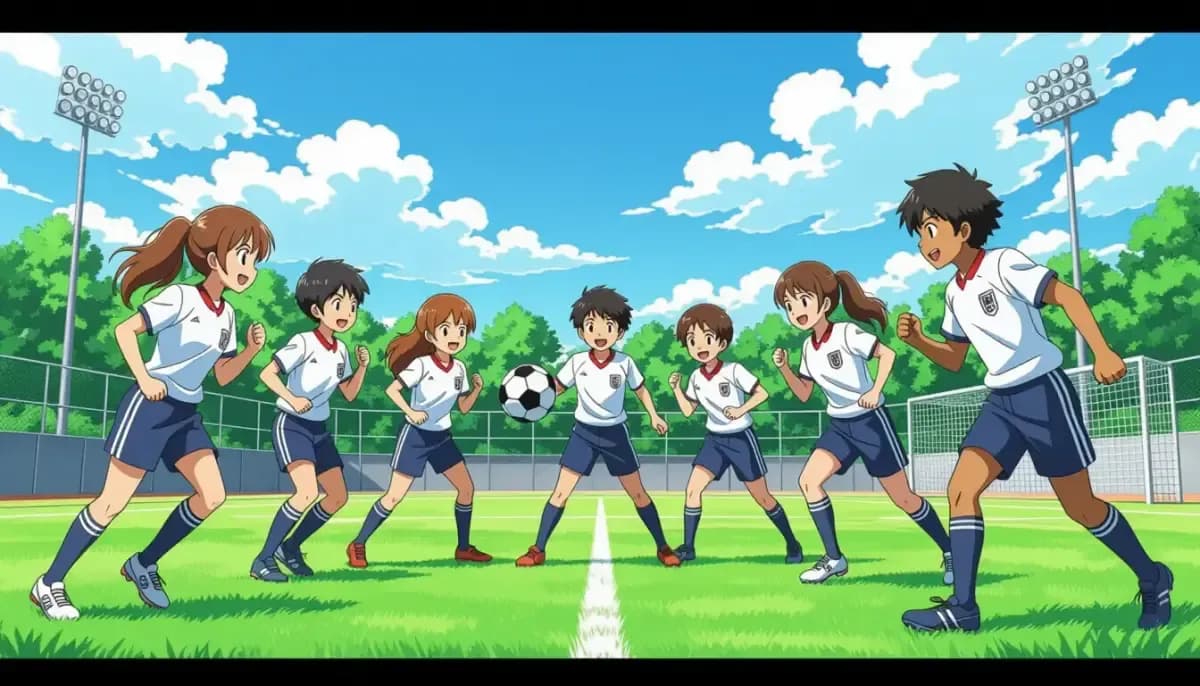
Discover how team sports work in Japanese schools — from bukatsudo clubs and senpai-kohai hierarchy to undokai sports festivals. A complete guide for foreign and expat families in Japan.
Team Sports Culture in Japanese Schools: A Complete Guide for Foreign Families
If your child attends a Japanese school, one of the most formative — and sometimes surprising — experiences they will encounter is the world of Japanese school sports. From the intense after-school club culture known as bukatsudo to the beloved annual undokai sports festival, team sports in Japanese schools are deeply intertwined with values of discipline, collective harmony, and personal perseverance. For foreign families navigating this system, understanding these traditions can make a huge difference in how well your child adapts and thrives.
This guide covers everything you need to know about team sports culture in Japanese schools: what to expect, how it compares to Western school sports, what challenges your child might face, and how to support them through it.
What Is Bukatsudo? Understanding Japanese School Sports Clubs
Bukatsudo (部活動) refers to the extracurricular club activities that are a cornerstone of Japanese school life, particularly in junior high and high school. Japanese schools typically offer a wide variety of clubs — according to the Japan National Tourism Organization (JNTO), schools offer around 47 kinds of sports clubs and 26 kinds of culture clubs.
Sports clubs include football/soccer, basketball, baseball, tennis, volleyball, badminton, track and field, swimming, kendo, judo, and many more. While club membership is technically voluntary, the cultural expectation is that essentially all students join one — and joining a sports club, in particular, is seen as a rite of passage.
Participation Rates
According to the Sasakawa Sports Foundation (2023), club participation rates at the junior high and high school level are substantial:
| School Level | Boys (Sports Clubs) | Girls (Sports Clubs) |
|---|---|---|
| Junior High School | 74.0% | 49.8% |
| High School | 53.8% | 33.5% |
These numbers reflect the significant role that sports clubs play in the daily life of Japanese school students. Boys, in particular, are strongly encouraged — and in many schools, socially expected — to join a sports team.
For more context on how Japanese schools are structured, see our guide to Junior High School in Japan: Guide for Foreign Families and High School in Japan: Options and Guidance for Foreign Families.
How Intense Is Sports Club Training?
One of the biggest cultural surprises for foreign families is just how demanding Japanese school sports clubs can be. Casual participation is rarely the norm.
According to Sasakawa Sports Foundation data:
- At middle schools, 43.1% of clubs hold activities 5 days per week, and 79.3% of clubs hold weekend activities
- At high schools, 41.2% of clubs hold activities 6 days per week, and 52.4% hold weekend activities
- Most clubs train for 2–3 hours per session on weekdays
This means a student in a competitive sports club may be training 6–7 days a week, often including holidays and school breaks, with practices sometimes extending into the evenings. This is a very different rhythm from the part-time seasonal sports typical in Western countries.
In response to growing concerns about student health and teacher workload, the Japan Sports Agency issued reform guidelines in 2018 that formally capped club activities at a maximum of 2 hours on weekdays and 3 hours on weekends, with at least one full day off per week. However, enforcement varies widely across schools and clubs, and highly competitive teams often continue to exceed these limits.
If you want to understand the broader academic and extracurricular pressures facing students, our Elementary School in Japan: A Complete Guide for Foreign Parents provides a helpful foundation.
The Senpai-Kohai Hierarchy in Sports Clubs
One of the most defining aspects of Japanese school sports culture is the senpai-kohai (先輩後輩) system — the strict hierarchical relationship between older and younger students. In the context of team sports, this hierarchy shapes almost every interaction.
- Senpai (seniors/upperclassmen) give instructions; kohai (juniors/underclassmen) follow without questioning
- New students (first-year kohai) often start with grunt work: cleaning equipment, fetching water, and observing before they are allowed to play
- Challenging a senpai's authority or showing up an older student is considered deeply disrespectful
- Respect is shown through formal speech (keigo), bowing, and deferential behavior at all times
For foreign children who come from school cultures that encourage assertiveness, debate, and equal peer relationships, this hierarchy can be very difficult to navigate. It is important to prepare your child in advance for this dynamic, not just as a cultural curiosity but as a practical reality that will affect their day-to-day club experience.
The senpai-kohai dynamic is also discussed in broader context in our guide to Cultural Identity for Hafu and Mixed-Race Children in Japan.
Core Values: What Japanese School Sports Are Really Teaching
Japanese school sports are explicitly designed to develop character, not just athletic skill. The educational philosophy behind bukatsudo includes several distinct values:
1. Wa (Harmony and Group Cohesion) In Japanese team sports, the needs of the group consistently take priority over individual achievement. Even the most talented player is expected to subordinate personal glory to team success. Showing off or seeking personal recognition is frowned upon.
2. Gambaru (Perseverance) Gambaru — meaning to persist, to do your best, to never give up — is one of the central virtues that sports clubs are meant to cultivate. Enduring difficult training, pushing through exhaustion, and maintaining effort even when things go wrong are all valued behaviors.
3. Respect for Authority and Elders The coach-player relationship, like the senpai-kohai relationship, is one of significant deference. The coach's word is rarely questioned. Listening, obeying instructions, and showing gratitude are expected regardless of how the athlete personally feels about the decisions being made.
4. Discipline Through Routine Regular, repetitive training — even at the expense of variety or innovation — is seen as building the mental and physical discipline that transfers to other areas of life and work.
These values align closely with broader Japanese social norms and are part of why sports clubs are considered so important to a child's overall development, not just their physical fitness.
Undokai: The Annual School Sports Festival
Beyond regular sports clubs, one of the most iconic elements of Japanese school sports culture is the undokai (運動会) — the school sports festival or sports day. Held once a year (typically in May or September–October), undokai is a whole-school event where students compete not as individuals but as members of color-coded teams (usually red vs. white, inspired by Japan's historic kouhaku red-and-white symbolism).
What Happens at Undokai?
Undokai events typically include:
- Relay races — the centerpiece of most festivals
- Tug-of-war (tsunahiki)
- Mock cavalry battles (kibasen) — students form "horses" and riders try to steal each other's helmets
- Ball tosses (tamaire) — teams throw balls into elevated baskets
- Group calisthenics (taiso) — synchronized dance or exercise routines performed as a class
- Traditional games and age-specific competitions
The philosophy of undokai is fundamentally collective: there are no individual trophies or medals. The entire team wins or loses together. Upper-grade students often take leadership roles in organizing and directing activities, and preparation can take weeks of school time.
Undokai as a Family Event
Undokai is also a major family event. Parents and grandparents attend in large numbers, bringing bento boxes, picnic mats, and cameras. Arriving early to stake out a good viewing spot is standard practice. Cheering is enthusiastic but typically more restrained than you might see at Western sporting events — loud individual chants for specific children are unusual; collective cheering for the team is the norm.
For families new to Japan, undokai can be a wonderful window into Japanese school culture and community. Read more at Japambience's guide to school sports festivals and TCJ's cultural insight into Japanese school events.
Most Popular Team Sports in Japanese Schools
The most popular sports clubs by registered student count reveal both Japanese traditions and global influences:
| Rank | Boys' Sport | Approx. Students | Girls' Sport |
|---|---|---|---|
| 1 | Football/Soccer | 149,637 | Volleyball |
| 2 | Basketball | 85,368 | Badminton |
| 3 | Badminton | 68,681 | Basketball |
| 4 | Track & Field | 62,804 | Track & Field |
| 5 | Table Tennis | 50,266 | Table Tennis |
| 6 | Baseball | High popularity | Softball |
| 7 | Tennis | Common | Tennis |
| 8 | Kendo | Traditional | Kendo |
Baseball deserves a special mention: while its raw participation numbers have declined slightly in recent decades, yakyu (野球) remains deeply embedded in Japanese school sports identity. High school baseball's national tournament at Koshien Stadium is one of the most-watched sports events in Japan each year, and school baseball culture carries intense community investment.
Football/soccer has overtaken baseball in raw club numbers at the junior and high school level, driven by Japan's success in international competitions and the global appeal of the sport among younger generations.
For a statistical deep-dive, see the Sasakawa Sports Foundation's participation data.
Can Foreign Children Join Japanese School Sports Clubs?
Yes — foreign children enrolled in Japanese public schools are generally welcome and encouraged to join sports clubs (bukatsudo). There is no formal rule excluding non-Japanese students. In practice, however, there are some real challenges to be aware of:
Language Barrier Most club communications — coaching instructions, team meetings, game rules, senpai-kohai interactions — happen entirely in Japanese. A child who does not speak Japanese will struggle significantly in the early months. Sports clubs can actually be a highly motivating environment for accelerated language learning, since the context is physical and social rather than academic, but the initial adjustment can be tough.
Cultural Expectations As described above, the implicit expectations around hierarchy, deference, and collective commitment may differ significantly from what your child is used to. It helps to brief them in advance on the senpai-kohai system and the expectation of high commitment.
High Time Commitment If your child joins a competitive sports club, the training schedule will be intense. This is worth discussing as a family before they join, especially if they also need time for language study or academic catch-up in other areas.
For more on helping your child navigate Japanese school life as a foreigner, see our comprehensive Guide to the Japanese Education System for Foreign Families and our resource on Teaching Japanese to Foreign Children.
You can also find expat community insights on the JNTO's official education resource: Club Activities in Japanese Schools.
For practical tips on living in Japan as a foreigner, Living in Nihon covers a wide range of topics relevant to expat families. Working parents looking for guidance on balancing work and school life in Japan can find helpful resources at For Work in Japan. Parents preparing their children academically can also explore Chuukou Benkyou for study resources relevant to middle and high school students.
Challenges and Criticisms of Japanese School Sports Culture
For all its positive dimensions, Japanese school sports culture also faces significant criticism — both domestically and internationally.
Overwork and Burnout The sheer volume of training hours — often 6–7 days per week across holidays and summers — has been widely linked to student burnout, declining participation rates at the high school level, and reluctance to participate in sport later in life. The 2018 Sports Agency reforms were a direct response to this concern.
Teacher Burden Club activities are typically supervised by teachers who may have no expertise in the sport they are managing. Teachers are often assigned to clubs with little say in the matter, and the expectation of weekend and holiday supervision creates significant overwork for educational staff.
Power Harassment and Abuse Bullying, corporal punishment (taibatsu), and power harassment — from coaches to students and from senpai to kohai — remain serious concerns in Japanese sports clubs. While formal taibatsu (physical punishment) has been prohibited since the 1990s, incidents continue to be reported, particularly in high-pressure, hierarchical club environments. The FutureLearn course on Japanese subculture and school clubs discusses some of these cultural tensions.
If your child experiences or witnesses any form of bullying or harassment in a sports club setting, it is important to consult the school's administration and, if needed, contact the relevant local education board (kyoiku iinkai). For guidance on your child's emotional wellbeing in the Japanese school system, see our article on Mental Health and Emotional Wellbeing for Foreign Children in Japan.
Practical Tips for Foreign Parents
Here is a summary of practical advice for foreign families navigating the Japanese school sports world:
- Prepare your child for the senpai-kohai system before they join a club — explain it as a cultural rule, not a personal slight
- Discuss the time commitment honestly as a family; high school sports clubs can demand 15–20+ hours per week
- Attend undokai with enthusiasm — it is a community event, and your participation signals respect and engagement with the school community
- Bring the essentials to undokai: picnic mat, sun umbrella, bento, and a camera; arrive early for good viewing spots
- Encourage language development through sports — the social context of clubs can accelerate your child's Japanese more than classroom study alone
- Monitor for signs of overwork or bullying — the hierarchical culture can create conditions for both; maintain open communication with your child
- Talk to the homeroom teacher (tantou sensei) and club supervisor if you have concerns — they are your primary point of contact for club-related issues
Conclusion
Team sports culture in Japanese schools is rich, demanding, and deeply revealing of broader Japanese social values. For foreign families, it offers both a powerful opportunity — your child can build language skills, friendships, and resilience through club sports — and real challenges around hierarchy, time intensity, and cultural expectations.
Understanding the system before your child enters it is the best preparation. With context and realistic expectations, many foreign children not only adapt to Japanese school sports culture but come to deeply appreciate what it taught them about teamwork, perseverance, and belonging.
For more guidance on raising children in Japan as a foreign family, explore our full resource library at our Complete Guide to the Japanese Education System for Foreign Families.

Originally from Vietnam, living in Japan for 16+ years. Graduated from Nagoya University, with 11 years of professional experience at Japanese and international companies. Sharing practical information for foreign parents raising children in Japan.
View Profile →Related Articles
Sports Injuries and Safety for Children in Japan
A complete guide for foreign parents on sports injuries, heat illness, abuse in sports, and medical care for children in Japan. Includes bukatsu safety tips and insurance advice.
Read more →
Physical Fitness Testing in Japanese Schools
Everything foreign parents need to know about Japan's annual Shin-tairyoku Test: 8 test items, scoring, results, and tips to help your child prepare for school fitness testing.
Read more →
Track and Field for Kids in Japan
Everything expat families need to know about track and field for kids in Japan — school clubs, private athletics clubs, costs, competitions, and how to enroll your child.
Read more →
Winter Sports for Families: Skiing and Snowboarding in Japan
Complete guide to skiing and snowboarding in Japan with kids. Best family resorts, costs, children's lessons, onsen tips, and how to get there. Niseko, Hakuba, Rusutsu and more.
Read more →
Martial Arts for Kids: Karate, Judo, and Kendo
Complete guide to enrolling your child in karate, judo, or kendo in Japan. Learn about dojo costs, styles, English-friendly options, and what to expect as a foreign family.
Read more →
Gymnastics and Dance Classes for Kids in Japan
Find the best gymnastics and dance classes for your child in Japan. Costs, enrollment tips, English-friendly programs, and what foreign families need to know.
Read more →