
Track and Field for Kids in Japan

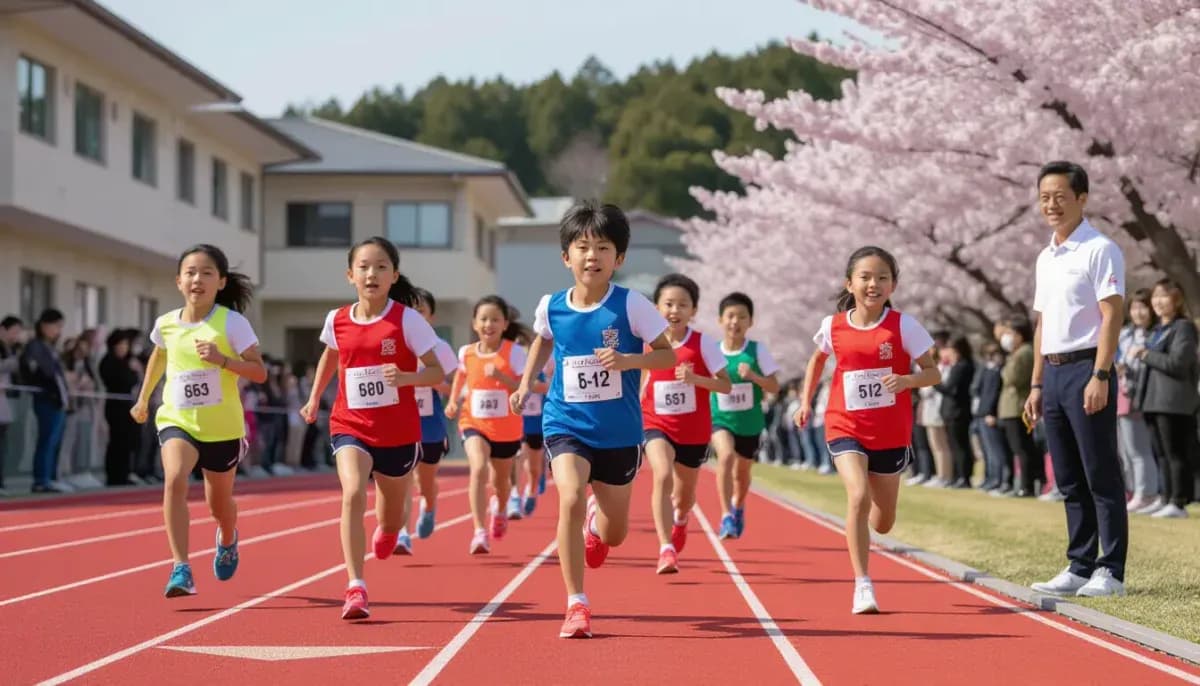
Everything expat families need to know about track and field for kids in Japan — school clubs, private athletics clubs, costs, competitions, and how to enroll your child.
Track and Field for Kids in Japan: A Complete Guide for Expat Families
If your child loves to run, jump, or throw — Japan is a fantastic place to nurture that passion. Track and field (陸上競技, rikujō kyōgi) has a deep tradition in Japanese school sports culture, and opportunities for children of all ages and backgrounds to participate are plentiful. Whether through school clubs, private athletics clubs, or community programs, getting your child involved in athletics in Japan is very achievable — even as a foreign family. This guide covers everything you need to know about track and field for kids in Japan, from age requirements and costs to competitions and tips for navigating the system as an expat.
Understanding Track and Field in Japan's Sports Culture
Athletics holds a respected place in Japanese school culture. Every elementary school holds an annual Sports Day (undōkai), a full-day event where students compete in relay races, sprints, and other events — often the biggest event of the school calendar. Beyond undōkai, formal track and field clubs exist at both the school level and through private athletics organizations.
According to the Sasakawa Sports Foundation's 2023 White Paper on Sport, track and field is the 4th most popular school sport club at the junior high level in Japan. In 2021, 123,916 boys (10.8%) and 88,563 girls (10.6%) were enrolled in track and field clubs at junior high schools nationwide — making it one of the most widely practiced youth sports in the country.
At the high school level, 62,804 boys and 35,470 girls participated in athletics clubs. Beyond school clubs, private athletics organizations serve children as young as grade 3 (age 8–9), with structured training and competitive pathways.
Understanding the two main systems — school clubs (bukatsu) and private clubs — is the first step to getting your child involved.
Two Pathways: School Clubs vs. Private Athletics Clubs
School Track and Field Clubs (Bukatsu)
The school club system, known as bukatsu (部活動), is the backbone of youth sports in Japan. At elementary schools, club activities typically begin in 4th grade (age 9–10) and run through 6th grade, meeting one to two times per week after school hours. These introductory clubs focus on fundamental running, sprinting, and relay skills.
At junior high and high school, bukatsu becomes significantly more intensive. According to research from the Sasakawa Sports Foundation, 43% of junior high track clubs meet five days a week, often running 2–3 hours per session and including weekend practices. Participation is technically voluntary, but culturally most students (~70%) join a sports club.
For expat families: Children enrolled in Japanese public schools automatically have access to the same clubs as any other student. The main barrier is the language — all sign-ups, parent meetings (hogosha-kai), and coach communications are conducted in Japanese.
Private Athletics Clubs
Private track and field clubs exist throughout Japan and offer a more flexible, structured training environment. These clubs typically accept children from grade 3 (age 8–9) and provide professional coaching, regular competitions, and a pathway to regional and national events.
A notable example is **BEAT AC TOKYO**, a well-established private athletics club serving students from elementary through high school across the Tokyo metropolitan area. Their fee structure gives a realistic cost benchmark for private club participation in Japan.
For families looking for English-friendly running communities, **Namban Rengo** is a well-known Tokyo running club that explicitly welcomes non-Japanese members, including families, and holds weekly interval training sessions and monthly time trials.
Costs: What to Expect
One of the most common questions from expat parents is: how much does it cost to enroll a child in track and field in Japan?
| Program Type | Enrollment Fee | Monthly Fee | Notes |
|---|---|---|---|
| School bukatsu (public school) | Free | Free | Supervised by teachers; equipment costs may apply |
| Private club (e.g., BEAT AC TOKYO) | ¥5,000 (one-time) | ¥13,800–¥15,800 | Single-location or all-access plans available |
| Competition uniform (private club) | ¥11,900 (one-time) | — | Required for competitions |
| General extracurricular costs (all sports) | — | ¥2,500–¥5,000/month | Events, travel, equipment at public schools |
| Free trial session (most private clubs) | Free | — | Usually one session offered before commitment |
School bukatsu is essentially free of charge, as it is supervised by homeroom and PE teachers and funded through the school system. However, families may need to budget for competition travel expenses, sports shoes, and team jerseys.
Private clubs provide more professional development but come with ongoing costs. Many clubs offer a free trial session (無料体験) before you commit, which is a great way to see if the environment is a good fit for your child.
How to Enroll Your Child
Joining a School Track Club
Enrollment in school bukatsu happens at the start of the Japanese academic year in April. At elementary school (grades 4–6), students typically choose one club from available options. At junior high and high school, students select their club during an orientation period in April.
For foreign families unfamiliar with the process, here's a practical outline:
- Confirm your child's school has a track and field club (most do at junior high level)
- Attend the new school year orientation where clubs are introduced
- Your child signs up directly at school — no audition required for most track clubs
- The school provides a basic schedule and any cost notices
- Parent meetings (hogosha-kai) are held in Japanese; consider asking a bilingual parent or the school office for help
Note: the academic year runs April to March, and clubs typically don't accept mid-year competition entries, though casual practice participation is more flexible.
Joining a Private Athletics Club
Private clubs accept new members throughout the year, though many prefer to start at the beginning of a training term. The typical process:
- Find a club near your home or workplace (search 陸上クラブ + your area in Japanese)
- Contact the club to request a free trial session
- Complete an application form (usually in Japanese) with your child's details
- Pay the enrollment fee and first monthly fee
- Purchase the required uniform if your child joins officially
For expat families, BEAT AC TOKYO and other private clubs in urban areas often have staff accustomed to international families, though communications will still be primarily in Japanese. Using Google Translate or a Japanese-speaking friend to help with paperwork is common.
Competitions and How They Work
Japan has a well-organized competitive structure for youth track and field, starting at the local level and extending to national finals.
Elementary School Competition: The Nissin Cup
The premier national event for elementary-aged athletes is the 日清食品カップ 全国小学生陸上競技交流大会 (Nissin Food Cup National Elementary School Track and Field Exchange Meet). Founded in 1985 and now in its 41st year, this competition targets students in grades 5 and 6 (ages 10–12) and follows a clear pathway:
- Local meets → Prefectural qualifying rounds → National Finals
- National finals are held at Yokohama International Stadium and draw approximately 650 representatives from all 47 prefectures
- Events include: 100m (grade 5 and 6 divisions), relay races, Combined A (80m hurdles + high jump), and Combined B (long jump + javelin ball throw)
Visit the official Nissin Cup website for the latest schedule and qualification standards.
Junior High and High School Competitions
For older students, track and field competitions are organized through the Japan Association of Athletics Federations (JAAF) at prefectural and national levels. Key events include:
- Prefectural Track and Field Championships — open to all school club members
- National Junior High School Athletic Meet — annual inter-prefecture competition
- All-Japan High School Track and Field Championships — prestigious national meet held each summer
- All-Japan High School Ekiden — famous long-distance relay race held every December
In 2023, regulations were partially eased to allow community club athletes (not just school club members) to qualify for prefectural and national events — a significant change that opens doors for children training at private clubs.
Tips for Expat Families
Enrolling your child in sports in Japan as a foreign family can feel daunting, but it's very doable. Here are some practical tips:
Language and Communication
- All club communications are in Japanese. Use translation apps (Google Translate's camera function is excellent for documents)
- Find a bilingual Japanese parent to help with initial paperwork and parent meetings
- Private clubs in Tokyo and other major cities are increasingly familiar with international families
Equipment Essentials
- Running shoes (rikujō shoes) with spikes are required for competition and upper-level club training — budget ¥5,000–¥15,000
- Most clubs provide a list of required gear after enrollment
- Sports Day events at school require white sports shoes (undōkai shoes), which are different from regular sneakers
Navigating the School Year Calendar
- The Japanese school year begins in April — this is the key enrollment window for bukatsu
- Summer break (July–August) is when many competitions take place, even though school is out
- Major competition seasons are May–July (spring-summer) and September–November (autumn)
For More Help and Resources For general guidance on navigating school life in Japan as a foreign family, Living in Nihon offers comprehensive resources. For parents also managing work and family in Japan, For Work in Japan provides practical expat guidance. For study support alongside sports activities, Chuukou Benkyou is a useful resource.
For more on how the Japanese school system is structured, see our guide: How the Japanese School System Works: Grade Structure and Beyond.
If your child is just starting out in Japan's education system, our Complete Guide to the Japanese Education System for Foreign Families is an essential read.
For families navigating transitions through the school years, check out our guide on the Transition from Elementary to Junior High School in Japan.
Is Track and Field Right for Your Child in Japan?
Track and field in Japan offers far more than just physical fitness. Participation in a track club — whether at school or through a private organization — helps children:
- Build discipline, resilience, and goal-setting skills
- Develop friendships and team spirit in a culturally immersive environment
- Learn Japanese naturally through daily interaction with coaches and teammates
- Participate in Japan's rich sports culture, from undōkai to national competitions
For expat children who may feel on the outside of school social life, joining a sports club can be one of the most effective ways to integrate and form genuine connections with Japanese peers.
With 58.3% of Japanese children aged 4–11 enrolled in some form of sports club, according to Sasakawa Foundation research, sport is central to childhood in Japan. Track and field — accessible, inexpensive through school clubs, and deeply rooted in school culture — is one of the best sports for expat children to explore.
Whether your child becomes a Nissin Cup qualifier or simply enjoys Friday afternoon practice with new friends, track and field in Japan is a rewarding journey well worth starting.

Originally from Vietnam, living in Japan for 16+ years. Graduated from Nagoya University, with 11 years of professional experience at Japanese and international companies. Sharing practical information for foreign parents raising children in Japan.
View Profile →Related Articles
Sports Injuries and Safety for Children in Japan
A complete guide for foreign parents on sports injuries, heat illness, abuse in sports, and medical care for children in Japan. Includes bukatsu safety tips and insurance advice.
Read more →
Physical Fitness Testing in Japanese Schools
Everything foreign parents need to know about Japan's annual Shin-tairyoku Test: 8 test items, scoring, results, and tips to help your child prepare for school fitness testing.
Read more →
Team Sports Culture in Japanese Schools
Discover how team sports work in Japanese schools — from bukatsudo clubs and senpai-kohai hierarchy to undokai sports festivals. A complete guide for foreign and expat families in Japan.
Read more →
Winter Sports for Families: Skiing and Snowboarding in Japan
Complete guide to skiing and snowboarding in Japan with kids. Best family resorts, costs, children's lessons, onsen tips, and how to get there. Niseko, Hakuba, Rusutsu and more.
Read more →
Martial Arts for Kids: Karate, Judo, and Kendo
Complete guide to enrolling your child in karate, judo, or kendo in Japan. Learn about dojo costs, styles, English-friendly options, and what to expect as a foreign family.
Read more →
Gymnastics and Dance Classes for Kids in Japan
Find the best gymnastics and dance classes for your child in Japan. Costs, enrollment tips, English-friendly programs, and what foreign families need to know.
Read more →