
Physical Fitness Testing in Japanese Schools

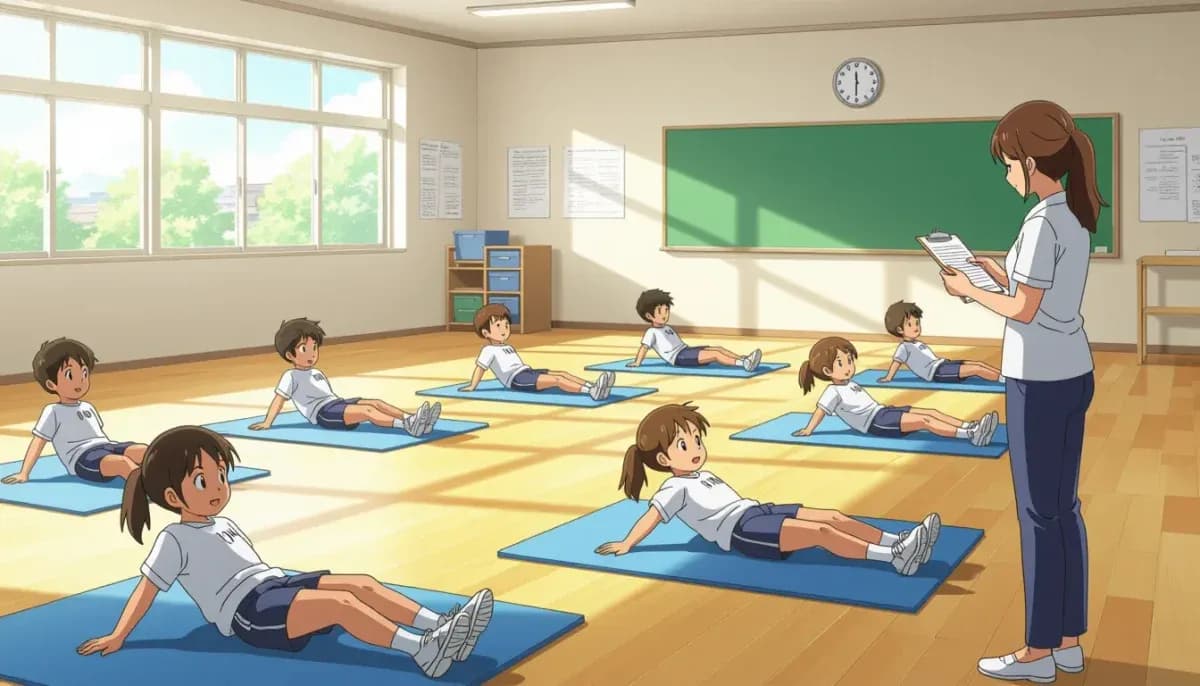
Everything foreign parents need to know about Japan's annual Shin-tairyoku Test: 8 test items, scoring, results, and tips to help your child prepare for school fitness testing.
Physical Fitness Testing in Japanese Schools: A Parent's Guide
Every year, children enrolled in Japanese schools take part in a nationwide physical fitness assessment known as the 新体力テスト (Shin-tairyoku Test). If your child attends a Japanese public or private school, this annual event will be part of their school calendar. As a foreign parent, you may have received a note home about "tairyoku sokutei" (体力測定) and wondered what it entails, how scores are used, and whether you need to do anything to help your child prepare.
This guide explains everything you need to know about physical fitness testing in Japanese schools — what it measures, how it works, what the results mean, and how to support your child through the experience.
What Is the Shin-tairyoku Test?
The Shin-tairyoku Test (新体力テスト) is a standardized nationwide fitness assessment introduced by Japan's Ministry of Education, Culture, Sports, Science and Technology (MEXT) in 1998 and now overseen by the Japan Sports Agency. It replaced an older test called the "Sports Test" (スポーツテスト) that had been in use since 1964.
The assessment is conducted annually — typically between April and July — at all public elementary schools (grades 5 and 6), all junior high schools (grades 7–9), and most high schools. Private schools generally follow the same schedule. Approximately 22,000 elementary schools, 12,000 junior high schools, and 5,000 high schools participate each year, making this one of the largest standardized health and fitness programs for children in the world.
The goals of the test are:
- To measure each child's current physical fitness levels
- To track national trends in children's health and fitness over time
- To provide data that informs PE curriculum development
- To motivate children to stay active and understand their own physical strengths and areas for improvement
![Japanese school children doing physical fitness tests in a gymnasium]()
The 8 Test Items Explained
The Shin-tairyoku Test consists of 8 events, each designed to measure a different component of physical fitness. Each event is scored on a scale of 1 to 10 based on gender- and age-specific standards published by the Japan Sports Agency. The maximum total score is 80 points.
| Test Item | What It Measures | How It Works |
|---|---|---|
| 握力 (Akuryoku) — Grip Strength | Muscular strength (upper body) | Squeeze a hand dynamometer with your dominant hand; best of two attempts recorded |
| 上体起こし (Jotai Okoshi) — Sit-Ups | Muscular endurance (core/abs) | As many sit-ups as possible in 30 seconds with knees bent |
| 長座体前屈 (Choza Taizen'kutsu) — Sit-and-Reach | Flexibility | Sitting with legs straight, push a measuring board forward as far as possible |
| 反復横とび (Hanpuku Yoko Tobi) — Side-to-Side Steps | Agility and coordination | Step side-to-side across three lines 1 meter apart as many times as possible in 20 seconds |
| 20mシャトルラン (20m Shuttle Run) — Endurance Shuttle Run | Cardiovascular endurance | Run back and forth between two lines 20 meters apart to a beep track; continue until you can no longer keep up with the beeps |
| 50m走 (50m So) — 50-Meter Dash | Speed | Timed sprint over 50 meters |
| 立ち幅とび (Tachi Haba Tobi) — Standing Long Jump | Explosive leg power | Jump as far as possible from a standing position (no run-up) |
| ソフトボール投げ / ハンドボール投げ — Ball Throw | Throwing power and coordination | Throw a softball (elementary) or handball (junior high/high school) as far as possible |
Elementary school grades 1–4 take a simplified version with fewer items. Grades 5 and 6 take the full 8-item test. Middle and high school students take the full test with age-adjusted scoring standards.
How Scores Are Calculated and What They Mean
Each of the 8 test items is converted to a point score (1–10) using age- and gender-specific conversion tables. These tables are recalibrated periodically by the Japan Sports Agency based on national data.
After all 8 items are completed, the total score (0–80) is used to assign the child to one of five fitness grade levels (A through E):
| Grade | Description | Total Score Range (approx.) |
|---|---|---|
| A | Excellent | 56+ (elementary boys/girls vary) |
| B | Above Average | 46–55 |
| C | Average | 36–45 |
| D | Below Average | 26–35 |
| E | Needs Improvement | 25 or below |
According to national data from 2019, average scores across Japan were:
- Elementary school boys: 53.6 / 80
- Elementary school girls: 55.6 / 80
- Junior high school boys: 41.6 / 80
- Junior high school girls: 50.0 / 80
These scores represent a gradual decline from previous years and are a topic of increasing concern among educators and health researchers in Japan. A survey by Nippon.com found that children's fitness peaked around 1985 and has been declining since, with the biggest drops in running, jumping, and throwing ability.
When and How Testing Takes Place
Testing typically takes place during regular PE class time across a two- to four-week period in the spring or early summer. The exact schedule varies by school, but most schools complete all 8 events by July.
Here's what the process generally looks like:
- Preparation period: PE teachers explain each event in class beforehand, and students may practice some items.
- Testing day(s): Some schools do all events in one or two designated days (sometimes called "体力テストの日"); others integrate individual events into regular PE lessons spread over several weeks.
- Indoor events (grip strength, sit-ups, sit-and-reach, side-to-side steps, standing long jump) are usually done in the gymnasium or multi-purpose room.
- Outdoor events (50m dash, ball throw, sometimes shuttle run) are done on the school grounds or track.
- Shuttle run is done in the gymnasium or covered area if weather is a concern.
Students typically wear their school gym uniforms (体操服, taisoufuku) — white shorts and a white shirt in most Japanese schools. If your child doesn't have their gym uniform, make sure they're prepared ahead of time. For more about what to expect in elementary school PE and daily routines, see our guide to Elementary School in Japan.
![Children running during physical fitness tests at a Japanese school]()
What Happens to the Test Results?
After all test items are complete, the school compiles the results and sends home a 個人票 (kojinhyo), or individual results sheet, usually in September or October. This sheet shows:
- Your child's score for each event
- The converted point score for each event
- The total score out of 80
- Your child's fitness grade (A–E)
- Comparison to national averages for the same age and gender
What are the results used for?
- Individual feedback: The results help your child understand their strengths and areas to work on
- School PE planning: Teachers use class-level results to adjust PE lessons and focus areas
- National database: Anonymized data is submitted to the Japan Sports Agency to track national fitness trends
- Parental awareness: The letter home is an opportunity to encourage physical activity
The results do not affect school grades or academic standing. They are informational, not competitive in a ranking sense (though children inevitably compare scores with friends).
Factors That Affect Fitness Test Performance
A 2025 cross-sectional study published in PMC (pmc.ncbi.nlm.nih.gov) involving 2,076 Japanese children aged 10–12 identified several lifestyle factors strongly associated with fitness test performance:
- Exercise frequency: Children who exercised 5–7 days per week scored significantly higher across all test items.
- Screen time: Children with 4+ hours of daily screen time showed notably lower endurance scores on the shuttle run.
- Breakfast habits: Skipping breakfast was linked to worse cardiovascular endurance and grip strength scores.
- BMI: Higher BMI was negatively correlated with endurance performance.
The study found that approximately 92% of Japanese children fail to meet the World Health Organization's recommendation of at least 60 minutes of moderate-to-vigorous physical activity per day — a significant finding that has driven efforts to improve activity levels in Japanese schools.
These results have real implications for foreign families: if your child spends a lot of after-school time on screens and doesn't participate in sports clubs (bukatsu) or outdoor play, they may score below average on the endurance events in particular.
How to Help Your Child Prepare
The good news: most of the fitness test items reflect everyday physical activity levels rather than special athletic skills. A child who plays outside regularly, rides a bike, and participates in sports will generally perform well without specific preparation. That said, there are some things you can do to help your child feel confident:
Practice the movements at home:
- Sit-ups: 30-second timed sets during family exercise time
- Sit-and-reach: Regular stretching, especially before baths or bedtime
- Standing long jump: Practice jumping from a standing position at the park
- Ball throw: Toss a ball at the park or in the backyard
Improve daily activity:
- Walk or bike to school instead of driving when possible
- Encourage participation in after-school sports clubs (bukatsu) or community sports
- Limit extended screen time, especially on school nights
- Make PE warm-ups or stretching part of a morning or evening routine
Mental preparation:
- Talk positively about the test. Emphasize that it's about learning, not winning.
- Remind your child that the results won't affect their grades
- If your child is anxious, read through this guide together in simple terms
For children who are anxious about school performance more broadly, our article on Mental Health and Emotional Wellbeing for Foreign Children in Japan offers additional strategies.
The Bigger Picture: Japan's Declining Youth Fitness
Japan has been tracking children's physical fitness since 1964, and the long-term data tells a concerning story. Fitness levels rose steadily through the 1970s and peaked around 1985, then entered a prolonged decline that has continued to the present day.
The Japan Sports Agency's Sasakawa Sports Foundation reports that the most significant declines are in:
- Endurance (shuttle run performance)
- Throwing ability (ball throw)
- Lower-body power (standing long jump)
Post-COVID, the decline has accelerated. Remote schooling periods, reduced recess, and increased screen time during the pandemic years contributed to a drop across almost all metrics between 2019 and 2022, according to the Japan 2022 Report Card on Physical Activity for Children and Youth.
Childhood obesity rates have also risen, with elementary school boys reaching an 11.1% obesity rate in 2019 — the highest recorded — and continuing to rise. These trends are why the Japan Sports Agency has placed increased emphasis on promoting physical activity both inside and outside of school hours.
For foreign families, this context is useful: the fitness test results your child brings home reflect a national baseline that has been declining. A "C" grade doesn't mean your child is unfit — it means they are average relative to a national cohort that is itself becoming less active.
Comparing Japanese School Sports Culture to Other Countries
One thing that may surprise foreign parents is how integrated sports and physical education are into Japanese school life — not just the annual fitness test, but the broader culture of physical activity.
| Aspect | Japan | Typical Western Countries |
|---|---|---|
| Annual fitness testing | Mandatory, nationwide, standardized | Varies widely; often optional or school-based |
| PE hours | ~90 hours/year | 40–80 hours/year (varies by country) |
| Sports Day (undokai) | Major annual event with family attendance | Rare as a school-wide event |
| After-school sports clubs | Bukatsu: free, teacher-led, almost universal | Fee-based or community programs outside school |
| Fitness data collection | National database since 1964 | Fragmented or limited national data |
Japan's undokai (運動会), or Sports Day, is a major community event that takes place in autumn at most elementary and junior high schools. Children practice for weeks and families attend to watch. It is a very different experience from a typical Western school athletics day, and well worth attending as a foreign family. For more on what to expect at Japanese school events, see our guide to Elementary School in Japan.
Resources for Foreign Families
Navigating the Japanese school system as a foreign family can feel overwhelming at first. Here are some resources that can help:
- Living in Nihon — Raising Children and Education in Japan: A comprehensive guide to parenting and education in Japan for foreigners, covering everything from school enrollment to daily routines.
- For Work in Japan: A practical resource for foreign workers in Japan, including information on family life and navigating Japanese systems.
- Chuukou Benkyou: Resources related to Japanese school study systems and educational preparation.
- Our guide to the Japanese Education System: An overview of how Japanese schooling works from elementary through high school for foreign families.
- Junior High School in Japan: What to expect when your child enters junior high school, including changes to PE and fitness testing.
Frequently Asked Questions
Q: Do foreign children have to take the fitness test? A: Yes, if they are enrolled in a Japanese school. The test applies to all students, regardless of nationality.
Q: Will the results be sent home in Japanese? A: Yes, the individual results sheet (個人票) is in Japanese. You can use a translation app or ask the school's international liaison (if available) to help you understand the sheet.
Q: What if my child has a medical condition or disability? A: Schools make accommodations for students who cannot participate in certain events due to health or disability. Talk to the homeroom teacher (担任の先生) or school nurse (保健の先生) ahead of time.
Q: Are the results shared with parents of other children? A: No. Results are individual and confidential. Class averages may be shared with teachers internally.
Q: Can my child opt out? A: In general, participation is expected as part of the regular PE curriculum. If there is a medical reason your child cannot participate, discuss this with the school in advance with appropriate documentation.
Physical fitness testing is a standard and important part of Japanese school life. Understanding what it involves — and how to support your child through it — will help your family navigate another aspect of the Japanese educational experience with confidence.

Originally from Vietnam, living in Japan for 16+ years. Graduated from Nagoya University, with 11 years of professional experience at Japanese and international companies. Sharing practical information for foreign parents raising children in Japan.
View Profile →Related Articles
Sports Injuries and Safety for Children in Japan
A complete guide for foreign parents on sports injuries, heat illness, abuse in sports, and medical care for children in Japan. Includes bukatsu safety tips and insurance advice.
Read more →
Team Sports Culture in Japanese Schools
Discover how team sports work in Japanese schools — from bukatsudo clubs and senpai-kohai hierarchy to undokai sports festivals. A complete guide for foreign and expat families in Japan.
Read more →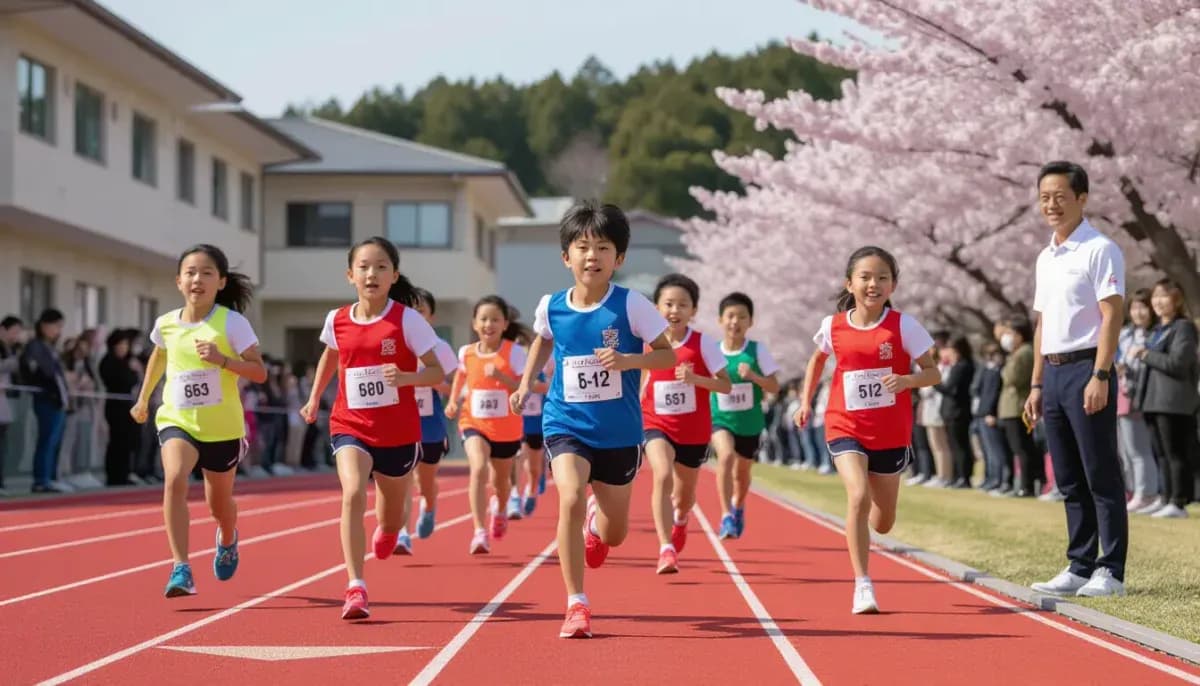
Track and Field for Kids in Japan
Everything expat families need to know about track and field for kids in Japan — school clubs, private athletics clubs, costs, competitions, and how to enroll your child.
Read more →
Winter Sports for Families: Skiing and Snowboarding in Japan
Complete guide to skiing and snowboarding in Japan with kids. Best family resorts, costs, children's lessons, onsen tips, and how to get there. Niseko, Hakuba, Rusutsu and more.
Read more →
Martial Arts for Kids: Karate, Judo, and Kendo
Complete guide to enrolling your child in karate, judo, or kendo in Japan. Learn about dojo costs, styles, English-friendly options, and what to expect as a foreign family.
Read more →
Gymnastics and Dance Classes for Kids in Japan
Find the best gymnastics and dance classes for your child in Japan. Costs, enrollment tips, English-friendly programs, and what foreign families need to know.
Read more →