
Physical Disability Support in Japanese Schools

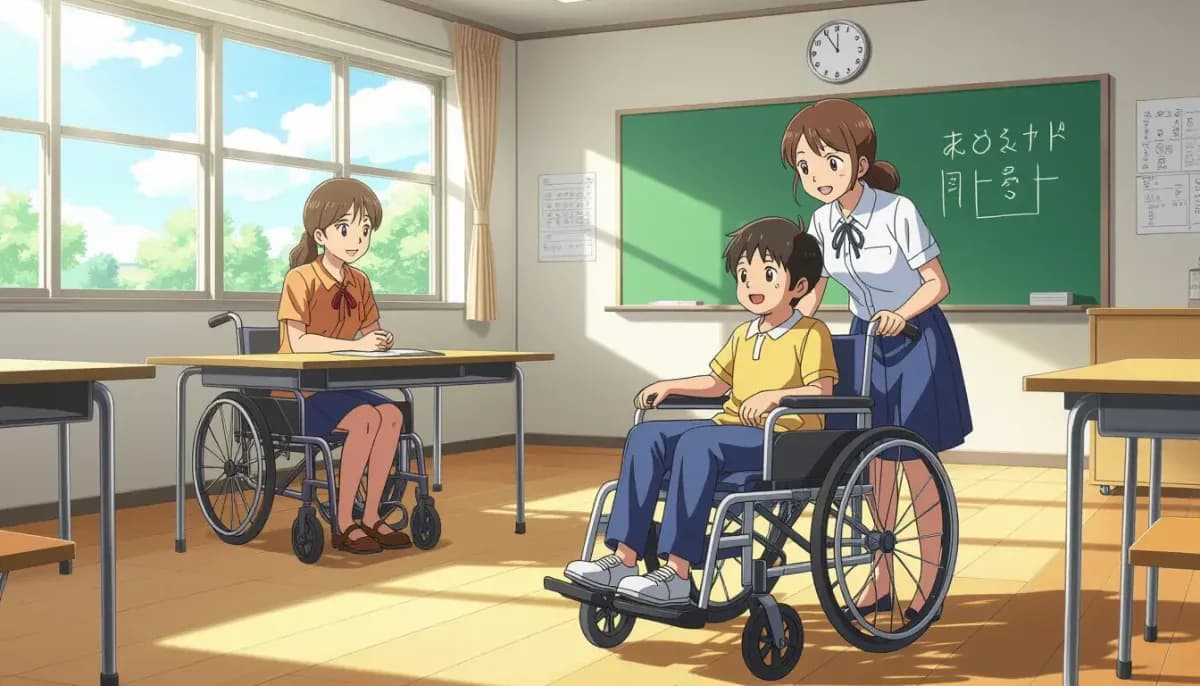
Complete guide for foreign parents on physical disability support in Japanese schools. Learn about school types, accessibility, how to apply for support, and English-language resources.
Physical Disability Support in Japanese Schools: A Complete Guide for Foreign Parents
As a foreign parent raising a child with a physical disability in Japan, navigating the school support system can feel overwhelming — especially in a new language. The good news is that Japan has a structured, well-funded system for supporting children with disabilities in school, and as a foreign resident, your child has the same rights to access these services as Japanese children. This guide will walk you through everything you need to know: the types of schools and support available, how to apply, what accommodations you can expect, and how to advocate effectively for your child.
Understanding Japan's Special Needs Education System
Japan's education system for children with disabilities is built on a tiered inclusion model, designed to place children in the least restrictive environment that still meets their needs. This philosophy aligns with Japan's 2014 ratification of the UN Convention on the Rights of Persons with Disabilities.
There are three main educational placements for children with physical disabilities:
1. Regular classroom with support (通常学級, tsūjō gakkyū) The majority of children with mild to moderate physical disabilities attend regular public schools alongside their peers. Depending on the school and municipality, this may include team-teaching, instructional assistants (介助員, kaijōin), modified physical education, and individual education support plans (個別の教育支援計画).
2. Resource room system (通級指導, tsūkyū shidō) Children who need more targeted therapeutic or educational support — but can otherwise participate in regular classes — can use the resource room system. Under this arrangement, students attend their regular homeroom class for most of the day but are pulled out for specialized sessions (typically a few times per week) in a dedicated room staffed by a trained specialist. These sessions might focus on motor skill development, assistive device training, speech therapy, or life skills.
3. Special support classes (特別支援学級, tokubetsu shien gakkyū) Present in approximately 62% of public elementary and junior high schools, these are small, specialized classes (maximum 8 students) operating within a regular school campus. Children in special support classes interact with the general student body during lunch, recess, and elective activities, while receiving individualized instruction for core subjects. This placement is common for children whose physical disabilities also involve cognitive, communication, or developmental challenges.
For children with the most complex or severe physical disabilities — for example, those requiring full-time medical monitoring or wheelchair-adapted facilities — Japan operates a network of dedicated special needs schools (特別支援学校, tokubetsu shien gakkō). As of 2023, there are 1,178 such schools across Japan, including 159 specifically designed for students with physical and motor disabilities. These schools offer extremely small class sizes: a maximum of 6 students per class for a single disability type, and just 3 students per class for multiple disabilities. Per-student spending in special schools is approximately ten times that of regular schools.
For more on Japan's overall education framework, see our guide to The Complete Guide to the Japanese Education System.
Physical Accessibility in Japanese Schools
One major concern for parents of children with mobility impairments is whether school buildings are actually accessible. Japan has made substantial progress in this area:
| Accessibility Feature | % of Public Schools (Primary & Secondary) |
|---|---|
| Step-free route: school gate to building entrance | 85% |
| Step-free route: entrance to classrooms | 65% |
| Accessible (wheelchair-friendly) toilets | 75% |
| Elevator or lift to upper floors | ~55% (varies by region) |
| Accessible changing rooms for PE | ~40% |
While headline figures show strong progress, the gap between gate-to-entrance accessibility (85%) and classroom-level access (65%) means some schools still require children to use alternative routes or have staff assistance for building navigation. When evaluating a school for your child, always conduct an in-person accessibility walkthrough — ideally with your child and any mobility aids they use.
Special needs schools (tokubetsu shien gakkō) designed specifically for physical disabilities are built or retrofitted to full wheelchair-accessible standards, with ramps, widened corridors, ceiling hoists, and adapted restrooms as standard features. They also typically provide school bus transport (スクールバス) with wheelchair-accessible vehicles.
For general healthcare considerations for children in Japan, see Healthcare and Medical Care for Children in Japan.
How to Apply for School Support: Step-by-Step
Applying for disability support in Japanese schools involves several government offices and may take two to three months. Here is the process in sequence:
Step 1: Obtain the Physical Disability Certificate (身体障害者手帳, shintai shōgaisha techō) This official document certifies the type and severity of your child's disability on a scale of 1 (most severe) to 6 (least severe). It is your gateway to school support, government welfare benefits, transportation subsidies, and equipment grants. Foreign residents are fully eligible to apply — you will need your residence card (在留カード) and a certificate from a designated physician (指定医, shitei-i) at a qualifying hospital.
Step 2: Contact your local Board of Education (教育委員会, kyōiku iinkai) After obtaining the disability certificate, contact the Board of Education in your municipality. They will introduce you to a Special Needs Education Coordinator (特別支援教育コーディネーター) who will conduct an assessment of your child's needs and discuss appropriate school placement options.
Step 3: School consultation and IEP development Once a placement is agreed, the assigned school will work with you to create an Individual Education Support Plan (個別の教育支援計画) and an Individual Instruction Plan (個別の指導計画). These documents specify the accommodations, goals, specialist support sessions, and emergency procedures applicable to your child.
Step 4: Transition support If your child moves between schools (e.g., elementary to junior high), support documentation transfers with them. Ask the school coordinator to prepare a transition brief (引継書, hikitsugi-sho) in advance.
For English-language guidance on living in Japan as a foreign family, Living in Nihon is a helpful resource covering settlement, welfare, and everyday life.
School Support Services and Accommodations
Depending on your child's placement and municipality, the following support services may be available:
Instructional/care assistants (介助員 / 支援員) Many schools assign dedicated assistants to children with physical disabilities who need help with mobility, eating, toileting, or classroom transitions. Availability varies by municipality and budget — in urban areas like Tokyo or Osaka, staffing tends to be more generous.
Assistive technology Schools can provide or help arrange: adapted desks and chairs, communication devices (AAC), tablet-based learning tools, large-print materials, and specialized writing/gripping tools. Assistive device subsidies are available through the disability certificate welfare pathway.
Physical therapy and occupational therapy within school Some special needs schools and special support classes have on-staff or visiting physical therapists (PT) and occupational therapists (OT) who work with students during school hours, targeting functional goals aligned with the child's education plan.
Medical care coordination For children who require medication, tube feeding, suctioning, or other medical procedures during school hours, schools coordinate with certified nurses or specially trained teachers (認定特定行為業務従事者). This provision has expanded significantly since 2012 legislation allowed trained non-nurse school staff to perform defined medical procedures.
Emergency evacuation planning All schools are required to create individual emergency evacuation plans (個別避難計画) for students with disabilities, specifying the assistance required and routes to be used in earthquake or fire evacuations.
For broader support information, For Work in Japan provides practical resources for foreign residents navigating Japanese systems.
Choosing the Right School: Regular vs. Special Needs School
One of the most consequential decisions you will make is whether your child attends a regular public school with support, or a dedicated special needs school. There is no single right answer — it depends on your child's physical and developmental profile, language abilities, social needs, and your family's priorities.
| Factor | Regular School + Support | Special Needs School |
|---|---|---|
| Social integration with non-disabled peers | High | Limited |
| Specialized physical care/therapy | Variable | High |
| Class size | 25–35 students | 3–6 students |
| Physical accessibility | Varies (65–85%) | Purpose-built (100%) |
| Japanese language instruction flexibility | Limited | Higher flexibility |
| School bus with wheelchair access | Rarely | Standard |
| MEXT curriculum | Standard | Modified/life-skills focus |
Many families opt for regular school through elementary years (小学校) if the child's physical needs allow, then transition to a special needs school for junior high or high school as academic demands increase and specialized vocational or life skills tracks become more relevant.
For guidance on the general elementary school experience, see Elementary School in Japan: A Complete Guide for Foreign Families.
Rights, Advocacy, and English-Language Resources
Japan's disability education framework has evolved substantially since the 2013 Act for Eliminating Discrimination against Persons with Disabilities and the related 2016 reforms requiring "reasonable accommodation" (合理的配慮, gōriteki hairyo) in schools. Under this principle, schools must make individualized adjustments for your child unless doing so creates an excessive burden — and the standard for what counts as excessive has narrowed significantly over time.
Advocating effectively:
- Always request decisions and support plans in writing (書面で, shōmen de)
- Ask for the school's Special Needs Education Coordinator by name — they are your primary contact
- Request translation support for important meetings through your local international affairs division (国際交流協会)
- If your child's needs are not being met, you can escalate to the municipal Board of Education or file a complaint with the prefectural government
English-language support organizations:
- TELL Counseling Center (telljp.com) — bilingual assessments for children in English and Japanese
- National Rehabilitation Center for Children with Disabilities (Itabashi, Tokyo) — comprehensive diagnostic evaluations
- Accessible Japan (accessible-japan.com) — wheelchair accessibility database for schools and public spaces
- Litalico Junior (リタリコジュニア) — private after-school support centers with individualized programs
For insights into study support for foreign children in Japan, Chuukou Benkyou covers entrance exam and academic pathways for foreign and returnee students.
You can also find additional information on government welfare programs available to families at Government Benefits and Subsidies for Families in Japan, and for managing the emotional and psychological side of raising a child with additional needs abroad, see Mental Health and Emotional Wellbeing for Foreign Children in Japan.
Summary: Key Takeaways for Foreign Parents
Raising a child with a physical disability in Japan is navigable, and in many respects the school support system is genuinely strong — particularly in urban areas with well-resourced municipal governments. The most important steps are:
- Obtain the disability certificate (shintai shōgaisha techō) as early as possible — it unlocks nearly all support pathways
- Contact your local Board of Education before your child's school enrollment date to allow time for placement assessment
- Visit multiple schools — do not rely on descriptions alone when physical accessibility is a factor
- Request an Individual Education Support Plan in writing and keep copies of all meetings and decisions
- Build a support network: connect with parent groups (like TELL's parent forums or international school communities) who have navigated the same system
Japan's education system continues to evolve toward greater inclusion, and as a foreign parent, you are entitled to the same support, the same advocacy rights, and the same reasonable accommodations as any Japanese family.
For more context on Japan's broader education landscape, return to our pillar article: The Complete Guide to the Japanese Education System for Foreign Families.
Further reading:

Originally from Vietnam, living in Japan for 16+ years. Graduated from Nagoya University, with 11 years of professional experience at Japanese and international companies. Sharing practical information for foreign parents raising children in Japan.
View Profile →Related Articles
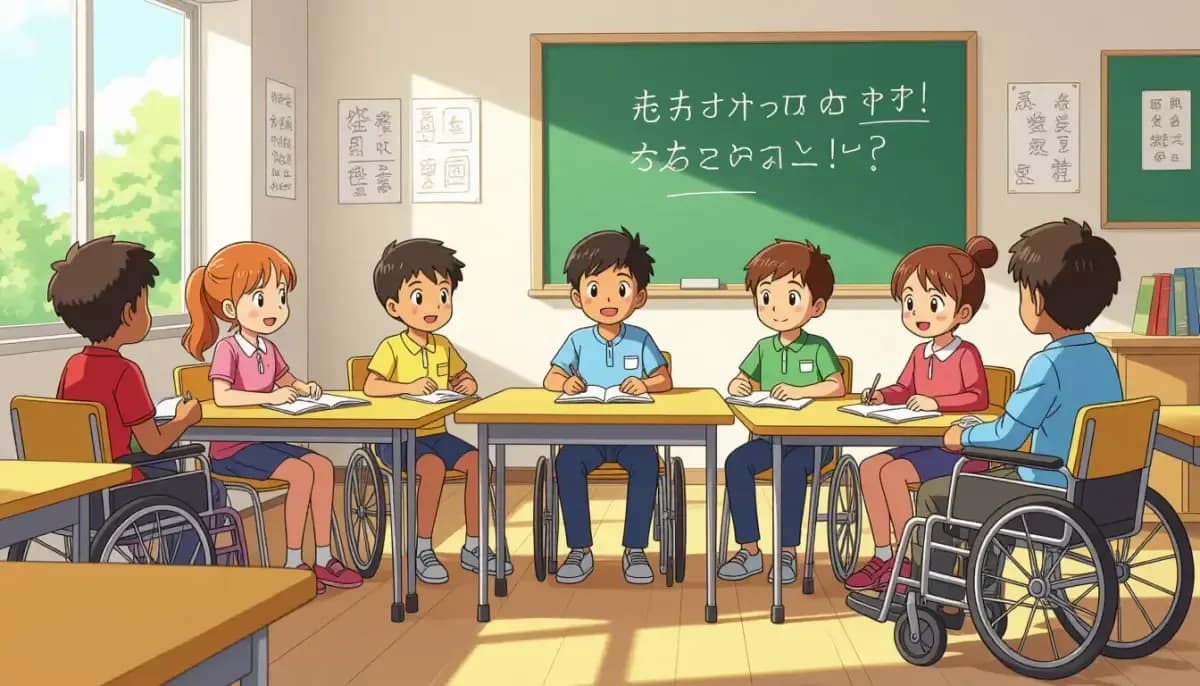
Inclusive Education Movement and Progress in Japan
Discover the state of inclusive education in Japan — from legal frameworks and school options to UN criticism and practical advice for foreign families with children with disabilities.
Read more →
English-Language Special Needs Resources in Japan
A complete guide to English-language special needs resources in Japan for expat families, covering education support, therapy services, disability certificates, financial aid, and parent communities.
Read more →
Advocating for Your Special Needs Child in Japanese Schools
A complete guide for foreign parents on navigating Japan's special needs education system — from understanding the three-tier support structure to effective advocacy strategies, English-language resources, and financial assistance.
Read more →
Therapy and Intervention Services for Children in Japan
Complete guide to therapy and intervention services for children in Japan. Find English-language speech therapy, mental health support, and early intervention programs for expat families.
Read more →
Government Support and Benefits for Special Needs Families
Complete guide to government support for special needs families in Japan: disability certificates, cash allowances up to ¥58,450/month, healthcare subsidies, school support, and welfare services for foreign residents.
Read more →
International Schools for Children with Special Needs
A complete guide to international schools and support services for children with special needs in Japan. Learn about inclusive schools, learning support teams, resources for expat families, and how to navigate the admissions process.
Read more →