
Reverse Culture Shock for Children Leaving Japan

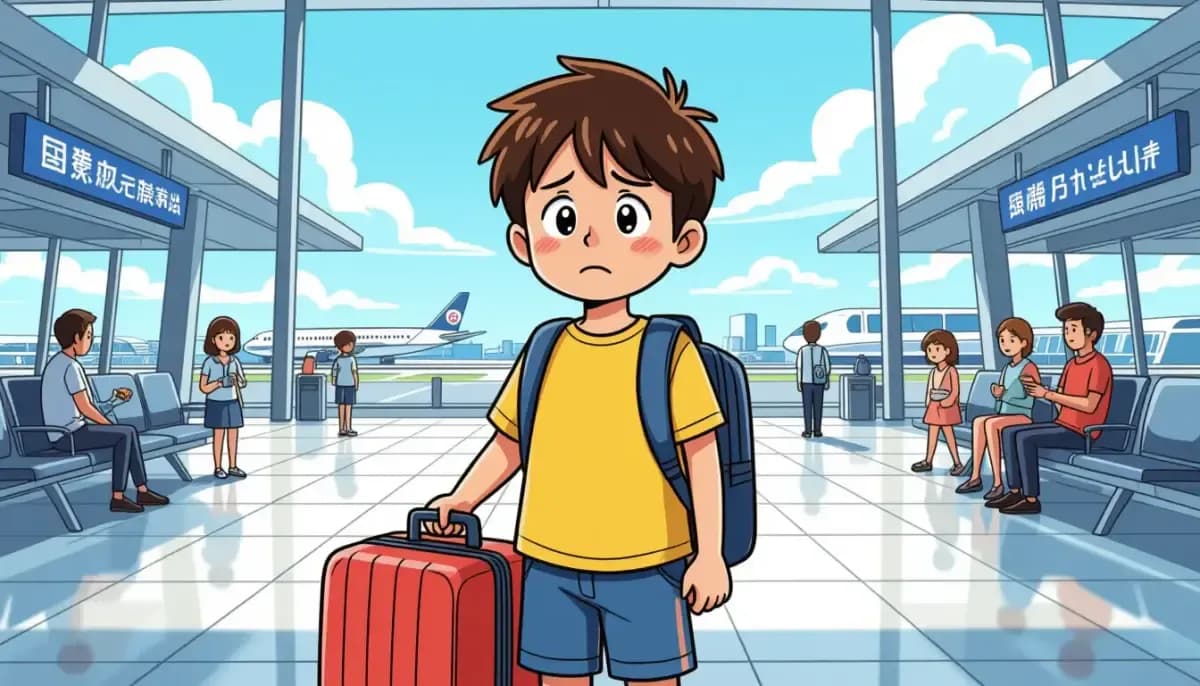
Help your children navigate reverse culture shock after leaving Japan. Understand the 4 stages, Japan-specific triggers, and practical strategies for a successful repatriation.
Reverse Culture Shock for Children Leaving Japan: A Complete Guide for Families
Leaving Japan is rarely simple — especially for children who have grown up immersed in one of the world's most distinctive cultures. Whether your family spent two years in Tokyo or a decade in rural Kyushu, your children may have absorbed Japan's values, social norms, and daily rhythms far more deeply than you realize. When it is time to move on, reverse culture shock can catch even well-prepared families off guard.
This guide covers everything you need to know about reverse culture shock for children leaving Japan: what it is, why it hits children hard, the four stages they typically go through, and — most importantly — the practical steps you can take to help your child thrive in their new home country.
What Is Reverse Culture Shock — and Why Children Are Especially Vulnerable
Reverse culture shock is the emotional and psychological disorientation that occurs when a person returns to their home country (or moves to a new country) after a prolonged period abroad. Unlike the initial culture shock of arriving in Japan, reverse culture shock is often unexpected. Most people brace themselves for adjusting to Japan. Few prepare for the adjustment of leaving.
For children, the experience is frequently more intense than it is for adults. This is because children are neurologically primed to absorb cultural norms during their formative years. A child who attended Japanese elementary school, played in neighborhood parks, and navigated Japan's social codes of group harmony, politeness, and collective responsibility does not simply "leave all that behind" when the plane departs.
According to a survey by CLAIR (Council of Local Authorities for International Relations), approximately 66% of JET Programme participants reported experiencing reverse culture shock to some degree after leaving Japan. For children who lived in Japan during critical developmental years, these percentages are believed to be even higher.
If your child is showing signs of distress, withdrawal, or conflict at school after returning home, you are not alone — and there are clear, evidence-backed steps you can take. For related reading on how to identify early warning signs, see our guide to signs of stress and anxiety in expat children.
The Four Stages of Reverse Culture Shock in Children
Researchers and repatriation counselors have identified four distinct stages of the reverse culture shock process. Understanding these stages helps parents recognize where their child currently is — and what kind of support they need.
| Stage | Name | What Children Experience | Typical Duration |
|---|---|---|---|
| 1 | Disengagement | Anticipatory grief, saying goodbye to Japan, feeling nervous about the move | Last weeks before departure |
| 2 | Initial Euphoria | Excitement about familiar foods, seeing relatives, novelty of home country | Days to a few weeks |
| 3 | Reentry Shock | Frustration, alienation, anger, feeling misunderstood by peers | Weeks to several months |
| 4 | Gradual Readjustment | Integrating both cultures, finding a new identity balance | Months to years |
Stage 1: Disengagement begins before the move. Children may become quieter, cling to their Japanese friends more tightly, or show unusual emotional swings. Some become unusually cheerful as a coping mechanism.
Stage 2: Initial Euphoria can fool parents into thinking the transition is going smoothly. Children enjoy reuniting with grandparents, eating foods they had missed, or watching TV in their native language. This stage feels like relief — but it is temporary.
Stage 3: Reentry Shock is where the real challenge begins. Children suddenly find that home does not feel like home. Friends have moved on, cultural references are unfamiliar, and the unspoken social rules feel different and even wrong. Peers may show little interest in hearing about life in Japan, which deepens feelings of isolation.
Stage 4: Gradual Readjustment does not mean forgetting Japan — it means building a bicultural identity. Children who successfully reach this stage often emerge with significant empathy, resilience, and cross-cultural communication skills.
Japan-Specific Triggers for Reverse Culture Shock in Children
Japan is not just "a different country." In many ways, it operates by a unique set of social, safety, and behavioral norms that children internalize so deeply that the absence of those norms feels jarring — even wrong.
Safety and Independence: In Japan, it is common for elementary school children to commute to school alone, play unsupervised in parks, and leave belongings unattended without fear of theft. This level of independence and safety is exceptional by global standards. When children return to countries like the United States, the United Kingdom, or Australia, the sudden loss of that freedom can feel oppressive. Parents of children returning from Japan often need to explicitly explain why the safety norms are different — and why things that felt normal in Japan require more caution elsewhere.
Social Norms and Group Harmony: Japanese school culture emphasizes group cohesion, consideration for others (meiwaku wo kakeru na — do not inconvenience others), and non-verbal social communication. Children who have internalized these values may find the more individualistic and confrontational social styles in Western schools abrasive and confusing.
Customer Service and Public Standards: Japan's legendary service culture — trains that run to the second, staff who bow and apologize for minor inconveniences, spotless public spaces — creates expectations that simply do not transfer. When your child gets frustrated that a bus is 10 minutes late or that a cashier was rude, they are experiencing one of Japan's most unexpected cultural exports.
Language and Communication Style: Japanese communication is often indirect, contextual, and relational. Children who have been educated in Japanese schools may find Western communication styles — particularly the directness expected in English-speaking countries — blunt or even offensive.
For families thinking about language maintenance after leaving Japan, our article on why maintaining your child's heritage language matters offers practical strategies for keeping Japanese skills strong.
The "Third Culture Kid" Dimension
Children who have spent significant time in Japan — particularly those who attended Japanese public schools, made close Japanese friends, or arrived during preschool or early elementary years — may identify more with a concept called the Third Culture Kid (TCK) experience.
TCKs are children who develop a sense of belonging in the country where they grew up (Japan), rather than in their passport country. When they "return home," they do not feel at home. They did not fully belong to Japanese society either. They exist in a third cultural space — one formed by the intersection of their family culture, Japanese culture, and the experience of being an outsider in multiple worlds.
This identity challenge is real and should be taken seriously. Research from the University of Michigan and other institutions has found that TCKs tend to score higher on measures of cultural empathy and global awareness, but also show elevated rates of restlessness, difficulty forming long-term relationships, and unresolved grief related to the repeated loss of community.
For a deeper exploration of how bicultural identity forms in Japan, see our guide on understanding hafu identity in modern Japan and the benefits of raising bilingual children in Japan.
Practical Strategies to Support Your Child Through the Transition
The good news: reverse culture shock is a predictable process, and there are proven strategies that significantly ease the transition for children.
Before the Move:
- Allow children to say proper goodbyes — exchange contact information, take photos, have a small farewell gathering with close friends. Abrupt endings without closure make Stage 3 significantly harder.
- Talk honestly about what will be different. Do not promise that "it will be great" — validate that it will also be hard.
- Help children create a "Japan memory box" with photos, a few meaningful objects, and handwritten notes from Japanese friends.
- Connect with other families who have made similar transitions. Online communities for expat families and returnees provide invaluable peer support.
After the Move:
- Find a local Japanese community. Most major cities have Japanese cultural organizations, Japanese language schools (hoshuko), or returnee family networks. Japan's Ministry of Education funds Saturday Japanese schools in many countries — these serve a crucial dual function: maintaining Japanese language skills and providing peer connection with other returnees.
- Encourage your child to maintain Japanese friendships digitally. Video calls with friends in Japan help children feel their Japan relationships were not lost — only relocated.
- Do not rush Stage 3. Reentry shock resolves through processing, not suppression. Allow your child to grieve what they lost.
- Watch for signs of stress and anxiety in expat children — persistent withdrawal, declining grades, refusal to attend school, or behavioral regression warrant attention from a school counselor or therapist.
At School:
- Brief your child's new teacher about their background. A child who has been educated in Japanese school culture has different strengths and different adjustment needs than a child who has never left the home country.
- Be patient with social re-integration. Japanese school social norms differ significantly from Western ones. Your child may initially come across as unusually formal, hesitant to speak up, or uncomfortable with confrontational peer dynamics.
For detailed guidance on how Japan's school system shaped your child's experience, see our overview of how the Japanese school system works.
When to Seek Professional Support
For most children, reverse culture shock is a difficult but temporary adjustment. However, some children benefit significantly from professional support — and there is no reason to wait until symptoms become severe.
Consider consulting a counselor or therapist if:
- Your child shows signs of depression lasting more than 4-6 weeks after the move
- Academic performance drops sharply and does not recover within a semester
- Your child refuses to discuss Japan or expresses intense shame about their time there
- Peer relationships are failing to form after several months
- There are signs of anxiety, including somatic symptoms (stomachaches, headaches before school)
Many therapists who specialize in Third Culture Kids and expat repatriation work telehealth — meaning families who relocated to areas without local TCK-specialized therapists can still access high-quality support. Organizations such as the Families in Global Transition (FIGT) network maintain referral lists of qualified professionals.
Planning the Move Well: Resources for Leaving Japan
Preparation before departure is one of the most effective investments you can make in your child's post-Japan adjustment. Understanding Japan's departure procedures — from school deregistration to visa cancellation — removes logistical stress that can compound emotional stress.
For a comprehensive guide to the practical steps of leaving Japan as a foreign resident, see Leaving Japan: Complete Preparation and Procedures Guide on Living in Nihon, which covers everything from deregistering your address at the ward office to managing your children's school records.
For families balancing work and family life during the transition, For Work in Japan's Family Life Guide offers useful context on how Japan's family systems work and what changes when you leave.
If your child has attended Japanese school and is continuing their education in Japan or applying to Japanese universities as a returnee, the Returnee Student Exam System at Chuukou Benkyou explains the kikokushijo (帰国子女) admissions pathways in detail.
For first-person accounts of the emotional experience of leaving Japan, Savvy Tokyo's guide to reverse culture shock and the JETAADC Returnee Handbook are excellent starting points that provide both personal context and structured coping frameworks.
What Children Carry Forward: The Long-Term Gift of Growing Up in Japan
It is easy to focus on what children lose when they leave Japan. But what they carry forward is remarkable.
Children who grow up in Japan develop:
- Exceptional empathy and social awareness from Japan's culture of consideration for others
- Strong non-verbal communication skills honed by Japan's high-context communication culture
- Resilience and adaptability from navigating a foreign language and cultural system
- Bilingual or multilingual foundations that support cognitive development and future career opportunities
- A global identity — a sense that belonging is not fixed to one geography
These children become adults who are uniquely equipped to build bridges across cultures. The pain of reverse culture shock, properly supported, becomes the foundation for extraordinary cross-cultural capability.
The key is not to eliminate the difficulty — it is to accompany your child through it with information, empathy, and practical support.
Related reading: Signs of Stress and Anxiety in Expat Children | Why Maintaining Your Child's Heritage Language Matters | Benefits of Raising Bilingual Children in Japan

Originally from Vietnam, living in Japan for 16+ years. Graduated from Nagoya University, with 11 years of professional experience at Japanese and international companies. Sharing practical information for foreign parents raising children in Japan.
View Profile →Related Articles
Repatriation Planning: Preparing to Leave Japan with Your Family
Complete guide to repatriation planning when leaving Japan with family. Covers tenshutsu todoke, pension withdrawal, school documents, shipping, tax obligations, and emotional preparation.
Read more →
Moving with Teenagers to Japan: Unique Challenges
A complete guide to moving with teenagers to Japan — covering school enrollment, language barriers, social integration, visa rules, and emotional wellbeing for expat families.
Read more →
Documentation and Paperwork for Moving with Children to Japan
Complete guide to all documents needed for moving to Japan with children: dependent visa, COE, birth certificates, post-arrival registration, health insurance, school enrollment, and My Number setup.
Read more →
Settling Into a New Neighborhood with Kids in Japan
A practical guide for expat families settling into a Japanese neighborhood with children — from neighbor introductions and chonaikai to jidokan, schools, and building a support network.
Read more →
Helping Children Maintain Friendships After Moving
Practical strategies for helping expat children maintain friendships after moving to Japan, from video calls and memory albums to building new bonds at school and local community centers.
Read more →
Emotional Support for Children During Relocation
Moving to Japan with kids? Learn how to support your children emotionally during relocation — from pre-move preparation through adjustment, school choice, and mental health resources in Japan.
Read more →