
The Role of Mothers (Mama) in Japanese Parenting

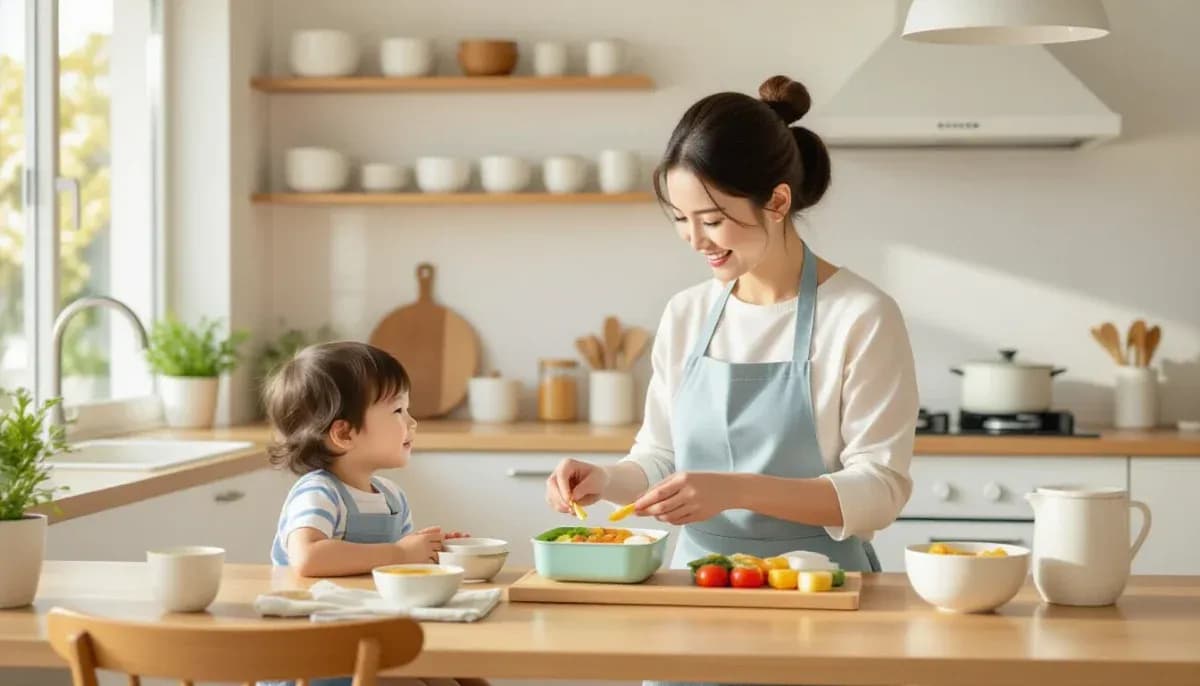
Discover the unique role of Japanese mothers (mama) in parenting culture: from proximal parenting and kyoiku mama to shitsuke discipline and modern work-life pressures. Essential guide for foreign parents in Japan.
The Role of Mothers (Mama) in Japanese Parenting
If you've spent any time in Japan — whether as a foreign parent, an expat observing daily life, or someone navigating the Japanese school system — you've probably noticed something striking: the role of the mother here is unlike almost anywhere else in the world. Japanese mothers, known affectionately as mama (ママ), are at the absolute center of family life. They are caregivers, educators, disciplinarians, logistics managers, and emotional anchors all at once. Understanding what that role looks like — and why — is essential for any foreigner trying to raise children in Japan or simply make sense of Japanese society.
This guide breaks down the unique role of mothers in Japanese parenting culture, from philosophical foundations to practical realities, including what it means for foreign parents living in Japan today.
The Philosophy Behind Japanese Motherhood
At the heart of Japanese maternal culture is a concept called wa (和) — harmony. Mothers are primarily responsible for teaching children that the group comes before the individual. From an early age, children learn to read social cues, suppress personal desires when they conflict with group needs, and behave appropriately in public spaces. This is not seen as repression; it is seen as a form of social intelligence.
Japanese motherhood is also deeply tied to amae (甘え) — a concept best translated as "indulgent dependence." Mothers allow, even encourage, babies and young children to be completely dependent on them. The idea is that through this deep early bond, children develop emotional security that eventually enables true independence. Research supports this: Japanese mothers average only 2 hours per week away from their baby, compared to American mothers who average around 24 hours per week. Yet somehow, these same children are riding public transit alone to school by age six.
This paradox — extreme closeness in infancy, remarkable independence by school age — is one of the most fascinating aspects of Japanese parenting culture. It all traces back to the philosophy that a mother's constant emotional attunement in the early years creates a secure base from which children can confidently launch.
For more on how Japan's overall childcare and education system supports families, see the Complete Guide to Childcare and Education in Japan at Living in Nihon.
Proximal Parenting: The Japanese Approach to Early Childhood
Japanese mothers practice what researchers call proximal parenting — a style characterized by sustained physical contact, co-sleeping, co-bathing, and near-constant physical presence during the first two to three years of life. This is simply the norm in Japan, not a deliberate parenting philosophy decision the way it might be in Western countries (where it is often called "attachment parenting").
Key proximal parenting practices:
- Co-sleeping (kawaii deshou): About 59% of Japanese children co-sleep with their parents three or more times per week, compared to only 15% of U.S. children. Sharing the family futon is practical, culturally normal, and continues well beyond infancy in many households.
- Co-bathing: The family bath (ofuro) is a daily ritual, and mothers typically bathe with their young children as a matter of course — not something that is questioned or debated.
- Baby-wearing: Carrying babies on the back using traditional onbu carriers keeps mothers and infants in constant contact throughout daily tasks.
- Anticipatory attunement: Japanese mothers don't wait for babies to cry to respond. They anticipate needs, staying attuned to subtle signals. The goal is to prevent frustration, not teach self-soothing.
Psychologist Heidi Keller's research has linked this proximal parenting approach to enhanced self-regulation skills in children — including emotional control, patience, and task persistence. The tradeoff is that children develop interdependence rather than the strong sense of individual self-expression more common in Western cultures. Neither is better; they are simply different, each suited to the society the child will grow up in.
You can explore baby and infant care practices for foreign parents in Japan for practical guidance on navigating these cultural norms as a foreigner.
Kyoiku Mama: The Education Mother
One of the most discussed aspects of Japanese motherhood is the concept of kyoiku mama (教育ママ) — literally "education mother." This refers to mothers who make their child's academic success a personal mission, sometimes to an extreme degree. The term can carry a slightly pejorative connotation (implying excessive pushiness), but it points to something real: in Japan, a child's academic performance is seen as a direct reflection of the mother's dedication.
Japanese mothers are expected to:
- Prepare home study environments and supervise homework nightly
- Attend all PTA meetings and school events actively
- Prepare elaborate bento lunches that reflect care and effort
- Research and manage juku (cram school) enrollment
- Track grades and communicate directly with teachers
- Support their child through juken (entrance exam prep) for middle school, high school, and university
This is not optional social participation — it is a core expectation. Foreign mothers in Japan often find this level of involvement surprising or even overwhelming. But understanding its cultural logic helps. In a society where group harmony matters deeply, a mother who appears disengaged from her child's schooling is judged harshly. Participating — even imperfectly — signals commitment to the community.
For more on what school involvement looks like in practice, read our guide on elementary school in Japan for foreign parents.
Shitsuke: How Japanese Mothers Discipline
Japanese mothers do not parent the way many Westerners expect. You won't often hear loud reprimands or threats of punishment in public. Instead, Japanese discipline follows a principle called shitsuke (躾) — best translated as "training" or "cultivating proper form." It is about shaping behavior through modeling, routine, and social awareness rather than through punishment.
Core principles of shitsuke in practice:
- Private correction: Mothers address misbehavior privately, never publicly humiliating the child. Observers often describe Japanese parents stepping aside, crouching to child level, speaking quietly, then resuming normal activity.
- Modeling over lecturing: Children watch what their mothers do far more than they are told what to do. Good behavior is demonstrated repeatedly until it becomes habit.
- Empathy before compliance: Japanese mothers constantly point out how actions affect others' feelings — including, notably, the "feelings" of objects. A child who throws a toy may be told the toy is sad.
- Social pressure as motivation: Rather than "that's wrong," the framing is often "people will think poorly of us if..." This leverages the child's natural desire for group belonging.
- Patience during tantrums: During public meltdowns — the Japanese equivalent of the "terrible twos" is called ma no nisai — mothers often appear unconcerned, neither comforting nor scolding. The behavior is acknowledged later, in private.
This approach requires enormous patience and emotional consistency from mothers. It also places significant psychological weight on them: the expectation to always remain calm, composed, and strategic, even when exhausted.
For guidance on managing discipline expectations as a foreign parent, see Savvy Tokyo's guide to Japanese child discipline.
The Modern Japanese Mother: Work, Identity, and Pressure
Today's Japanese mother exists in a state of cultural tension. Traditional expectations — centered on full-time devotion to home and children — clash with economic realities and evolving personal aspirations.
The numbers reflect this tension:
- 71% of Japanese mothers with children are now employed (the most recent fiscal year), up 14 percentage points since 2004
- Yet Japan's birth rate remains critically low, in part because many women choose careers over the enormous demands of Japanese motherhood
- Childcare infrastructure has expanded — government reforms now provide free childcare for all children ages 3–5 — but hoikuen (daycare) waiting lists remain long in urban areas
Many mothers report feeling caught between two impossible standards: the traditional kyoiku mama model (which demands total maternal sacrifice) and the modern expectation to work and contribute economically. Maternal burnout and isolation are significant concerns, particularly for foreign mothers in Japan who may lack family support networks.
Foreign mothers face additional layers: language barriers at school events, cultural confusion about expected roles, and the challenge of maintaining their own parenting identity while adapting to local norms. Multilingual childcare consultation services exist in many municipalities — a resource worth knowing about.
For support navigating this balance, For Work in Japan offers resources for foreign workers and families. Understanding Japanese government benefits and subsidies for families can also ease the financial pressures.
Japanese vs. Western Motherhood: Key Differences
| Dimension | Japanese Motherhood | Western Motherhood (General) |
|---|---|---|
| Parenting style | Proximal (constant closeness in infancy) | Distal (more physical independence early) |
| Sleep | Co-sleeping common (59% of children) | Independent sleeping encouraged early |
| Time away from baby | ~2 hrs/week average | ~24 hrs/week average (U.S.) |
| Discipline | Shitsuke (modeling, private correction) | Direct correction, reward/consequence systems |
| Child's goal | Group harmony (wa), social intelligence | Individual self-expression, autonomy |
| Academic role | Mother manages entire academic journey | Shared parental responsibility |
| Work expectations | Pressure to stay home or part-time | More equal workforce expectations |
| Independence | High by school age (transit alone at 6) | Often later, with more scaffolding |
These are generalizations — Japanese society is changing rapidly, and individual families vary enormously. But the patterns are real and visible enough that foreign parents consistently notice them.
You can also explore cross-cultural parenting challenges at InCultureParent for more on navigating cultural differences in parenting affection and style.
What This Means for Foreign Mothers in Japan
If you're a foreign mother raising children in Japan, you'll find that Japanese parenting culture is both admirable and demanding. Here's what matters most:
Don't try to replicate everything. Japanese mothers operate within a cultural ecosystem — extended community support, school structures that reinforce their methods, and social norms that align with their approach. You don't have that full ecosystem, and that's okay. Take what serves your family.
Prepare for school involvement. Japanese schools expect mothers to be present and engaged. Even basic participation — attending PTA meetings, returning signed forms promptly, sending properly packed lunches — signals good-faith effort.
Understand the pressure is real. Japanese mothers face enormous cultural expectations. If you sense tension or judgment, it's often not personal — it's systemic. The pressure you feel is a fraction of what Japanese mothers carry.
Find your people. Other foreign mothers, bilingual playgroups, and expat communities can provide the support network that Japanese mothers often find through neighborhood and school ties. Groups like the international communities in Tokyo, Osaka, and Yokohama are excellent starting points.
For practical guidance on navigating the school system as a foreign family, visit Chuukou Benkyou for study and education resources in Japan. You might also explore our guides on raising bilingual children in Japan and cultural identity for hafu and mixed-race children.
Conclusion
The role of the mama in Japanese society is one of the most demanding, nuanced, and culturally specific roles in the world. Japanese mothers are expected to cultivate harmony, manage academics, maintain emotional composure, and serve as the primary architect of their child's character — all while increasingly balancing work and personal identity.
For foreign parents in Japan, understanding this role isn't about adopting it wholesale. It's about appreciating the values behind it — the emphasis on empathy, group responsibility, and long-term emotional attunement — and finding what resonates with your own family's approach. Japan has much to teach the world about patient, present, relationship-centered parenting. You don't have to be Japanese to learn from it.

Originally from Vietnam, living in Japan for 16+ years. Graduated from Nagoya University, with 11 years of professional experience at Japanese and international companies. Sharing practical information for foreign parents raising children in Japan.
View Profile →Related Articles

Modern Parenting Trends and Changes in Japan
Explore how parenting in Japan is changing in 2025 — from landmark government reforms and childcare expansion to shifting discipline norms and the rise of involved fathers. A practical guide for foreign families.
Read more →
Mama-Tomo Culture: Navigating Mother Friendships in Japan
Understand mama-tomo (ママ友) culture in Japan and learn practical strategies for foreign mothers to build genuine friendships through hoikuen, kodomokan, and school communities.
Read more →
The Ikumen Movement: Japan's Push for Involved Fathers
Discover Japan's ikumen movement — the cultural push for involved fatherhood. Learn about paternity leave rights, government initiatives, and what it means for foreign fathers living in Japan.
Read more →
Japanese vs Western Parenting Styles Compared
Discover the key differences between Japanese and Western parenting styles — from amae and shitsuke to co-sleeping, discipline, and public behavior. A practical guide for foreign parents in Japan.
Read more →
Group Harmony and Socialization in Japanese Child-Rearing
Understand wa (group harmony) and how Japanese schools, proximal parenting, and mimamoru shape your child's socialization. Essential guide for expat families in Japan.
Read more →
Japanese Approach to Early Childhood Development
Understand Japan's early childhood development philosophy: hoikuen, yochien, kodomoen, mimamoru, and Chi-Toku-Tai. A complete guide for foreign parents raising children in Japan.
Read more →