
Swimming Schools and Lessons for Kids in Japan

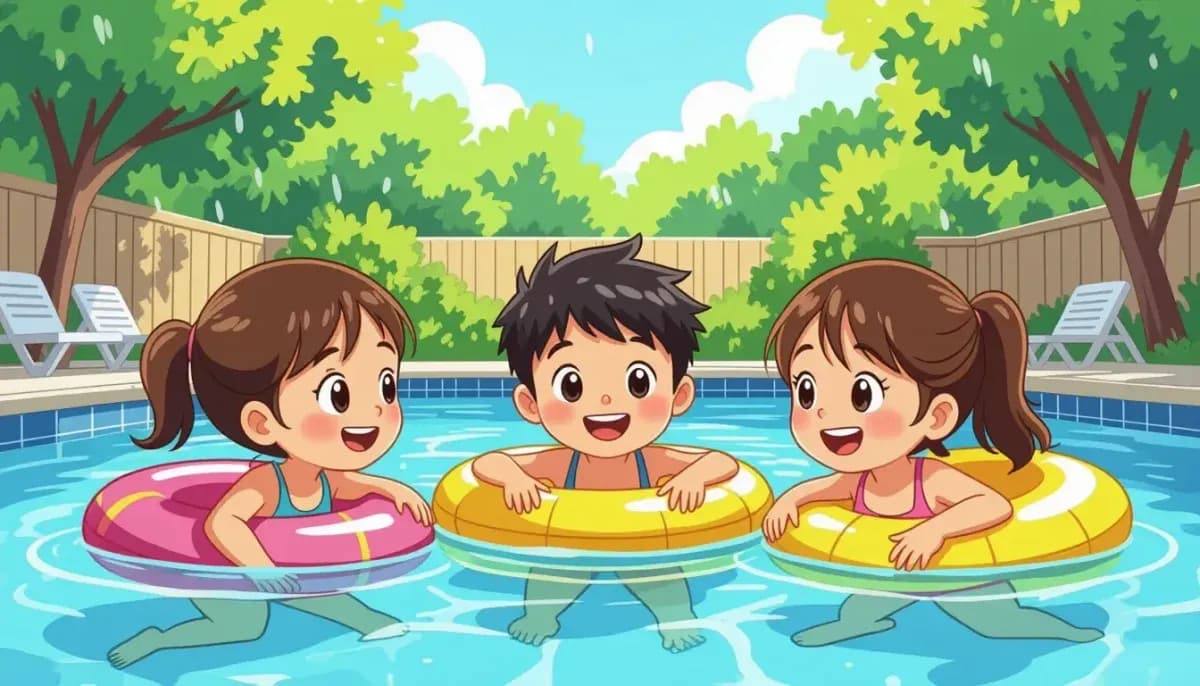
Everything foreign parents need to know about swimming schools and lessons for kids in Japan: costs, enrollment, English-friendly schools, and how the level system works.
Swimming Schools and Lessons for Kids in Japan: A Complete Guide for Foreign Parents
If you're raising children in Japan and wondering whether to enroll them in swimming lessons, here's something you should know: swimming is the single most popular extracurricular activity for kids in Japan. According to a 2020 survey by Nippon.com, 38% of parents chose swimming as their child's activity—more than any other option. That statistic has held steady across virtually every major survey since 2017. For foreign parents navigating Japanese life, understanding the swimming school landscape—from public school swim classes to private academies with English-speaking instructors—is an important part of setting your child up for success.
This guide covers everything you need to know: why swimming is so culturally significant in Japan, how school-based swimming works, what private swimming schools cost, how to find English-friendly options, and what the enrollment process looks like.
Why Swimming Is So Important for Kids in Japan
Swimming holds a unique place in Japanese children's education that goes beyond simple recreation. The national curriculum formally incorporated swimming in 1968, a response to two devastating water accidents in 1955: the sinking of the Shiun Maru ferry, which killed 168 people, and a separate school trip drowning that claimed 36 junior high school students. These tragedies shaped a national commitment to teaching children water safety.
Today, the reasons parents choose swimming for their kids go well beyond safety:
- Health benefits: Swimming is particularly recommended for children with low stamina or respiratory conditions like asthma
- Low parental burden: Unlike team sports, there is no roster duty, minimal spectating requirement, and laundry is simple
- Affordable equipment: All you need is a swimsuit and goggles
- Year-round availability: Indoor pools run through winter
- Level-based progression: Children advance through clearly defined skill levels, which provides visible achievement milestones
The Sasakawa Sports Foundation reports that swimming is the top after-school activity for children ages 4–11, with a participation rate of 23.7%. By age 6, over 82% of Japanese children participate in at least one extracurricular activity.
For more on what activities are popular and how Japanese education values physical development, see our guide on most popular sports for children in Japan.
Swimming at Japanese Public Schools
Before you start researching private swimming schools, it helps to understand that your child will already encounter swimming through the Japanese public school system. Most elementary and junior high schools have their own pools.
As of FY2021, 75% of elementary and junior high schools in Japan had their own swimming pools—that's 22,036 pools across 29,412 schools. Of these, the vast majority (21,607) are outdoor pools; only 429 are indoor. This matters because the school swimming season is limited.
The School Swimming Season
School-based swimming typically runs from mid-June to September in most parts of Japan. Warmer regions like Okinawa may start in May. Schools with indoor pools operate year-round. During the season, children typically participate in about 4–5 swimming lessons per semester, usually in double class periods.
What Children Learn in School Swimming
School swimming curriculum progresses through:
- Water acclimatization and floating (early elementary)
- Freestyle (crawl stroke) and backstroke
- Breaststroke and butterfly (upper elementary/junior high)
- Breath control and endurance
Attendance and Opt-Outs
School swimming is not strictly mandatory. If your child has a medical condition, skin condition, or you have religious objections, you can communicate with the homeroom teacher (担任, tantou) to request an opt-out. You'll typically submit a written note from a parent or doctor.
What Your Child Needs for School Swimming
| Item | Notes |
|---|---|
| Swimsuit (水着, mizugi) | School may specify design/color; name tags required |
| Swim cap (スイムキャップ) | Often a specific color required by school |
| Goggles (ゴーグル) | Usually the child's own; any style acceptable |
| Towel | Name tag required |
| Swim bag | Mesh bag for wet items recommended |
Always check your school's handbook (gakkou no tebiki) for specific requirements—some schools are particular about swimsuit colors or cap styles.
For a broader overview of what daily life is like at a Japanese elementary school, see what to expect on your child's first day of elementary school in Japan.
Private Swimming Schools: Costs and What to Expect
Public school swimming is seasonal and limited in frequency. Many families supplement it—or replace it entirely for younger children who aren't yet in elementary school—with private swimming schools (suiei kyōshitsu, 水泳教室).
Private swimming schools in Japan follow a systematic level-based curriculum. Children are tested every 6–7 weeks and advance through numbered or named levels as they master each skill. Most schools track all four strokes, turns, endurance, and eventually competitive technique for advanced swimmers.
Typical Cost Breakdown
| Item | Typical Cost |
|---|---|
| Monthly fee (group, 4 x 30-min lessons) | ¥7,000–¥10,000 |
| Registration fee (入会金) | ¥5,000–¥7,000 |
| Annual insurance fee | ¥2,000–¥2,500 |
| Required swimsuit (boys) | ¥2,600–¥3,000 |
| Required swimsuit (girls) | ¥4,500–¥4,900 |
| Swim cap (if required by school) | ¥500–¥1,000 |
| Private 1:1 lesson (45 min, Central Sports) | ¥15,000 |
| Private 1:1 lesson (60 min, Central Sports) | ¥20,000 |
Most schools bill monthly via bank transfer (furikomi, 振込). Initial enrollment typically requires payment of the first month's fee plus registration and insurance fees upfront. Many schools allow one makeup lesson per month if your child misses a class.
For a full breakdown of what extracurriculars cost as part of raising children in Japan, see our complete breakdown of the cost of raising a child in Japan.
English-Friendly Swimming Schools for Expat Families
One of the biggest concerns for foreign parents is whether they can communicate with instructors and whether their child will be able to follow lesson instructions. Here are the best options for English-speaking families.
Swimmy Swimming School Tokyo
Website: swimmy-ss.com
Swimmy is one of the few genuinely bilingual (English/Japanese) swimming schools in Tokyo. Key features:
- Small class sizes (maximum 6 students)
- Ages 3 and up
- Located near Tokyo Station (Yaesu area)
- Classes on Monday, Tuesday, Friday, and Saturday
- English-language enrollment process
This is the top recommendation for families who want their child to receive instruction in English or who don't yet feel confident enough in Japanese to navigate a Japanese-only school.
Tokyo Aquatics Center
Website: en.central.co.jp/club/tokyo_aqua/kids/swimming/
The Tokyo Aquatics Center (operated by Central Sports) has an English-language website and offers a structured children's program with multiple tracks:
- Toddler/beginner classes: from ¥3,950/month (2x/month)
- Intermediate classes: ¥5,920/month (3x/week)
- Advanced/competitive: ¥7,900/month (2x/week)
- Artistic swimming and diving programs also available
The center uses a clear level progression system with quarterly promotion checks.
Central Sports Private Lessons
Website: central.co.jp/lp/private_en/
Central Sports offers drop-in private lessons for children ages 3–10 with an English-language inquiry form. The main location is Central Fitness Club Tennozu in Tokyo. This is a great option for children who need individual attention or who are catching up with peers.
Setagaya Sports Foundation Swimming Academy
Website: en.se-sports.or.jp/stja/stsa/
A public-sector option with lower monthly costs: ¥7,500–¥8,500 per month plus an annual membership fee of ¥4,400–¥5,500. There are four pool locations in Tokyo's Setagaya ward. The program runs from toddler level through competitive-track swimmers. As a public facility, it offers excellent value.
P-Com Ginowan Swimming School (Okinawa)
Website: okinawahai.com/p-com-ginowan-swimming-school/
For families living in Okinawa, P-Com Ginowan is a popular choice among expats. They have English-speaking coaches, an English-language registration form, and a free shuttle bus service. Pricing:
- Once a week: ¥5,880/month
- Twice a week: ¥7,350/month
- Three times a week: ¥8,400/month
The registration fee is ¥6,300 plus ¥2,400 insurance. Children start at Level 15 (total beginner) and progress upward through a structured system.
How to Enroll Your Child in a Japanese Swimming School
The enrollment process in Japan is more structured than in many Western countries. Here's what to expect:
Step-by-Step Enrollment Process
- Check the school's website for availability: Most schools have online registration systems. Waiting lists are common at popular locations.
- Book a trial lesson (体験レッスン, *taiken ressun*): Most schools offer a free or discounted trial session. This is highly recommended—it lets your child experience the environment before committing.
- Gather required documents:
- Passport-size photos (typically 2 copies) - A completed registration form (nyūkai moushikomisho, 入会申込書) - Bank transfer details for monthly fee payment
- Pay initial fees: Registration fee + insurance fee + first (and sometimes second) month's fee are due at enrollment.
- Purchase required gear: Many schools require their branded swimsuit. Check whether the school sells these on-site or if you need to order them.
- Attend level assessment: New students are typically assessed in their first lesson to determine appropriate placement.
Tips for Foreign Parents
- If your Japanese is limited, call or email ahead to ask whether the school has any English-speaking staff
- Bring your health insurance card (hoken shōucho) to enrollment—some schools request it
- Look for schools with a 体験無料 (free trial) label on their website
- Ask about the promotion test (shinkyu tesuto, 進級テスト) schedule so you can plan around it
For more context on navigating Japan's school systems as a foreign parent, see how the Japanese school system works.
What the Level System Looks Like
Most private swimming schools in Japan use a numbered level system to track children's progress. Here's a typical structure:
| Level | Skills Covered |
|---|---|
| Beginner (Level 1) | Water acclimatization, blowing bubbles, floating with support |
| Level 2–3 | Floating unaided, kicking with board |
| Level 4–5 | Freestyle (crawl stroke) 10–25 meters |
| Level 6–7 | Backstroke 10–25 meters |
| Level 8–9 | Breaststroke introduction |
| Level 10–12 | Breaststroke 10–25 meters |
| Level 13–14 | Butterfly stroke introduction |
| Advanced | All four strokes, turns, endurance 100m+ |
Schools typically run promotion tests every 6–7 weeks. Children who pass receive a badge, ribbon, or certificate. This level structure is highly motivating for children—and parents appreciate the clear visibility into their child's progress.
Frequently Asked Questions
What age can my child start swimming lessons in Japan?
Most private swimming schools accept children from age 3. Some offer parent-and-child classes (oyako swimming) for babies and toddlers from around 6 months old.
Do I need to speak Japanese to manage enrollment?
For most mainstream swimming schools, basic Japanese or a Japanese-speaking friend is helpful for enrollment and communication. For fully English-friendly options, Swimmy Tokyo, Central Sports' private lesson program, and P-Com Okinawa are the best choices.
Can my child join mid-year?
Yes—unlike school sports clubs, private swimming schools accept new students throughout the year, subject to available slots.
What should I do if my child is afraid of water?
Most schools place beginners in small groups with patient instructors focused on water acclimatization before introducing any techniques. The free trial lesson is particularly useful in this situation—let your child see the pool environment without pressure to participate fully.
Swimming lessons in Japan are an excellent investment in your child's safety, health, and social development. With so many options—from public school pool classes to English-bilingual private academies—there is genuinely something for every family, regardless of where you live in Japan or how comfortable you are with Japanese. Start with a trial lesson, assess how your child responds, and go from there.
For more ideas on extracurricular activities and navigating education in Japan as a foreign parent, also check understanding juku and cram schools in Japan and our guide on helping foreign children make friends in Japan.
Further Reading:
- Swimming Lessons Popular for Japanese Children | Nippon.com
- Swimming Education and Facilities in Japan | Sasakawa Sports Foundation
- Children's Extracurricular Activities in Japan 2025 | Fun Japan
- More resources for foreign parents in Japan | Living in Nihon
- Work and family life in Japan | For Work in Japan
- Japanese education resources | Chuukou Benkyou

Originally from Vietnam, living in Japan for 16+ years. Graduated from Nagoya University, with 11 years of professional experience at Japanese and international companies. Sharing practical information for foreign parents raising children in Japan.
View Profile →Related Articles
Online Learning and Tutoring Options for Kids in Japan
Discover the best online learning and tutoring options for children in Japan — from affordable NPO programs to international test prep services. Compare costs, platforms, and tips for expat families.
Read more →
After-School Programs for Elementary Students in Japan
Complete guide to after-school programs for elementary students in Japan: gakudo childcare, juku cram schools, swimming, English, and more. Costs, enrollment tips, and advice for foreign families.
Read more →
Balancing Juku, Homework, and Free Time for Children
Learn how to balance juku cram school, homework, and free time for your child in Japan. Practical tips for foreign parents on schedules, costs, burnout signs, and alternatives to juku.
Read more →
How Much After-School Activities Cost in Japan
Complete cost breakdown of after-school activities in Japan: swimming, piano, English, juku cram schools, and bukatsu clubs. Real prices, hidden fees, and tips for expat families.
Read more →
Robotics, STEM, and Programming Classes for Kids in Japan
Find the best English-friendly robotics, STEM, and programming classes for kids in Japan. Compare Tokyo Coding Club, Coding Lab Japan, YouCode, CodeTots, and more — with pricing, ages, and locations.
Read more →
Art and Creative Classes for Kids in Japan
Discover the best art and creative classes for foreign children in Japan. From English art schools in Tokyo to traditional Japanese crafts—costs, tips, and top schools covered.
Read more →