
Helping Foreign Children Make Friends in Japan

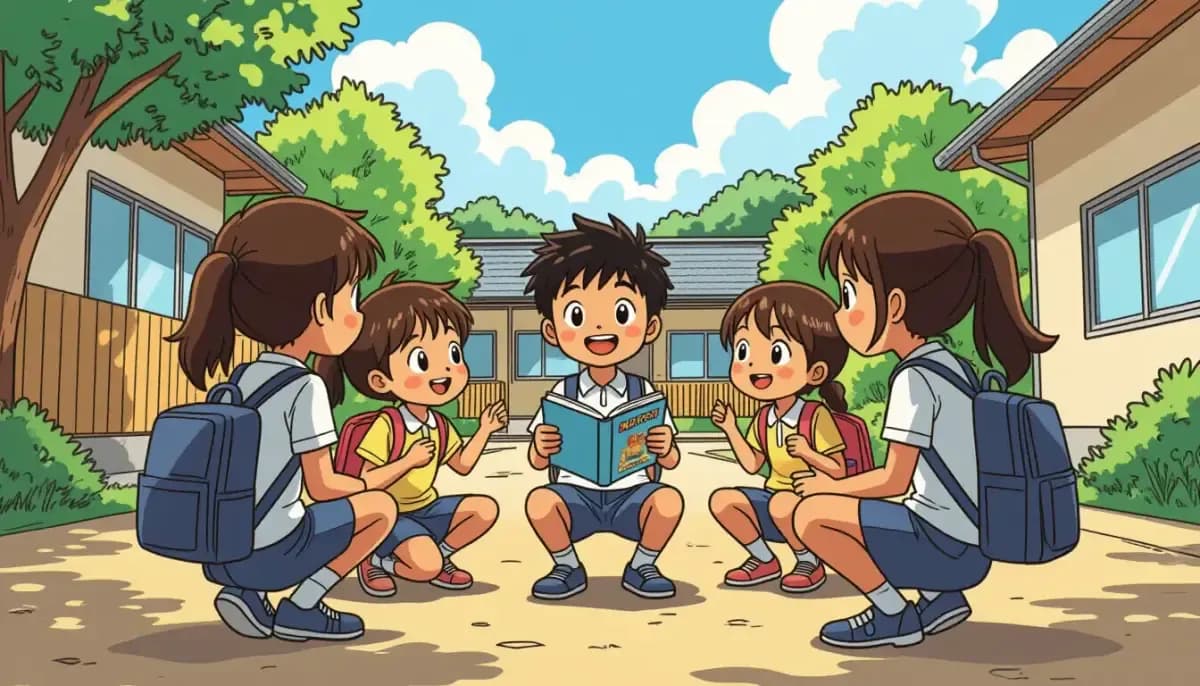
Practical strategies for helping your foreign child make friends in Japan. Learn about school choice, language learning, naraigoto activities, and how to navigate Japanese school culture as an expat family.
Helping Foreign Children Make Friends in Japan: A Practical Guide for Expat Families
Moving to Japan with children is an exciting adventure, but one of the most common concerns parents have is whether their kids will be able to make friends. Japan's society is famously cohesive and homogeneous, which can make social integration feel daunting — especially if your child doesn't yet speak Japanese. The good news is that children are remarkably adaptable, and with the right strategies and support, foreign kids can build meaningful friendships and thrive socially in Japan.
This guide draws on real experiences from expat families, educators, and research to give you practical, actionable advice for helping your child connect with peers in Japan — whether they're attending a local Japanese school or an international institution.
Understanding the Landscape: Foreign Children in Japan Today
Japan is home to more foreign residents than ever before. As of end-2024, there were 3.77 million foreign nationals in Japan — roughly 1.8 times the number from a decade ago. Of these, 129,000 foreign children are enrolled in public elementary and junior high schools (fiscal 2024 data), representing a 9% year-over-year increase.
Despite these growing numbers, social integration remains a real challenge. Research consistently shows that the language barrier is the #1 obstacle to friendship for foreign children. And the structural reality makes it harder: 70% of schools with foreign students have just 4 or fewer such children, which means most foreign kids are the only or one of very few "outsiders" in their class.
The stakes are significant. Foreign children who struggle to integrate socially also tend to fall behind academically. The high school progression rate for foreign children in Japan is just 47%, compared to 75% for Japanese nationals — a gap largely attributed to early linguistic and social struggles. Starting strong socially pays dividends long-term.
For more background on the educational context, read our Complete Guide to the Japanese Education System for Foreign Families.
The Language Factor: Why Japanese Is Non-Negotiable
Let's address the elephant in the room: your child will have an exponentially easier time making friends if they speak Japanese. This isn't a surprise, but it's worth being direct about.
Japanese children are generally polite and welcoming, but friendships develop through shared play, conversation, and humor — all of which require language. Even basic Japanese greetings, school vocabulary, and playground phrases go a long way toward breaking the ice.
Practical steps to prioritize language learning:
- Enroll your child in Japanese language tutoring before or immediately after arrival
- Use Japanese at home for simple daily routines — counting, colors, food names
- Find Japanese language learning apps designed for children (NHK World, Hiragana Quest)
- Encourage your child to watch Japanese cartoons — anime is a powerful cultural connector with peers
- Ask the school about Japanese as a Foreign Language (JFL) support programs; over 57,000 students received this support in fiscal 2023
Even partial Japanese ability signals effort and respect, which Japanese children and parents respond to positively. For structured approaches to language learning, see our guide on Teaching Japanese to Foreign Children: Methods and Resources.
![Foreign child learning Japanese with Japanese classmates at school]
School Choice: Local vs. International Schools
One of the biggest decisions affecting your child's social life is where they go to school.
| School Type | Language | Friendship Pool | Integration Speed | Cost |
|---|---|---|---|---|
| Local Japanese Public School | Japanese | Mostly Japanese children | Fast (if language learned) | Free |
| Local Japanese Private School | Japanese | Mostly Japanese children | Moderate | Moderate |
| International School | English/mixed | Mixed nationalities | Moderate | High (¥1M+/year) |
| ASIJ / BIS / etc. | English | Expat-heavy | Easy initially | Very High |
Local Japanese schools are the fastest path to Japanese language acquisition and deep friendship with Japanese children. The immersion is intense, but children who go through it typically form genuine, lasting bonds. Many expat families who have tried both routes say their children ultimately became more socially confident and had richer friendships in the Japanese school environment.
International schools offer an easier initial transition — your child won't feel linguistically isolated — but friendships there may be shallower long-term due to the high turnover of expat families. Children may also miss out on the cultural experience that makes Japan so unique.
Our comprehensive International Schools in Japan: The Definitive Guide covers every major school type if you're still deciding.
For guidance on local public school enrollment as a foreigner, visit Living in Nihon which covers the full settlement process for foreign residents in Japan.
Extracurricular Activities: The Secret Weapon
In Japan, naraigoto (習い事) — extracurricular activities — are the primary social container for children outside of school. Swimming lessons, piano, cram school (juku), soccer, baseball, calligraphy, and dance are all enormously popular. Children who participate in the same naraigoto form tight bonds through shared routines, performances, and competitions.
Why extracurriculars work so well for foreign children:
- Smaller groups mean your child gets more individual attention and faster relationship-building
- Activity-based interaction reduces the pressure of pure conversation — kids do things together rather than needing to talk constantly
- Structured repetition creates familiarity; your child sees the same peers weekly and relationships deepen naturally
- Shared achievement (recitals, swim meets, tournaments) creates emotional bonding moments
Top recommended activities for social integration:
- Swimming (スイミング): Nearly universal among Japanese children; great equalizer regardless of language ability
- Soccer / Baseball: Team sports with clear roles; children communicate through action
- Piano / Music lessons: Creates common cultural references with peers
- Calligraphy (書道): Japanese cultural activity that earns genuine peer respect
- Martial arts (judo, karate): Strong community ethos; instructors often take special interest in foreign students
Enroll your child in at least one local naraigoto as soon as possible — ideally in the first month of arrival.
For more on socializing strategies beyond childhood, For Work in Japan has useful resources on community building for foreign residents.
The Parent's Role: Building Your Own Network
Your child's friendships are partly a function of your own social connections. Japanese children's social lives are highly parent-mediated, especially in elementary school. Playdates are arranged between parents. Birthday party invitations go through parent LINE groups. School events are coordination opportunities.
What parents can do:
- Join the class LINE group immediately — this is where all practical coordination happens
- Attend every school event (undokai, school festivals, parent meetings) — visibility builds trust
- Volunteer at school — reading English aloud to classes, helping with school events — parents who volunteer become known and trusted
- Learn the names of your child's classmates and make small talk with their parents at pickup
- Organize the first playdate yourself — don't wait for an invitation; Japanese parents often feel they're imposing by asking first
- Celebrate Japanese seasonal events at home — setsubun, hinamatsuri, tanabata — gives your child shared cultural reference points with peers
The parent-to-parent relationship is often what makes or breaks a child's social integration. A friendly, engaged parent signals to Japanese families that yours is a family worth knowing.
For more on community building and expat family life in Japan, check out Chuukou Benkyou, a resource focused on education and life in Japan for families.
![Expat family participating in Japanese school sports day event with other families]
Addressing Challenges: Bullying and Exclusion
Japan has a well-documented bullying problem (ijime, いじめ), and visibly foreign children can be targets. This isn't universal — many foreign children are welcomed warmly — but it's important to be aware and proactive.
Warning signs to watch for:
- Sudden reluctance to go to school
- Coming home without having eaten lunch
- Unexplained loss of belongings
- Withdrawal from activities they previously enjoyed
- Vague complaints of stomachaches or headaches on school mornings
How to respond:
- Talk to the homeroom teacher immediately — don't wait or hope it resolves on its own
- Document in writing — email communications create a paper trail
- Contact the school counselor (if available) or the kyoiku soudan center (教育相談センター, educational counseling center)
- Escalate to the principal if the teacher doesn't respond effectively
- Contact external support — organizations like Tokyo English Life Line (TELL) offer counseling in English
Most Japanese teachers take ijime reports seriously and will intervene. The key is early, clear communication. See also our dedicated article on Mental Health and Emotional Wellbeing for Foreign Children in Japan for deeper support resources.
Long-Term Strategies for Lasting Friendships
Making friends is one thing; maintaining friendships over time requires continued effort. Here are strategies that work for the long haul:
- Maintain bilingual connections — encourage friendships with both Japanese and other international children; a diverse social network is resilient
- Keep extracurricular commitments — consistency is what deepens bonds
- Facilitate home visits — inviting classmates to your home (even once) significantly deepens friendships
- Use holidays wisely — Japanese summer break (July-August) and winter break are friendship-building opportunities if you plan activities with classmates
- Acknowledge your child's bicultural identity — children who feel proud of being "different" have an easier social time than those who feel ashamed of it
For perspective on the beautiful complexities of raising a child between cultures, our article on Cultural Identity for Hafu and Mixed-Race Children in Japan offers thoughtful guidance.
For broader context on raising bilingual children, our guide on Raising Bilingual Children in Japan: Strategies and Support is also recommended reading.
For general expat friendship-building beyond the school context, Making Friends in Japan: Socializing Tips and Expat Communities offers excellent practical advice.
For statistics and research on foreign children in Japanese schools, Japan Today's coverage and Nippon.com's in-depth analysis are authoritative resources.
Key Takeaways
Helping your foreign child make friends in Japan is very achievable with the right approach:
- Prioritize Japanese language learning from day one — it is the single biggest unlock
- Choose school type carefully — local schools offer deeper integration despite the harder start
- Enroll in naraigoto (extracurricular activities) immediately — this is where Japanese childhood friendships are made
- Be socially active as a parent — your relationships with other parents directly facilitate your child's friendships
- Attend every school event and volunteer when possible — visibility matters
- Watch for signs of bullying and act quickly if they appear
- Celebrate your child's unique bicultural identity — it's an asset, not a burden
Japan is a wonderful place to raise children, and the friendships your child forms here — forged through shared language, culture, and experience — can be among the most meaningful of their lives. The investment of effort in those early months of arrival pays lasting dividends.

Originally from Vietnam, living in Japan for 16+ years. Graduated from Nagoya University, with 11 years of professional experience at Japanese and international companies. Sharing practical information for foreign parents raising children in Japan.
View Profile →Related Articles
Sibling Relationships in Multicultural Families
A practical guide to sibling dynamics in multicultural families in Japan. Learn how to strengthen bonds, navigate cultural differences, and support your children's identity development.
Read more →
Building Social Confidence in Your Child
Practical strategies for foreign parents raising socially confident children in Japan. Covers Japanese parenting philosophy, research-backed techniques, community resources, and expat-specific challenges.
Read more →
Summer Camps and Group Activities for Making Friends
Discover the best summer camps and year-round group activities to help your children make friends in Japan. Practical guide for expat families with activity recommendations by age.
Read more →
Online Friendships and Safety for Children in Japan
A complete guide to online friendships and internet safety for children in Japan. Learn about Japanese platforms, legal protections, school guidelines, and how to keep your child safe online as a foreign family in Japan.
Read more →
Maintaining Friendships After Moving Within Japan
Learn how to maintain friendships after moving within Japan. Essential tips on LINE, communication strategies, rebuilding your social circle, and navigating Japan's unique social culture as an expat.
Read more →
Shy and Introverted Children in Social Japan
How to support shy and introverted children in Japan's conformity-driven social culture. Practical strategies for foreign parents on school, activities, and mental health resources.
Read more →