
City vs Suburb: Choosing Where to Raise Your Family in Japan

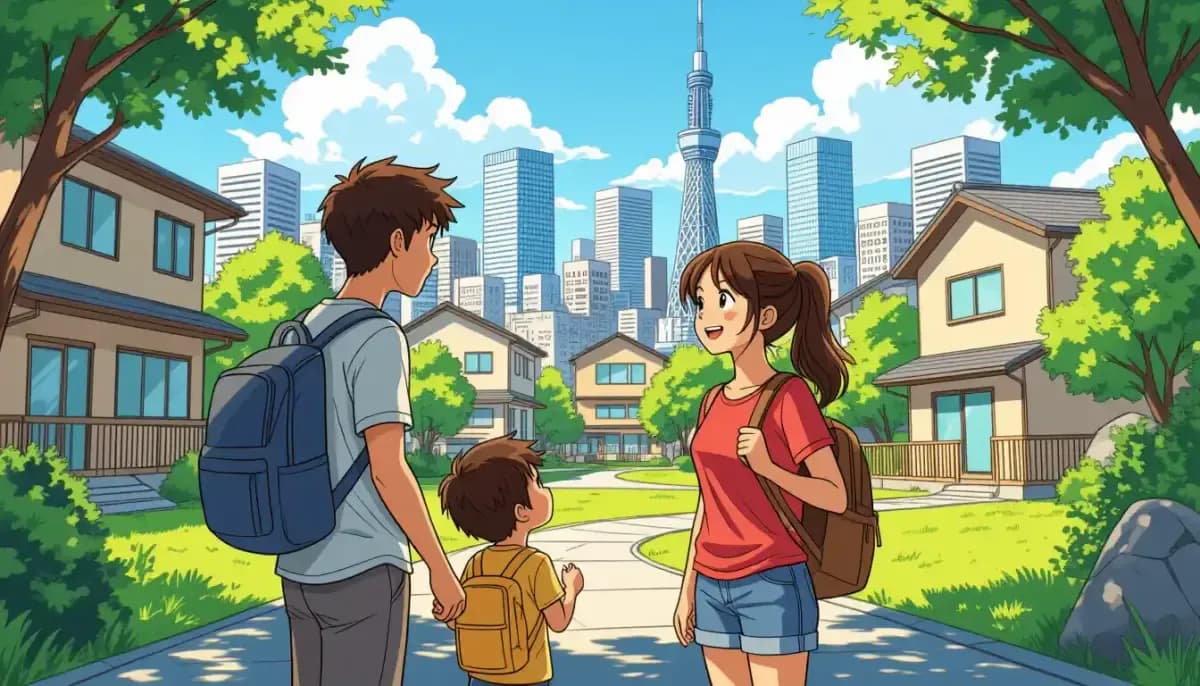
City center or suburb — which is better for raising a family in Japan? Compare costs, schools, space, and commutes to find the right location for your expat family.
City vs Suburb: Choosing Where to Raise Your Family in Japan
One of the most consequential decisions you'll make as a foreign parent in Japan is where to live. The choice between a city center apartment and a suburban home shapes everything: your children's school options, your daily commute, your budget, your family's social life, and the kind of childhood your kids will experience. Japan offers remarkably diverse living environments within short distances of each other — yet the differences between urban and suburban life here are significant enough to matter for families at every stage.
This guide breaks down the key factors foreign families need to weigh when choosing between city and suburban living in Japan, with practical data and real-world considerations to help you make the right call for your household.
Cost of Living: The Numbers That Drive Most Decisions
Housing is the biggest budget line for most families, and the gap between city center and suburb is substantial. Monthly living costs in central Tokyo run approximately ¥190,000–¥255,000, while suburban and rural areas come in at ¥85,000–¥140,000 per month — a difference of roughly ¥1 million per year. Central Tokyo condos average around ¥78.3 million ($550,000), while comparable properties in outer suburbs like Saitama or Chiba are typically 20–40% less expensive.
Rental prices follow a similar pattern. A 3LDK (three bedroom with living, dining, and kitchen) in Setagaya Ward in western Tokyo might run ¥180,000–¥250,000 per month. The same layout in a suburb 30–40 minutes by train could cost ¥120,000–¥160,000. For families with multiple children, that gap compounds quickly.
What's different in Japan compared to many Western countries is that suburban housing doesn't necessarily mean sacrificing quality of life. Japan's suburbs are well-served by public transit, have excellent supermarkets, hospitals, and parks, and often feel genuinely residential rather than sprawling and car-dependent. For a full breakdown of cost factors affecting expat families, Living in Nihon's guide to rural vs. city living has detailed budget comparisons worth reviewing.
Housing Space and Layout: What Your Family Actually Lives In
City center apartments in Tokyo and Osaka tend to be compact — 1LDK or 2LDK units designed for singles or couples. Finding a 3LDK or larger in a central location at a reasonable price is challenging. Suburban homes, by contrast, frequently offer 3LDK or 4LDK layouts with private entrances, small gardens, and dedicated parking.
For families with young children, space matters in concrete ways: room for toys and study desks, outdoor areas for kids to play, storage for bicycles and seasonal gear. Many foreign families find that the jump to a suburban detached house or larger apartment dramatically improves daily quality of life compared to cramming into a tight city-center unit.
Japanese suburban houses often include:
- Separate children's rooms for older kids
- A tatami room that doubles as a guest or play space
- A small outdoor area for summer paddling pools or garden play
- Parking for a family car, which becomes essential in less transit-connected areas
If schooling is a priority for your family, note that some international schools are clustered in specific suburban areas, making proximity a relevant factor in your location search.
Schools and Education: Navigating Options by Location
Japan's public school system maintains remarkably consistent quality across most areas, which means that in terms of elementary and junior high education, choosing a suburb doesn't necessarily mean worse schooling. However, certain location-specific factors are worth knowing.
International schools are concentrated in Greater Tokyo (particularly Yokohama, western Tokyo, and Saitama), Kobe-Osaka corridor, and Nagoya. If you're committed to an international school curriculum, proximity matters — and some schools have very limited bus service. Our guide to international schools in Japan covers options by region.
Japanese public schools in suburban areas sometimes have smaller class sizes and more community involvement, though this varies widely. Urban schools in areas with large foreign populations (like Minato Ward in Tokyo or Namba in Osaka) may have more experience supporting non-Japanese-speaking students and families. For more on navigating the Japanese school system as a foreign parent, see the Japanese education system guide for foreign families.
Cram schools (juku) and extracurricular activities are widely available in suburbs, though the selection may be narrower than in city centers. This matters more as children reach middle school age when exam prep becomes common. See chuukoubenkyou.com for resources on Japanese exam preparation and educational support options.
Commute and Work-Life Balance: What Parents Actually Experience
The suburban trade-off most foreign workers struggle with is commute time. If your workplace is in central Tokyo, Osaka, or Nagoya, a suburban home often means 45–70 minutes each way on the train — compared to 15–25 minutes from a central city apartment.
In Japan, this means:
- Later arrivals home for working parents
- Less time for evening family activities on weekdays
- Higher commuter rail pass costs (though often covered by employers)
- More reliance on the non-working parent for school drop-offs and pickups
That said, Japan's train system makes suburban commuting dramatically more pleasant than car-based commuting elsewhere. You can read on the train, nap, or handle emails. Many foreign workers find 45-minute train commutes from leafy suburbs perfectly manageable in a way that a 30-minute car commute in traffic is not.
Remote and hybrid work has also shifted this calculus for many expat families since 2020. If you're working from home two or three days per week, a longer theoretical commute matters less in practice. For information on work arrangements and family financial planning, see financial planning for expat families in Japan.
Safety, Community, and Quality of Family Life
Japan's famously low crime rates apply across both urban and suburban environments — you don't need to choose suburbs for safety reasons the way you might in some other countries. That said, suburban neighborhoods do offer some family-specific advantages:
More outdoor play space. Suburban parks tend to be larger and less crowded. Children can move more freely, and the street-level environment is less intense than a city neighborhood.
Stronger neighborhood community. Japanese suburban neighborhoods (chōnaikai) often have more active community associations, local festivals, and neighbor relationships. This can help children integrate and give parents a social network. For foreign families, being the only non-Japanese household in a small suburb can cut both ways — it may accelerate Japanese language acquisition and cultural integration, or it may feel isolating depending on the community.
Fewer English-language services. Urban areas with large expat populations have English-speaking doctors, international supermarkets, and foreign-resident support services that suburban areas typically lack. For health insurance and medical access for foreign families, this guide from For Work in Japan is a useful reference regardless of where you live.
Government relocation incentives. The Japanese government offers subsidies of up to ¥1 million for families relocating from major cities to rural and suburban areas. This policy is intended to address population imbalance, and some municipalities offer additional child-rearing support. See government benefits and subsidies for families in Japan for details.
City vs Suburb: Side-by-Side Comparison
| Factor | City Center | Suburb (30-60 min from center) |
|---|---|---|
| Monthly living costs | ¥190,000–¥255,000 | ¥85,000–¥140,000 |
| Typical family apartment | 2LDK, ~50–60m² | 3–4LDK, ~80–110m² |
| Commute to central business district | 15–25 min | 45–70 min |
| Average purchase price (Tokyo) | ¥78.3M+ | 20–40% lower |
| International school access | Moderate (Minato, Yokohama) | Good (western Tokyo, Chiba, Saitama) |
| English-language services | High | Low to moderate |
| Outdoor/play space | Limited | Ample |
| Community integration | Faster (expat community) | Deeper (local immersion) |
| Government family incentives | Minimal | Available up to ¥1M |
| Public school quality | High | High (consistent) |
Best Areas for Foreign Families: Specific Recommendations
Based on consistently cited recommendations for expat families:
For city-leaning families:
- Setagaya Ward, Tokyo — Residential with parks, well-connected, international schools accessible. Among the most recommended Tokyo wards for families.
- Minato Ward, Tokyo — High expat density, English-language services, but expensive and compact.
- Namba/Umeda adjacent areas, Osaka — Central with family amenities, more affordable than Tokyo.
For suburb-leaning families:
- Kichijoji (Musashino City) — Often voted Japan's most desirable place to live; leafy, excellent shopping and parks, 15 minutes from Shinjuku.
- Den-en-Chofu — Prestigious residential suburb, large homes, quiet atmosphere, strong school options.
- Jiyugaoka — Charming suburban feel within Tokyo's city limits; café culture, good schools, accessible.
- Yokohama (Kanagawa) — Full city facilities with lower costs than central Tokyo; large international community and several international schools.
- Nishinomiya / Ashiya (Hyogo) — Between Osaka and Kobe; popular with expat families, excellent schools including international options.
For families with children approaching middle or high school age, see the junior high school guide for foreign families in Japan and high school options guide for how location affects secondary education choices.
Making the Decision: Questions to Ask Your Family
Before committing to city or suburb, work through these practical questions:
- Where is your workplace? If you're in a specific district, map realistic commute times from candidate neighborhoods.
- What school type are you targeting? International, Japanese public, or a mix — this constrains geography more than almost anything else.
- How many children do you have or plan to have? Each additional child increases the value of space and outdoor access.
- Is your stay in Japan long-term or short-term? Short-term expats may prioritize central location for experience and networking; long-term residents often shift toward suburban stability.
- What's your Japanese language level? Lower-language families may benefit from urban expat infrastructure initially, then consider moving suburban as skills develop.
- Does your employer offer housing subsidies? This significantly affects the cost calculation.
For more on the legal and visa considerations tied to residence registration (which connects to your home address), see visa and legal issues for foreign families with children in Japan.
Conclusion
There's no universally correct answer for foreign families choosing between city and suburb in Japan — the right choice depends on your work situation, budget, children's ages, language level, and personal priorities. What is consistent across the research is this: Japan's suburban areas offer genuine quality of life, excellent safety, and significantly lower costs than city centers, at the price of longer commutes and reduced access to English-language services. City living gives you convenience, expat community infrastructure, and cultural immersion — at a premium.
Most foreign families who stay in Japan long-term ultimately land in the suburbs, finding that the financial and space benefits compound over time. But there's real value in starting central, especially when you're new to Japan and still building language skills and local networks. Many families do both: start in a central apartment, then move to a suburb once they've found a school, established a routine, and decided they're staying.
Whatever you choose, Japan is a genuinely excellent place to raise children — and that holds true whether your address is a Minato Ward high-rise or a Setagaya house with a small garden. For a detailed comparison of city and rural/suburban living from an expat perspective, see Living in Nihon's comprehensive guide and the Tokyo suburbs guide for expat families from Japan Dev.

Originally from Vietnam, living in Japan for 16+ years. Graduated from Nagoya University, with 11 years of professional experience at Japanese and international companies. Sharing practical information for foreign parents raising children in Japan.
View Profile →Related Articles
Cost of Family Housing by Region in Japan
Compare family housing costs across Japan's major regions — Tokyo, Osaka, Fukuoka, Sapporo and more. Includes rent tables, move-in cost guide, and tips for foreign families renting in Japan.
Read more →
Safety Considerations for Family Neighborhoods in Japan
A complete guide to safety considerations for foreign families choosing neighborhoods in Japan — covering crime statistics, natural disaster risk, safest wards, and practical daily safety tips for expat families with children.
Read more →
Parks and Green Spaces Near Family Housing
Complete guide to parks and green spaces near family housing in Japan. Compare Tokyo wards, city rankings, park types, seasonal tips, and what to look for when choosing a family neighborhood with good outdoor access.
Read more →
Moving with Children Within Japan: A Practical Guide
A complete guide to moving with children within Japan for foreign families — school transfers, address change procedures, healthcare continuity, and tips for helping kids adjust emotionally to their new home.
Read more →
School Districts and How They Affect Housing Choices
Learn how Japan's school district (gakku) system works and how it affects housing choices for foreign families. Research districts, understand pricing premiums, and find the right neighborhood for your child's education.
Read more →
International Areas with Diverse Communities in Japan
Discover Japan's most international and diverse communities — from Tokyo's Shin-Okubo Korean Town to Yokohama Chinatown, Osaka's Ikuno Ward, and beyond. A complete expat guide.
Read more →