
Cyberbullying Among Children in Japan

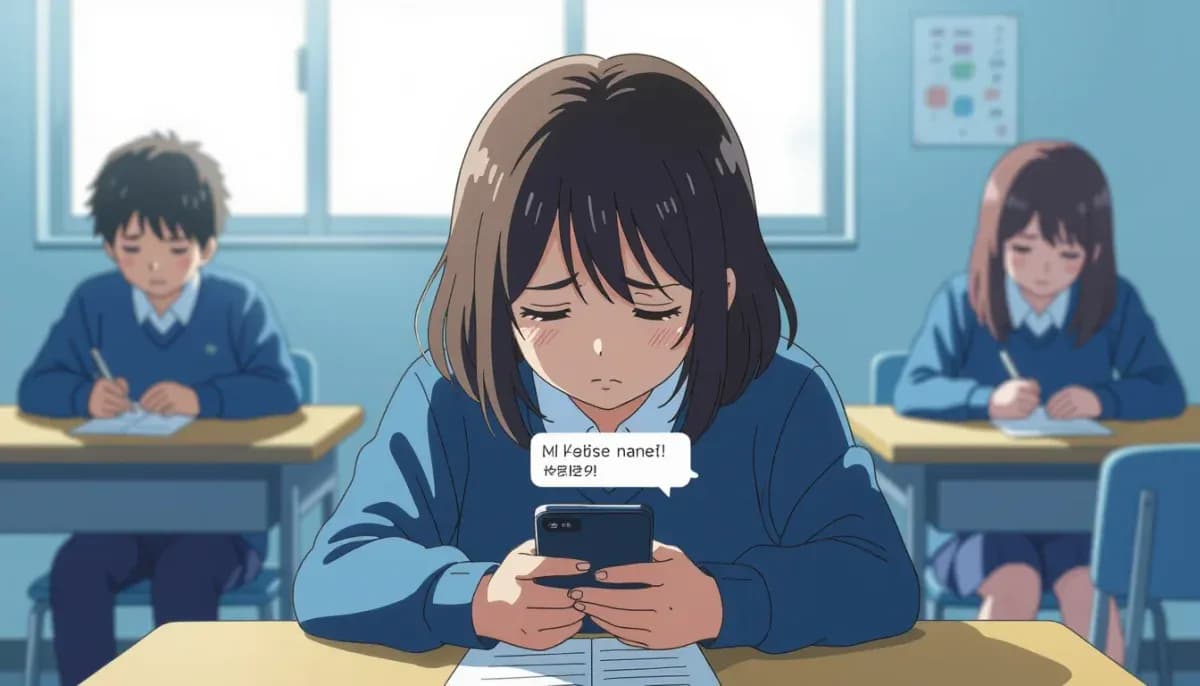
Learn how cyberbullying works in Japan, key statistics, Japan's legal framework, warning signs to watch for, and how foreign parents can protect their children and get help.
Cyberbullying Among Children in Japan: A Complete Guide for Foreign Families
As a foreign parent raising children in Japan, understanding the landscape of online bullying is essential — especially when Japanese social dynamics and digital culture combine in ways that may surprise even tech-savvy expat families. Japan has one of the world's highest rates of youth internet usage, and cyberbullying has emerged as a serious and growing concern in schools across the country.
This guide explains what cyberbullying looks like in Japan, how schools and the government respond, what warning signs to watch for, and how you as a foreign parent can protect your child and seek help.
The Scale of Cyberbullying in Japan: Key Statistics
Japan's Ministry of Education reports alarming figures. In fiscal year 2022, approximately 23,920 cyberbullying cases were officially reported by schools — and educators believe the true number is significantly higher, since many children never tell an adult.
The broader picture of bullying in Japan is even more striking. In fiscal year 2024, schools recorded 769,022 total bullying cases, a record high and a 5% increase from the previous year. Among those, 1,405 were classified as serious cases causing major harm to students.
Internet access is nearly universal among Japanese youth. According to national surveys:
- 98.7% of children ages 10–17 use the internet
- 83.2% use smartphones
- High schoolers average 6 hours and 14 minutes online on weekdays
- 46% of children surveyed in June 2024 had experienced difficulties related to internet use
Japan's most popular platforms among teenagers (ages 10–19) include:
| Platform | Usage Rate (Ages 10–19) |
|---|---|
| LINE | 95.0% |
| YouTube | 94.3% |
| 72.9% | |
| TikTok | 70.0% |
| X (formerly Twitter) | 65.7% |
Academic research paints a nuanced picture of who is affected. One study found that 22% of Japanese youth had experienced cybervictimization, while 7.8% admitted to cyberbullying others. A second study found that girls (14.5%) were slightly more likely to be victimized than boys (11.3%).
How Cyberbullying Works in Japan: Unique Patterns
Cyberbullying in Japan has distinctive characteristics that differ from what many Western families may expect. Understanding these patterns can help you identify problems earlier.
The LINE Group Dynamic
LINE is Japan's dominant messaging app, used by nearly everyone from elementary school students to grandparents. Much of Japanese cyberbullying happens inside closed LINE group chats. Common tactics include:
- Excluding a child from a group chat shared by the whole class
- Posting derogatory comments in LINE profile status messages where the target may not see them
- Creating a "hidden group" that excludes and mocks one specific student
- Pressuring children to respond immediately to messages (delayed responses are seen as disrespect)
Because these attacks happen in private closed groups, parents and teachers often have no visibility into what is occurring until the situation has escalated significantly.
Overlap with Offline Bullying
In Japan, cyberbullying rarely exists in isolation. Research consistently shows that most victims know their tormentors personally — these are classmates, not strangers. Online harassment almost always accompanies and amplifies in-person exclusion or bullying at school. The digital space extends the reach of traditional ijime (いじめ, bullying), making it impossible for victims to escape even at home.
Anonymous Posting and Rumor Spreading
Some cyberbullying involves posting rumors, embarrassing photos, or manipulated images on public platforms like X (Twitter), Instagram, or anonymous boards. Japan has a strong culture of anonymous online communication, and this can be exploited to damage a student's reputation without clear accountability.
The Emotional and Academic Impact on Children
The consequences of cyberbullying are severe and well-documented. Children who experience online harassment commonly show:
- Declining academic performance and loss of motivation
- School refusal (futoko, 不登校) — Japan reported over 344,000 cases of school refusal in FY2023
- Anxiety, depression, and social withdrawal
- Sleep disturbances and physical complaints (stomachaches, headaches)
- In serious cases, self-harm and suicidal ideation
Japan has been shaken by high-profile tragedies. In 2020, professional wrestler Hana Kimura (age 22) died by suicide after a coordinated social media harassment campaign following her appearance on the reality TV show Terrace House. Her death prompted national outrage and directly drove legislative reform.
In November 2020, a sixth-grader in Tokyo died by suicide following tablet-based harassment. In February 2022, a 15-year-old in Osaka died by suicide linked to LINE chat harassment. These cases underscore that cyberbullying can have fatal consequences, and early intervention is critical.
For foreign children, the emotional burden may be even heavier. A child navigating language barriers, cultural differences, and social isolation already has additional stress — adding cyberbullying to that mix can be devastating. This is why foreign parents need to be especially proactive.
You can learn more about supporting your child's mental health in our guide: Mental Health and Emotional Wellbeing for Foreign Children in Japan.
Japan's Legal Framework: Laws Against Cyberbullying
Japan has strengthened its legal response to cyberbullying significantly in recent years.
The 2013 Ijime Prevention Methods Promotion Law
This foundational law (Ijime Boshi Taisaku Suishin Ho) requires:
- Schools to conduct regular bullying surveys among students
- Immediate reporting of suspected serious bullying cases to local education boards
- Schools to have structured response systems and designate a bullying prevention coordinator
- Ongoing educator training on identifying and responding to bullying
Under this law, "cyberbullying" is explicitly included in the definition of ijime, giving schools legal authority and responsibility to respond even when harassment occurs outside school grounds.
The 2022 Penal Code Amendment: Criminalizing Online Insults
Driven by Hana Kimura's death and sustained advocacy from her mother, Japan revised its Penal Code in 2022. Key changes:
- Online insults are now punishable by up to one year in prison and a fine of up to approximately ¥300,000 (~$2,000 USD)
- Previously, online insults carried only a minor fine with no imprisonment
- The legal process for prosecuting cyberbullying was also streamlined
This was a landmark shift — for the first time, Japan made it meaningfully criminal to harass someone online, not just morally wrong.
Internet Safety Regulations for Minors
Japan's 2008 Act on Development of an Environment that Provides Safe and Secure Internet Use for Young People (revised 2018) requires:
- Mobile carriers to offer content filtering by default for users under 18
- App stores and platforms to implement age verification
- Schools to include internet safety education in curricula
For more on Japan's legal environment affecting your family, see our guide: Visa and Legal Issues for Foreign Families with Children in Japan.
Warning Signs Your Child May Be Experiencing Cyberbullying
As a parent, watch for these behavioral changes:
- Visible distress during or after using their phone or computer
- Suddenly stopping use of devices they previously loved
- Becoming secretive about online activity, hiding screens
- Withdrawing from friends, family activities, or previously enjoyed hobbies
- Declining grades or sudden refusal to go to school
- Sleeping poorly, losing appetite, or frequent physical complaints
- Expressions of hopelessness or statements about not wanting to be around
If your child shows several of these signs, have a calm, non-judgmental conversation. Let them know they will not be punished for something someone else did to them online. For foreign families, language barriers can complicate these conversations — consider using drawings, a bilingual counselor, or a trusted interpreter to create a safe space.
How to Report Cyberbullying in Japan
If you believe your child is being cyberbullied, here are the concrete steps to take:
1. Document everything. Take screenshots of offensive messages, posts, or group chats before anything is deleted. Note dates, times, and platform names.
2. Report to the school. Under the 2013 law, schools are legally required to respond. Request a meeting with the homeroom teacher (tantou kyoushi), the school counselor (sukuuru kaaunseraa), and if necessary, the vice principal. Ask what specific steps the school will take.
3. Contact the school board (*kyoiku iinkai*). If the school response is inadequate, escalate to the local board of education. Most cities have dedicated bullying response offices.
4. Report to the platform. Most platforms operating in Japan have Japanese-language reporting tools. Have a bilingual friend or your ward office help you file a takedown request if needed.
5. File a police report if there are threats. If your child receives threatening messages or the harassment involves criminal behavior (stalking, extortion, explicit image sharing), contact your local police and ask for the cybercrime division (saibaa hanzai taisaku shitsu).
6. Seek mental health support. Counseling for both child and parent is often essential. TELL Japan provides English-language mental health support and crisis counseling.
For more information on navigating Japan's school system as a foreigner: Junior High School in Japan: Guide for Foreign Families.
Support Resources for Foreign Families
| Resource | Contact | Language |
|---|---|---|
| TELL Lifeline | 03-5774-0992 (9am–11pm daily) | English |
| TELL Lifeline (toll-free) | 0800-300-8355 | English |
| TELL Anti-Bullying Workshops | telljp.com/outreach/antibullying | English |
| Tokyo Education Consultation (English) | 03-3360-4175 | English |
| 24-Hour Children's SOS Hotline | 0120-0-78310 | Japanese |
| Childline Japan | 0120-99-7777 (4–9pm) | Japanese |
| Cyberbullying Research (Japan data) | cyberbullying.org | English |
Japan's Children and Families Agency established a new working group in November 2024 to develop updated online child protection policies, signaling that more legal protections may be on the way.
For a detailed look at Japan's bullying statistics and school response systems, Savvy Tokyo has a useful English-language overview at savvytokyo.com.
Practical Prevention: What You Can Do at Home
Prevention is always better than crisis response. Here are evidence-based steps foreign parents can take:
Set up open communication early. Establish regular, low-pressure conversations about your child's online life — who they talk to, what apps they use, what feels fun vs. uncomfortable. Do this before any problem arises.
Use parental controls with explanation. Japan's carriers and most devices offer parental filtering. Install them, but explain why — children who understand the reasons behind rules are more likely to come to you when something goes wrong.
Know their platforms. Create accounts on LINE, Instagram, and whatever platforms your child uses. You don't need to monitor every message, but understanding how these apps work helps you ask meaningful questions.
Teach them what to do if targeted. Practice the response: don't reply, take a screenshot, tell a trusted adult immediately, and block the person. Role-play this scenario so they have a plan when emotions are running high.
Stay connected to the school. Attend parent-teacher meetings (kanndankai), read school newsletters, and build a relationship with the homeroom teacher. Teachers who know you are engaged are more likely to contact you early if they notice something concerning.
For bilingual parenting strategies that can help your child navigate Japanese social culture more effectively, see: Raising Bilingual Children in Japan: Strategies and Tips.
Additional Reading and Resources
For broader context on Japanese education and child welfare policy, Nippon.com has published two excellent in-depth analyses:
- Social Media Risks and Government Policy for Japanese Youth — covers platform use statistics, risk categories, and government responses
- Cyberspace Safety and OECD Frameworks — covers international comparison, expert recommendations, and policy gaps
The 2022 reform to Japan's Penal Code was a landmark moment. The Diplomat covered this in detail: Japan Toughens Penalties for Cyberbullying.
For expat families seeking community support and general guidance on living in Japan, Living in Nihon and For Work in Japan offer practical resources covering many aspects of daily life in Japan.
For parents interested in the cultural dimension of Japanese schooling and how academic pressure intersects with social dynamics, visit Chuukou Benkyou for resources related to Japanese middle and high school education.
Conclusion
Cyberbullying among children in Japan is a serious and growing problem — one that affects both Japanese students and foreign children living here. The country has made meaningful legislative progress in recent years, and schools are legally required to respond. But the burden often still falls on parents to notice warning signs, document incidents, escalate appropriately, and provide emotional support.
As a foreign parent, you may face additional barriers: language, unfamiliarity with the school system, and cultural norms around silence and conflict avoidance. The most important thing you can do is create a home environment where your child feels safe telling you when something goes wrong online — and make sure they know that no matter what, you are on their side.
If your family is navigating a cyberbullying situation right now, please reach out to TELL Japan (03-5774-0992) for English-language support. You do not have to handle this alone.

Originally from Vietnam, living in Japan for 16+ years. Graduated from Nagoya University, with 11 years of professional experience at Japanese and international companies. Sharing practical information for foreign parents raising children in Japan.
View Profile →Related Articles
Recovery and Building Resilience After Being Bullied
Learn how to help your child recover from bullying (ijime) in Japan. Practical steps, support resources, and proven resilience strategies for foreign families navigating Japanese schools.
Read more →
Bullying Prevention Strategies Parents Can Use
Learn effective bullying prevention strategies for parents raising children in Japanese schools. Understand ijime culture, warning signs, school escalation steps, and English support resources for expat families.
Read more →
When to Consider Changing Schools Due to Bullying
Learn the warning signs, escalation steps, and school transfer process for bullied children in Japan. A practical guide for foreign parents navigating ijime in Japanese schools.
Read more →
Peer Pressure and Conformity Challenges in Japanese Schools
Understand how conformity culture and peer pressure affect children in Japanese schools — especially foreign and mixed-heritage kids. Practical strategies, warning signs, and expert guidance for expat families.
Read more →
The Role of Teachers in Preventing Bullying in Japan
Learn how Japanese teachers prevent and respond to bullying (ijime). Understand the 2013 law, teacher responsibilities, systemic barriers, and what foreign parents can do.
Read more →
Bullying of Foreign Children in Japanese Schools
Foreign children in Japan face a 52.2% bullying rate if they speak a non-Japanese language at home. Learn the warning signs, how to report ijime, and what resources are available to protect your child.
Read more →