
Japanese School Uniforms and Dress Codes: What Parents Need to Know

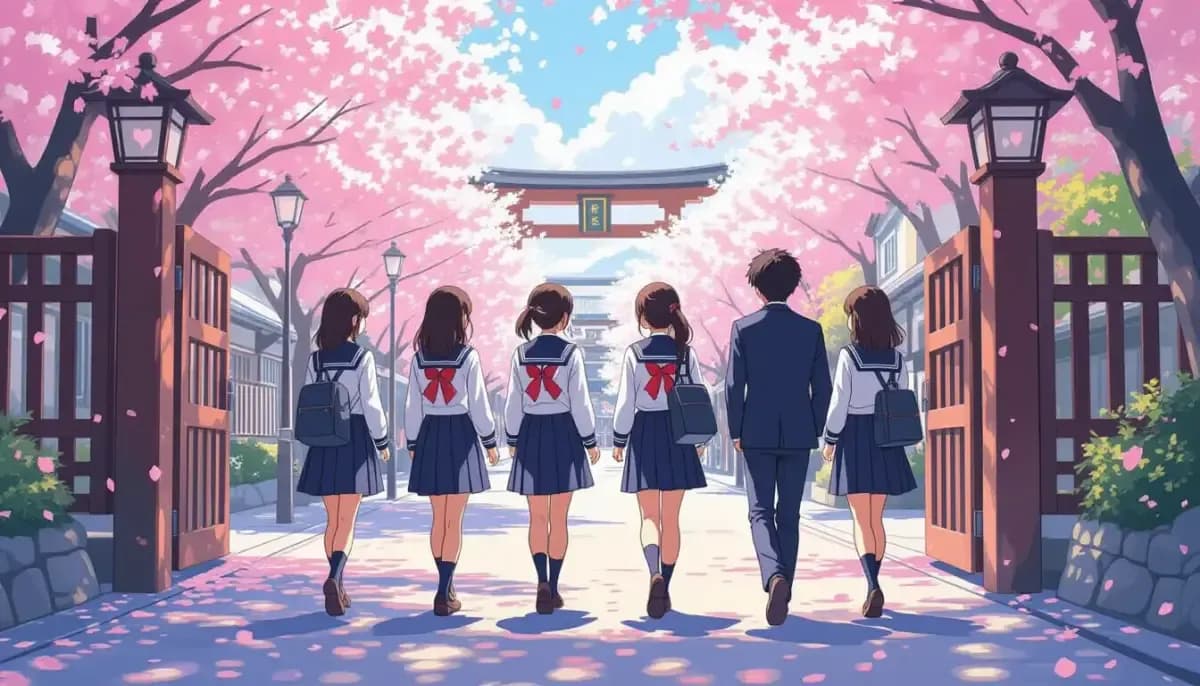
Complete guide to Japanese school uniforms and dress codes for foreign parents. Learn about uniform types, costs, strict appearance rules, where to buy, and recent policy changes including gender-neutral options.
Japanese School Uniforms and Dress Codes: What Parents Need to Know
If you are a foreign parent raising children in Japan, one of the first things you will notice about the school system is the iconic school uniform. From the classic sailor-style outfits to the military-inspired gakuran, Japanese school uniforms are deeply embedded in the country's educational culture. Understanding the uniform requirements, costs, and dress code rules will help you prepare your child for a smooth transition into Japanese school life.
Whether your child is entering elementary school, junior high school, or high school, this guide covers everything you need to know about Japanese school uniforms and dress codes.
Do All Japanese Schools Require Uniforms?
Not every school in Japan mandates a uniform, but the majority do. The requirements vary significantly depending on the school level and whether the institution is public or private.
Public elementary schools generally do not require uniforms. Children typically attend in their own clothing, though some schools have a simple dress code or recommend specific items like indoor shoes (uwabaki) and a hat for commuting. However, about 10-15% of public elementary schools do have uniform requirements.
Private elementary schools almost universally require uniforms, often with distinctive designs that reflect the school's identity.
Junior high and high schools — both public and private — require uniforms in the vast majority of cases. This is the level where dress codes become particularly strict and comprehensive.
If you are considering an international school, uniform policies vary widely. Some follow Western-style dress codes while others adopt Japanese uniform traditions.
Types of Japanese School Uniforms
Japanese school uniforms come in several distinct styles, each with its own history and cultural significance.
Sailor Fuku (Sailor Uniform)
The sailor fuku is the traditional girls' uniform, inspired by European naval uniforms introduced to Japan in the early 20th century. It typically consists of a white blouse with a large sailor collar, a pleated skirt, a neckerchief or ribbon, knee-high socks, and black or brown leather shoes. This style remains popular at many junior high schools across the country.
Gakuran (Boys' Military-Style Uniform)
The gakuran is the classic boys' uniform featuring a black or dark navy standing-collar jacket with gold buttons, straight-leg trousers, and leather shoes. The design traces back to Prussian military uniforms adopted during the Meiji era.
Blazer-Style Uniforms
Many modern schools have shifted to blazer-style uniforms for both boys and girls. These typically include a blazer jacket, dress shirt, tie or ribbon, and either trousers or a plaid skirt. Blazers are considered more practical and contemporary, and their popularity has been growing steadily.
| Uniform Type | Typical Wearers | Key Features | Common At |
|---|---|---|---|
| Sailor Fuku | Girls | Sailor collar, pleated skirt, neckerchief | Junior high, some high schools |
| Gakuran | Boys | Standing collar, gold buttons, dark color | Junior high, some high schools |
| Blazer Style | Boys and Girls | Blazer jacket, tie/ribbon, modern look | High schools, newer schools |
| Casual/No Uniform | All | Free clothing choice | Most public elementary schools |
How Much Do School Uniforms Cost?
School uniform costs can be a significant expense for families, and prices have been rising in recent years. According to a survey by Save the Children Japan, the average cost of high school uniforms rose by more than ¥10,000 in a single year.
Here is a breakdown of typical uniform costs by school level:
| School Level | Uniform Set Cost | Additional Items | Total Estimated Cost |
|---|---|---|---|
| Elementary (if required) | ¥10,000–¥30,000 | Randoseru bag: ¥40,000–¥80,000 | ¥50,000–¥110,000 |
| Junior High School | ¥30,000–¥70,000 | Gym clothes, indoor shoes | ¥40,000–¥90,000 |
| High School | ¥40,000–¥100,000 | Seasonal items, accessories | ¥50,000–¥120,000 |
These costs typically include both the summer and winter uniform sets. Additional expenses include gym uniforms (taiiku-gi), indoor shoes (uwabaki), school bags, and sometimes specific coats or rainwear.
Tips to Save on Uniform Costs
- Buy secondhand: Many schools and community groups organize uniform recycling events (osagari) where families can buy gently used uniforms at reduced prices.
- Check school co-ops: Some schools have cooperative shops that offer discounts.
- Purchase early: Ordering during off-peak periods can sometimes save money.
- Municipal subsidies: Low-income families may qualify for financial support programs that cover uniform expenses.
For more about managing family expenses in Japan, check out the complete guide to family life at For Work in Japan.
Seasonal Uniform Changes
Japanese schools typically have two official uniform sets: one for summer and one for winter. The transition between them follows a structured schedule.
Winter uniforms (October to May) feature heavier fabrics, long sleeves, sweaters or vests, and jackets. Girls wear longer skirts or tights, and boys wear their full gakuran or blazer ensemble.
Summer uniforms (June to September) are lighter, with short-sleeved shirts, thinner fabrics, and fewer layers. Some schools allow polo shirts during the hottest months.
The changeover period is called koromogae (衣替え), a tradition that dates back centuries in Japanese culture. Schools announce specific dates when students must switch between summer and winter uniforms. During a brief transition period, students may be allowed to mix items from both sets.
Understanding this seasonal cycle is important for budgeting, as you will need to purchase both sets when your child enters a new school. Learn more about navigating the Japanese school system in the education guide for foreign families on Living in Nihon.
Strict Dress Code Rules Beyond the Uniform
The Japanese school dress code extends far beyond just the uniform itself. Schools regulate nearly every aspect of a student's appearance, and these rules are enforced consistently for all students, including foreign children.
Hair Rules
- Hair must be kept in its natural color — dyeing is strictly prohibited
- Boys are generally required to keep their hair short and neat
- Girls' hair must be tidy; some schools specify maximum length or require hair ties
- Perms and elaborate hairstyles are not allowed
- Some schools still require students with naturally non-black hair to submit proof of their natural hair color
Makeup and Accessories
- Heavy makeup is forbidden; only minimal, natural-looking makeup may be tolerated at some high schools
- Nail polish is not allowed
- Jewelry is generally prohibited, with the exception of small stud earrings and a simple wristwatch at some schools
- Designer logos and flashy accessories are not permitted
- Hats are generally not worn except during outdoor activities or field trips
Bags and Shoes
- Many schools designate specific bags or require the traditional randoseru for elementary students
- Indoor shoes (uwabaki) are mandatory at all schools
- Outdoor shoes must typically be simple and in approved colors
For foreign families, these rules can feel surprisingly strict. However, they apply equally to all students. If your child has naturally lighter or non-black hair, it is wise to proactively communicate with the school to avoid any misunderstandings. You can learn more about school dress code details at YouGoJapan.
Where and How to Buy School Uniforms
Purchasing school uniforms in Japan follows a specific process that may be unfamiliar to foreign parents.
Designated Retailers
Most schools have agreements with specific uniform retailers. During the enrollment process, the school will provide information about where to purchase the required uniform. These designated shops ensure that the uniform matches the school's exact specifications, including fabric, color, and emblem.
Department Stores
Large retailers like Aeon and Ito-Yokado sell basic school clothing and accessories such as white shirts, socks, and indoor shoes. These items are often more affordable than purchasing everything from the designated retailer.
Online Options
Some uniform items can be found online, but be cautious about matching your school's specific requirements. Always confirm with the school before purchasing from non-designated sources.
Sizing and Fitting
Japanese uniform sizing may differ from Western standards. It is recommended to visit the designated retailer in person for a proper fitting, especially for the first purchase. Many parents buy uniforms slightly larger to allow for growth, as uniforms are expected to last at least a year or two.
For a comprehensive look at Japanese school uniform styles and the manufacturing process, see this detailed guide from Only in Japan.
Recent Trends and Changes in Uniform Policies
Japanese school uniform policies are gradually evolving to reflect changing social values.
Gender-Neutral Options
Since 2019, more than 800 schools across Japan now permit girls to choose slacks instead of skirts. This shift toward gender-inclusive uniform policies is strongest in urban areas and reflects growing awareness of gender diversity. Some schools have introduced completely gender-neutral uniform options where all students can choose between skirts and trousers regardless of gender.
Subscription and Rental Services
A growing number of municipalities are experimenting with uniform subscription or rental programs to reduce the financial burden on families. These services allow parents to lease uniforms rather than purchasing them outright, which can significantly reduce costs, especially for rapidly growing children.
Relaxed Rules
Some schools have begun relaxing traditional appearance rules, such as allowing more flexibility in hairstyles and reducing the strictness of color requirements for accessories. However, these changes are happening slowly and vary greatly between regions and individual schools.
For insights into how entrance exams and school culture intersect, visit Chuukou Benkyou's guide on exam subjects.
Preparing Your Child: Practical Advice for Foreign Parents
Starting at a Japanese school with uniform requirements can be an adjustment for foreign children. Here are some practical tips:
- Attend the school orientation (nyuugaku setsumeikai) — uniform requirements and purchasing details are typically explained here
- Label everything — Japanese parents put name labels on all uniform items, bags, and shoes
- Practice wearing the uniform — let your child try on and get comfortable with the uniform before the first day
- Understand the morning routine — students are expected to arrive in proper uniform every day
- Keep spares ready — have backup white shirts and socks, as these items get dirty quickly
- Connect with other parents — the PTA and parent groups can be invaluable sources of information about uniform expectations and secondhand options
If your child is adjusting to Japanese school culture more broadly, you may find our guides on raising bilingual children in Japan and cultural identity for mixed-race children helpful.
FAQ: Common Questions About Japanese School Uniforms
Can my child wear a modified uniform for religious or cultural reasons? This depends on the individual school. Some schools may accommodate requests for modifications, but it is best to discuss this directly with the school administration before enrollment.
What happens if my child does not follow the dress code? Schools typically issue warnings first. Repeated violations may result in meetings with parents or other disciplinary measures. Enforcement varies by school.
Do students wear uniforms on weekends or holidays? Generally no, but students may wear uniforms to school-related events, club activities, or when commuting to juku (cram schools). Interestingly, an estimated 80% of Japanese high school students say they prefer wearing uniforms.
Are there financial assistance programs for uniforms? Yes, many municipalities offer subsidies for low-income families through the shuugaku enjo (就学援助) program, which can cover uniform costs along with other school expenses.
Understanding the uniform culture is just one part of navigating the Japanese education system as a foreign family. With preparation and knowledge of the expectations, your child can feel confident and comfortable from day one.

Originally from Vietnam, living in Japan for 16+ years. Graduated from Nagoya University, with 11 years of professional experience at Japanese and international companies. Sharing practical information for foreign parents raising children in Japan.
View Profile →Related Articles
Recent Japanese Education Reforms That Affect Foreign Children
Comprehensive guide to recent Japanese education reforms that affect foreign children, including free high school tuition, GIGA School program, JSL support expansion, and special exam pathways for expat families.
Read more →
How to Transfer Schools in Japan as a Foreign Family
Complete guide to transferring schools in Japan for foreign families. Learn the required documents, step-by-step process, best timing, and tips for a smooth school transition in Japan.
Read more →
School Fees and Education Costs in Japan Breakdown
Complete breakdown of education costs in Japan for foreign families. Compare public, private, and international school fees from kindergarten through high school with real cost data.
Read more →
Understanding Japanese Report Cards and Academic Evaluation
Understand Japanese report cards (tsushinbo), grading scales, evaluation criteria, and naishoten scores. A complete guide for foreign parents navigating academic assessment in Japanese schools.
Read more →
Homework and Study Habits in Japan: What to Expect
A complete guide to homework and study habits in Japanese schools for foreign families. Learn about daily homework amounts, summer assignments, juku cram schools, and tips for supporting your child.
Read more →
Japanese Classroom Culture and Etiquette Your Child Should Know
A complete guide to Japanese classroom culture and etiquette for foreign families. Learn about bowing rituals, school cleaning duties, lunch customs, dress codes, and how to prepare your child for school in Japan.
Read more →