
Toddler Milestones and Development in Japan

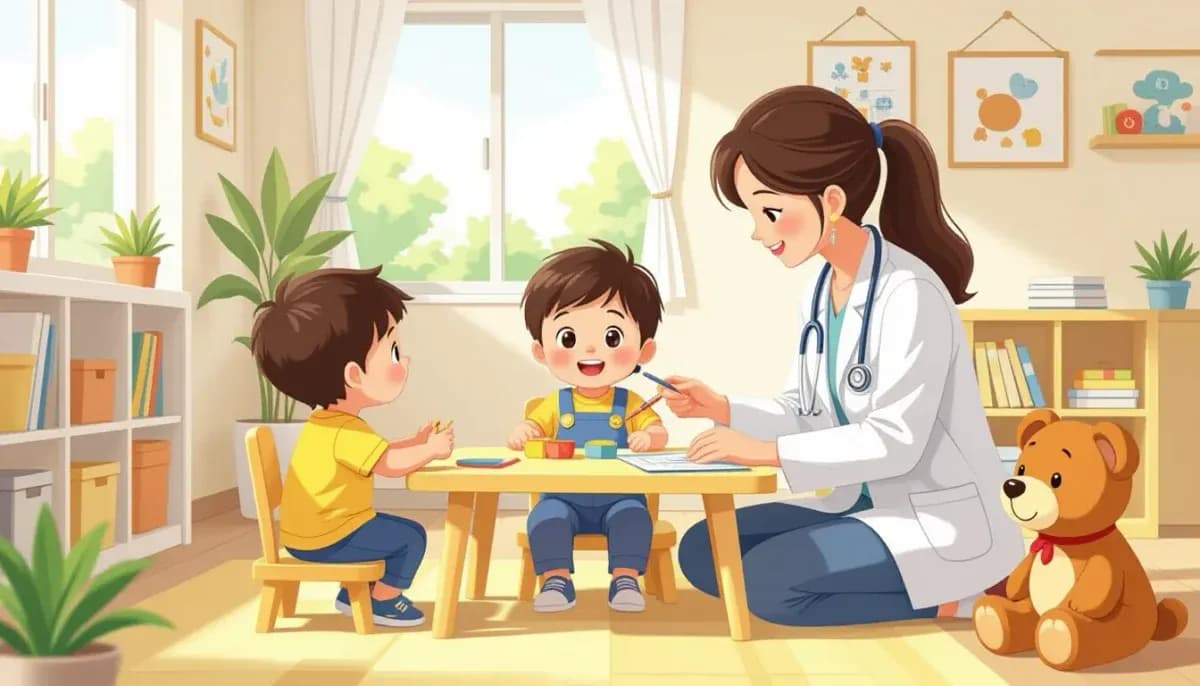
Complete guide to toddler milestones and development in Japan for foreign parents. Learn about free government checkups, developmental stages, English-speaking pediatricians, and support resources.
Toddler Milestones and Development in Japan: A Complete Guide for Foreign Parents
Raising a toddler in Japan as a foreign parent is a rewarding but complex experience. Between navigating government checkup schedules in Japanese, understanding what milestones are monitored at each stage, and finding English-speaking pediatricians, the learning curve can feel steep. The good news is that Japan has one of the most structured and well-funded child development monitoring systems in the world — and once you understand how it works, you can take full advantage of it for your child's benefit.
This guide covers everything foreign parents need to know about toddler milestones, development stages, and the support systems available to you in Japan.
Understanding Japan's Government-Mandated Checkup Schedule
Japan takes child development monitoring seriously. The government requires free developmental checkups at specific ages, making it easier for parents — including foreigners — to track their toddler's growth and identify any potential concerns early.
Here is a breakdown of the official checkup schedule:
| Age | Where | Cost | What Is Checked |
|---|---|---|---|
| 1 month | Private pediatric clinic | ¥3,000–¥5,000 | Weight gain, congenital disease screening |
| 3–4 months | Local health center | Free | Neck strength, head control, hearing |
| 6–7 months | Pediatric clinic (coupon) | Free with coupon | Sitting, rolling, stranger anxiety |
| 9–10 months | Pediatric clinic (coupon) | Free with coupon | Crawling, standing with support, imitation |
| 18 months | Health center | Free (required by law) | Walking, speech, fine motor (block play), dental |
| 3 years | Health center | Free | Vision, hearing, urinary test, social skills |
The 18-month checkup is the most comprehensive and is required by law. Doctors assess your child's ability to walk independently, communicate through simple speech or gestures, and manipulate objects with their hands and fingers. Children are asked to play with blocks to evaluate fine motor skills and cognitive development. A dental examination is also conducted to screen for early cavities.
Notifications and questionnaires for these checkups arrive in Japanese from your local ward or city office. If you are having trouble understanding them, contact your local international center or ask an English-speaking staff member at your city hall for assistance.
For more information about Japan's healthcare system for children, see our guide on Healthcare and Medical Care for Children in Japan.
Key Developmental Milestones to Track Between Ages 1 and 3
Whether your child attends daycare or is raised at home, there are universal milestones that Japanese pediatricians — and the international medical community — look for during the toddler years.
Gross Motor Skills
- 12 months: Pulling to stand, cruising along furniture, taking first steps
- 15 months: Walking independently, beginning to climb stairs with help
- 18 months: Walking well, stooping and recovering, beginning to run
- 24 months: Running, kicking a ball, climbing furniture
- 36 months: Riding a tricycle, jumping with both feet, climbing stairs alternating feet
Research published in PubMed tracking Japanese infants noted some cultural variation in gross motor milestone timing, particularly in the age at which children begin walking independently. This is normal and may vary by several months without indicating any developmental concern.
Fine Motor Skills
- 12 months: Pincer grasp (picking up small objects with thumb and forefinger)
- 18 months: Stacking 2–3 blocks, scribbling, turning pages
- 24 months: Stacking 6 blocks, drawing circular strokes, using a spoon
- 36 months: Drawing a circle, using scissors, dressing with minimal help
The 18-month health center checkup specifically evaluates block-stacking ability as a benchmark for fine motor and cognitive development.
Language and Communication
- 12 months: First words (mama, dada or Japanese equivalents), understanding simple commands
- 18 months: Vocabulary of 10–20 words, points to pictures in books, follows 2-step instructions
- 24 months: Two-word phrases, vocabulary of 50+ words, names familiar objects
- 36 months: Short sentences, strangers can understand most speech
For bilingual toddlers, language development may appear slower initially as their brain processes two or more languages simultaneously. This is entirely normal. Many foreign parents in Japan worry about this, but research consistently shows that bilingual children catch up to and often surpass monolingual peers in overall language competence.
Explore strategies for supporting your child's language journey in our article Raising Bilingual Children in Japan: Strategies and Tips.
Personal-Social and Emotional Development
- 12 months: Separation anxiety peaks, waves bye-bye, imitates actions
- 18 months: Plays alongside (not yet with) other children, shows affection, has tantrums
- 24 months: Begins parallel play, shows empathy, increasing independence
- 36 months: Cooperative play begins, takes turns (with guidance), shows interest in peers
A landmark 2025 study published in Scientific Reports, drawing on data from approximately 40,000 participants in the Japan Environment and Children's Study (JECS), found that children who started group childcare at age 6 months showed significantly improved development by age 3 in all five domains: communication, gross motor, fine motor, problem-solving, and personal-social skills. The biggest gaps between daycare-enrolled and home-raised toddlers were in communication and personal-social skills.
The Role of Hoikuen and Yochien in Toddler Development
Japan has two main types of early childhood institutions: hoikuen (保育園, daycare centers) and yochien (幼稚園, kindergartens). Understanding the difference between these two systems is important for foreign parents planning their childcare.
Hoikuen accepts children from 57 days old through kindergarten age and focuses primarily on childcare for working parents. Yochien typically accepts children aged 3–6 and emphasizes preschool education. Many Japanese families choose based on work schedules and educational philosophy.
For toddlers specifically (ages 1–3), hoikuen is the most relevant option. Japanese hoikuen follow a structured daily routine that supports developmental milestones through organized play, meals, nap times, and outdoor activities.
Learn more about these options in our full guide: The Complete Guide to Daycare and Hoikuen in Japan.
Japanese daycare centers maintain strict health policies: children with a fever above 37.5°C cannot attend and must be picked up immediately if they develop a fever during the day. Keep this in mind when planning work schedules.
Developmental Delays and Screening in Japan
If you notice your toddler is not meeting certain milestones, Japan's healthcare system offers screening and support services. The government-mandated checkups at 18 months and 3 years are specifically designed to identify developmental delays early.
Common concerns flagged during checkups include:
- Limited eye contact or social interaction
- Absence of pointing by 12 months
- No single words by 16 months
- No two-word phrases by 24 months
- Loss of previously acquired language or social skills at any age
If a concern is identified, your local health center will typically refer you to a specialist, such as a developmental pediatrician or child psychiatrist. Some areas have dedicated developmental support centers (発達支援センター, hattatsu shien senta).
For English-speaking expats, organizations like SEMI (Sapporo English Medical Interpreters) provide bilingual well-baby questionnaires and guidance on navigating Japan's developmental health system. They also offer translated vaccination questionnaires and information about developmental disability screening.
Screen time is another area flagged by Japanese pediatricians. The Japan Pediatric Society recommends no screen time for children under 2 years old (except video calls with family), and limited, supervised use for children aged 2–5. Extended screen exposure has been linked in Japanese research to language delays and reduced social eye contact in toddlers.
Finding English-Speaking Pediatricians in Japan
One of the biggest challenges for foreign parents is finding healthcare providers who can communicate in English. Here are practical steps:
- Ask at your ward or city office: Many have lists of international-friendly clinics
- Contact local international centers: Tokyo, Osaka, Nagoya, and other major cities have free consultation and translation services
- Check Japan Healthcare Info: A comprehensive resource available at japanhealthinfo.com with guides on baby checkups, pediatric care, and navigating insurance
- Join expat parent communities: Facebook groups and online forums like those hosted by Japan Dev are invaluable for neighborhood-specific recommendations
- Call hospitals directly: Many large hospitals in urban areas have international patient departments
When you register your child at a hospital, bring your health insurance card (健康保険証), your child's Maternal and Child Health Handbook (母子健康手帳, boshi kenko techo), and any vaccination records. The boshi techo is issued free at your local city hall and is the central document tracking your child's development and vaccinations throughout childhood.
For a complete overview of baby and infant care in your first year, see our guide Baby and Infant Care in Japan: A Guide for Foreign Parents.
Japan's Population Context: Raising a Toddler in a Declining Birth Rate Environment
Japan's declining birth rate has significant implications for families. As of April 2025, Japan's child population under 15 stands at 13.7 million, with approximately 2.2 million children aged 0–2 years. The government has responded with expanded childcare support, child allowances, and increased investment in early childhood services.
The child allowance system (児童手当, jido teate) provides monthly payments for families with children, and most toddler checkups, vaccinations, and even medical treatment may be covered or significantly subsidized through your local government's infant medical care support program (乳幼児医療費助成). Make sure to apply at your ward or city office as soon as possible after your child is born or after registering residence in Japan.
For details on navigating financial support as an expat family, see our article on Government Benefits and Subsidies for Families in Japan.
Tips for Supporting Your Toddler's Development in Japan
Here are practical tips to help your toddler thrive during this crucial developmental window:
- Use the boshi techo actively: Record feeding, sleeping, and developmental observations — doctors will ask about this at every checkup
- Embrace community: Jidokan (児童館, community children's centers) are free government-funded play spaces where toddlers can socialize and parents can meet others
- Maintain your home language: Even in a Japanese-dominant environment, consistent exposure to your native language is essential for bilingual development
- Be consistent with vaccinations: Japan's vaccination schedule covers BCG, rotavirus, hepatitis B, DPT, polio, Hib, pneumococcal, and more — most are free with coupons from your city office
- Limit screen time: Follow Japanese Pediatric Society guidelines for under-2s and 2–5-year-olds
- Connect with other expat parents: Communities and groups help share resources and navigate language barriers
For broader guidance on parenting in Japan, the Complete Guide to Raising Children and Education in Japan for Foreigners at Living in Nihon is a valuable resource. You can also find practical workplace and family life guidance at For Work in Japan's Family Life Guide.
Conclusion
Tracking your toddler's milestones in Japan is made significantly easier by the country's structured, government-funded healthcare system. The free checkup schedule, the boshi techo, the local health centers, and the jidokan network all provide a solid foundation for monitoring and supporting your child's growth. The key for foreign parents is understanding how to navigate these systems — particularly the language barrier — and connecting with the resources available to international families.
Japan's investment in early childhood development means your toddler has access to excellent monitoring and support. Combined with your own attentiveness and community connections, you can give your child the best possible start during these critical early years.
For more information on parenting topics in Japan, visit Chuukou Benkyou's education and family resources for additional guidance from a Japanese education perspective.
Sources and further reading:

Originally from Vietnam, living in Japan for 16+ years. Graduated from Nagoya University, with 11 years of professional experience at Japanese and international companies. Sharing practical information for foreign parents raising children in Japan.
View Profile →Related Articles
Discipline Approaches for Toddlers: Japan vs Western Methods
A practical guide for foreign parents on Japanese vs Western discipline methods for toddlers — including shitsuke, mimamoru, ma no nisai, and how to blend both approaches living in Japan.
Read more →
Seasonal Outdoor Activities for Toddlers in Japan
Discover the best seasonal outdoor activities for toddlers in Japan — from spring cherry blossom picnics to winter snow play. A practical guide for expat families with young children.
Read more →
Toddler Sleep Routines and Challenges in Japan
Navigate toddler sleep in Japan with confidence. Understand co-sleeping norms, late bedtimes, and cultural differences—plus research-backed strategies for better sleep routines for your child.
Read more →
Preparing Toddlers for Daycare or Preschool in Japan
Complete guide for foreign parents on preparing toddlers for Japanese daycare (hoikuen) or preschool (yochien). Covers enrollment, narashihoiku, packing lists, labeling, food introduction, and emotional preparation tips.
Read more →
Toddler Safety in Japanese Homes: Practical Tips
Keep your toddler safe in a Japanese home with our practical guide covering sliding doors, earthquake furniture anchoring, balcony safety, kitchen hazards, and where to buy childproofing products in Japan.
Read more →
Best Toddler Toys and Games Available in Japan
Discover the best toddler toys and games available in Japan for foreign parents. From Anpanman to Tomica cars, wooden educational toys to where to buy them — your complete expat guide.
Read more →