
Celebrating Your Baby's First Birthday in Japan

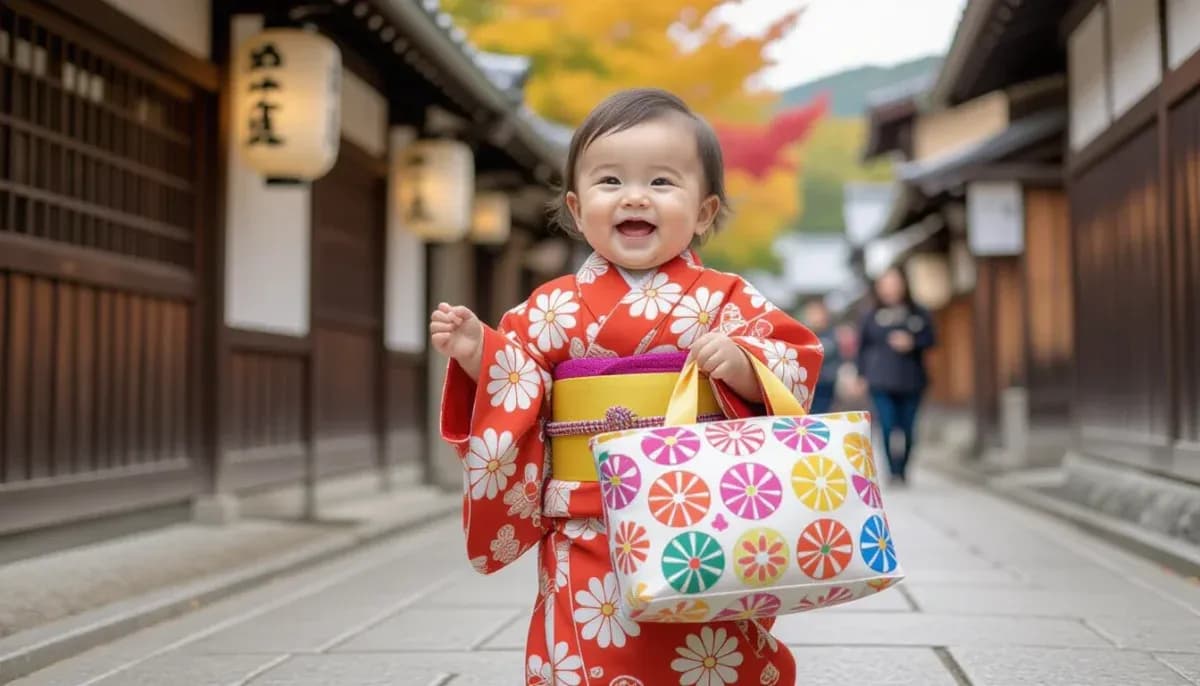
Learn how to celebrate your baby's first birthday in Japan with the isshou mochi ceremony, erabitori fortune-telling, and tips for blending Japanese and Western traditions.
Celebrating Your Baby's First Birthday in Japan: Traditions, Tips & What to Expect
Your baby's first birthday is a milestone that families around the world celebrate with joy and meaning. In Japan, this occasion is rich with unique cultural traditions that blend ancient symbolism with modern festivities. For foreign parents living in Japan, understanding these customs can transform the event from a simple party into a deeply meaningful cultural experience — and a treasured memory you will carry for a lifetime.
This guide covers everything you need to know about celebrating your baby's first birthday in Japan: from the famous isshou mochi ceremony to erabitori fortune-telling, plus practical tips for blending Japanese tradition with your own family culture.
What Makes a Japanese First Birthday Unique?
In Japan, the first birthday — called tanjoubi (誕生日) — holds special significance beyond just marking one year of life. The Japanese traditionally celebrate many milestones in a baby's first year, from birth registrations to 100-day ceremonies, and the first birthday is the grand culmination of it all.
Two traditions in particular define a Japanese first birthday celebration:
- Isshou Mochi (一升餅) — the mochi-carrying ceremony
- Erabitori (えらびとり) — the fortune-telling object selection
These ceremonies are not just fun customs — they carry genuine cultural depth and heartfelt wishes for the child's future. Even if you are not Japanese, participating in or observing these rituals can be a beautiful way to connect your family with Japanese culture.
For a broader look at parenting milestones in Japan, see our guide to Baby and Infant Care in Japan and Toddler Parenting in Japan.
The Isshou Mochi Ceremony: Carrying the Mochi
The centerpiece of a traditional Japanese first birthday is the isshou mochi ceremony. Here is everything you need to know.
What Is Isshou Mochi?
Isshou mochi is a large rice cake (mochi) weighing approximately 1.8 kg (about 4 lbs), which corresponds to one isshou — a traditional Japanese unit of measurement roughly equal to 1.8 liters.
The brilliance of this tradition lies in a beautiful wordplay: isshou (一升) sounds identical to isshou (一生), the word meaning "a lifetime" or "one's whole life." By having your baby carry this heavy mochi on their first birthday, you are symbolically expressing the wish that they will:
- Never go hungry throughout their entire life
- Always have enough food, health, and prosperity
- Carry the weight of life with resilience and strength
How Is the Ceremony Done?
The traditional method involves wrapping the mochi in furoshiki (a square wrapping cloth) and tying it to the baby's back. The baby is then encouraged to stand and walk with the heavy bundle.
In modern celebrations, many families now use a cute decorative mini-backpack designed specifically for isshou mochi — these are widely sold at baby stores, department stores, and online in Japan around January.
Regional variations exist too: In some areas of Japan, particularly in the Kansai region, it is traditional for the baby to step on the mochi (fumimochi) rather than carry it, symbolizing that the child will stand firmly on the earth and live with stability.
Why Does the Baby Fall — and Why Is That a Good Thing?
Here is the part that surprises most foreign parents: when your baby inevitably topples over under the weight of the mochi, that is considered the best possible outcome!
In Japanese culture, falling down is seen as symbolizing the natural ups and downs of life. A baby who falls while carrying the mochi is thought to grow into someone who can face hardship, get back up, and persevere — a deeply valued character trait in Japanese society.
So rather than rushing to prevent the fall, many Japanese grandparents will cheer when it happens. Let your little one wobble, fall, and (with your gentle help) get back up — it is the perfect metaphor.
Where to Buy Isshou Mochi
You can find isshou mochi at:
- Akachan Honpo and Nishimatsuya (major baby goods chains)
- Department store baby floors (depato no akachan yohin)
- Online via Rakuten or Amazon Japan — search for 一升餅 (isshou mochi)
- Local rice cake makers (mochi-ya) who can prepare custom mochi with the baby's name
Many sets come with a decorative furoshiki or mini-backpack included. Prices typically range from ¥3,000 to ¥8,000 for a basic set.
Erabitori: The Fortune-Telling Ceremony
Alongside the isshou mochi, most Japanese first birthday celebrations also include erabitori (えらびとり), a delightful fortune-telling ritual.
How Erabitori Works
Several symbolic objects are placed on a flat surface in front of the seated baby. The family watches to see which item the baby reaches for first — this choice is believed to predict the child's future talents, interests, or career path.
Common Objects and Their Meanings
| Object | Symbolism / Predicted Future |
|---|---|
| Pen or brush (筆) | Writer, artist, academic, or creative professional |
| Money / wallet (お金) | Wealth, financial success, business acumen |
| Abacus / calculator (そろばん) | Merchant, accountant, or entrepreneur |
| Chopsticks (箸) | Chef, food professional, or someone who will always eat well |
| Ruler or measuring tape | Architect, engineer, or precise craftsperson |
| Stethoscope or medical tools | Doctor or healthcare professional |
| Dictionary or book | Scholar, teacher, or lifelong learner |
| Thread or fabric | Tailor, fashion designer, or skilled artisan |
| Sports ball | Athlete or physically gifted individual |
| Smartphone or camera | Tech professional, photographer, or creative |
Modern families sometimes add fun custom items — a passport for a future traveler, a toy microphone for a singer, or a toy globe for a world explorer. The key is to place enough variety for the baby to have a genuine choice, and to embrace whatever they pick with laughter and celebration.
Tips for a Great Erabitori
- Use objects that are safe for your baby to touch and mouth (no sharp edges or small parts)
- Take a video — watching the moment your baby makes their "choice" is always memorable
- Do not worry if your baby grabs multiple objects; many families laugh it off and say they will have a multifaceted future
- Involve grandparents and family members as observers — their reactions are often the best part of the video
Okuizome: The 100-Day Ceremony (A Related Milestone)
While not a first birthday tradition, okuizome (お食い初め) is a closely connected baby milestone that foreign parents should know about. Held around the baby's 100th day of life, this ceremony involves laying out a symbolic ceremonial meal and mimicking the act of feeding the baby.
The meal typically includes:
- Steamed white rice
- Clear soup (osumashi)
- Red and white dishes (kohaku)
- A whole grilled fish, often sea bream (tai)
- Pickled plum (umeboshi) — symbolizing longevity
- A small pebble (hama-guri or iwa) — symbolizing strong teeth
An elder of the same gender as the baby traditionally performs the ritual, using chopsticks to bring each dish toward the baby's lips (without actually feeding it). This expresses the wish that the child will never go hungry.
If your baby's first birthday is coming up and you have not yet done okuizome, you can often combine both celebrations into one event. Speak with Japanese family members or friends for guidance on the proper ceremony for your region.
For more on early childhood healthcare and development milestones, see our guide to Healthcare and Medical Care for Children in Japan.
Blending Traditions: Japanese + Western First Birthday
Many modern families in Japan — both Japanese and foreign — now combine traditional ceremonies with Western birthday celebration elements. Here is how to blend the best of both:
The Smash Cake Trend
Smash cakes have become extremely popular in Japan over the past decade. A small, beautifully decorated cake is placed in front of the baby, and they are encouraged to explore, poke, and eat it freely — resulting in adorable, messy photos.
You can order smash cakes from specialty bakeries in major cities, or from Instagram-based cake makers who create stunning custom designs. Search for スマッシュケーキ (sumasshu keeki) on Instagram or food delivery apps to find local options.
Combining the Two
A typical modern Japanese first birthday schedule might look like:
- Isshou mochi ceremony (morning, with family or grandparents)
- Erabitori (immediately after, while everyone is gathered)
- Lunch or dinner party (with a birthday cake and smash cake)
- Photos and celebrations throughout
Foreign families often add their own cultural elements — songs from home, traditional foods, or family video calls with relatives abroad. Japan is an wonderfully accepting environment for multicultural celebrations.
Practical Tips for Foreign Parents Planning a First Birthday in Japan
Timing and Planning
- Most families hold the first birthday celebration on or near the actual birthday date (not Japanese New Year or Golden Week if possible — venues book up)
- Reserve restaurant private rooms early — 2–3 months in advance is recommended for popular venues
- Photography studios offering first birthday packages (isshou mochi sets included) should be booked 1–2 months ahead
Venue Options
| Venue Type | Pros | Cons |
|---|---|---|
| Home celebration | Personal, flexible, no travel | Requires preparation and cleanup |
| Restaurant private room | Elegant, catering included | Can be expensive (¥20,000–¥80,000+) |
| Photography studio with party package | All-in-one, includes photos | Limited guest count, shorter duration |
| Community center or hall | Affordable, spacious | Less atmosphere, DIY setup |
Budget Estimates
| Item | Estimated Cost |
|---|---|
| Isshou mochi set (with backpack/furoshiki) | ¥3,000–¥8,000 |
| Birthday cake (custom order) | ¥5,000–¥15,000 |
| Smash cake (add-on) | ¥3,000–¥6,000 |
| Professional photography | ¥20,000–¥60,000 |
| Venue rental or restaurant reservation | ¥0–¥80,000+ |
| Decorations and party supplies | ¥3,000–¥10,000 |
Language Tips
When shopping or booking services related to the first birthday, these Japanese terms are useful:
- 一歳のお誕生日 (issai no otanjoubi) — first birthday
- 一升餅 (isshou mochi) — the mochi ceremony
- えらびとり (erabitori) — the fortune-telling ceremony
- お祝い (oiwai) — celebration/congratulations
- 記念撮影 (kinen satsuei) — commemorative photography
Safety Reminder: Do Not Let Your Baby Eat the Mochi
This point is important enough to state clearly: the isshou mochi is a ceremonial object only — never let your baby eat it.
Mochi is an extremely sticky, dense food that poses a severe choking hazard for infants and toddlers. Every year, medical incidents in Japan involve mochi-related choking. Keep the mochi safely out of reach after the ceremony, and do not cut pieces for the baby to taste, regardless of encouragement from well-meaning family members.
The birthday cake at your celebration should be an age-appropriate, soft cake designed for babies — many Japanese bakeries now offer "first birthday cakes" made with ingredients suitable for babies under 12 months.
Further Resources for Expats in Japan
Navigating Japanese parenting customs as a foreigner can feel overwhelming at times, but you are far from alone. Many communities and resources exist for international families in Japan.
- Living in Nihon offers comprehensive guides on expat life in Japan, including housing, visas, and family resources.
- For Work in Japan provides practical career and immigration guidance for foreign residents navigating life in Japan.
- Chuukou Benkyou covers educational resources for children studying in Japan.
- Savvy Tokyo's guide to Japanese events in a child's first year is an excellent English-language overview of all the milestone celebrations.
- Tiny Tot in Tokyo offers a detailed, personal account of the isshou mochi and erabitori ceremonies from an expat perspective.
For related parenting topics in Japan, explore our guides on Pregnancy and Giving Birth in Japan as a Foreign Parent and Government Benefits and Subsidies for Families in Japan.
Final Thoughts: Making It Your Own
Your baby's first birthday in Japan is an opportunity to experience the warmth and thoughtfulness embedded in Japanese culture. Whether you go all-in on the isshou mochi ceremony with extended family, or create a blended celebration that honors both your heritage and your new Japanese home, the most important thing is the love and intention you bring to the day.
Take photos. Laugh at the falling-down moment. Watch carefully to see what object your baby reaches for first. And above all — enjoy every moment of this milestone with your growing family.
Japan has a beautiful way of reminding us that even the heaviest burdens in life are worth carrying when we are surrounded by people who love us.

Originally from Vietnam, living in Japan for 16+ years. Graduated from Nagoya University, with 11 years of professional experience at Japanese and international companies. Sharing practical information for foreign parents raising children in Japan.
View Profile →Related Articles
Creating Family Traditions That Blend Both Cultures
Discover practical strategies for multicultural families in Japan to blend two cultures through intentional traditions, bilingual rituals, and bicultural identity-building for children.
Read more →
How to Mark Milestones Across Two Cultures
A complete guide for bicultural and expat families in Japan on how to celebrate childhood milestones across two cultures — from Shichi-Go-San to birthday traditions, with practical tips for blending both worlds.
Read more →
Half Coming of Age (Nibun no Ichi Seijinshiki)
Everything foreign parents need to know about the Nibun no Ichi Seijinshiki - Japan's Half Coming of Age Ceremony for 10-year-olds. What it is, what happens, and how to participate.
Read more →
School Photo Day and Memory Traditions in Japan
Everything expat parents need to know about school photo day traditions in Japan — from the entrance ceremony shot to graduation albums (sotsugyou arubamu), shashin hanbai ordering systems, yosegaki, and purikura culture.
Read more →
Preschool Recitals and Performance Events
Everything foreign parents need to know about preschool recitals and performance events in Japan — happyokai, undoukai, sotsuenshiki, and more. Practical tips for expat families.
Read more →
Randoseru Buying: Choosing Your Child's School Bag
Everything foreign families need to know about buying a randoseru in Japan — prices, materials, colors, brands, and when to shop. Practical tips for expat parents.
Read more →