
Father's Role in Japanese Child-Rearing Today

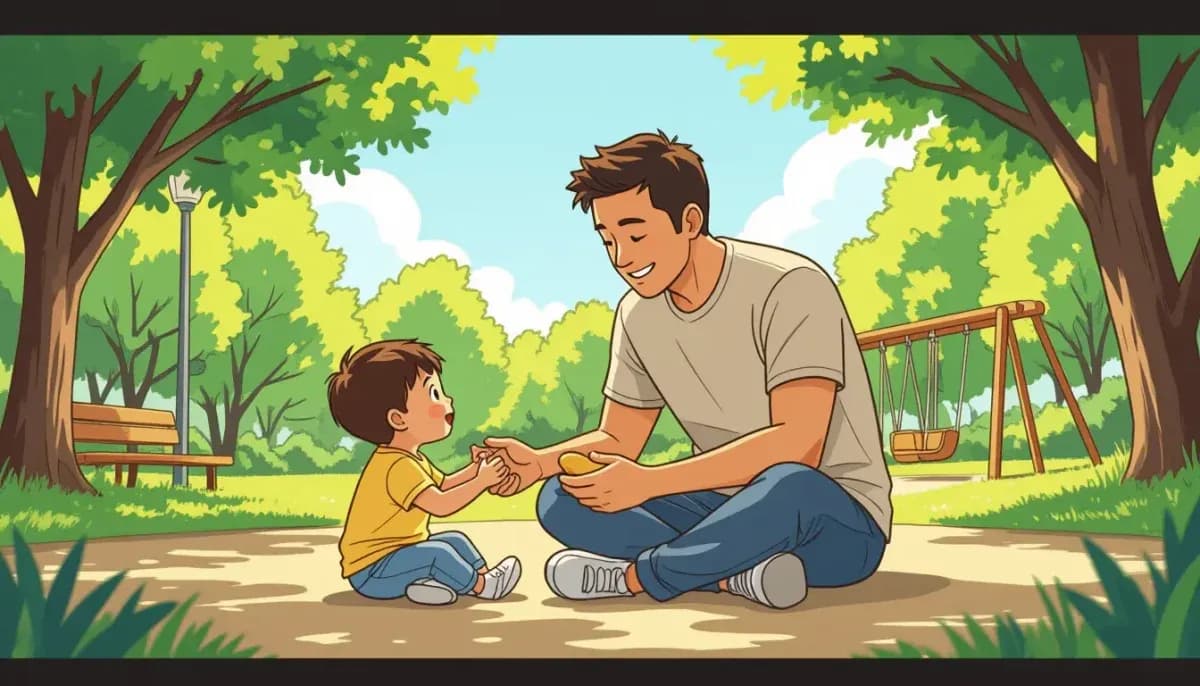
Understand how fathers fit into Japanese child-rearing culture today. From the ikumen movement to paternity leave laws, this guide covers what foreign dads in Japan need to know.
Father's Role in Japanese Child-Rearing Today
Japan's approach to fatherhood is in the middle of a quiet but profound transformation. For decades, the image of the Japanese father was the silent salaryman who left early, returned late, and left all parenting to his wife. Today, that picture is rapidly evolving — though the reality still lags far behind the ideal. For foreign parents and expats navigating family life in Japan, understanding the shifting landscape of fatherhood here is essential for making informed decisions about childcare, work-life balance, and co-parenting in a Japanese cultural context.
This guide explores the changing role of fathers in Japanese child-rearing, the cultural and legal forces driving change, the challenges that remain, and what foreign fathers living in Japan need to know.
The Traditional Role of Japanese Fathers
Historically, the Japanese father's role was clear and narrowly defined: provide financially. This archetype — the "salaryman" (サラリーマン) — worked long hours, socialized with colleagues after work, and handed over his paycheck to his wife to manage the household. Active parenting was considered a mother's domain, and men who tried to participate too visibly in child-rearing risked being seen as professionally uncommitted or even weak.
This division of labor was reinforced by Japan's post-war economic structure. Companies rewarded long hours and total dedication. Fathers who left early or took time off for family were passed over for promotions. The expectation was clear: be a good provider, and parenting would take care of itself — through your wife.
The result was a generation of children who barely knew their fathers. Many adults in Japan today recall their fathers as distant, authoritative figures more than warm caregivers. This legacy still shapes expectations and behavior, even as social attitudes begin to shift.
The Rise of Ikumen: A Cultural Shift Begins
The word ikumen (育メン) became a cultural phenomenon in the mid-2000s. A portmanteau of ikuji (育児, child-rearing) and men, it also puns on ikemen (イケメン, handsome man) — deliberately associating active fatherhood with attractiveness and masculinity rather than weakness. The term gave a positive, aspirational label to fathers who were actively involved in raising their children.
The Japanese government embraced and promoted the ikumen concept as part of broader work-life balance and demographic policy. In 2010, the Ministry of Health, Labor and Welfare launched the Ikumen Project, a national campaign encouraging fathers to take paternity leave and participate more actively in child-rearing. In 2013, the Ikumen Company Award was introduced to recognize employers who supported paternal involvement.
Despite the government's enthusiasm, uptake among fathers was slow. A 2012 survey by Asatsu-DK found that only 17% of fathers fully identified as ikumen, though roughly 50% identified partially with the concept. Younger fathers in their late 20s and early 30s were significantly more likely to embrace the ikumen identity than men in their 40s.
For foreign fathers in Japan, the ikumen movement is worth understanding — it represents the cultural permission structure around active fathering. A foreign father who takes paternity leave, picks children up from daycare, or attends school events is no longer completely aberrant in Japan. In fact, he may be seen as a positive example by Japanese colleagues and neighbors.
For more context on parenting culture in Japan, see our Complete Guide to Baby and Infant Care in Japan.
The Numbers: How Much Are Japanese Fathers Actually Doing?
The gap between aspiration and reality remains wide. International time-use data tells a stark story about how Japanese fathers actually spend their time compared to fathers in other developed countries.
| Country | Daily Childcare Time (Fathers) | Daily Household Task Time (Fathers) |
|---|---|---|
| Japan | ~39 minutes | ~28 minutes |
| United Kingdom | ~60 minutes | ~106 minutes |
| United States | ~60+ minutes | ~90 minutes |
| Sweden | ~90+ minutes | ~120 minutes |
| Germany | ~75 minutes | ~90 minutes |
Japanese fathers with children under age 6 spend an average of just 39 minutes per day on childcare and 28 minutes on household tasks — a fraction of what their partners do. Japanese mothers with young children average over 7 hours and 34 minutes of combined childcare and household work per day.
Even among fathers who express a desire for more involvement, structural barriers are powerful. 54.2% of Japanese fathers say they want to be more involved in child-rearing and household matters. More than 70% say they want to spend more time playing outdoors with their children. But translating intention into behavior requires workplace cultures to change — and that is happening only gradually.
If you are a foreign father in Japan, recognizing this baseline is important. Your Japanese partner may have internalized expectations about the division of labor that differ significantly from what you were raised to expect. Open, explicit conversations about childcare responsibilities are essential — don't assume shared assumptions.
Read more about how childcare is structured in Japan at our guide on Daycare and Hoikuen in Japan for Foreign Parents.
Paternity Leave in Japan: Law vs. Reality
Japan has some of the most generous paternity leave laws in the world on paper — and some of the lowest take-up rates among developed nations.
Under Japanese law, fathers are entitled to up to 52 weeks of parental leave (育児休業, ikuji kyūgyō). During the leave, compensation is paid through social insurance: approximately 67% of prior salary for the first 180 days, then 50% for the remainder.
In October 2022, Japan introduced a significant new provision: Postpartum Paternity Leave (産後パパ育休, sangopapaikusyū). This allows fathers to take up to 4 weeks of leave within 8 weeks of the child's birth, splittable into two separate periods. The reform was designed specifically to address the low engagement of fathers during the critical early weeks.
Yet actual paternity leave usage tells a very different story:
| Year | Paternity Leave Take-Up Rate (Japan) |
|---|---|
| 2011 | 2.6% |
| 2012 | 1.9% |
| 2015 | ~3.0% |
| 2017 | 7.0% |
| Government 2020 Target | 13.0% |
The barriers are largely cultural and workplace-related. In surveys, 85% of fathers who did not take leave cited work-related reasons — primarily that their workplace atmosphere discouraged it, or that they feared career consequences. A 2015 Mitsubishi Research Institute survey found that 26.6% of men specifically cited "workplace atmosphere" as the primary deterrent.
Of those who did take leave in 2012, 41% took five days or fewer — hardly the extended involvement envisioned by policymakers.
For foreign fathers, the situation can be nuanced. Foreign companies operating in Japan may have more flexible cultures around paternity leave. If you work for a Japanese company, taking parental leave may require proactive communication with your manager and HR department. Knowing your legal rights is the first step.
For detailed practical guidance on work rights in Japan, visit For Work in Japan — a resource covering employment rights for foreign workers.
Japanese Parenting Culture: What Fathers Walk Into
Understanding the broader cultural context of parenting in Japan helps foreign fathers make sense of their role. Japan practices what developmental psychologists call proximal parenting — an emphasis on physical closeness, co-sleeping, co-bathing, and extended physical contact between parents (predominantly mothers) and young children.
In the first two years, Japanese mothers typically spend an average of only 2 hours per week away from their baby. Fathers in this model are often peripheral during infancy — present but not the primary caregiving figure. Japanese cultural norms around this can feel isolating for foreign fathers who expected a more equal division of caregiving responsibilities from birth.
Key features of Japanese parenting culture that foreign fathers should know:
- Co-sleeping (添い寝, *soineuchi*): Highly common and normalized in Japan. Many families sleep in a family bed until children are school-aged.
- Co-bathing (一緒にお風呂, *issho ni ofuro*): Japanese fathers are traditionally expected to bathe with their young children — this is often one of the primary bonding rituals that falls to fathers even in traditional households.
- Emphasis on group harmony: Children are raised to prioritize group belonging and to be sensitive to how their actions affect others' feelings, rather than prioritizing individual expression.
- School events: School sports days (運動会, undōkai) and graduation ceremonies are major family events where father attendance is increasingly expected.
For foreign parents navigating the Japanese school system, see our guide on Elementary School in Japan for Foreign Parents.
Foreign Fathers and Co-Parenting in Japan
Foreign fathers in Japan face a particular set of challenges that go beyond cultural adjustment.
Language barriers in navigating schools, hospitals, and government offices disproportionately affect fathers who may not have studied Japanese as extensively as their partners. Taking an active role in a child's education — attending teacher conferences, reading school newsletters, navigating the renraku chō (communication notebook) — requires at minimum basic Japanese literacy.
Work culture for foreign workers in Japan can vary enormously. Those in foreign-affiliated companies may find generous flexibility. Those employed by Japanese firms may face the same pressures as their Japanese counterparts — long hours, implicit discouragement of leave, and performance reviews that don't accommodate parenting.
Relationship dynamics: In international couples (a foreign father with a Japanese partner), there can be significant tension around differing expectations for the father's role. Japanese mothers may have grown up expecting to manage the household and child-rearing largely independently, while the foreign father expects a more equitable split. This is one of the most common friction points in international families in Japan.
Legal considerations: Japan only introduced joint custody after divorce in May 2024, set to be implemented by 2026. For the previous 80 years, divorced parents could only have single custody — and foreign parents in custody disputes faced significant challenges. For any foreign father navigating family law issues, understanding your legal position is critical. See our dedicated guide on Child Custody and Family Law in Japan for International Families.
For broader guidance on raising children in Japan as a foreigner, Living in Nihon offers comprehensive resources on life in Japan for foreign residents, including education and family life.
Practical Tips for Foreign Fathers in Japan
Whether you are a newly arrived expat or have been in Japan for years, here are practical steps for being an active, engaged father in the Japanese context:
1. Negotiate leave early. If you are expecting a child, initiate the conversation about paternity leave with your employer before the birth. Know your legal rights under the Ikuji Kyūgyō Hō. If your company does not have a formal policy, propose one or push for time off using annual leave.
2. Take ownership of bath time. Even in traditional Japanese households, the bath (ofuro) is often a father's domain. Use this as your dedicated bonding time with young children.
3. Attend school events. Sports days, school concerts, and graduation ceremonies are major events in Japanese school culture. Making these a priority signals to both your child and their school community that you are an engaged father.
4. Learn the logistics. Actively learn how your child's daycare or school operates — pickup/dropoff procedures, the communication notebook system, school rules. Being able to handle these tasks independently is essential to genuine co-parenting.
5. Connect with other expat parents. Expat parent networks in major Japanese cities (Tokyo, Osaka, Nagoya) often have active Facebook groups or LINE communities where foreign fathers share experiences and practical advice.
6. Have explicit conversations. Cultural assumptions about fathering run deep on both sides of an international couple. Be direct and specific about how you want to share responsibilities — don't leave it to assumption.
For support with language and educational integration for your children, explore our guide on Teaching Japanese to Foreign Children.
The Road Ahead: Japan's Evolving Fatherhood
The trajectory for Japanese fatherhood is clearly toward greater involvement — the question is pace. Government initiatives, generational change, and the post-COVID normalization of remote work have all accelerated the shift. Younger Japanese men increasingly reject the salaryman model, and companies are gradually recognizing that supporting fathers' involvement in family life improves retention and morale.
For foreign fathers, Japan today is a far more welcoming environment for active fathering than it was 20 years ago. The legal framework is strong. Cultural attitudes are shifting. And international couples are often at the leading edge of modeling new approaches to parenting that blend the best of Japanese proximal warmth with more egalitarian division of labor.
For academic perspectives on the challenges and opportunities in this cultural shift, the NIH/PMC article on Challenges to Changing the Culture of Parenting in Japan provides excellent evidence-based analysis. The BCCJ Acumen report on the Rise of Modern Dads offers a business-community perspective on how the ikumen movement is reshaping corporate culture.
For broader context on parenting across all stages in Japan, see our resource on Toddler Parenting in Japan: Ages 1 to 3.
The Japanese proverb ichi-go ichi-e (一期一会) — "one time, one meeting" — captures something important about parenthood. The window for being an active, present father in a child's early years is brief. For foreign fathers in Japan, navigating the cultural landscape thoughtfully can make all the difference in how deeply and meaningfully you are woven into your child's life.
For Japanese middle school students and educational support resources, Chuukou Benkyou provides study materials and educational guidance relevant to families with school-age children in Japan.
For practical insights on how Japanese fathers are embracing change in the workplace, The Rise of Modern Dads on BCCJ Acumen is an excellent read with detailed statistics on the ikumen movement.
Want to explore more about raising children in Japan? Browse our full resource hub on the Japanese education system, healthcare, and family life for foreign residents.

Originally from Vietnam, living in Japan for 16+ years. Graduated from Nagoya University, with 11 years of professional experience at Japanese and international companies. Sharing practical information for foreign parents raising children in Japan.
View Profile →Related Articles

Modern Parenting Trends and Changes in Japan
Explore how parenting in Japan is changing in 2025 — from landmark government reforms and childcare expansion to shifting discipline norms and the rise of involved fathers. A practical guide for foreign families.
Read more →
Mama-Tomo Culture: Navigating Mother Friendships in Japan
Understand mama-tomo (ママ友) culture in Japan and learn practical strategies for foreign mothers to build genuine friendships through hoikuen, kodomokan, and school communities.
Read more →
The Ikumen Movement: Japan's Push for Involved Fathers
Discover Japan's ikumen movement — the cultural push for involved fatherhood. Learn about paternity leave rights, government initiatives, and what it means for foreign fathers living in Japan.
Read more →
Japanese vs Western Parenting Styles Compared
Discover the key differences between Japanese and Western parenting styles — from amae and shitsuke to co-sleeping, discipline, and public behavior. A practical guide for foreign parents in Japan.
Read more →
Group Harmony and Socialization in Japanese Child-Rearing
Understand wa (group harmony) and how Japanese schools, proximal parenting, and mimamoru shape your child's socialization. Essential guide for expat families in Japan.
Read more →
Japanese Approach to Early Childhood Development
Understand Japan's early childhood development philosophy: hoikuen, yochien, kodomoen, mimamoru, and Chi-Toku-Tai. A complete guide for foreign parents raising children in Japan.
Read more →