
First Month in Japan with Children: Survival Checklist

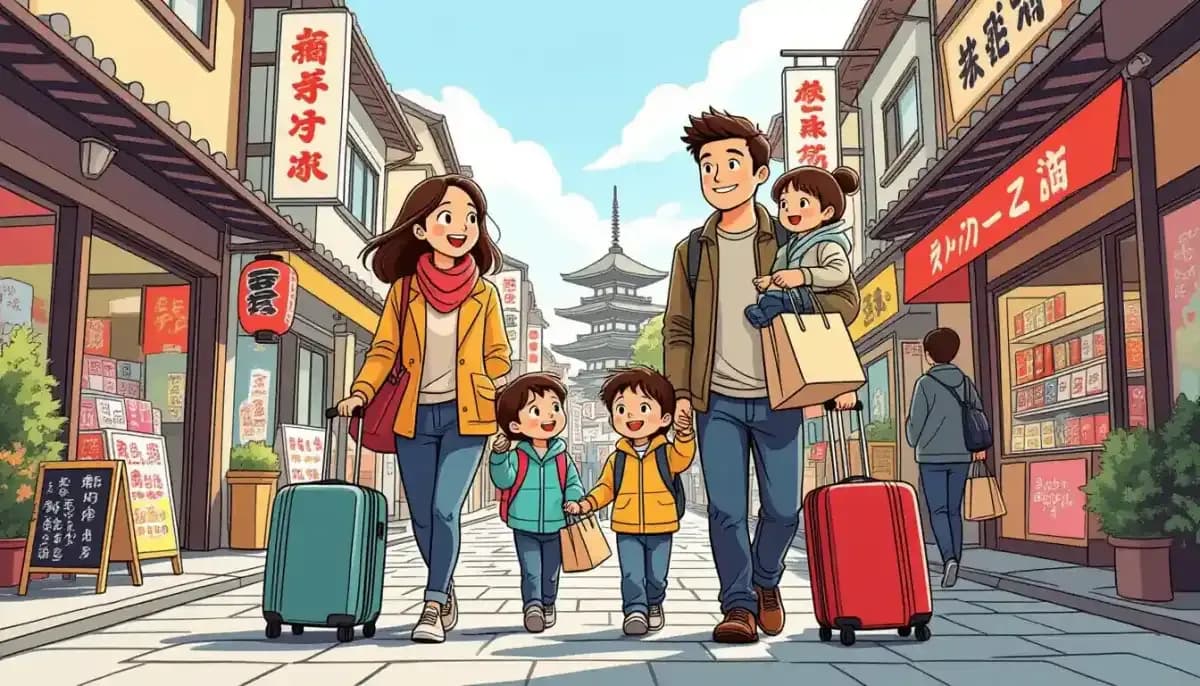
Comprehensive survival checklist for your first month in Japan with children. Covers address registration, health insurance, school enrollment, child allowance, healthcare, and daily life setup for expat families.
First Month in Japan with Children: Survival Checklist
Moving to Japan with children is an incredible adventure — but the first month can feel overwhelming. Between bureaucratic appointments, school enrollment, healthcare registration, and simply finding the nearest grocery store, parents have an enormous to-do list. This survival checklist will guide you through everything you need to accomplish in your first 30 days in Japan, so your family can settle in smoothly and start enjoying life in this remarkable country.
Japan is family-friendlier than many expats expect. Public transport is safe and efficient, healthcare is world-class, and neighborhoods are generally clean and welcoming to children. That said, the systems work quite differently from what you may be used to back home. Understanding what to do — and when — will save you significant stress in those critical early weeks.
Week 1: Administrative Priorities (Days 1–7)
The first week is all about legal and administrative registration. These steps are time-sensitive and legally required.
Register Your Address at the City or Ward Office
Within 14 days of arrival, all foreign residents on mid- or long-term visas must file a moving-in notification (転入届, ten'nyū todoke) at their local city hall, ward office (ku-yakusho), or town office. Bring your Residence Card (zairyū kādo), passport, and your lease agreement or proof of address.
If your Residence Card was not issued at the airport (only major airports issue them on arrival), you will receive it after registering your address. This card is essential — you cannot open a bank account, enroll children in school, or access municipal services without it.
For each child, you will also need to register them at the same time. Bring your child's passport and any documentation of their visa status.
Apply for My Number (Individual Number)
Japan's My Number system (マイナンバー) is a 12-digit identification number assigned to all residents, including foreign nationals. You will receive your My Number notification card by mail within 1–2 weeks of address registration. This number is required for tax filings, social insurance enrollment, and — as of December 2, 2024 — it is also linked to your health insurance through the My Number Card (マイナンバーカード), which has replaced paper health insurance cards.
Apply for My Number Cards for yourself and each family member at your local city office. While not immediately mandatory for all services, having the physical card streamlines access to healthcare and administrative processes significantly.
Enroll in Health Insurance
Health insurance is mandatory in Japan for all residents. You have two options:
- Employees' Health Insurance (健康保険, Kenkō Hoken): If you are employed by a Japanese company, you will typically be enrolled automatically through your employer.
- National Health Insurance (国民健康保険, Kokumin Kenkō Hoken / NHI): If you are self-employed, freelancing, or your employer does not provide insurance, enroll at your city office.
Coverage begins from your registration date, so do not delay. National Health Insurance covers 70% of medical costs. Crucially for families, most municipalities issue a Medical Care Certificate (医療証, iryōshō) to children free of charge, covering the remaining 30% co-pay. This essentially means children receive free or heavily subsidized medical care up to age 15, though the exact age limit varies by city. Ask about this at your city office when you register — it is one of the biggest financial benefits for expat families.
For more information on navigating Japan's expat systems, visit Living in Nihon for practical guides written for foreigners.
Week 2: School Enrollment and Childcare (Days 8–14)
Education is a top priority for families with school-age children. Japan's public school system is excellent and — importantly — free for elementary and junior high school students.
Understanding the Japanese School System
The Japanese school year begins in April and runs through March. Schools are divided into:
| Level | Age | Duration | Tuition |
|---|---|---|---|
| Elementary School (小学校) | 6–12 | 6 years | Free (public) |
| Junior High School (中学校) | 12–15 | 3 years | Free (public) |
| High School (高校) | 15–18 | 3 years | Low cost (public) |
| Kindergarten/Yochien (幼稚園) | 3–6 | 1–3 years | Free since Oct 2019 |
| Nursery/Hoikuen (保育園) | 0–6 | Varies | Free (ages 3–5, 2019 reform) |
If you arrive mid-year, contact your local Board of Education (教育委員会, kyōiku iinkai) — found at your municipal office — to arrange enrollment. They will assign your child to the nearest public school. Note that instruction is in Japanese; many schools have support programs for non-Japanese-speaking children, but availability varies.
For families considering alternatives, read our guide to International Schools in Japan and our detailed comparison of Hoikuen vs Yochien.
Enrolling Young Children in Hoikuen or Yochien
For children aged 0–5, Japan has two main options: hoikuen (childcare centers focused on working parents) and yochien (kindergartens with shorter hours). Since October 2019, early childhood education became free for ages 3–5 at both types of licensed facilities. For children under 3 at hoikuen, fees are income-based.
Enrolling in hoikuen often involves a waiting list — apply as early as possible, especially in urban areas like Tokyo or Osaka. Read our complete guide to applying for hoikuen for step-by-step instructions.
For working expat parents, the For Work in Japan website offers resources on balancing professional life with family needs in Japan.
Week 3: Healthcare Setup (Days 15–21)
Getting your children registered with a local pediatrician early prevents scrambling in a medical emergency.
Finding an English-Speaking Pediatrician
Not all clinics in Japan have English-speaking staff. Join local expat Facebook groups (search for "[your city] English Moms" or "[your city] Expat Families") to get recommendations for bilingual pediatricians. University hospitals often have international departments with interpreters.
For a comprehensive resource, our article on finding English-speaking pediatricians in Japan lists strategies and what to look for.
Vaccinations and Medical Records
Japan's vaccination schedule differs from many countries. Bring your children's complete vaccination records from home. Your local health center (保健センター, hoken sentā) will provide free vaccination vouchers for the Japanese schedule, which includes:
- BCG (tuberculosis)
- PCV (pneumococcal)
- DTP-IPV (diphtheria, tetanus, pertussis, polio)
- MR (measles-rubella)
- Japanese Encephalitis
- Varicella (chickenpox)
- Hib
- HPV
- Hepatitis B
A pediatrician can help you map your child's existing vaccination history to the Japanese schedule to avoid duplicates.
Important Emergency Numbers
Save these in your phone immediately:
- Police: 110
- Fire/Ambulance: 119
- Children's Nursing Consultation Line: #8000 (evening/night hotline for child health questions)
- Japan Poison Information Center: 0120-014-110 (Tokyo), 072-726-9898 (Osaka)
For guidance on monitoring your children's emotional health during the transition, read our article on signs of stress and anxiety in expat children.
Week 4: Daily Life Setup (Days 22–30)
By the final week of your first month, focus on establishing the routines that will make daily life sustainable and enjoyable.
Shopping and Baby Supplies
Japan has excellent baby and child products. Key items to know:
- Diapers: Merries (メリーズ) and Goo.n (グーン) brands are highly rated
- Formula: Available everywhere, though flavor/texture differs from Western brands — bring a supply for transition
- Fluoride toothpaste: Japanese tap water lacks fluoride; buy fluoride toothpaste at pharmacies (look for フッ素 on the label)
- Medications: Some Western OTC medications are unavailable or heavily restricted — stock up before arriving
- Clothing and shoes: Sizes run small; Western children above age 5–6 may need adult Japanese sizes or shopping at import stores
For a full breakdown of what to buy locally versus bring from home, see our article on essential baby products available in Japan.
Transportation with Children
Japan's train system is exceptional for families once you know the rules:
- Children under 6 ride free (up to 2 children per adult; additional children under 6 pay half)
- Children ages 6–11 pay half fare
- Children 12+ pay adult fare
- Avoid rush hours: 7:00–9:00 am and 5:00–7:00 pm on weekdays
Most modern stations have elevators, but older stations may not — check before planning routes with a stroller. A compact, foldable stroller is essential; large Western prams are impractical in crowds and on narrow station platforms.
For details on managing costs with children, read our complete breakdown of the cost of raising a child in Japan.
Child Allowance (Jidou Teate)
Japan provides a Child Allowance (児童手当, Jidō Teate) to residents with children under 15. Monthly amounts (as of 2025 reform) are:
- Children aged 0–2: ¥15,000/month
- Children aged 3 to end of junior high: ¥10,000/month
- Third and subsequent children: ¥30,000/month
Apply at your city office within 15 days of moving in. This benefit is available to all residents regardless of nationality. Read our complete guide to child allowance (Jidou Teate) in Japan for the full application process.
For deeper guidance on the Japanese school system and what to expect, Chuukou Benkyou is an excellent resource for understanding Japanese education for families navigating the system.
Complete First-Month Checklist Summary
Use this checklist to track your progress:
| Week | Task | Location | Deadline |
|---|---|---|---|
| 1 | Register address (転入届) | City/Ward Office | Within 14 days |
| 1 | Receive Residence Card | City/Ward Office | After address registration |
| 1 | Apply for My Number Card | City/Ward Office | Within 1 month |
| 1 | Enroll in Health Insurance | City Office / Employer | Within 14 days |
| 1 | Apply for Children's Medical Care Certificate | City Office | With insurance enrollment |
| 2 | Contact Board of Education for school enrollment | City Office | Start of week 2 |
| 2 | Apply for hoikuen/yochien if needed | City Childcare Section | ASAP (waitlists exist) |
| 3 | Register with a local pediatrician | Clinic | Week 3 |
| 3 | Review vaccination schedule | Health Center | Week 3 |
| 4 | Apply for Child Allowance (Jidou Teate) | City Office | Within 15 days of move |
| 4 | Set up bank account | Bank | After receiving Residence Card |
| 4 | Learn emergency numbers | Phone contacts | Day 1 |
Common Mistakes to Avoid
Even well-prepared expat families often stumble on the same issues. Here is what to watch out for:
Delaying administrative registration: The 14-day deadline for address registration is strict. Without your Residence Card and registered address, you cannot access healthcare, enroll children in school, or open a bank account. Prioritize this above everything else.
Bringing oversized strollers: Standard Western double prams are nearly impossible to navigate on Japanese trains, in convenience stores, and on narrow sidewalks. Invest in a compact, Japanese-style stroller before or shortly after arriving.
Not researching school options early enough: International school enrollment in major cities can have waitlists of 1–2 years. If you prefer international schooling, start the application process before you arrive in Japan.
Assuming medications are available: Japan has strict regulations on imported pharmaceuticals. ADHD medications (e.g., Adderall) are illegal. Some Western pain relievers and cold medicines are available only in limited forms. Research your family's medications before you move and consult with your doctor about bringing a supply.
Missing the Child Allowance application window: This benefit is retroactive only from the application date, not from when you moved. Apply within 15 days of registering your address to avoid losing months of payments.
For broader context on raising children across cultures, our article on managing different parenting styles between two cultures offers helpful perspectives for families navigating Japan's unique social norms.
You can also find excellent expat family advice at Japan Handbook's Moving to Japan Checklist and The Tokyo Chapter's guide for families.
The first month in Japan with children is demanding, but every item you check off brings your family closer to feeling at home. Japan rewards those who engage with its systems — and once you are registered, insured, and enrolled, you will find an extraordinary quality of life waiting for your family.

Originally from Vietnam, living in Japan for 16+ years. Graduated from Nagoya University, with 11 years of professional experience at Japanese and international companies. Sharing practical information for foreign parents raising children in Japan.
View Profile →Related Articles

Repatriation Planning: Preparing to Leave Japan with Your Family
Complete guide to repatriation planning when leaving Japan with family. Covers tenshutsu todoke, pension withdrawal, school documents, shipping, tax obligations, and emotional preparation.
Read more →
Moving with Teenagers to Japan: Unique Challenges
A complete guide to moving with teenagers to Japan — covering school enrollment, language barriers, social integration, visa rules, and emotional wellbeing for expat families.
Read more →
Documentation and Paperwork for Moving with Children to Japan
Complete guide to all documents needed for moving to Japan with children: dependent visa, COE, birth certificates, post-arrival registration, health insurance, school enrollment, and My Number setup.
Read more →
Settling Into a New Neighborhood with Kids in Japan
A practical guide for expat families settling into a Japanese neighborhood with children — from neighbor introductions and chonaikai to jidokan, schools, and building a support network.
Read more →
Helping Children Maintain Friendships After Moving
Practical strategies for helping expat children maintain friendships after moving to Japan, from video calls and memory albums to building new bonds at school and local community centers.
Read more →
Emotional Support for Children During Relocation
Moving to Japan with kids? Learn how to support your children emotionally during relocation — from pre-move preparation through adjustment, school choice, and mental health resources in Japan.
Read more →