
Graduation Ceremonies in Japan: What Parents Should Know

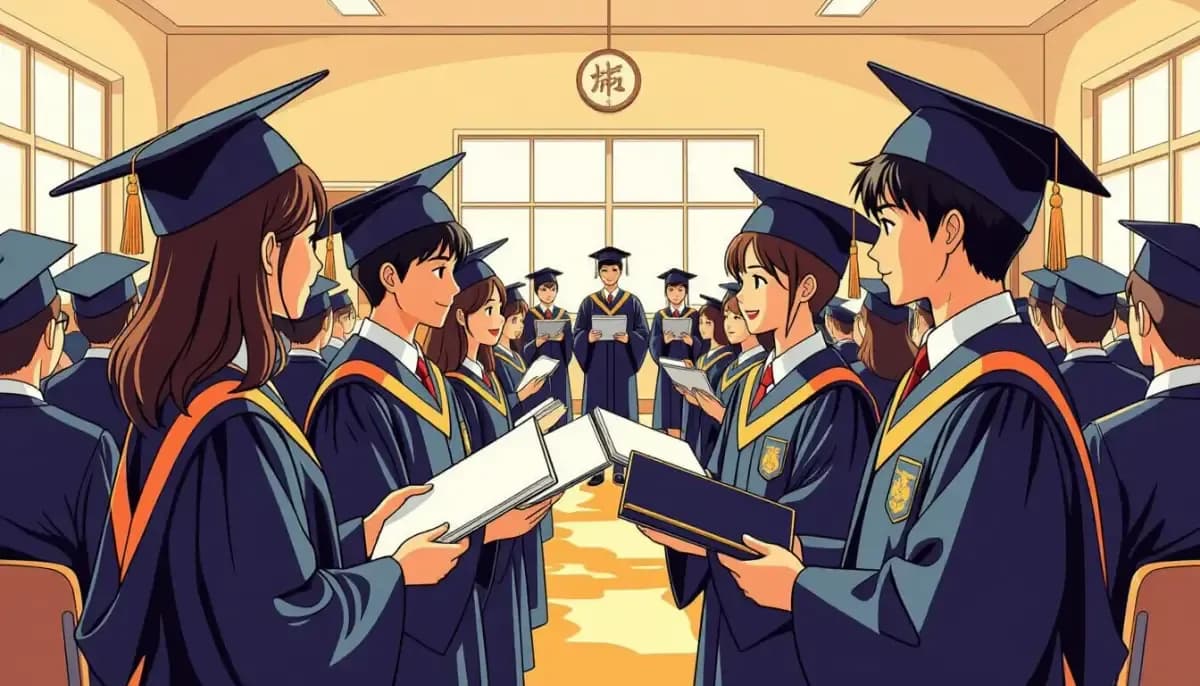
Everything foreign parents need to know about Japanese graduation ceremonies (sotsugyoshiki): dress code, traditions, schedule, and tips for navigating this emotional milestone.
Graduation Ceremonies in Japan: What Parents Should Know
Watching your child graduate is one of the most emotional milestones of parenthood — and in Japan, the experience is unlike anything most foreign families have ever seen. Known as 卒業式 (sotsugyōshiki), Japanese graduation ceremonies are deeply formal, quietly moving events that mark the end of one chapter and the beginning of another. For foreign parents attending for the first time, the solemnity can come as a surprise. There are no beach balls, no pop music, no confetti cannons. Instead, you'll find an atmosphere of genuine reverence — and quite likely, tears on nearly every face in the gymnasium.
This guide walks you through everything you need to know as a foreign parent: what to expect at the ceremony, how to dress, what traditions your child will participate in, and how to prepare for one of Japan's most important school rituals.
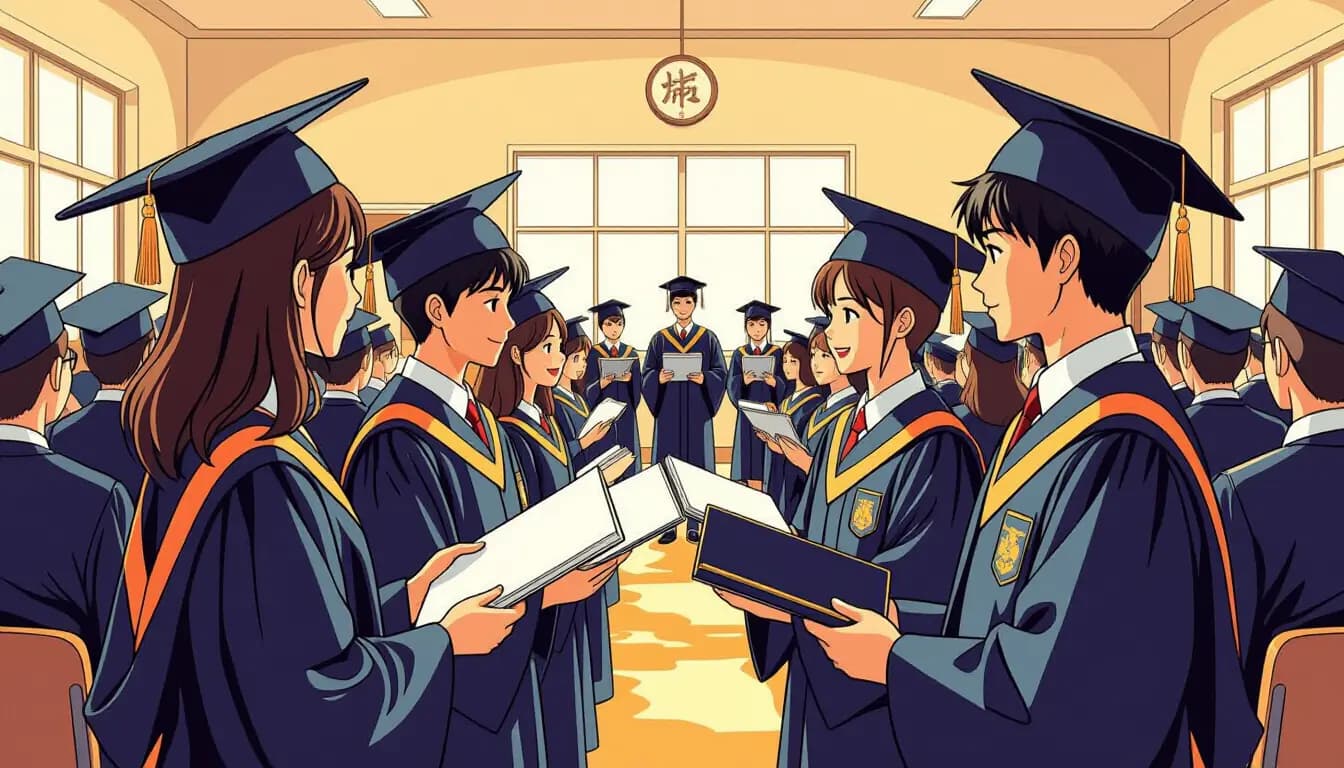
What Is Sotsugyōshiki? Understanding the Japanese Graduation Ceremony
The word sotsugyōshiki literally means "graduation ceremony." It takes place every March, at the close of Japan's academic year, which runs from April to March. The ceremony marks the end of elementary school (after 6th grade), junior high school (after 9th grade), high school (after 12th grade), and university. For most families, the elementary and junior high graduations are particularly significant milestones.
Unlike Western graduations — which often feel like parties — Japanese ceremonies are formal, structured events lasting one to two hours. They are held in the school gymnasium, decorated with floral arrangements and red-and-white drapes, with chairs arranged for students and parents. The ceremony begins with the raising of the national flag and singing of the national anthem, followed by the main diploma presentation and a series of speeches.
Each student's name is called individually. The student walks to the front of the gymnasium, bows, receives their diploma from the school principal — typically enclosed in a black protective cylinder — and returns to their seat. The formality of this moment is intentional: every student is honored individually and recognized for completing their journey.
Japan's approach to education produces remarkable outcomes. The country's high school graduation rate is approximately 96%, among the highest in the world, and around 61% of graduates proceed directly to universities or junior colleges. These ceremonies celebrate not just an individual achievement, but the culmination of years of collective effort.
For foreign parents navigating the Japanese school system, it helps to read our overview of Japanese school milestones and coming-of-age traditions to understand how graduation fits into the broader cultural calendar.
The Ceremony Schedule: What Happens Step by Step
Knowing the sequence of events helps you prepare — and helps you avoid the awkward moment of not knowing when to stand, sit, clap, or bow.
| Stage | What Happens |
|---|---|
| Opening | National flag raised, national anthem sung (Kimigayo), guests seated |
| Roll Call | Class teacher calls each student's name; students respond |
| Diploma Presentation | Principal calls each student individually to receive diploma |
| Principal's Address | Formal speech reflecting on the graduating class's journey |
| Guest Speeches | From the PTA chairman, local board of education representative |
| Farewell Songs | Students and underclassmen exchange farewell songs (送辞/答辞) |
| Choral Performance | Graduating class sings final song together |
| School Song | Final collective singing of the school song |
| Closing | Students file out; commemorative photo session begins |
One tradition that often surprises foreign parents is the farewell exchange (送辞 sōji / 答辞 tōji): an underclassman delivers a formal farewell speech to the graduating class, and a graduating student responds with their own speech reflecting on their school years. These speeches are often heartfelt and carefully prepared over many weeks, and it's common for both speakers — and many in the audience — to cry.
The choral component is particularly central to Japanese graduation. Students practice their graduation song for weeks, and the performance is treated with the same seriousness as a formal music recital. These songs — often slow, melodic pieces about parting and new beginnings — frequently bring parents to tears.
Dress Code: What to Wear as a Parent
This is one area where foreign parents often need guidance, as Japanese ceremony dress codes are stricter and more uniform than many Westerners expect.
For parents attending the ceremony, the standard attire is:
- Mothers: Dark-colored formal suits or dresses (navy, black, charcoal grey, dark brown). A-line skirt suits or tailored dresses are most common. Accessories should be modest — pearl jewelry is traditional and widely worn. Avoid white or very bright colors.
- Fathers: Dark business suits with white shirts and subdued ties. Black suits are the most formal choice; navy and charcoal are also appropriate.
The key rule: Graduation ceremonies call for dark, muted tones. This is the opposite of entrance ceremonies in April, where lighter colors are more acceptable. At a graduation, wearing bright red, loud patterns, or overly casual clothing will make you stand out in a way that Japanese families will notice.
For the children:
- Junior high and high school students: Full school uniform, worn immaculately.
- Elementary school girls: Formal dresses with jackets, or increasingly, traditional hakama (a formal divided skirt worn over a kimono). Hakama for graduation has become very popular in recent years.
- Elementary school boys: Blazers, dress shirts, and ties; some schools also allow suits.
- University women: Hakama over kimono is extremely common and photographed extensively. Men typically wear suits or, less commonly, hakama as well.
Learn more about Japanese school uniform expectations throughout the year.
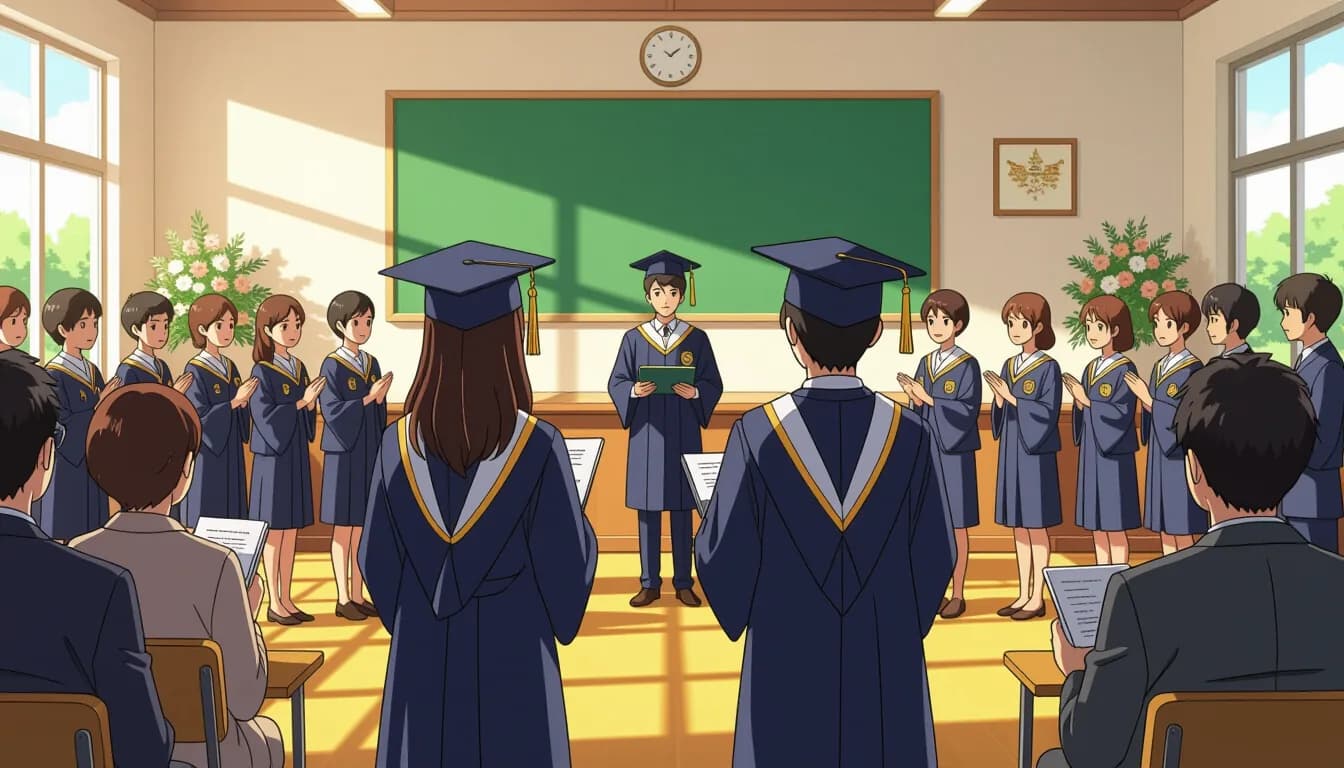
Graduation Traditions Your Child Will Participate In
Japanese graduation is rich with traditions that your child will likely treasure long after the ceremony is over. Understanding these rituals helps you support your child and participate meaningfully.
The Second Button (第二ボタン, Dai-ni Botan) At high school graduation, it's a long-standing tradition for graduating male students to gift their second uniform button — the one closest to the heart — to someone they have romantic feelings for. Girls who ask for this button are expressing their affection, and receiving the button is considered a significant gesture. This tradition has its roots in post-war Japan and remains very much alive in Japanese schools today.
Randoseru Photos At elementary school graduation, children often bring their iconic randoseru (the structured leather backpacks worn by elementary students) to take commemorative photos — sometimes recreating the exact pose from their entrance ceremony photo six years earlier. This side-by-side comparison of a tiny first-grader and a confident 6th-grader is one of the most emotionally resonant graduation traditions in Japan, and many parents frame these photos together at home.
Blackboard Art Before or after the ceremony, students often decorate the classroom chalkboard with colorful artwork, messages, and drawings reflecting their six years together. This tradition has become enormously popular on social media in Japan, with graduating classes spending hours creating elaborate murals on their final day.
Shaon-kai (謝恩会) This is an optional but beloved post-graduation tradition, especially at elementary and university level. The shaon-kai — literally "gratitude meeting" — is an evening party organized by the graduating class (with parent help) to thank their teachers. It's typically held at a restaurant or hotel, and may include student performances, a photo slideshow of school memories, speeches, and the presentation of gifts to teachers. As a foreign parent, you may be asked to help organize or contribute to this event through the PTA.
For more about PTA responsibilities and how to navigate parent involvement, Living in Nihon has a helpful guide for foreign parents.
Before Graduation Day: The Farewell Ceremony and Pre-Ceremony Preparations
The official graduation ceremony is actually preceded by several weeks of preparation and a separate farewell celebration organized by the school's student body.
The Farewell Ceremony (okurukai / 送る会) Months before the official graduation ceremony, the school's current students organize a farewell celebration for the graduating class. This event features video compilations of school memories, live musical performances, group games, messages from former teachers, and heartfelt well-wishes from younger students. It's a more relaxed, student-run event compared to the formal ceremony — and often even more emotional. Even students who rarely show emotion tend to cry by the end.
Graduation Practice Japanese schools take ceremony rehearsal seriously. In the weeks before graduation, students practice their bowing technique, how to walk to the front, how to receive their diploma with both hands, and how to return to their seat. The choral group rehearses their songs repeatedly. By the time the actual ceremony arrives, every student knows exactly what to do.
For Parents: What to Prepare
- Check the school notice (お知らせ): You'll receive a formal letter from the school with the ceremony date, time, and specific instructions for parents. Use a translation app if needed.
- Arrive early: Seating for parents is first-come, first-served in most public schools. Arriving 30-45 minutes before the ceremony begins is common.
- Prepare tissues: Many parents consider this non-negotiable.
- Camera rules: Check your school's photography policy. Many schools allow photography during the diploma presentation but restrict filming in certain areas. Some schools prohibit posting photos to social media to protect student privacy.
For Work in Japan has practical guidance on school event participation for foreign parents that applies to graduation as well.
After the Ceremony: What Comes Next
Immediately after the ceremony, students gather with their classmates and homeroom teacher for commemorative group photos. These photos are cherished, and most families also hire a professional school photographer to capture individual and family portraits.
Following the official ceremony, families typically go home together or to a restaurant for a celebratory meal. Some schools provide a special bento lunch box for students on graduation day.
Practical next steps depend on the graduation level:
For elementary school graduates, the transition to junior high school begins almost immediately after spring break. Parents may need to prepare new uniforms, different school supplies, and — if moving from public to private junior high — formally notify the public school district of the change. Understanding the transition to junior high school can help foreign families navigate this shift.
For junior high school graduates, spring break is also a time of high anticipation: high school entrance exam results are frequently announced around the same time as graduation, meaning students may receive both news simultaneously. Explore what to expect from high school in Japan as your child prepares for this next chapter.
For high school graduates, university in Japan is the next major milestone for many students. Understanding the entrance exam system and university culture is essential preparation.
For a broader look at the academic calendar and what major events fall throughout the year, Chuukou Benkyou's guide to the yearly school schedule is an excellent reference for families with children in junior high or high school.
Tips for Foreign Parents: How to Navigate the Ceremony Gracefully
Attending a Japanese graduation ceremony as a foreign parent can feel intimidating — especially if your Japanese is limited. Here are practical strategies to help you feel prepared and present.
Communicate with the homeroom teacher in advance. If you have questions about the ceremony format, what to bring, or how to dress, emailing the homeroom teacher a week or two before is completely appropriate. Many teachers are happy to help foreign parents understand the expectations.
Bring a trusted interpreter if possible. If you have a bilingual Japanese friend or neighbor, inviting them to accompany you can make the experience far more meaningful. They can translate the speeches in real-time and help you understand the farewell song lyrics.
Use translation apps during the ceremony. Google Translate's camera mode works well for printed programs and notices. If you receive a written program at the door, you can photograph and translate the schedule to follow along.
Connect with other foreign parents. Many international families find that connecting with other expat parents — through groups, forums, or school events — gives them a community to ask questions and share experiences. Check what community and support networks exist for foreign families in Japan in your area.
Embrace the emotion. Graduation in Japan is designed to make you cry — and there's no stigma in doing so. Parents cry. Teachers cry. Students cry. Bring tissues, let yourself feel it, and know that you're participating in a ceremony that millions of Japanese families hold deeply sacred.
For additional perspective on how Japanese graduation differs from ceremonies abroad, Japan Ich has a great comparison for international families. You can also explore the beautiful traditions of the ceremony through Belonging Japan's cultural guide to graduation ceremonies.
Conclusion
Japanese graduation ceremonies are among the most moving educational experiences a foreign parent can witness. The sotsugyōshiki blends formal tradition with genuine emotion — from the careful diploma presentation to the tearful farewell songs — and for families who have spent years navigating the Japanese school system, it is a deeply satisfying moment of arrival.
As a foreign parent, your job is simple: dress appropriately, arrive early, bring tissues, follow the lead of the parents around you, and be present for your child's milestone. The language barrier matters far less than your love and your attention.
Graduation is just one of many milestones in your child's Japanese school journey. To understand the full picture of ceremonies, traditions, and coming-of-age moments in Japan, return to our complete guide to milestones and ceremonies in Japan and continue exploring with your child every step of the way.

Originally from Vietnam, living in Japan for 16+ years. Graduated from Nagoya University, with 11 years of professional experience at Japanese and international companies. Sharing practical information for foreign parents raising children in Japan.
View Profile →Related Articles

Creating Family Traditions That Blend Both Cultures
Discover practical strategies for multicultural families in Japan to blend two cultures through intentional traditions, bilingual rituals, and bicultural identity-building for children.
Read more →
How to Mark Milestones Across Two Cultures
A complete guide for bicultural and expat families in Japan on how to celebrate childhood milestones across two cultures — from Shichi-Go-San to birthday traditions, with practical tips for blending both worlds.
Read more →
Half Coming of Age (Nibun no Ichi Seijinshiki)
Everything foreign parents need to know about the Nibun no Ichi Seijinshiki - Japan's Half Coming of Age Ceremony for 10-year-olds. What it is, what happens, and how to participate.
Read more →
School Photo Day and Memory Traditions in Japan
Everything expat parents need to know about school photo day traditions in Japan — from the entrance ceremony shot to graduation albums (sotsugyou arubamu), shashin hanbai ordering systems, yosegaki, and purikura culture.
Read more →
Preschool Recitals and Performance Events
Everything foreign parents need to know about preschool recitals and performance events in Japan — happyokai, undoukai, sotsuenshiki, and more. Practical tips for expat families.
Read more →
Randoseru Buying: Choosing Your Child's School Bag
Everything foreign families need to know about buying a randoseru in Japan — prices, materials, colors, brands, and when to shop. Practical tips for expat parents.
Read more →