
Hiragana and Katakana Learning Tips for Kids

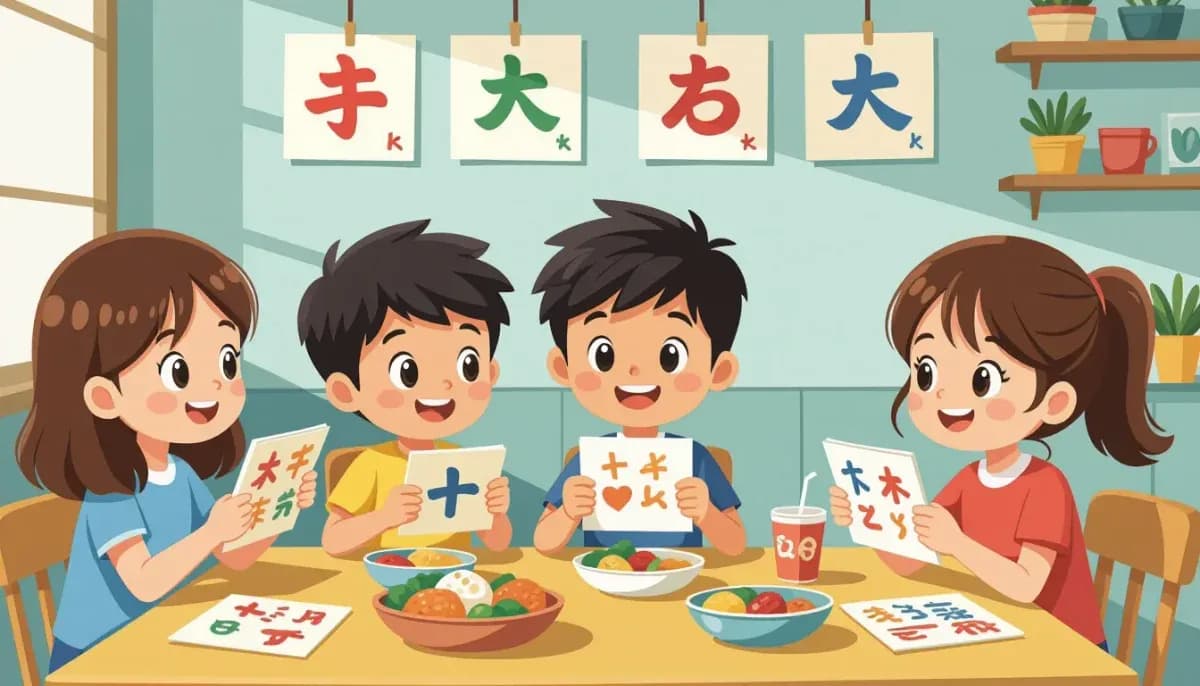
Practical tips to help your child master hiragana and katakana fast. Mnemonics, apps, daily schedules, and strategies for foreign kids living in Japan.
Hiragana and Katakana Learning Tips for Kids in Japan
If your child is growing up in Japan or learning Japanese, mastering hiragana and katakana is the essential first step. These two phonetic writing systems — together called "kana" — are the foundation of Japanese literacy. Unlike kanji (Chinese-origin characters), kana can be fully learned in a matter of weeks. With the right strategies, even young children can become kana-confident quickly.
This guide is written for foreign parents raising children in Japan, covering everything from how Japanese children learn kana to the best apps, games, and techniques for making the learning process fun and effective.
Understanding Hiragana and Katakana: The Basics
Before diving into tips, it helps to understand exactly what your child is learning:
- Hiragana (ひらがな): 46 characters used for native Japanese words, grammatical particles, verb and adjective endings, and as reading aids (furigana) on kanji.
- Katakana (カタカナ): 46 characters primarily used for foreign loanwords (like コーヒー koohii for "coffee"), scientific terms, and onomatopoeia.
Together, there are 92 basic kana characters. Both sets represent the exact same sounds — it is the usage context that differs. Think of hiragana as the "default" script for Japanese, and katakana as the "special cases" script.
Key fact: With a focused, strategic approach, most children — and adults — can memorize all 92 characters in just 1 to 2 weeks.
For a broader view of how Japanese literacy develops within the school system, see our guide on Elementary School in Japan: A Complete Guide for Foreign Parents.
Why Learn Hiragana First?
Japanese children always begin with hiragana, and language educators agree this is the right order. Here is why:
- Hiragana is more common. Japanese texts — especially children's books, manga, and school materials — are saturated with hiragana. Immediate reading rewards motivate children.
- Hiragana builds the foundation. Once your child knows the 46 hiragana sounds, learning katakana is significantly easier because both scripts represent identical phonetic sounds — only the shapes differ.
- Hiragana is visually gentler. The rounded, flowing strokes of hiragana are generally considered easier for young children to form than katakana's more angular lines.
Academic research supports this: a study of 618 Japanese primary school children (Grades 1–6) found that children with developmental dyslexia made significantly more errors in katakana writing than hiragana — reflecting that katakana's angularity makes it inherently more challenging to produce.
For more on how Japanese children learn language at different developmental stages, visit our article on Teaching Japanese to Foreign Children: Methods and Tips.
Technique 1: Use Mnemonics (Memory Hints)
Mnemonics — memory tricks that link a character's shape to its sound — are widely regarded as the most effective and fastest way to learn kana. The principle is simple: associate each character with a picture or story that it visually resembles.
Examples:
- き (ki): looks like a key — ki = key
- ね (ne): looks like a sleeping cat with a curled tail — the Japanese word for cat is neko (ねこ)
- ア (a): the katakana shape resembles an axe coming down
Resources like Tofugu's free kana learning books provide high-quality mnemonic images for every character, making the process systematic and memorable. The Dr. Moku app (available for iOS and Android) takes this further with animations and storylines that embed the mnemonics more deeply.
For young children: Draw the mnemonic pictures together. When a child makes the image themselves, retention improves dramatically. Turning it into an art project makes it both educational and fun.
Technique 2: Spaced Repetition — Little and Often
One of the biggest mistakes parents make is trying to cram kana study into one long weekend session. Research consistently shows that short, frequent practice beats infrequent marathon sessions.
The spaced repetition principle in practice: 10 minutes twice a day, every day is more effective than 140 minutes once a week — even though the total time is the same. Your child's brain consolidates memory during sleep, so daily review allows the kana to move from short-term to long-term memory.
Practical daily schedule:
- Morning (5–10 min): Review yesterday's characters with flashcards or an app
- Evening (5–10 min): Introduce 2–3 new characters, then review all learned so far
Apps like Real Kana (free) and Kana Pro (free) are excellent for daily spaced repetition drills and work well for children aged 6 and above.
Technique 3: Make It Physical — Worksheets and Writing Practice
While reading is more immediately practical (since most "writing" is now done by typing), handwriting practice accelerates memorization through muscle memory. The act of physically forming each stroke reinforces the character's shape.
Tips for young children:
- Use large-grid practice sheets — Japan's stationery stores (such as Daiso) sell hiragana/katakana writing practice books specifically for young learners.
- Follow proper stroke order. Japanese characters have specific stroke sequences, and learning the correct order from the beginning builds good habits and helps characters look right.
- Color the characters. Using different colors for different character groups (e.g., the a-row in red, the ka-row in blue) creates visual memory cues.
Free printable worksheets are available through sites like MLC Japanese Language School Tokyo: Hiragana and Katakana charts and practice sheets.
Technique 4: Use Your Everyday Environment in Japan
One of the greatest advantages of raising a child in Japan is the total immersion environment. Hiragana and katakana are literally everywhere — on food packaging, street signs, train stations, restaurant menus, and children's TV shows.
How to leverage daily life:
- At the supermarket: Point to food labels and read the katakana together (most imported food names are in katakana).
- On the train: Read station names. Many stations are displayed in hiragana, katakana, and romaji.
- Watching NHK for School (Eテレ): Japanese children's educational programming frequently features hiragana and is designed for early literacy.
- Reading children's books: Picture books like those in the "Noisy Village" (Moomin) series or simple hiragana-only books from the library expose children to characters in meaningful context.
This environmental exposure means that children living in Japan often internalize kana faster than children studying Japanese abroad.
| Learning Environment | Estimated Time to Master Basic Kana |
|---|---|
| Immersive (living in Japan) | 1–2 weeks with study |
| Semi-immersive (Japanese school + home study) | 2–4 weeks |
| Non-immersive (studying abroad) | 3–8 weeks |
| No structured study (passive exposure only) | Several months to years |
For a comprehensive look at language learning strategies in Japan, see our guide on Raising Bilingual Children in Japan: Strategies and Advice.
Top Apps and Tools for Kids
| App/Tool | Platform | Cost | Best For |
|---|---|---|---|
| Dr. Moku Hiragana | iOS/Android | ~$5.99 | Visual learners, animated mnemonics |
| Dr. Moku Katakana | iOS/Android | ~$7.99 | Same as above for katakana |
| HIRAGANA Memory Hint | iOS/Android | Free | Multiple quiz formats |
| Real Kana | iOS/Android/Web | Free | Speed drills, font variety |
| Tofugu Kana Quiz | Web | Free | Detailed results, targeted practice |
| Kana Pro | Web | Free | Daily practice, spaced repetition |
| JapanesePod101 (YouTube) | YouTube | Free | Overview videos, pronunciation |
For bilingual and multilingual families navigating language challenges, our article on Heritage Language Maintenance for Children in Japan offers additional strategies.
Common Mistakes to Avoid
1. Teaching romaji first Romaji (romanized Japanese) can become a crutch that delays kana acquisition. Children who learn romaji first often resist transitioning to kana. If possible, introduce hiragana directly.
2. Expecting perfect kanji alongside kana Kana is the first step. Kanji will come gradually through school exposure. Do not pressure your child to learn kanji until kana is solidly in place.
3. Mixing hiragana and katakana too early Learn all 46 hiragana first. Only move to katakana once hiragana is well-established. Mixing both simultaneously often leads to confusion.
4. Skipping pronunciation practice Kana represents sounds, not just shapes. Always pair character recognition with audio — say the sound aloud when practicing each character.
How Foreign Children Fit Into the Japanese School System
If your child attends a Japanese public school, kana learning will be handled systematically in Grade 1. Japanese children are expected to know all hiragana before entering elementary school — often learned at kindergarten (yochien) or daycare (hoikuen).
For foreign children who join a Japanese school mid-year or at an older age, schools typically provide supplemental Japanese language support. However, the pace may be fast for a true beginner. Supplementing school learning with home practice using the techniques above is highly recommended.
See our related guides:
- Kindergarten in Japan (Yochien): Everything Foreign Parents Need to Know
- The Complete Guide to Daycare and Hoikuen in Japan
For a comprehensive overview of the Japanese language learning journey, Living in Nihon offers an excellent resource: Complete Japanese Language Learning Roadmap.
For work-related Japanese language information and resources for families in Japan, see For Work in Japan.
If your child is preparing for Japanese school exams or needs study support for middle school and high school levels, Chuukou Benkyou provides exam preparation resources in Japanese.
Quick-Start 2-Week Kana Plan
Here is a practical 2-week plan for parents to use with children aged 5 and up:
Week 1 — Hiragana
- Days 1–2: a, i, u, e, o rows (あいうえお)
- Days 3–4: ka, ki, ku, ke, ko (かきくけこ)
- Days 5–6: sa, si, su, se, so and ta, ti, tu, te, to rows
- Day 7: Review all 25 characters learned so far with games and flashcards
Week 2 — Complete Hiragana + Begin Katakana
- Days 8–9: na, ni, nu, ne, no and ha, hi, fu, he, ho rows
- Days 10–11: ma, mi, mu, me, mo and ya, yu, yo rows
- Days 12–13: ra, ri, ru, re, ro and wa, wo, n
- Day 14: Full review + introduce first 10 katakana characters
By the end of two weeks, your child will have a solid hiragana foundation and be well on their way with katakana. From there, consistent daily review and real-world reading practice will cement the knowledge permanently.
Learning kana is one of the most empowering milestones in a child's Japanese language journey. Once they can read hiragana and katakana, an entire world of books, games, signs, and social interaction opens up — making life in Japan richer and more connected.

Originally from Vietnam, living in Japan for 16+ years. Graduated from Nagoya University, with 11 years of professional experience at Japanese and international companies. Sharing practical information for foreign parents raising children in Japan.
View Profile →Related Articles
Summer Immersion Programs for Japanese Language Learning
Discover the best summer immersion programs for Japanese language learning for children and teens. From in-Japan schools to US-based camps, find the right program with costs, age requirements, and tips for expat families.
Read more →
Overcoming Japanese Language Barriers in School
A complete guide for foreign families on overcoming Japanese language barriers in school. Learn practical strategies, support resources, and what to expect for your child in Japan's education system.
Read more →
How Long Does It Take Kids to Become Fluent in Japanese?
Wondering how long it takes expat children to become fluent in Japanese? This guide covers realistic timelines by age group, immersion strategies, and tips to help your child thrive in Japan.
Read more →
Kumon and Learning Programs for Japanese Language
Explore Kumon's Japanese Language Program and other top learning options for foreigners in Japan. Costs, enrollment tips, and how to choose the right program for your child or yourself.
Read more →
Japanese Language Playgroups and Immersion Activities
A complete guide to Japanese language playgroups and immersion activities for foreign children in Japan. Find the best programs, strategies, and tips for raising bilingual kids.
Read more →
Using Anime and TV Shows to Help Kids Learn Japanese
A complete guide for foreign parents in Japan on using anime and children's TV shows to build kids' Japanese skills. Includes recommended shows by age, subtitle strategies, and practical daily habits that actually work.
Read more →