
Japanese Language Support Programs in Public Schools

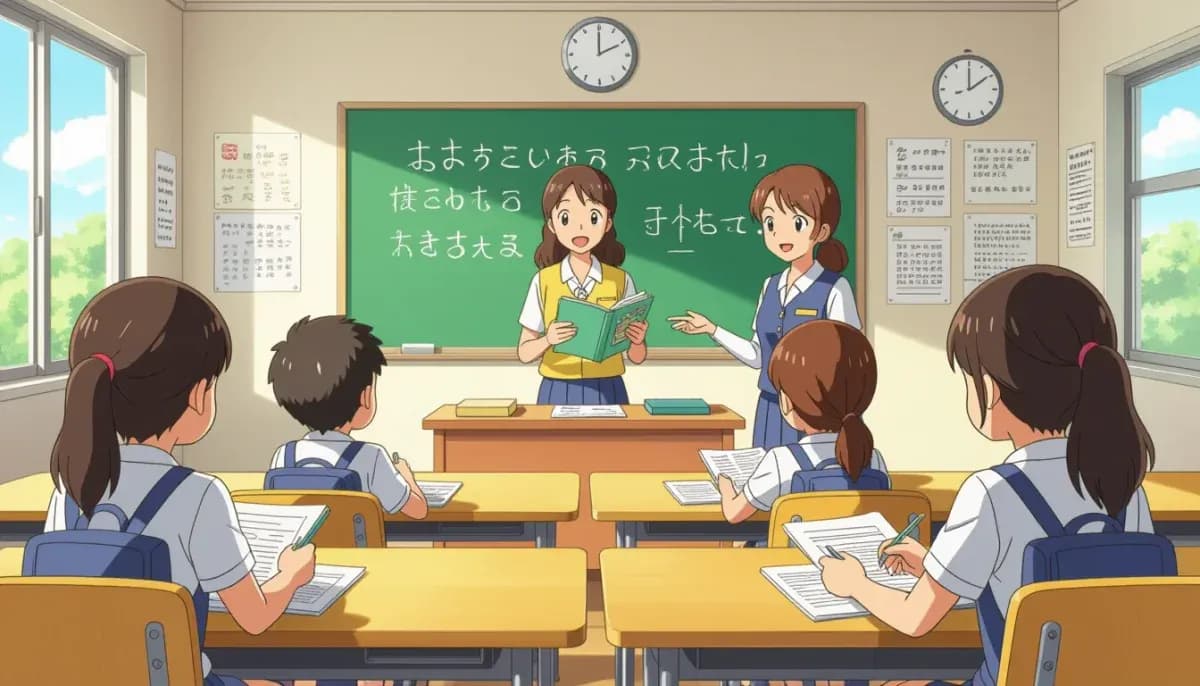
Complete guide to Japanese language support programs in public schools for foreign children. Learn about JSL curriculum, regional programs, NPOs, and how to access support for your child in Japan.
Japanese Language Support Programs in Public Schools: A Complete Guide for Foreign Families
Enrolling your child in a Japanese public school is a significant milestone — but if your child doesn't yet speak Japanese, the first few months can feel overwhelming for everyone. The good news: Japan's public school system has a growing network of Japanese language support programs specifically designed to help foreign children settle in, build language skills, and thrive academically. This guide covers everything you need to know about these programs, from how they work to how to access them.
Understanding the Scale: Why Language Support Matters
The number of foreign children in Japan's public schools has reached record highs. As of 2023, 114,853 foreign students were enrolled in Japanese public elementary and junior high schools — a 23.3% year-on-year increase. Of those, an estimated 41.5% require Japanese language instruction to follow regular classes.
In fiscal 2023 alone, 69,123 students were formally identified as needing Japanese as a Foreign Language (JFL) support — nearly double the figure from a decade earlier. Despite this growth, approximately 970 foreign children were confirmed as not enrolled at all, and another 8,601 had uncertain attendance status.
The stakes are high. Students who don't receive adequate language support face serious long-term consequences:
- High school dropout rate: 8.5% for students who needed language support (vs. 1.1% national average — 8 times higher)
- University/college advancement: only 46.6% (vs. ~75% nationally)
- Employment after high school: nearly 40% enter non-regular (part-time/temp) employment
These numbers underscore why accessing Japanese language support early — and persistently — is so important for your child's future.
For a broader overview of how Japan's school system works for foreign families, see our Complete Guide to the Japanese Education System for Foreign Families.
How Japanese Language Support Programs Work in Public Schools
The JSL Special Curriculum
Since 2014, the Ministry of Education (MEXT) has operated a special curriculum for Japanese as a Second Language (JSL). Under this framework, children who need language support can receive up to 280 hours of JSL instruction per year, which are formally counted as school credits — usually substituting for Japanese language or other subjects.
In practice, most junior high students receive around 200 hours per year, which many educators and researchers consider insufficient for preparing students for high school entrance exams. The curriculum was extended to high schools in 2023, a landmark change recognizing older students' needs.
What happens during JSL classes:
- Small-group or one-on-one instruction with a JSL specialist
- Emphasis on everyday school Japanese (classroom instructions, textbook language)
- Gradual transition to academic Japanese for subject learning
- Communication with parents through interpreters when available
Pull-Out vs. In-Class Support
Depending on your child's school, support may be delivered as:
| Model | Description | Pros | Cons |
|---|---|---|---|
| Pull-out JSL class | Child leaves regular classroom for dedicated language sessions | Focused instruction, less overwhelming | Misses regular class content during sessions |
| In-class support | JSL teacher or assistant joins regular class | No missed content | Less intensive language focus |
| Separate JSL room | Child spends most of the day in a special room, joining regular class gradually | Maximum language immersion | Social separation from peers |
| Combination model | Mix of pull-out and in-class | Flexible | Requires strong coordination |
The model used varies by school and local government resources. Urban areas (Tokyo, Aichi, Kanagawa) tend to have more dedicated facilities; rural schools often have limited options.
Which Languages Are Most Supported?
Support resources — including bilingual instructors and translated materials — are most available for the largest language groups. As of fiscal 2023, the top native languages among students needing JFL support were:
| Language | Students Needing Support |
|---|---|
| Chinese | 13,754 |
| Portuguese | 12,579 |
| Filipino | 11,121 |
| Spanish | ~6,000+ |
| Vietnamese | ~5,500+ |
| English | ~3,000+ |
If your child's native language is less common (e.g., Turkish, Arabic, Amharic), finding bilingual support at school may be harder. In these cases, community NPOs and volunteer programs become especially important.
Regional Programs: What Different Cities Offer
Support quality varies enormously by region. Here's a snapshot of some of the more developed local programs:
Aichi Prefecture (Highest Concentration)
Aichi has the most foreign students needing JSL support (13,984), partly due to its large Brazilian and Filipino communities. Many schools in Toyota, Hamamatsu, and Nagoya have dedicated JSL rooms and experienced bilingual staff.
Matsudo City, Chiba
A model city often cited for its comprehensive approach:
- 15 of 45 elementary/middle schools have dedicated JFL classrooms
- 20-day pre-enrollment intensive program before the regular school year starts
- 70 dedicated support staff and volunteers across the city
Yokohama
Operates the Himawari Japanese-language support center for recently arrived children, providing intensive initial support before placement in a neighborhood school.
Kawaguchi, Saitama
Home to a large Kurdish community and ~3,000 non-Japanese children in public schools. The city employs over 90 supplementary instructors and has a well-documented network of evening and weekend classes.
From Fiscal 2024: New National 20-Day Readiness Program
A new nationwide initiative launched in fiscal 2024 requires municipalities to offer a 20-day school readiness program before newly arrived foreign children begin regular classes. This is a significant step toward standardizing initial support across Japan.
For more on what to expect when your child first starts school, see our guide to Elementary School in Japan for Foreign Parents.
NPO and Volunteer Programs: Filling the Gaps
Public school programs, while improving, often cannot meet the full range of students' needs — especially outside urban centers. A robust network of NPOs and volunteer groups has grown to fill the gaps.
SFCS (Supporting Foreign Children to Attend School)
Founded in 2021, SFCS offers 100 hours of free online Japanese instruction for foreign children, funded through crowdfunding and run by volunteers from Reitaku University. Their curriculum is structured for quick practical gains:
- After 30 hours: students can discuss everyday topics
- After 100 hours: some students can articulate career goals and navigate school independently
Kawaguchi Voluntary Evening Schools
Two long-running programs in Kawaguchi:
- Kawaguchi Voluntary Evening School: ~40 years in operation, near JR Kawaguchi Station, free for ages 13+, currently has a waiting list
- Kawaguchi Japanese Class for Children: serves ages 6–15, primarily Chinese and Vietnamese students
YSC Global School
A Tokyo-based NPO serving approximately 350 students ages 6–18 on weekday evenings and weekends. YSC has developed its own specialized Japanese textbooks and also provides psychological support and career counseling — recognizing that language is only one barrier foreign children face.
These NPOs are valuable even if your child has public school support. Evening or weekend Japanese classes supplement school instruction and give children a peer community of others in similar situations.
What to Do When Your Child Enrolls: Practical Steps
1. Contact the School Board (Kyoiku Iinkai) First
Before your child's first day, contact your municipal board of education. Ask specifically:
- Does this school have a JSL teacher (日本語指導担当教員)?
- Is there an interpreter or bilingual support person?
- Will my child receive a JSL assessment on enrollment?
2. Request a Language Assessment
Your child should be assessed for their current Japanese level within the first weeks. This assessment determines how many JSL hours they receive and which support model applies.
3. Keep Records of JSL Hours
The 280-hour annual cap sounds generous, but given school calendars and scheduling constraints, many children receive far fewer. Ask the school to document how many JSL hours your child is receiving each term.
4. Connect with Parent Networks
Groups like Oyanokai (oyanokai.org) connect parents of foreign children in Japan, sharing information about local support resources and navigating the school system.
5. Supplement with Home Practice and Outside Programs
Even with strong school support, consistent home practice accelerates language acquisition. See our guide on Teaching Japanese to Foreign Children: Methods and Resources for strategies that work alongside school programs.
High School Entrance: Special Consideration Exams
One concrete result of expanding language support is the growth of special selection exams for high schools, designed for recently arrived foreign students. As of 2025:
- 12 schools in Saitama Prefecture offer special entrance exams
- Eligibility: typically students who have resided in Japan 3 years or less and are of equivalent age to Japanese 3rd-year middle school students or older
- Exams may be conducted in Japanese or English, and often include an essay and interview rather than standard multiple-choice tests
If your child is in junior high school and preparing for high school entrance exams, ask the municipal board of education whether special selection options are available in your area. For a full overview of high school pathways, see High School in Japan: Options and Guidance for Foreign Families.
Resources and Further Reading
For more detailed research on the current state of Japanese language support for foreign children, these sources are particularly useful:
- E-Housing: Foreign Children in Japanese Public Schools — comprehensive overview with current enrollment statistics
- Nippon.com: Volunteer Evening Schools in Kawaguchi — detailed look at how volunteer programs operate
- Japan Today: Record Numbers of Foreign Children Need Japanese Language Support — current statistics and policy context
- Nippon.com: In-Depth Coverage of Foreign Students and Language Support — policy analysis and school-level data
For broader context on living in Japan as a family, Living in Nihon covers life in Japan for foreign residents, For Work in Japan provides guidance for working parents navigating Japanese systems, and Chuukou Benkyou offers resources for middle and high school students in Japan.
Conclusion
Japanese public schools have come a long way in supporting foreign children's language acquisition, but the system remains uneven — well-resourced in some cities, thin in others. The most important thing you can do as a parent is to actively engage with the school from day one: ask about JSL hours, request assessments, connect with local NPO programs, and supplement school support with home practice and community resources.
Your child's Japanese will grow faster than you expect. With the right support in place during those critical first one to two years, most foreign children achieve functional academic Japanese and go on to thrive in the Japanese school system.

Originally from Vietnam, living in Japan for 16+ years. Graduated from Nagoya University, with 11 years of professional experience at Japanese and international companies. Sharing practical information for foreign parents raising children in Japan.
View Profile →Related Articles
Summer Immersion Programs for Japanese Language Learning
Discover the best summer immersion programs for Japanese language learning for children and teens. From in-Japan schools to US-based camps, find the right program with costs, age requirements, and tips for expat families.
Read more →
Overcoming Japanese Language Barriers in School
A complete guide for foreign families on overcoming Japanese language barriers in school. Learn practical strategies, support resources, and what to expect for your child in Japan's education system.
Read more →
How Long Does It Take Kids to Become Fluent in Japanese?
Wondering how long it takes expat children to become fluent in Japanese? This guide covers realistic timelines by age group, immersion strategies, and tips to help your child thrive in Japan.
Read more →
Kumon and Learning Programs for Japanese Language
Explore Kumon's Japanese Language Program and other top learning options for foreigners in Japan. Costs, enrollment tips, and how to choose the right program for your child or yourself.
Read more →
Japanese Language Playgroups and Immersion Activities
A complete guide to Japanese language playgroups and immersion activities for foreign children in Japan. Find the best programs, strategies, and tips for raising bilingual kids.
Read more →
Using Anime and TV Shows to Help Kids Learn Japanese
A complete guide for foreign parents in Japan on using anime and children's TV shows to build kids' Japanese skills. Includes recommended shows by age, subtitle strategies, and practical daily habits that actually work.
Read more →