
JLPT for Kids: Japanese Proficiency Testing for Young Learners


Complete guide to JLPT for kids in Japan. Learn about levels, age requirements, registration, test day tips, and preparation strategies for young Japanese language learners.
JLPT for Kids: Japanese Proficiency Testing for Young Learners
If your child is learning Japanese in Japan, you may have heard about the JLPT — the Japanese-Language Proficiency Test. Whether your family has been in Japan for a year or several years, the JLPT offers a meaningful milestone for young learners to demonstrate their Japanese skills. The good news? There is no minimum age requirement. Children as young as elementary school age take the JLPT every year, making it accessible to motivated kids at any stage of their language journey.
This guide covers everything foreign families in Japan need to know about the JLPT for kids — from understanding the levels and registration process, to preparation tips and what to expect on test day.
What Is the JLPT? An Overview for Families
The JLPT (日本語能力試験, Nihongo Nōryoku Shiken) is the world's most widely recognized Japanese language proficiency exam. Administered by the Japan Foundation and Japan Educational Exchanges and Services (JEES), it tests reading and listening skills in Japanese.
Key facts:
- Five levels: N5 (beginner) through N1 (advanced)
- Held twice a year in Japan: July and December
- No age restrictions — applicants range from elementary school pupils to working adults
- Certificate never expires — once your child passes, the certification is permanent
- 1.72 million applicants worldwide in 2024 — a record-breaking number
The JLPT does not test speaking or writing by hand, which can actually make it more approachable for younger children who are still building production skills but have strong reading and listening comprehension.
JLPT Levels Explained: Which Level Is Right for Your Child?
Understanding each level helps you set realistic goals for your young learner. Here is a breakdown of what each level requires and typical study hours:
| Level | Description | Vocabulary | Kanji | Study Hours (Estimate) |
|---|---|---|---|---|
| N5 | Basic Japanese, daily greetings and simple phrases | ~800 words | ~100 | 150–300 hours |
| N4 | Basic conversational Japanese | ~1,500 words | ~300 | 300–600 hours |
| N3 | Intermediate, everyday topics | ~3,700 words | ~650 | 450–900 hours |
| N2 | Near-advanced, newspapers and TV | ~6,000 words | ~1,000 | 600–1,200 hours |
| N1 | Advanced, complex texts | ~10,000 words | ~2,000 | 900–2,000+ hours |
For most children new to Japanese or enrolled in Japanese school for 1–2 years, N5 is a great starting point. Children attending Japanese public school who have been in Japan for 3+ years may be ready for N4 or even N3.
Pass rates provide useful context for setting expectations:
- N5: ~51% pass rate (highest of all levels)
- N4: ~37% pass rate
- N3: ~39% pass rate
- N2: ~40% pass rate
- N1: ~32% pass rate (most difficult)
The overall average pass rate across all levels is approximately 38%, which underscores that even N5 requires solid preparation.
Is the JLPT Appropriate for Children?
Many parents wonder whether an exam designed for adults is suitable for their child. The answer is yes, with some caveats.
Reasons the JLPT works well for children:
- The format is entirely multiple choice — no writing by hand, no speaking
- N5 content overlaps heavily with what children learn in their first years of Japanese school
- Passing provides a confidence boost and tangible recognition of progress
- The certificate can be useful later for school applications, scholarship programs, and more
Things to keep in mind:
- The test environment is formal — quiet exam halls with strict time limits
- N5 and N4 test duration is 1 hour 45 minutes, which can be long for younger children
- Children must be able to read hiragana, katakana, and some kanji
- A child who feels forced or pressured may develop a negative attitude toward Japanese learning
The ideal JLPT candidate is a child who wants to take the test, has been building Japanese skills consistently, and is ready for the challenge of a formal exam.
For more on supporting your child's bilingual journey, see our guide on Benefits of Raising Bilingual Children in Japan and Best Methods to Teach Children Japanese as a Second Language.
How to Register Your Child for the JLPT in Japan
Registration is straightforward but requires advance planning. Here is the step-by-step process for registering in Japan:
Step 1: Create a MyJLPT Account Visit the official JLPT Japan website and create a free account at jlpt.jp. You will register your child under your account.
Step 2: Check the Registration Window Applications open approximately 3–4 months before each test date. For July exams, registration typically opens in April. For December exams, registration opens around September.
Step 3: Complete the Application Fill in your child's personal details, select the test level, choose a test location, and upload a recent photo.
Step 4: Provide Residence Information Starting in 2026, only residents of Japan can take the JLPT in Japan. You will need to input your child's residence card number (在留カード番号) or your own as the parent/guardian.
Step 5: Pay the Exam Fee The exam fee is approximately ¥5,500 (prices may vary slightly by year). Payment can be made online via credit card or convenience store payment.
Step 6: Receive the Admission Ticket Your child's admission ticket (受験票) will be issued closer to the exam date. Print it out and bring it along with photo ID on test day.
For more on navigating bureaucratic processes in Japan as a foreign family, check Living in Nihon's complete guide for foreigners and the JLPT exam preparation guide at For Work in Japan.
What to Expect on JLPT Test Day
Knowing what test day looks like can help reduce anxiety for both parent and child.
Test center environment:
- Tests are held at designated universities, schools, or community centers across Japan
- Major test cities include Tokyo, Osaka, Nagoya, Fukuoka, Sapporo, and many others
- Arrive at least 30 minutes early — latecomers are not admitted after the exam begins
- Bring the printed admission ticket and a photo ID (residence card works)
During the exam:
- All instructions are in Japanese — prepare your child for this
- N5 and N4 tests include a vocabulary/grammar section, a reading section, and a listening section
- No dictionaries or electronic devices are allowed
- Pencils and erasers are required (mechanical pencils are usually accepted)
After the exam:
- Results are announced online and by mail approximately 2 months after the exam
- If your child passes, the official certificate arrives by mail
- If they do not pass, scores are still provided — useful for tracking progress
JLPT Preparation Tips for Young Learners
Preparation methods should be fun and age-appropriate. Here are strategies that work well for children:
1. Start with the Official Vocabulary and Kanji Lists Download the JLPT N5 or N4 word lists and create flashcards. Apps like Anki or Quizlet make this engaging for older children.
2. Use JLPT-Specific Workbooks Japanese bookstores like Kinokuniya and Junkudo carry dedicated JLPT prep books for each level, including illustrated materials designed for younger learners.
3. Take Official Practice Tests The JLPT website (jlpt.jp) offers free official sample questions for all levels. Doing a timed practice run helps children get comfortable with the exam format.
4. Build Listening Skills Through Daily Input Watching Japanese children's TV shows (NHK's おかあさんといっしょ, アニメ), listening to Japanese podcasts, and regular conversation with Japanese speakers all build the listening comprehension tested on the JLPT.
5. Read Simple Japanese Texts For N5, reading simple hiragana storybooks is great practice. For N3/N4, manga with furigana and NHK Web Easy are excellent resources.
6. Enroll in Supplementary Classes Many Japanese communities offer weekend Japanese language schools (補習校, hoshūkō) for children. These often incorporate JLPT preparation into their curriculum.
For broader context on how Japanese schools support foreign children's language development, see our articles on the Japanese school system and transition from elementary to junior high school in Japan.
You can also explore JLPT pass rate statistics and study tips at JLPTsensei and check the official JLPT statistics page for the latest participation data.
JLPT vs. Other Japanese Language Tests for Children
The JLPT is not the only option. Here is a comparison of the most common Japanese language assessments available to children:
| Test | Age Range | Skills Tested | Format | Notes |
|---|---|---|---|---|
| JLPT N5–N1 | Any age | Reading, Listening | Multiple choice | No speaking/writing |
| J.TEST | Any age | Reading, Listening, Writing | Mixed | More detailed, less recognized |
| Kanken (漢検) | Any age | Kanji reading & writing | Written | Kanji-focused only |
| BJT (Business Japanese) | Adults mainly | Business Japanese | Multiple choice | Not suitable for children |
For most foreign children in Japan, the JLPT remains the gold standard certification because of its international recognition and straightforward format. Kanken is a great complementary test if your child wants to demonstrate their kanji mastery specifically. You can find more information about Kanken preparation at 中高勉強 (Chuukou Benkyou), a resource for exam preparation in Japan.
Frequently Asked Questions About JLPT for Kids
Can a 6-year-old take the JLPT? Yes. There is no minimum age. However, realistically, most children under 8–9 may find the formal exam setting challenging. Many families wait until their child is around 10+ before registering.
Does my child need to be enrolled in a Japanese school? No. Any child learning Japanese — whether at international school, home, or a language class — can take the JLPT.
What if my child fails? Failing is a normal part of the process. The score report will show where they need improvement, and they can retake the exam at the next sitting. JLPT certificates are only issued upon passing — there is no partial pass.
Can we take the JLPT outside Japan? Yes. The JLPT is administered in over 90 countries. Check the official JLPT website for the list of test cities and schedules outside Japan, as some locations only offer the December sitting.
Is the JLPT recognized by Japanese schools and universities? Yes. JLPT certification, especially N3 and above, is recognized for university admissions, scholarship applications, and certain school entrance processes in Japan.
Final Thoughts
The JLPT offers foreign children in Japan a meaningful, recognized way to demonstrate their Japanese language progress. Whether your goal is to motivate your child, open future academic doors, or simply mark an important milestone in their bilingual journey, the JLPT is a worthwhile consideration for young learners at any level.
Start with N5, prepare consistently, and celebrate the effort — regardless of the result. Language learning is a lifelong journey, and every step counts.
For more guides on raising multilingual children and navigating education in Japan, explore Living in Nihon's resources for foreign families and For Work in Japan's comprehensive JLPT preparation guide.

Originally from Vietnam, living in Japan for 16+ years. Graduated from Nagoya University, with 11 years of professional experience at Japanese and international companies. Sharing practical information for foreign parents raising children in Japan.
View Profile →Related Articles

Summer Immersion Programs for Japanese Language Learning
Discover the best summer immersion programs for Japanese language learning for children and teens. From in-Japan schools to US-based camps, find the right program with costs, age requirements, and tips for expat families.
Read more →
Overcoming Japanese Language Barriers in School
A complete guide for foreign families on overcoming Japanese language barriers in school. Learn practical strategies, support resources, and what to expect for your child in Japan's education system.
Read more →
How Long Does It Take Kids to Become Fluent in Japanese?
Wondering how long it takes expat children to become fluent in Japanese? This guide covers realistic timelines by age group, immersion strategies, and tips to help your child thrive in Japan.
Read more →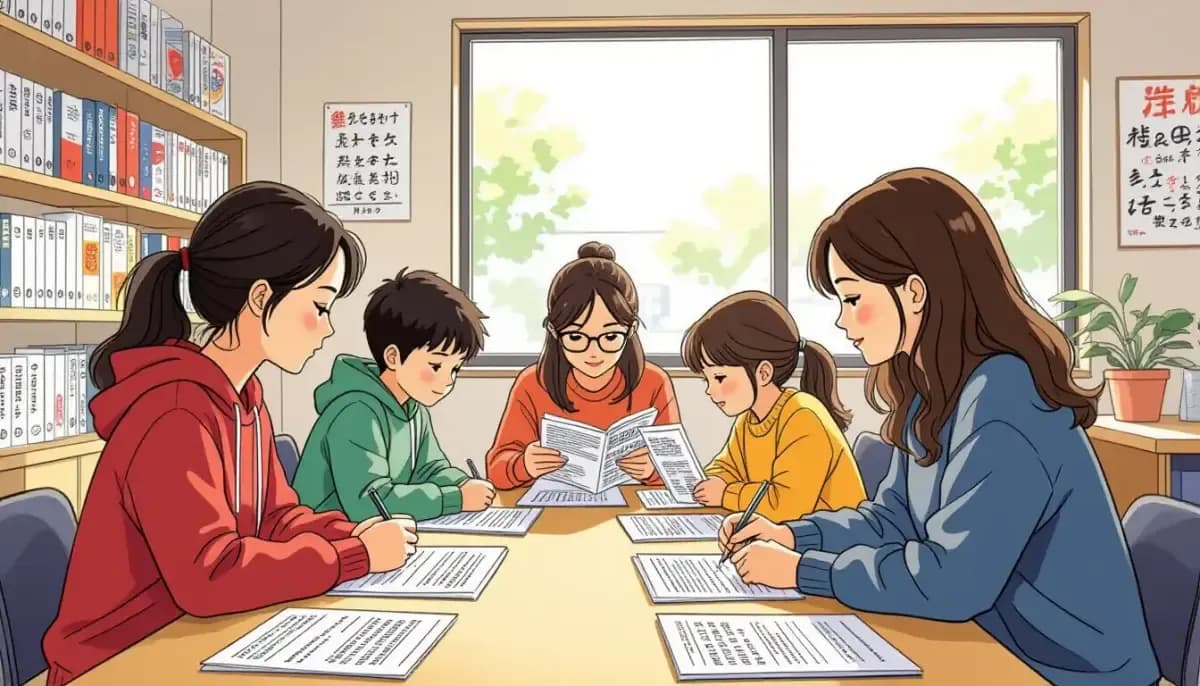
Kumon and Learning Programs for Japanese Language
Explore Kumon's Japanese Language Program and other top learning options for foreigners in Japan. Costs, enrollment tips, and how to choose the right program for your child or yourself.
Read more →
Japanese Language Playgroups and Immersion Activities
A complete guide to Japanese language playgroups and immersion activities for foreign children in Japan. Find the best programs, strategies, and tips for raising bilingual kids.
Read more →
Using Anime and TV Shows to Help Kids Learn Japanese
A complete guide for foreign parents in Japan on using anime and children's TV shows to build kids' Japanese skills. Includes recommended shows by age, subtitle strategies, and practical daily habits that actually work.
Read more →