
Kindergarten Bus Service in Japan: How It Works

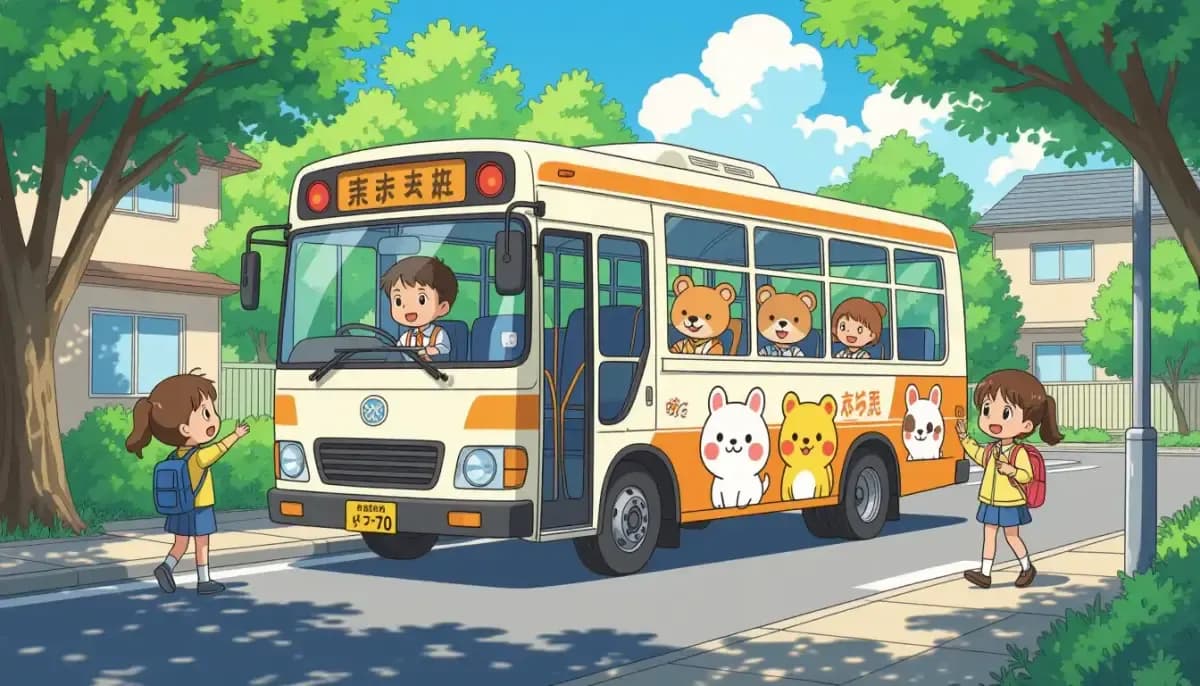
Learn how kindergarten bus service works in Japan, including costs (around ¥4,000/month), safety features, character-themed designs, signup process, and tips for foreign families with young children.
Kindergarten Bus Service in Japan: How It Works
If you are a foreign parent in Japan, you may have noticed the colorful, character-themed buses driving through residential neighborhoods every morning and afternoon. These are kindergarten buses, known as tsūen basu (通園バス), and they are one of the most charming aspects of early childhood education in Japan. In this guide, we cover everything you need to know about how the kindergarten bus service works, what it costs, safety features, and how to sign up as a foreign family.
What Is the Kindergarten Bus Service?
Most private kindergartens (yochien / 幼稚園) in Japan offer a dedicated bus service that picks children up near their homes and brings them to school in the morning, then drops them off again after classes end. This service is optional — parents can choose to walk, cycle, or drive their children instead.
Unlike elementary and middle school, where children typically walk to school on their own, kindergarten-age children (ages 3–5) need supervised transportation. The bus service fills this need, especially for families who live more than a short walk from the kindergarten.
If you are still deciding between daycare and kindergarten, check out our guide on daycare and hoikuen options for foreign parents. Public daycare centers (hoikuen) generally do not offer bus service, while many private yochien do.
How the Kindergarten Bus System Operates
The kindergarten bus follows a fixed route through the surrounding neighborhoods, with designated pickup and drop-off points. Here is how a typical day works:
Morning pickup: The bus arrives at your assigned stop between 7:30 and 9:00 AM, depending on the route. A parent or guardian must be present to hand the child over to the teacher on the bus.
Afternoon drop-off: After classes end (usually around 2:00 PM), the bus follows the same route in reverse. A parent or guardian must be waiting at the stop to receive the child.
Key operational details:
- A teacher or staff member always rides the bus in addition to the driver
- Children receive a bus badge (バスバッジ) so staff can confirm each child boards the correct bus at the right time
- Routes are set at the beginning of the school year and typically do not change mid-year
- If your child will not ride the bus on a given day, you must notify the kindergarten by phone or the school communication app before the bus departs
The bus schedule is shared with families through a renraku memo (連絡メモ), a communication network that also alerts parents about cancellations due to typhoons, heavy rain, or other weather emergencies.
Cost of the Kindergarten Bus Service
The bus service is an optional add-on and comes with a separate monthly fee. Here is what you can expect:
| Cost Item | Typical Range |
|---|---|
| Monthly bus fee | ¥3,000 – ¥5,000 |
| Most common price | ¥4,000/month |
| Annual total | ~¥36,000 – ¥60,000 |
| Registration/setup fee | ¥0 – ¥5,000 (one-time) |
The most common bus fee is around ¥4,000 per month, or roughly ¥48,000 per year. This fee is charged on top of tuition and other kindergarten fees. Since October 2019, the Japanese government made kindergarten education free for children ages 3–5, but supplementary costs like bus fees, lunch fees, and uniform fees are still paid by parents.
For a broader look at education costs, see this helpful guide on planning education funds for children in Japan.
Safety Features of Japanese Kindergarten Buses
Japanese kindergarten buses are designed with child safety as a top priority. After several high-profile incidents in recent years, safety regulations have been strengthened significantly.
Standard safety features include:
- Electric-assist steps that make it easier for small children to board and exit safely
- "Boarding/alighting" signal lights at the rear of the bus to alert other drivers when children are getting on or off
- External monitoring cameras positioned to watch the boarding and disembarking process
- Interior safety checks — drivers and teachers must physically walk through the bus after each route to confirm no child is left behind
- Buzzer/alarm systems — newer buses are equipped with alarms that activate if the engine is turned off without completing the safety check
No seatbelt requirement: Unlike regular vehicles, kindergarten buses in Japan are not required to have seatbelts. This may surprise foreign parents, but the reasoning is practical: young children have difficulty unbuckling quickly in an emergency, and their varying body sizes make standard belts ineffective. Instead, the emphasis is on slower driving speeds and having a supervising teacher on board at all times.
The Famous Character-Themed Bus Designs
One of the most recognizable features of Japanese kindergarten buses is their creative exterior designs. Many kindergartens customize their buses with themes featuring popular characters and animals:
- Pikachu (Pokémon) — bright yellow buses shaped like the character
- Hello Kitty — pink and white with the iconic bow
- Doraemon — blue buses with the robotic cat's face
- Snoopy — red doghouse-themed designs
- Animal buses — pandas, bears, elephants, and cats
This reflects Japan's broader kawaii (cute) culture and serves a practical purpose: children can easily identify their bus by its character, making pickup and drop-off smoother. The eye-catching designs also make the buses highly visible to other drivers on the road.
For more about family life in Japan as a foreigner, including tips on navigating school systems, check out this comprehensive guide.
How to Sign Up for the Bus Service
When you enroll your child in a kindergarten that offers bus service, the registration process typically goes like this:
- Indicate interest during enrollment — When you submit your application (usually in the fall for the following April start), mark that you want to use the bus service.
- Address confirmation — The kindergarten checks whether your home is within the bus route area. If not, they may suggest a nearby pickup point.
- Route assignment — You will be assigned a specific bus stop and pickup time before the school year starts.
- Receive the bus badge — Your child gets a badge or tag with their name, class, and bus route number.
- Trial period — Many kindergartens offer a short trial period in April where parents can accompany their child to the bus stop to help them adjust.
Tips for foreign families:
- If your Japanese is limited, ask the kindergarten office for English instructions or bring a bilingual friend to the enrollment meeting
- Join the parent communication group (LINE group) for your bus route — this is where last-minute schedule changes are shared
- Label all of your child's belongings clearly, as items can get mixed up on the bus
- Learn how to navigate the Japanese education system as a foreign family to understand how yochien fits into the bigger picture
Kindergarten Bus vs. Walking vs. Other Options
Not every family needs the bus. Here is a comparison of the main transportation options:
| Option | Pros | Cons |
|---|---|---|
| Kindergarten bus | Convenient, supervised, social | Monthly fee, fixed schedule |
| Walking/cycling | Free, flexible, exercise | Weather dependent, time consuming |
| Driving by car | Door-to-door, flexible | Parking limited, traffic |
| Public transport | Inexpensive | Not practical for young children alone |
In Japan, many kindergartens actively encourage walking as part of their educational philosophy. Some schools deliberately do not offer bus service because they believe the daily walk builds independence and physical fitness in children. Only about 1.7% of Japanese children ride a bus to school overall, as most school districts in cities are small enough to walk.
If your child attends an international school instead of a Japanese yochien, bus service options may differ. Learn more in our guide to international schools in Japan.
What Happens on Bad Weather Days
Typhoons, heavy snow, and flooding can all disrupt the bus schedule. Here is what to expect:
- Minor rain: The bus runs as normal. Have your child wear rain gear and bring an umbrella.
- Heavy rain warning: The bus may be delayed. Check the school communication app or LINE group for updates.
- Typhoon or severe weather warning: The bus service is cancelled. The kindergarten will send a notification via the renraku system. School may also close for the day.
- Snow days: In snowy regions, the bus route may be shortened or delayed. In areas that rarely get snow (like Tokyo), even light snowfall can cause cancellations.
Parents are expected to monitor weather alerts and check school communications proactively. The school will not come looking for children at bus stops if the service is cancelled.
Tips for Helping Your Child Adjust to the Bus
The first few weeks of riding the bus can be stressful for young children, especially if they do not speak Japanese fluently yet. Here are some practical tips:
- Practice the routine at home — Walk to the bus stop a few times before school starts so your child knows the route
- Arrive early — Being at the stop a few minutes before the bus arrives reduces stress
- Stay calm at drop-off — Keep goodbyes short and cheerful. Children pick up on parental anxiety
- Talk about the bus positively — Mention the fun character design, the friends they will see, and the kind teacher on the bus
- Pack comfort items — A small handkerchief or familiar keychain attached to their bag can help
For children who do not yet speak Japanese, the first three months can be challenging, but most children adapt quickly once they make friends. Read more about raising bilingual children in Japan for language development strategies.
For information on how Japan's exam and education systems work for returnee and foreign students as they grow older, this resource from Chuukou Benkyou offers useful insights.
Frequently Asked Questions
Can I change bus stops mid-year? Generally no, but if you move within the bus route area, the kindergarten may accommodate a change. Contact the office as early as possible.
What if my child misses the bus? You will need to bring your child to the kindergarten yourself. The bus does not wait or return for individual children.
Is the bus service available for extended hours (hoiku)? Some kindergartens offer a second bus run for children staying for extended care (預かり保育), but this varies. Ask during enrollment.
Are there buses for summer programs? Most kindergartens suspend bus service during summer vacation, even if the school offers summer programs. Parents typically need to provide their own transportation during breaks.
What age can my child start using the bus? Children can use the bus from their first year of kindergarten, typically age 3 (年少 / nenshō). There is no minimum age requirement beyond the kindergarten enrollment age.
Understanding how toddler parenting works in Japan can help you prepare before your child reaches kindergarten age.

Originally from Vietnam, living in Japan for 16+ years. Graduated from Nagoya University, with 11 years of professional experience at Japanese and international companies. Sharing practical information for foreign parents raising children in Japan.
View Profile →Related Articles
Transitioning from Yochien to Elementary School in Japan
A complete guide for foreign parents on transitioning from yochien to elementary school in Japan. Covers enrollment timelines, language support, costs, and what to expect in Grade 1.
Read more →
Religious Kindergartens in Japan: Buddhist and Christian Options
Discover the differences between Buddhist and Christian kindergartens in Japan. Compare teaching philosophies, curriculum approaches, enrollment processes, and tips for foreign families choosing religious preschools.
Read more →
Bilingual and English Kindergartens in Japan
Discover the best bilingual and English kindergartens in Japan for foreign families. Compare costs, enrollment processes, government subsidies, and top school options across Tokyo and beyond.
Read more →
After-School Care Options at Kindergartens in Japan
Comprehensive guide to after-school care options at kindergartens in Japan for foreign parents, covering azukari hoiku, gakudo programs, costs, enrollment, and tips for working families.
Read more →
Yochien Events and Annual Activities Calendar
Complete month-by-month guide to Japanese kindergarten (yochien) annual events and activities. From undokai sports day to happyokai performances, everything foreign parents need to know.
Read more →
Preparing Your Child for Yochien: Readiness Checklist
Complete yochien readiness checklist for foreign families in Japan. Cover self-care skills, Japanese phrases, supplies, enrollment timeline, and daily routine preparation for kindergarten.
Read more →