
Religious Kindergartens in Japan: Buddhist and Christian Options

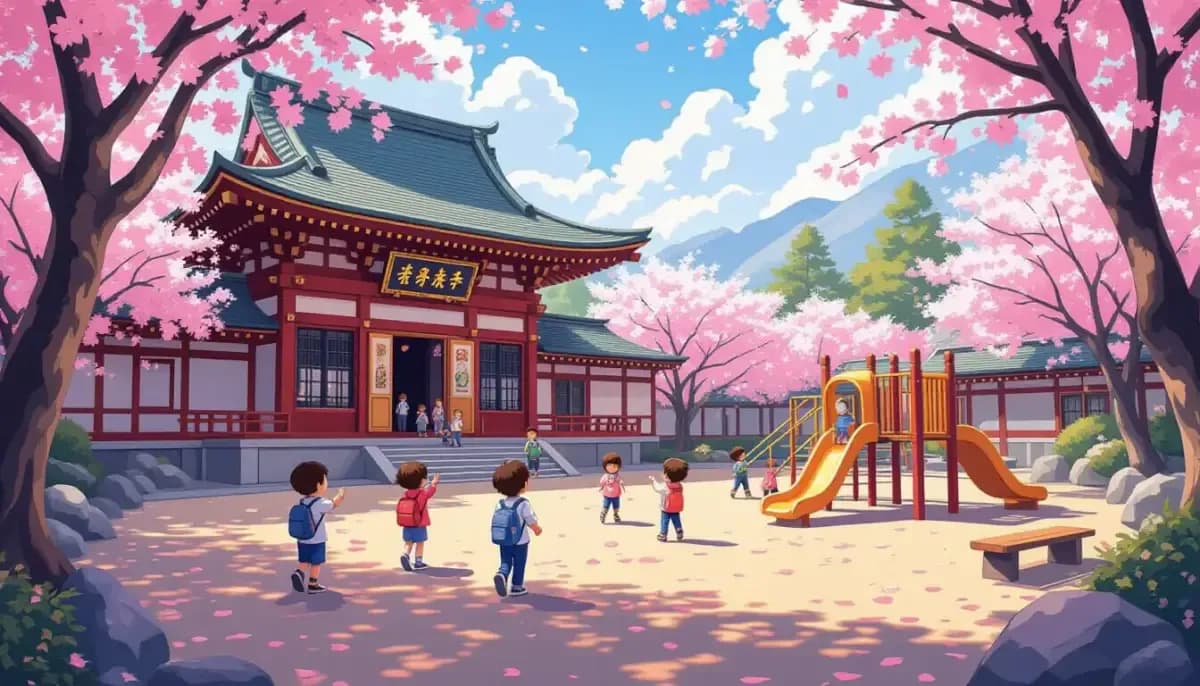
Discover the differences between Buddhist and Christian kindergartens in Japan. Compare teaching philosophies, curriculum approaches, enrollment processes, and tips for foreign families choosing religious preschools.
Religious Kindergartens in Japan: Buddhist and Christian Options
Choosing a kindergarten for your child in Japan goes beyond location and tuition fees. For many foreign families, understanding the religious foundations behind a preschool can be the deciding factor. In Japan, a significant number of private kindergartens are affiliated with either Buddhist temples or Christian churches. These institutions bring distinct educational philosophies, daily routines, and values into the classroom. Whether you are drawn to the contemplative discipline of a Buddhist kindergarten or the nurturing individualism of a Christian preschool, knowing what to expect will help you make the right choice for your family.
Over 90% of Japanese children attend at least two years of licensed preschool, and approximately 80% of them enroll in private institutions. Among these, religious kindergartens represent a meaningful share of the landscape. As of the most recent comprehensive data, there were approximately 1,636 Christian preschools and over 760 Buddhist preschools across Japan. This guide breaks down the key differences, enrollment processes, and practical tips for foreign parents considering a religious kindergarten.
Understanding Religious Kindergartens in Japan
Japan's education law prohibits public schools from providing religious education tied to a specific faith. However, private institutions are free to incorporate religious teachings into their curriculum. This means that religious kindergartens — known as yochien (幼稚園) — operate primarily in the private sector.
It is important to note that many preschools located on temple or church grounds are not deeply influenced by their host religion. In some cases, the motivation for running a preschool is primarily financial rather than spiritual. However, the most committed religious kindergartens weave their faith traditions into every aspect of the school day, from morning greetings to lunchtime rituals.
If you are exploring general kindergarten options, see our comprehensive guide to kindergarten in Japan for an overview of the system.
Buddhist Kindergartens: Philosophy and Curriculum
Buddhist kindergartens in Japan are often affiliated with local temples and follow a philosophy rooted in three traditional pillars: virtue (toku), knowledge (chi), and physical discipline (tai).
Virtue (Toku): Children learn consideration for others (itawari no kokoro) and extending kindness to all living things. Weekly temple prayer services are common, where children participate in simple Buddhist rituals and learn gratitude.
Knowledge (Chi): These schools tend to emphasize teacher-directed, whole-group instruction. Children sit at desks and engage in structured learning activities including literacy instruction (reading kanji, writing hiragana), poetry recitation, and memorization of sacred chants. Flash cards and pattern recognition exercises are frequently used.
Physical Discipline (Tai): Posture training, structured physical activities, and communal meals are central. Some Buddhist kindergartens use benches instead of chairs to strengthen children's back muscles. Physical challenges are designed to build resilience and discipline.
The Buddhist Nursery and Kindergarten Association reports membership of 598 child care centers and 763 preschools across Japan. These schools typically feature larger class sizes of 20 to 30 or more children, with the belief that peer interaction and mild competition motivate learning.
Christian Kindergartens: Philosophy and Curriculum
Christian preschools in Japan number approximately 1,636, with about two-thirds being Protestant and one-third Catholic. These institutions represent roughly 10% of all kindergartens in the country.
The guiding principle in Christian kindergartens is that each child is a precious gift from God deserving appreciation and individual attention. This philosophy leads to a distinctly play-oriented, child-centered curriculum.
Free Play Focus: Play forms the foundation of the curriculum. Children are given choices about their activities, and teachers facilitate rather than direct learning.
Creative Expression: Art projects, storytelling, and group discussions are central. Teachers guide children in articulating their ideas and integrating different perspectives with classmates.
Inclusive Environment: Christian preschools actively welcome children with disabilities, viewing peer diversity as beneficial for all students.
Western Educational Influences: Directors at Christian kindergartens often incorporate Montessori, Froebel, and constructivist educational theories, blending these with their faith-based approach.
For families also considering non-religious options, our guide on daycare and hoikuen in Japan covers the full range of childcare facilities available.
Key Differences Between Buddhist and Christian Kindergartens
| Aspect | Buddhist Kindergartens | Christian Kindergartens |
|---|---|---|
| Teaching Style | Teacher-directed, structured | Child-centered, play-based |
| Class Size | Larger (20-30+ children) | Smaller preferred |
| Curriculum Focus | Academics, memorization, discipline | Creative play, exploration |
| View of Individuality | Group harmony emphasized | Individual expression encouraged |
| Physical Education | Structured, posture-focused | Free play, movement-based |
| Religious Activities | Temple visits, chanting, prayer | Chapel time, hymns, Bible stories |
| Approach to Disabilities | Less emphasis on inclusion | Active inclusion and accommodation |
| Meals | Communal meals with gratitude rituals | Varies by school |
| Western Influence | Traditional Japanese methods | Montessori, Froebel methods |
How to Choose the Right Religious Kindergarten
Selecting the right religious kindergarten depends on your family's values, your child's temperament, and practical considerations. Here are the main factors to weigh:
Your Child's Learning Style: If your child thrives with structure and routine, a Buddhist kindergarten may be a natural fit. If your child is more independent and creative, a Christian preschool's play-based approach might suit them better.
Language Considerations: Most religious kindergartens operate entirely in Japanese. Some Christian schools, particularly those affiliated with international churches, may offer bilingual programs. Check our guide on raising bilingual children in Japan for tips on supporting language development alongside Japanese schooling.
Location and Community: Buddhist kindergartens are often located on temple grounds in residential neighborhoods. Christian preschools may be attached to churches that also serve as community gathering points. Consider which community aligns with your family. You can learn more about religious communities and cultural organizations in Japan to find connections.
Cost: Since October 2019, children aged 3 to 5 receive free education and care at authorized facilities in Japan. This applies to both Buddhist and Christian kindergartens that hold official authorization. For planning education costs long-term, see this guide on education fund planning.
Enrollment Process for Religious Kindergartens
The enrollment process for religious kindergartens follows the standard Japanese kindergarten timeline:
- Research phase (6-12 months before): Visit open house events (kengakukai) held in spring and summer. Most religious kindergartens welcome foreign families and will explain their religious activities during these visits.
- Application period (October-November): Obtain application forms from the kindergarten directly. Some popular schools require early morning queuing on application day.
- Interview and selection (November-December): Many religious kindergartens conduct parent-child interviews. Questions may touch on your understanding of the school's religious philosophy, though conversion is never required.
- Enrollment confirmation (February-March): Purchase required uniforms, supplies, and bags. Attend orientation sessions.
- School year begins (April): The Japanese academic year starts in April.
Religious kindergartens generally do not require families to be practitioners of the faith. Buddhist kindergartens welcome non-Buddhist families, and Christian preschools accept children of all backgrounds. The religious activities are considered part of the educational experience rather than a conversion effort.
For families preparing for the broader education journey, understanding how education reforms affect the system can help with long-term planning.
Daily Life at a Religious Kindergarten
A typical day at a Buddhist kindergarten might include a morning gathering with a brief temple prayer, followed by structured academic activities, outdoor play, a communal lunch with a gratitude ritual, afternoon classes in art or music, and dismissal around 2:00 PM.
At a Christian kindergarten, the day often begins with a chapel gathering featuring a short hymn and prayer. Free play periods dominate the morning, interspersed with teacher-guided creative activities. Lunch may be a packed bento or school-provided meal, followed by more play time and story reading before dismissal.
Both types of kindergartens participate in seasonal events that reflect their religious traditions. Buddhist schools celebrate Hanamatsuri (Buddha's birthday) in April and Obon observances. Christian schools hold Christmas pageants, Easter celebrations, and harvest thanksgiving events.
These cultural experiences can be enriching for children growing up in multicultural families. Our article on cultural identity for mixed-race children in Japan explores how these experiences contribute to identity formation.
Tips for Foreign Parents
Visit before deciding. Attend at least two or three open house events. Observe how teachers interact with children and ask about the role of religion in daily activities.
Language preparation is key. Communication with teachers and other parents will be primarily in Japanese. Start building your Japanese skills early. Resources for teaching Japanese to foreign children can help your child prepare as well.
Understand the commitment. Religious kindergartens may expect parent participation in religious events and festivals. Clarify expectations during the interview process.
Connect with other foreign parents. Join local parenting groups or expat communities to get firsthand recommendations. Other families who have navigated the religious kindergarten system can offer invaluable advice. The Expat's Guide to Japan also lists preschool options by area.
Consider the transition to elementary school. Both Buddhist and Christian kindergartens prepare children for entry into the public elementary school system. The skills and social habits developed in kindergarten — whether through structured discipline or creative play — will serve your child well.
Frequently Asked Questions
Do I need to be Buddhist or Christian to enroll my child? No. Religious kindergartens in Japan welcome families of all faiths and backgrounds. Religious activities are part of the educational program, not a requirement for belief.
Will my child be pressured to convert? No. Japanese religious kindergartens view their faith-based activities as character education and cultural experience, not evangelism.
Are religious kindergartens more expensive? Not necessarily. Since the 2019 free education policy covers authorized kindergartens for ages 3-5, most religious kindergartens fall under this subsidy. Additional fees for uniforms, materials, and special activities vary by school.
Can foreign children who don't speak Japanese attend? Most religious kindergartens teach in Japanese. For an overview of all education options, see this expat education guide. Some Christian schools affiliated with international communities may offer English support. Visit the school to discuss your child's language level and the support available.
How do religious kindergartens compare to international schools? Religious kindergartens offer deep cultural immersion at a fraction of the cost of international schools. However, international schools provide English-medium instruction and internationally recognized curricula.

Originally from Vietnam, living in Japan for 16+ years. Graduated from Nagoya University, with 11 years of professional experience at Japanese and international companies. Sharing practical information for foreign parents raising children in Japan.
View Profile →Related Articles
Transitioning from Yochien to Elementary School in Japan
A complete guide for foreign parents on transitioning from yochien to elementary school in Japan. Covers enrollment timelines, language support, costs, and what to expect in Grade 1.
Read more →
Bilingual and English Kindergartens in Japan
Discover the best bilingual and English kindergartens in Japan for foreign families. Compare costs, enrollment processes, government subsidies, and top school options across Tokyo and beyond.
Read more →
After-School Care Options at Kindergartens in Japan
Comprehensive guide to after-school care options at kindergartens in Japan for foreign parents, covering azukari hoiku, gakudo programs, costs, enrollment, and tips for working families.
Read more →
Yochien Events and Annual Activities Calendar
Complete month-by-month guide to Japanese kindergarten (yochien) annual events and activities. From undokai sports day to happyokai performances, everything foreign parents need to know.
Read more →
Preparing Your Child for Yochien: Readiness Checklist
Complete yochien readiness checklist for foreign families in Japan. Cover self-care skills, Japanese phrases, supplies, enrollment timeline, and daily routine preparation for kindergarten.
Read more →
Kindergarten Bus Service in Japan: How It Works
Learn how kindergarten bus service works in Japan, including costs (around ¥4,000/month), safety features, character-themed designs, signup process, and tips for foreign families with young children.
Read more →