
Managing Different Parenting Styles Between Two Cultures

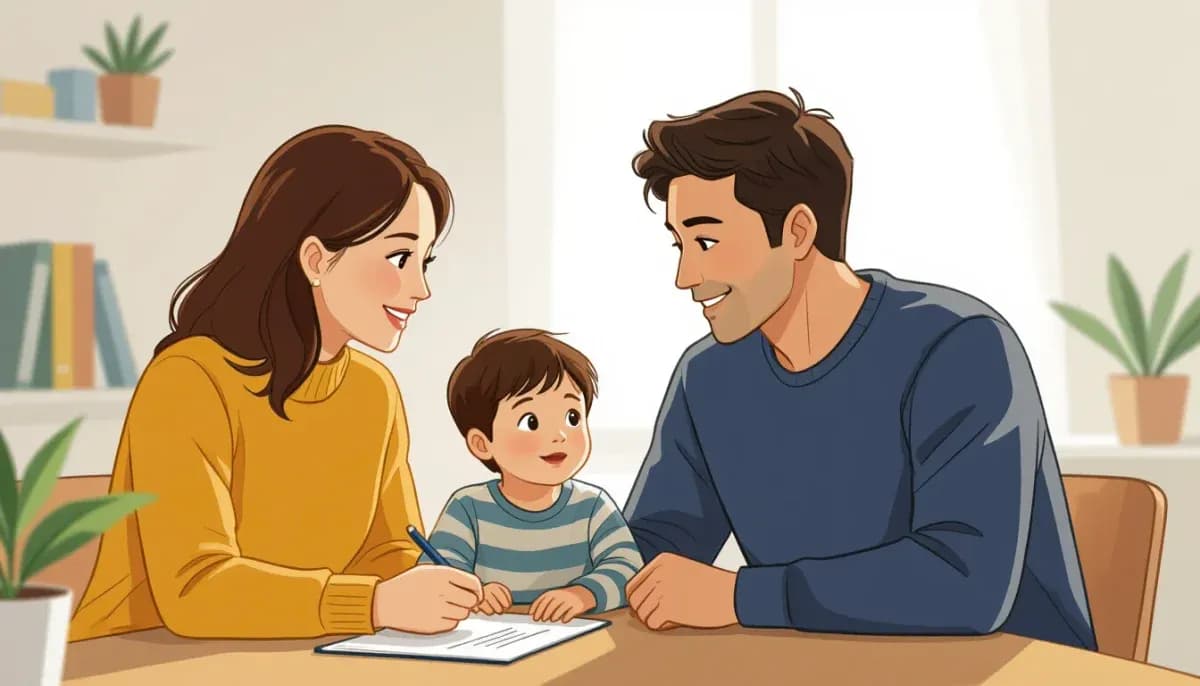
A practical guide for bicultural and expat families in Japan navigating the differences between Japanese and Western parenting styles, discipline, affection, and school choices.
Managing Different Parenting Styles Between Two Cultures in Japan
Raising a child in Japan as a foreign parent — or in a bicultural household where one partner is Japanese — means navigating two fundamentally different philosophies of childhood. The differences go far deeper than language or food preferences. Japanese and Western parenting rest on distinct assumptions about independence, discipline, emotional expression, and what a "good childhood" even looks like. Understanding these differences is the first step toward building a harmonious family life that draws the best from both worlds.
This guide is for expat parents, international couples, and anyone raising children across cultural lines in Japan. We will walk through the core differences, the friction points that come up most often, and practical strategies for creating a unified parenting approach that works for your family.
The Core Difference: Proximal vs. Distal Parenting
Researchers who study parenting across cultures describe Japanese parenting as proximal and Western parenting as distal — and understanding this distinction explains almost everything else.
Proximal parenting (typical in Japan) prioritizes sustained physical closeness. Mothers carry babies in arms or carriers almost constantly, co-sleep in the family bed, and minimize time away from the infant. Studies show that Japanese mothers spend an average of 2 hours per week away from their infant in the first year — compared to 24 hours per week for American mothers. The goal is to build deep interdependence and emotional attunement.
Distal parenting (typical in Western countries) encourages early independence. Babies sleep in their own cribs, parents use verbal communication and eye contact, and object-focused play fosters individual exploration. The goal is to build autonomous, self-reliant individuals from early on.
Neither approach is objectively superior. Research published in PMC shows that Japanese children develop superior self-regulation and group awareness earlier, while Western children develop stronger individual identity and verbal self-expression sooner. Cross-cultural parenting research consistently finds that children thrive with attentive caregiving under both models — but the style of that attention looks very different.
For bicultural families, the first major friction often appears in the first months of life: how much closeness is healthy? Is co-sleeping safe? Is picking up a crying baby "spoiling" them? These questions often reflect cultural assumptions more than medical evidence.
Discipline: Shitsuke vs. Direct Correction
One of the most visible differences for foreign parents in Japan is how children are disciplined — especially in public.
Japanese discipline is built around the concept of shitsuke (躾), which roughly translates to "upbringing" or "training through habit." Rather than correcting children with verbal reprimands or time-outs, Japanese parents and educators use modeling, repetition, and structured routine to instill correct behavior almost automatically. Children learn the right way to do things through consistent practice, not through punishment or negotiation.
When a Japanese child misbehaves in public — at a train station or in a park — a Japanese parent will typically wait for a quiet moment and address it privately. This is not indifference; it is a deliberate approach to preserving the child's dignity and avoiding public shame (a powerful motivator in Japanese culture).
Western parents, by contrast, tend to intervene immediately and publicly, providing clear verbal feedback in the moment. This can seem harsh or confrontational to Japanese observers — and can seem slow or passive to Western parents watching a Japanese parent's approach.
In practice, this creates real tension in bicultural households:
- One parent wants to explain and negotiate; the other wants to demonstrate and repeat.
- One parent addresses behavior immediately; the other prefers to let the moment pass.
- One parent uses positive reinforcement; the other uses non-verbal disappointment.
Neither style is "wrong," but inconsistency can confuse children. Agreeing on a unified approach — or clearly dividing which situations call for which style — is important.
For more on how Japanese schools reinforce this approach, see our guide to elementary school in Japan for foreign parents.
Expressing Love: Warmth Looks Different Here
One of the most common shocks for foreign parents partnered with Japanese spouses — or living in Japan — is the apparent absence of verbal and physical affection.
Japanese parents love their children intensely. But that love is expressed through instrumental care: packing perfect bento lunches, attending every school event, arranging tutoring, sacrificing personal time for the family. Saying "I love you" (愛してる) to a child is rare in Japan. Hugging and kissing in front of others is uncommon. Praise for individual achievements can actually be muted, to avoid encouraging arrogance or standing out from peers.
Western parenting norms — hugging, kissing, saying "I love you," celebrating individual wins out loud — can seem excessive to Japanese family members, and the Japanese approach of quiet dedication can seem cold to foreign partners.
For children growing up in bicultural homes, both forms of love are present and real. But it is worth explicitly discussing with your partner how you each express affection and what you each need to feel loved — and making sure your children understand both languages of love.
Independence and Safety: The Japan Difference
Japan has a remarkable cultural practice that surprises almost every foreign parent: young children commute to school alone. Even first-graders regularly navigate public transit, walk to school unsupervised, and run errands independently.
This is not neglect — it is a deeply held cultural value, supported by Japan's genuinely low crime rate and a communal "village" approach where neighbors and strangers look out for children in public. Japanese children develop a powerful sense of social responsibility and self-sufficiency from a young age.
Many foreign parents find this liberating once they understand the context. Others remain uncomfortable, especially those from cultures with intense concerns about child safety in public. If you are raising children in Japan, it is worth understanding this cultural norm and deciding consciously where your family stands — rather than simply defaulting to the parenting norms of your home country.
For families navigating school choice in Japan, our international schools guide covers options for families who want a blend of Japanese and international educational values.
Navigating Cultural Conflict in a Bicultural Household
The most challenging situation is when parents themselves come from different cultures — one Japanese, one foreign — and genuinely disagree about how to raise their children.
Some of the most common flash-points include:
| Issue | Japanese Tendency | Western Tendency |
|---|---|---|
| Sleep arrangements | Co-sleeping (family bed) | Independent crib/room |
| Discipline style | Private, habit-based (shitsuke) | Immediate, verbal, explanatory |
| Affection expression | Instrumental care, service | Verbal/physical: hugs, "I love you" |
| Independence | Earlier unsupervised outdoor play | More supervised, safety-focused |
| Praise | Muted, group-focused | Individualized, enthusiastic |
| School choice | Japanese public school | International/bilingual school |
| After-school activities | Structured practice (juku, clubs) | Child-led free play |
| Mealtime | Traditional Japanese food, shared | More varied, individual preference |
The research is clear: bicultural families who integrate elements of both cultures — rather than fully assimilating to one — tend to have the best outcomes. A study cited in academic literature found that 25% of Japanese mothers in international settings adapted toward a more authoritative Western style, and children in these households showed stronger academic performance and parent-child relationships.
The key is not to "win" the parenting debate, but to build a shared framework that both partners understand and respect. This usually requires explicit conversation about values — not just habits — and some genuine curiosity about the cultural logic behind your partner's approach.
For additional context on raising bilingual and bicultural children, see our article on raising bilingual children in Japan and cultural identity for hafu and mixed-race children.
Practical Strategies for Bicultural Families
Here are concrete steps that bicultural families in Japan have found helpful:
1. Map your values, not just your habits. Before arguing about whether to co-sleep or use a crib, ask: what does this practice mean to each of you? What are you trying to give your child? Often the underlying values are more similar than the surface behaviors.
2. Create unified rules for your home. Children adapt easily to "in our family, we do it this way" — even if it differs from what they see at school or at grandparents' houses. The key is consistency between parents.
3. Respect the Japanese school environment. Even if your home approach is more Western, your child will spend significant time in a Japanese school system that runs on shitsuke principles. Helping your child understand and respect school rules — even if different from home rules — is a gift, not a contradiction.
4. Talk openly about cultural differences with your children. Children who understand why things are different in different contexts — "in Japan, we are quiet on the train; in our home country, it's fine to talk" — develop sophisticated cross-cultural skills that will serve them for life.
5. Seek community. Other bicultural families in Japan face the same challenges. Online communities, international parent groups, and school-based parent networks can provide enormous support. Resources like Living in Nihon offer practical guides for foreign residents navigating family life in Japan.
6. Use professional support when needed. Cross-cultural parenting disagreements can be deep and emotionally charged. Counselors who work with expat families in Japan can help. For background on child mental health support, see our guide to mental health and emotional wellbeing for foreign children in Japan.
School Choices and Their Cultural Implications
One of the biggest bicultural parenting decisions is school choice, and it carries the weight of your family's cultural values.
Japanese public school immerses children in Japanese language, culture, and social norms. Children become fluent and socially integrated — but may feel the pressure of conformity and group harmony acutely, especially if they look or act differently.
International schools offer instruction in English or other languages, with curricula that align more closely with Western educational values (individual expression, critical thinking, project-based learning). But they are expensive — 1,500,000 to 3,000,000 yen per year — and can create social distance from the local community.
Some families choose Japanese public school for the elementary years and international school for junior high or high school. Others move between systems as family circumstances change. There is no universally right answer — the best choice depends on your family's long-term plans, your child's personality, and your financial situation.
For a detailed breakdown, see our guides to elementary school in Japan for foreign parents and our international schools guide for families.
Additional perspectives on bicultural family life in Japan can be found at For Work in Japan's family guide and HH JapaNeeds' overview of Japanese parenting differences.
Building a Family Culture That Honors Both Worlds
Ultimately, the goal of bicultural parenting is not to choose one culture over the other — it is to build a family culture that is uniquely your own, drawing consciously from both traditions.
Japan offers extraordinary gifts to children: a sense of community responsibility, self-discipline, deep respect for others, and the social fluency to navigate a complex and beautiful culture. Western parenting traditions offer their own gifts: verbal emotional literacy, individual confidence, and comfort with self-expression.
Children who grow up with both are genuinely lucky — provided their parents can find a way to work together rather than against each other.
For more support on raising children in Japan as a foreign family, explore our comprehensive resources on toddler parenting in Japan, baby and infant care in Japan, and heritage language maintenance for children in Japan.
Further reading from Savvy Tokyo on Japanese discipline practices and the PMC research on changing parenting culture in Japan provide academic depth for parents who want to go further.
Parenting across cultures is one of the most demanding and rewarding things you can do. Take it one conversation, one bedtime, one school event at a time — and give yourself and your partner the grace to keep learning together.

Originally from Vietnam, living in Japan for 16+ years. Graduated from Nagoya University, with 11 years of professional experience at Japanese and international companies. Sharing practical information for foreign parents raising children in Japan.
View Profile →Related Articles
Building a Strong Multicultural Family Identity
Learn how to build a strong multicultural family identity in Japan. Practical strategies for bilingualism, cultural rituals, school navigation, and raising confident bicultural children as an expat family.
Read more →
Navigating Different Education Expectations Between Cultures
Discover how education expectations differ between Japan and Western countries. A practical guide for expat families on Japanese school culture, academic pressure, language barriers, and how to help your child thrive in both worlds.
Read more →
Best Cross-Cultural Parenting Books and Resources
Discover the best books and resources for cross-cultural parenting in Japan. From bilingual strategies to Japanese parenting philosophy, this guide helps multicultural families thrive.
Read more →
Keeping Cultural Traditions Alive When Living Abroad
Practical guide for expat families in Japan on keeping cultural traditions alive abroad — covering language, food, celebrations, community, and digital tools for raising bicultural children.
Read more →
Choosing Names for Children in Multicultural Families
Complete guide to choosing names for children in multicultural families in Japan — legal requirements, bilingual naming strategies, pronunciation pitfalls, kanji selection, and real bicultural name examples.
Read more →
Conflict Resolution in Multicultural Families
Practical strategies for resolving conflict in multicultural families living in Japan. Understand tatemae vs hon-ne, cultural communication styles, and evidence-based techniques for building lasting family harmony.
Read more →