Cross-Cultural Parenting: Managing Multiple Cultures in Your Family
Complete guide to cross-cultural parenting in Japan. Learn bilingual strategies, cultural identity tips, education choices, and legal considerations for multicultural families raising children in Japan.
13 articles
Cross-Cultural Parenting: Managing Multiple Cultures in Your Family in Japan
Raising children across two or more cultures is one of the most rewarding — and challenging — journeys a family can undertake. For the hundreds of thousands of international families living in Japan, cross-cultural parenting means navigating a deeply traditional society while preserving your own heritage, raising genuinely bilingual children, and helping your kids build a secure, multifaceted identity. As of December 2024, Japan is home to 3,768,977 foreign residents — roughly 3% of the total population — and over 20,000 international marriages are registered every year. The multicultural family is no longer an anomaly in Japan; it is an increasingly visible and vibrant part of Japanese society.
This guide is your comprehensive roadmap for managing multiple cultures in your family life in Japan. Whether you are a newly arrived expat couple, a Japanese-foreigner couple raising haafu children, or a family relocating to Japan with older kids, you will find practical strategies for language development, cultural identity, education choices, and family wellbeing.
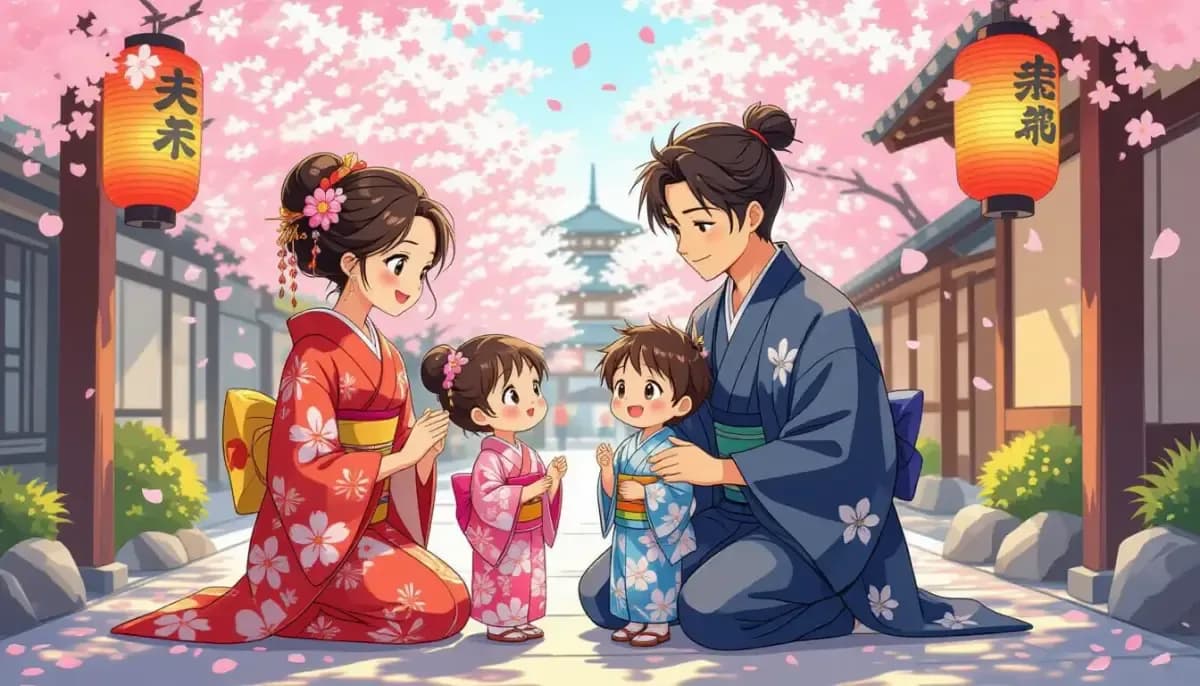
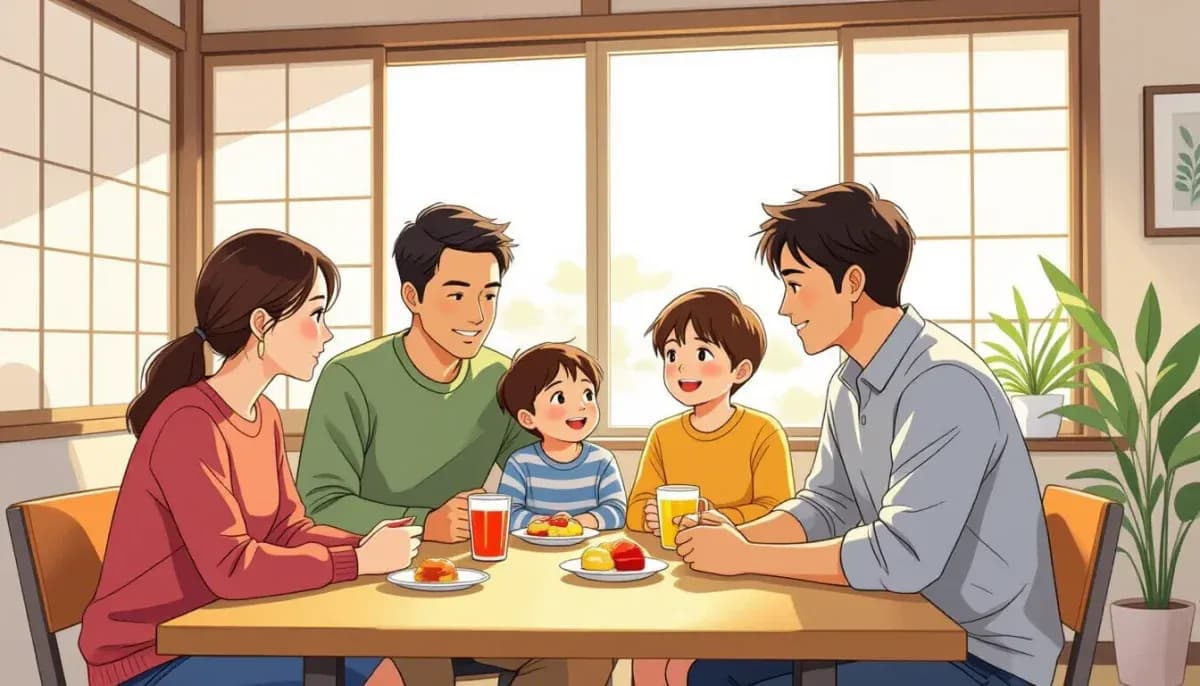
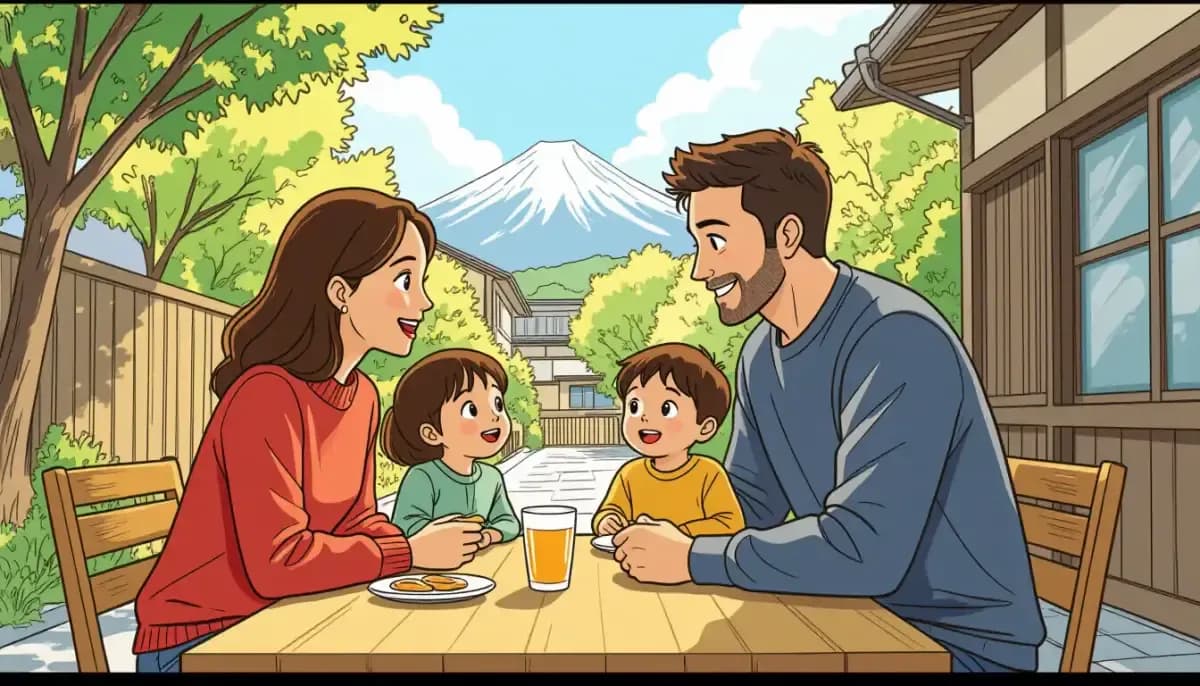
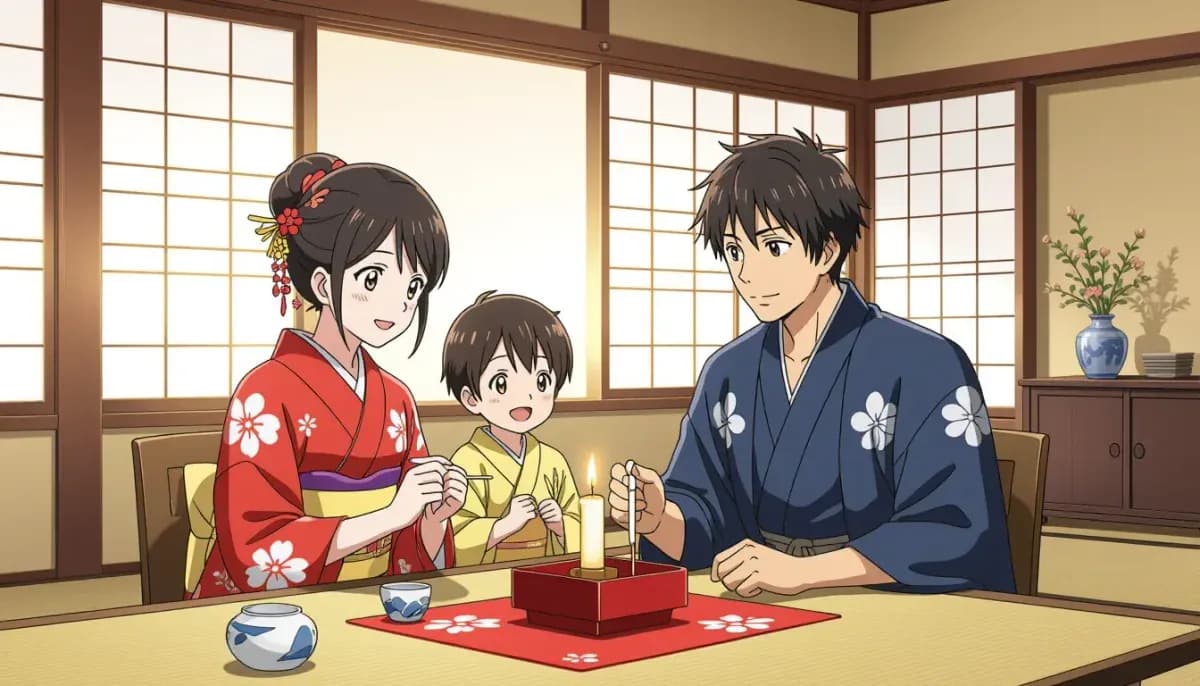
Cross-cultural family in Japan celebrating different traditions together
Understanding the Cross-Cultural Parenting Landscape in Japan
Japan's homogeneous cultural identity makes it one of the more challenging — yet uniquely enriching — environments in which to raise multicultural children. The society places enormous value on group harmony, conformity, and implicit social rules. The Japanese proverb "deru kui wa utareru" (the nail that sticks out gets hammered down) captures the social pressure toward sameness that international families will encounter, especially as children move through the school system.
Yet Japan is also a country of deep cultural richness, safety, and stability. International families who learn to navigate its cultural terrain often raise children with exceptional emotional intelligence, cross-cultural empathy, and genuine bilingual or multilingual abilities.
Key characteristics of Japan's parenting culture:
Proximal parenting style: Japanese parenting is characterized by physical closeness — co-sleeping (co-sleeping is near-universal), co-bathing (ofuro culture), and extended breastfeeding are common norms that contrast sharply with independence-focused Western parenting styles.
Indirect discipline: Rather than direct punishment, Japanese parents rely on social awareness, peer group dynamics, and quiet modeling. Children are expected to internalize group expectations naturally.
Mother-centered care: Japan's workplace culture places the full burden of childcare on mothers. A 2023 study found that Japanese mothers spend approximately 2 hours per week away from infants during the first year, compared to 24 hours per week for American mothers.
Community pressure: Behavior in public — on trains, in restaurants, in parks — carries implicit judgment. International parents who are unaware of these social expectations can feel unfairly criticized.
Understanding these foundations helps international parents anticipate areas of friction and make informed choices about how much to adapt versus how much to maintain your own cultural practices.
The Language Challenge: Raising Bilingual Children in Japan
Language is the cornerstone of cross-cultural parenting. In Japan's monolingual environment, maintaining a heritage language takes deliberate, sustained effort — but the payoff is enormous.
The One Parent, One Language (OPOL) Strategy
The most evidence-supported approach for raising bilingual children is One Parent, One Language (OPOL): each parent speaks exclusively in their native language with the child, creating two consistent language environments at home. Research consistently shows that children in OPOL families develop stronger bilingual foundations than those in mixed-language households.
Critical window alert: The foundational period for bilingualism is ages 0 through 6 or 7. During this window, children's brains are optimally wired for acquiring multiple phonological systems. After age 7, while language learning remains possible, the effort required increases substantially and accent acquisition becomes more difficult.
Strategies for Maintaining Heritage Language
One of the most consistent findings in bilingual research is that children in Japan tend to gravitate toward Japanese — the dominant social language — especially after school enrollment. Heritage language becomes passive unless actively maintained.
Effective strategies include:
Weekly video calls with grandparents and extended family in the heritage language — children are highly motivated when grandparents are the audience
Heritage language media: books, audiobooks, streaming shows, and music exclusively in the minority language at home
Weekend supplementary schools (hoshuko): Japanese weekend schools for Japanese-abroad children exist in reverse — many cities have English, French, Korean, Chinese, and other heritage language weekend programs
Annual immersive visits: Research from bilingual family studies in Japan shows that 3-week yearly trips to the heritage country produce marked and lasting improvement in minority language proficiency
Sibling reinforcement: Studies of bilingual families in Japan found that up to 70% of sibling role-play occurred in the minority language — if you have more than one child, encourage them to use the heritage language together
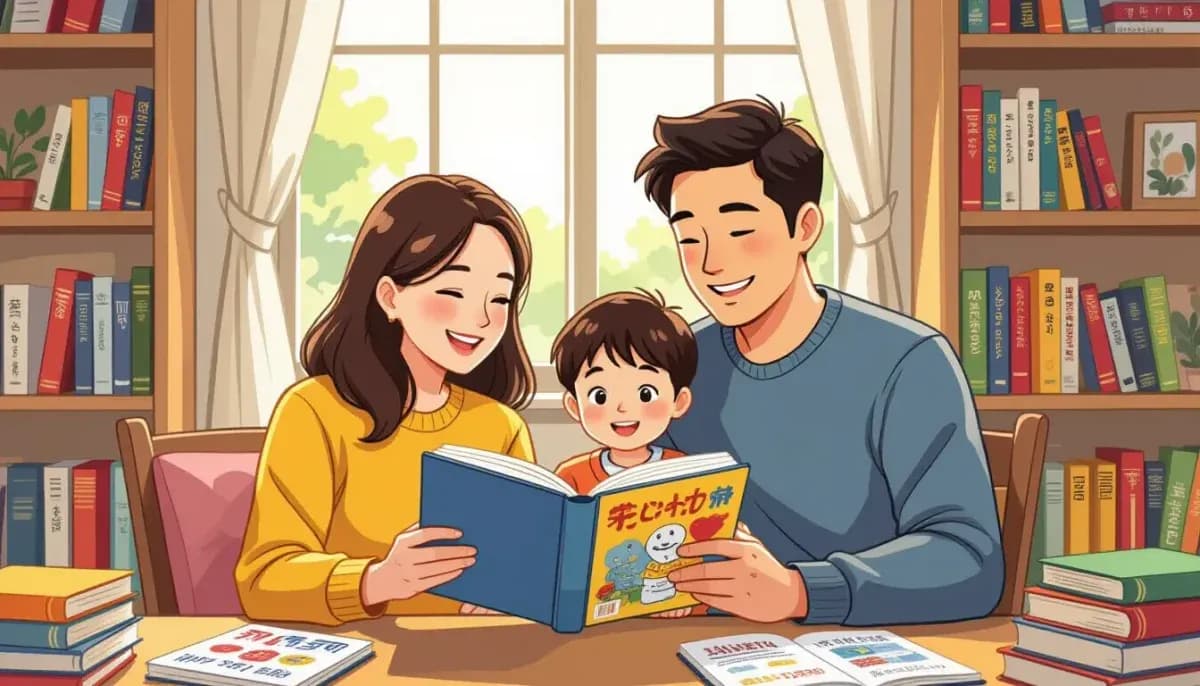
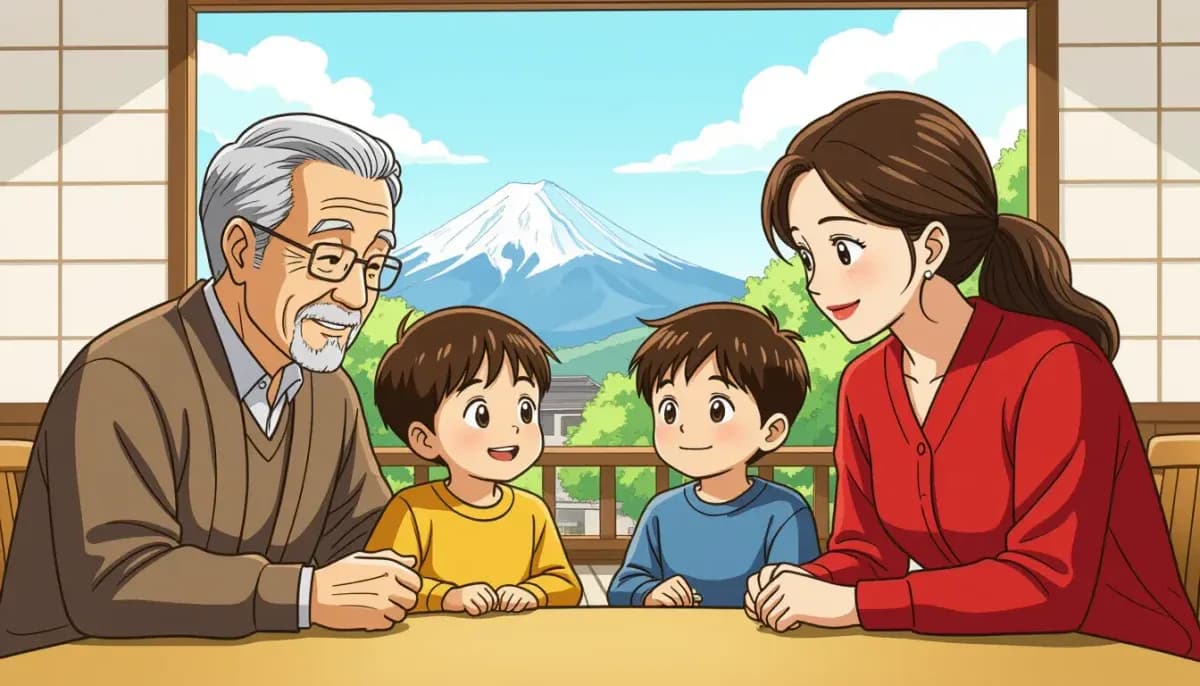
Bilingual children reading books in two languages at home in Japan
Cultural Identity and the "Haafu" Experience
Children of mixed Japanese-foreign parentage — commonly called haafu (ハーフ, from "half") — face a unique identity journey that parents should understand and actively support. Japan's social categories are strongly binary: you are either Japanese or you are not. Haafu children often feel pulled between two worlds, belonging fully to neither.
Research has documented identity struggles beginning as young as age 5. One longitudinal study described a 5-year-old haafu child who expressed a desire for black hair and resented being called a "foreigner" — even though she had lived her entire life in Japan and was fully fluent in Japanese.
Building a Secure Multicultural Identity
The goal is not to choose one culture over another, but to help your child develop a positive, expansive identity that encompasses all of their heritages. Research on third-culture kids (TCKs) and cross-cultural individuals consistently shows that a secure bicultural identity is a psychological asset, not a liability.
Practical approaches:
Name both cultures explicitly and positively at home. Talk openly about what you love about Japan and what you love about your heritage culture.
Create intentional cultural touchstones: Celebrate both sets of holidays and traditions. Blend them — Christmas gifts and New Year's otoshidama money. Eat Japanese food and heritage cuisine side by side.
Read books featuring multicultural protagonists in the heritage language — representation matters.
Connect with other multicultural families. Tokyo, Osaka, Nagoya, and other large cities all have active multicultural parent groups where haafu children can meet others with similar experiences.
Validate the difficulty. When your child expresses frustration about being "different," do not rush to dismiss it. Listen, validate the feeling, and then reframe difference as strength.
Navigating the Japanese Education System as a Multicultural Family
Approximately 129,000 foreign children attend Japanese public schools as of 2024 — a 9% year-over-year increase that reflects Japan's growing internationalization. As a cross-cultural family, you face a genuine choice: Japanese public school, private school, or international school. Each path has profound implications for your child's bilingual development, cultural identity, and future options.
School Options Comparison
School Type
Language
Annual Cost
Pros
Cons
Public elementary/junior high
Japanese
Free
Full Japanese immersion, local community bonds
Limited heritage language support
Private Japanese school
Japanese
¥500K–¥1.5M
Higher academic standards, smaller classes
Same bilingual challenges as public
International school
English/other
¥2M–¥3M+
Heritage language preserved, global curriculum
Expensive, less Japanese integration
Weekend supplementary (hoshuko)
Heritage language
¥50K–¥200K/yr
Complements public school, builds heritage literacy
Time-intensive, can be stressful for children
Bilingual school
Japanese + English
¥1M–¥2M
Best of both worlds
Limited availability, competitive admission
Key insight: One-third of international families who choose international schools struggle to maintain their children's Japanese proficiency — even while living in Japan. Conversely, families who choose Japanese public school often find their children's heritage language eroding quickly. A combined approach — Japanese public school plus weekend heritage school — is the most common solution among long-term expat families.
In international couples, the cross-cultural challenge is not only between your family and Japan — it is also within your own household. Parents from different cultures bring different assumptions about discipline, independence, family structure, gender roles, and what a "good childhood" looks like.
Common Points of Friction
Work-life balance: Japan's salaryman culture means fathers are frequently absent during weekday evenings and weekends. For a Japanese spouse who grew up in this context, this may feel normal. For a Western spouse, it may feel like parental abandonment. Research on international couples in Japan consistently identifies work-life imbalance as the top source of parenting conflict.
Discipline styles: Japanese parents tend to use indirect, empathy-based discipline — pointing out how bad behavior affects others. Western parents from more individualist cultures often favor direct behavioral feedback and consequences. Neither approach is wrong, but inconsistency between parents confuses children.
Independence vs. interdependence: When to let a child walk to school alone (a Japanese cultural practice as early as age 6), when to stop co-sleeping, when to allow the child to make their own decisions — these milestones are culturally calibrated differently across nationalities.
Grandparent involvement: Japanese grandparents may offer very different advice on infant feeding, co-sleeping, and independence than grandparents from Western or other cultural backgrounds. Navigating these competing inputs while maintaining a united parental front requires ongoing communication.
Building a Shared Parenting Philosophy
The most successful international couples develop a deliberate, articulated family culture — a set of shared values and practices that draw from both heritages while acknowledging Japan's social environment.
Steps to get there:
Have explicit conversations about your own childhood experiences and what you want to replicate or avoid
Identify non-negotiables for each partner — the cultural practices that are essential to your identity as a parent
Research together what the evidence says about child development, particularly around bilingualism and identity
Establish routines that incorporate both cultures regularly, not just on special occasions
Seek support when conflicts persist — multicultural couples counseling is available in major Japanese cities in multiple languages
Government Support and Financial Resources for Multicultural Families
Japan's government provides substantial financial support to families — and most of it is available to foreign residents as well as Japanese citizens. Many international families leave significant money on the table simply because they are unaware of available benefits.
Key Benefits for Families in Japan (2025)
Benefit
Amount
Eligibility
Childbirth lump sum
¥500,000 per child
Parents enrolled in Japanese health insurance
Childcare allowance (under 3)
¥15,000/month
All children residing in Japan
Childcare allowance (3 to high school)
¥10,000/month
All children (income restrictions removed 2025)
Third child bonus
¥30,000/month
Third child and beyond
Subsidized preschool (age 3–5)
Full subsidy
All children regardless of nationality
Pediatric healthcare
Free to age 15 in most municipalities
Children enrolled in public health system
Prenatal checkups
14 subsidized visits
Insured pregnant parents
Income restrictions on the childcare allowance were eliminated in 2025, making these payments available to all families regardless of income level — including high-income expat families who were previously excluded.
Legal Considerations: What Every International Family Must Know
Japan's family law is significantly different from most Western countries, and international families must understand these differences — particularly before any potential relationship breakdown.
Single-Parent Custody Law
Japan mandates single-parent custody upon divorce. Unlike shared custody arrangements common in the US, UK, Australia, and most of Europe, Japanese law has historically recognized only one parent as the legal custodian after divorce. As of 2024, Japan passed legislation to allow for joint custody beginning in 2026 — but implementation is ongoing and the practice of sole custody remains deeply embedded.
For international couples, this creates serious risk: if a relationship ends, the Japanese parent (or the parent recognized as primary custodian) may have full legal authority over the children, making it extremely difficult for the non-custodial parent — especially one residing abroad — to maintain a meaningful parental role.
Take these precautions:
Consult a family law attorney before any crisis situation
Understand your rights and your children's rights under both Japanese law and your home country's law
Consider international family law agreements where applicable
Ensure both parents' names are registered on all children's documents
One of the most consistent challenges reported by international parents in Japan is isolation. Japan's group-oriented culture means that existing social networks — neighborhood associations, school parent groups, PTA organizations — can feel opaque and difficult to enter for foreign parents. Meanwhile, the absence of extended family support networks (grandparents, cousins, close friends from home) that many parents relied upon in their home countries creates a gap that must be actively filled.
Where to Find Community
Online and social media groups:
Facebook groups for specific nationalities in Japan (e.g., "American Parents in Tokyo," "Mums in Japan," "Expat Parents Osaka")
Meetup.com groups for expat families in your city
Reddit communities: r/japanlife and r/Tokyo have active parent subcommunities
In-person resources:
Municipal international exchange associations (国際交流協会): Most cities with significant foreign populations have these offices, which provide multilingual counseling, translation services, and community event calendars
International schools' parent associations: Even if your children don't attend the school, some international schools host open community events
Multicultural family support centers: Available in Tokyo, Osaka, Nagoya, and other cities; provide counseling, legal advice, and community connection
Crisis support: Yorisoい Hotline (0120-279-338) provides multilingual counseling 24 hours a day, 7 days a week
Cross-cultural parenting in Japan is demanding, nuanced, and sometimes exhausting. It requires you to be intentional about language at every meal, thoughtful about cultural exposure every school year, and vigilant about legal and financial matters that do not apply to monocultural families. It requires you to communicate deeply with your partner about values that were never made explicit before you became parents.
But the children who emerge from this experience — truly bicultural, genuinely bilingual, comfortable navigating between worlds — carry gifts that no single-culture upbringing can bestow. They understand implicitly that there are multiple valid ways to live a life, to raise a family, to mark the passage of time. That understanding is, in an increasingly interconnected world, perhaps the most valuable inheritance parents can give.
Japan is a remarkable place to raise these children. Its safety, its beauty, its extraordinary commitment to craftsmanship and attention to detail — these are values that will shape your children for life. The challenge is ensuring that the richness of your own heritage shapes them just as deeply.
For more on specific aspects of raising children in Japan, explore: