
Communication Styles in Cross-Cultural Parenting

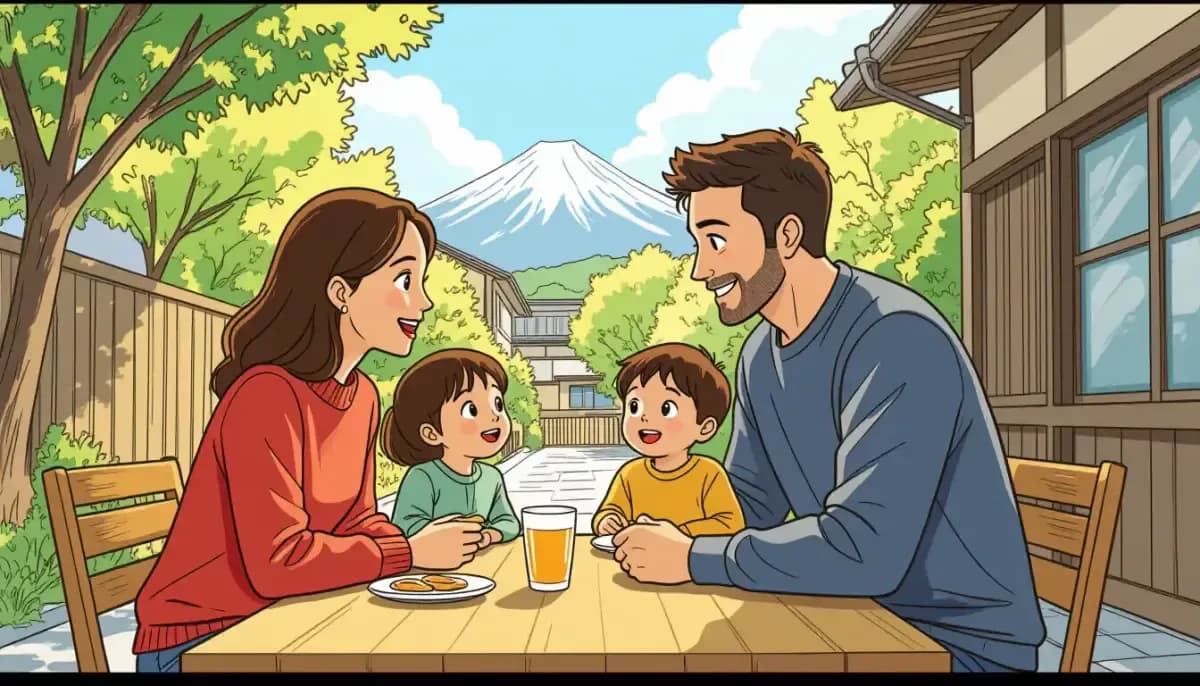
Navigate communication differences in cross-cultural parenting in Japan. Learn how Japanese high-context communication differs from Western styles and practical strategies for multicultural families.
Communication Styles in Cross-Cultural Parenting: A Guide for Families in Japan
Raising children in Japan as a foreign parent means navigating two (or more) sets of deeply held assumptions about how families communicate. Whether you come from a culture where open debate at the dinner table is the norm or one where quiet respect is a foundational value, you will encounter moments where your communication style and the Japanese style seem to be on completely different wavelengths. Understanding these differences — and learning to bridge them — is one of the most valuable gifts you can give your multicultural children.
This guide explores the key differences in communication styles between Japanese culture and many Western cultures, offers practical strategies for cross-cultural families, and helps you build a bilingual, bicultural home where children feel confident in both worlds. For more on raising children in Japan, see our guide on raising bilingual children in Japan and cultural identity for hafu and mixed-race children.
High-Context vs. Low-Context Communication: The Core Difference
Japan is one of the world's most prominent examples of a high-context culture, while many Western countries — particularly the United States, Canada, Australia, and much of northern Europe — operate within low-context communication norms. Understanding this distinction is the foundation for everything else in cross-cultural family communication.
In a low-context culture, communication is explicit and direct. Parents tell children clearly what they mean: "Don't do that because it hurts your sister." Rules are stated, expectations are named, and children are encouraged to ask questions and voice opinions. The value is on clarity and verbal expression.
In a high-context culture like Japan, meaning is embedded in context, tone, relationship, and silence. A Japanese parent may convey disapproval through a subtle change in facial expression, a pause, or a quiet withdrawal of warmth. Children are expected to read these cues rather than wait for explicit verbal instruction. Harmony (和 — wa) is deeply prized; open confrontation is often seen as a failure of relationship management, not a healthy form of expression.
Research published by PMC found that Japanese families most commonly exhibit a "laissez-faire" communication pattern — low on both direct conversation and explicit conformity — while American families tend toward "consensual" styles with high levels of both open discussion and shared values. This isn't because Japanese families care less about values; rather, those values are transmitted through everyday behavior, ritual, and subtle social modeling rather than explicit discussion. For deeper insights into Japanese parenting philosophy, O'Sullivan Counseling's overview of Japanese parenting styles is a helpful resource.
How Japanese Parents Communicate with Children
Japanese parenting communication has some distinctive features that can surprise foreign parents:
Empathy-based guidance over commands. Rather than saying "Stop hitting your brother," a Japanese mother might say something like "Your brother is crying. How do you think he feels?" This approach — called mentalization by researchers — helps children develop emotional awareness by constantly being invited to consider others' inner experiences.
Non-verbal communication is primary. Facial expressions, body posture, silence, and the way something is said carry as much (or more) weight than the words themselves. A soft "Hmm…" from a Japanese parent can communicate strong disapproval without a single critical word being spoken. For children raised in this environment, this becomes second nature; for foreign parents observing it, it can feel confusing or even evasive.
Indirect expression of dissatisfaction. Research consistently shows that Japanese people are far more likely than their Western counterparts to express negative feelings indirectly — perhaps through a third party, through ambiguous phrasing, or through silence. In parenting, this means children learn to pick up on subtle signals rather than expecting to be told directly when something is wrong.
Group harmony over individual expression. Japanese children are socialized from early childhood to fit smoothly into groups. At school, there is strong emphasis on minna issho ni (all together), and standing out or expressing strong individual opinions is often discouraged. This can be a point of friction for Western parents who value confidence and self-assertion in their children. Read more on mental health and emotional wellbeing for foreign children in Japan.
Communication Challenges in Cross-Cultural Families
A study of 30 Nordic expatriates living in Japan identified communication style differences, cultural hierarchy (verticality), and collectivism as key challenges in intercultural relationships, including family dynamics. These challenges show up in several common ways for cross-cultural families:
Language asymmetry. When one parent speaks Japanese and the other doesn't, or when children develop stronger Japanese skills than their heritage language, communication within the family can become unequal. Children may unconsciously code-switch to Japanese in emotionally intense moments, leaving a non-Japanese-speaking parent feeling shut out.
Different emotional expression norms. A Western parent who expects a child to say "I'm angry" or "That hurt my feelings" may be frustrated when their child deals with difficult emotions more in the Japanese style — withdrawing, becoming quiet, or processing internally. The child isn't suppressing emotions; they are expressing them in the culturally appropriate way they learned at school.
Conflict styles. When disagreements arise between spouses from different cultural backgrounds, the communication pattern itself becomes part of the conflict. One partner may want to talk it out directly and immediately; the other may need space and time, and may feel that pushing for an immediate verbal resolution is itself aggressive. Japan Today has documented these communication struggles in international marriages in Japan, confirming this is a widespread experience.
School communication expectations. Japanese schools communicate with parents primarily through written notices (renrakucho, the daily contact notebook) and formal meetings. Teachers rarely call to discuss problems directly; issues are often signaled indirectly. Foreign parents used to direct, frequent communication with teachers may misread the silence as "everything is fine" when the teacher is actually sending subtle signals.
Practical Strategies for Cross-Cultural Communication at Home
Building a functional communication culture in a multicultural family requires conscious effort from both parents. Here are evidence-based strategies:
Establish shared values, not shared rules. Instead of fighting over which culture's rules apply, identify the values both parents share — respect, kindness, responsibility, curiosity — and let those be the shared foundation. The specific behavioral expectations can vary by context (more Japanese-style at school, more Western-style at home).
Name communication styles explicitly. As children get older, talk openly with them about the differences they experience. "In Japan, people often show they're upset by going quiet. In [our home country], people tend to say it directly. Both ways are valid, and you can learn to use both." This builds metacultural awareness — an invaluable skill for bicultural children.
Create bilingual emotional vocabulary. Work deliberately to build your child's ability to name emotions in both languages. Japanese has rich vocabulary for subtle emotional states (amae, mono no aware) that have no direct English equivalent, and vice versa. Expanding children's emotional vocabulary in both languages strengthens their ability to communicate across cultural contexts.
Practice the art of reading the room. Help your children develop sensitivity to non-verbal cues — not just the Japanese ones, but across both cultures. Role-playing social scenarios (how do you know a Japanese grandmother is pleased vs. a direct American friend?) builds cultural intelligence.
Seek community and support. Connecting with other multicultural families provides validation and practical ideas. For guidance on family life in Japan, resources like Living in Nihon offer expat-focused perspectives on navigating Japanese culture. Similarly, For Work in Japan provides resources for foreigners integrating into Japanese society, which can complement family communication strategies. For Japanese-language study support that reinforces your children's communication in Japanese, Chuukou Benkyou offers educational resources.
For related guidance, see our articles on teaching Japanese to foreign children and heritage language maintenance for children in Japan.
Communication at Japanese School: What Foreign Parents Need to Know
Your child's communication style will be actively shaped by their school environment. Understanding what Japanese schools teach — explicitly and implicitly — about communication helps foreign parents stay in sync.
| Japanese School Communication Norm | What It Means for Your Child | How to Complement at Home |
|---|---|---|
| Speak only when called upon | Politeness, turn-taking | Encourage questions and discussion at home |
| Express yourself indirectly | Avoid embarrassing others | Teach direct expression as a skill for certain contexts |
| Group consensus over individual opinion | Cooperation, harmony | Validate individual opinions in a safe home environment |
| Non-verbal harmony cues | Read the room | Practice identifying emotions from facial expressions |
| Formal teacher communication | Respect for hierarchy | Teach how to address teachers vs. peers vs. family |
| Senpai-kohai dynamics | Hierarchical relationships | Discuss respectful communication across age groups |
Understanding these norms also helps foreign parents interpret school communications correctly. If a teacher notes in the renrakucho that your child "seems a little tired lately," this may be a carefully indirect signal that something needs attention — not just a casual observation. For a full overview of navigating Japanese schools, see elementary school in Japan: a complete guide for foreign parents.
Raising Metacultural Communicators
The goal for cross-cultural families isn't to choose one communication style over the other — it's to raise children who can navigate multiple styles with fluency and confidence. Research on multicultural children suggests that those who develop this kind of "cultural code-switching" ability tend to have stronger interpersonal skills, greater empathy, and more adaptability in diverse environments.
This doesn't happen automatically. It requires parents to:
- Model both styles — let children see you communicate directly in some situations and with nuance and indirection in others
- Debrief cultural moments — when a confusing communication moment happens, talk it through: "Why do you think obaachan didn't say anything when you were noisy? What was she showing us?"
- Celebrate both cultures — ensure neither parent's communication culture is treated as "wrong" or inferior; both are sophisticated systems that evolved for good reasons
- Seek bilingual counseling if needed — for families experiencing significant communication breakdown, a therapist who understands both cultural contexts can be transformative. Cross-cultural communication tools for working with families from PMC research offers frameworks that many therapists use
For broader context on supporting your family's wellbeing in Japan, our guides on mental health and emotional wellbeing for foreign children in Japan and the complete guide to the Japanese education system for foreign families provide useful complementary perspectives.
Moving Forward as a Cross-Cultural Family
Communication styles in cross-cultural parenting are not obstacles to overcome — they are resources to develop. Every time your child switches fluently between indirect Japanese social communication and direct Western expression, they are exercising a sophisticated set of skills that will serve them throughout their lives.
The families who navigate this most successfully are those who approach cultural difference with curiosity rather than judgment, who create space at home for explicit conversation about communication itself, and who help their children understand that being bicultural is not being torn between two worlds — it is having access to two powerful ways of understanding and relating to other people.
For more resources on raising children in Japan as a foreign parent, explore our complete guide to the Japanese education system and our overview of raising bilingual children in Japan.

Originally from Vietnam, living in Japan for 16+ years. Graduated from Nagoya University, with 11 years of professional experience at Japanese and international companies. Sharing practical information for foreign parents raising children in Japan.
View Profile →Related Articles
Building a Strong Multicultural Family Identity
Learn how to build a strong multicultural family identity in Japan. Practical strategies for bilingualism, cultural rituals, school navigation, and raising confident bicultural children as an expat family.
Read more →
Navigating Different Education Expectations Between Cultures
Discover how education expectations differ between Japan and Western countries. A practical guide for expat families on Japanese school culture, academic pressure, language barriers, and how to help your child thrive in both worlds.
Read more →
Best Cross-Cultural Parenting Books and Resources
Discover the best books and resources for cross-cultural parenting in Japan. From bilingual strategies to Japanese parenting philosophy, this guide helps multicultural families thrive.
Read more →
Keeping Cultural Traditions Alive When Living Abroad
Practical guide for expat families in Japan on keeping cultural traditions alive abroad — covering language, food, celebrations, community, and digital tools for raising bicultural children.
Read more →
Choosing Names for Children in Multicultural Families
Complete guide to choosing names for children in multicultural families in Japan — legal requirements, bilingual naming strategies, pronunciation pitfalls, kanji selection, and real bicultural name examples.
Read more →
Conflict Resolution in Multicultural Families
Practical strategies for resolving conflict in multicultural families living in Japan. Understand tatemae vs hon-ne, cultural communication styles, and evidence-based techniques for building lasting family harmony.
Read more →