
Navigating Different Education Expectations Between Cultures

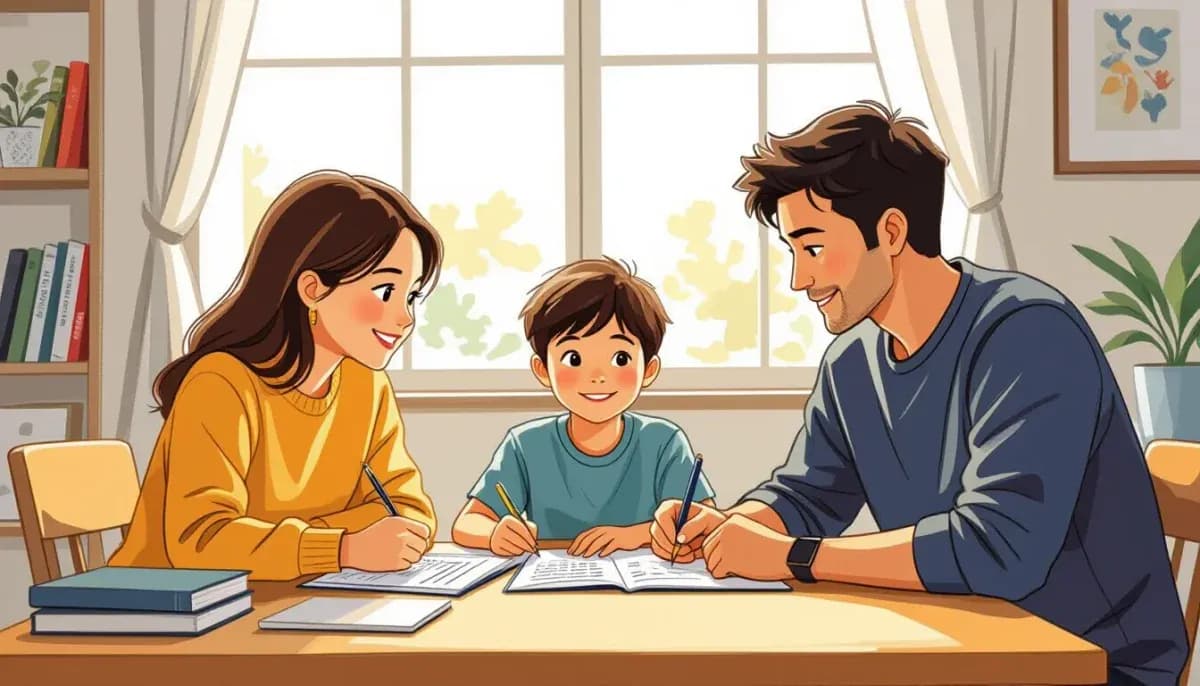
Discover how education expectations differ between Japan and Western countries. A practical guide for expat families on Japanese school culture, academic pressure, language barriers, and how to help your child thrive in both worlds.
Navigating Different Education Expectations Between Cultures: A Guide for Expat Families in Japan
Moving to Japan with children is an exciting adventure, but one of the biggest surprises for many foreign families is just how different the education system and cultural expectations around learning can be. Whether your child is enrolling in a local Japanese school or attending an international school, understanding these cultural differences — and managing the gap between what you expect and what Japan offers — is essential for your family's smooth transition.
This guide walks you through the key differences between Japanese and Western education philosophies, practical tips for helping your child adapt, and how to bridge two educational cultures at home.
Understanding the Core Philosophy: Group vs. Individual
At the heart of Japanese education is a deeply held belief in group harmony and collective responsibility. Where many Western countries celebrate individual expression, critical thinking, and personal achievement, Japanese schools emphasize:
- Wa (和) — group harmony above personal opinion
- Effort over talent — struggling is seen as virtuous, not shameful
- "Reading the air" (kuuki wo yomu) — sensing unspoken social cues to maintain group cohesion
- Discipline and punctuality — being on time is a basic sign of respect
A telling example of this difference: one research study found that American first-graders gave up on an impossible problem after roughly 30 seconds, while Japanese first-graders persisted for the entire hour. This persistence culture is built into the school system from the very first year.
For Western parents raised to encourage children to speak up, assert themselves, and question authority, watching your child quietly conform in a Japanese classroom can feel jarring. But understanding that this is intentional — a values-driven approach, not oppression — helps enormously.
Key Structural Differences: What to Expect Day-to-Day
Beyond philosophy, the everyday mechanics of Japanese school life differ significantly from what most expat families are used to. Here's a side-by-side comparison:
| Aspect | Japan | Western Countries (US/UK/Australia) |
|---|---|---|
| Classroom structure | Students stay in homeroom; teachers rotate | Students move between subject classrooms |
| Uniforms | Near-universal, sometimes chosen by students | Uncommon in public schools |
| School lunches | Nutritious, eaten together in classrooms | Cafeteria-style, quality varies |
| Indoor shoes | Required (students change at entrance) | Not applicable |
| Cleaning duties | Students clean daily (10-15 min) | Professional janitors employed |
| Assessment style | No formal exams for first 3 years; high-stakes entrance exams later | Mixed: tests, projects, participation |
| Extracurriculars | One club, year-round, near-daily commitment | Multiple activities, flexible scheduling |
| Cram school (juku) | Very common after regular school hours | Not typical |
| Academic calendar | April to March (3 terms) | Sept/Aug to May/June |
| Homework | Heavy, including during school holidays | Generally lighter |
Japan added AI and information technology as a mandatory high school subject in 2023, reflecting a push to modernize while maintaining its rigorous academic culture. Japan consistently ranks among the world's top performers in PISA science and mathematics assessments.
For more details on the structure of the Japanese school system, see our Complete Guide to the Japanese Education System for Foreign Families.
Language: The Biggest Practical Barrier
For expat children enrolling in Japanese public schools, language is the single most immediate challenge. Japanese instruction means a child must acquire not just conversational fluency but academic proficiency — two very different bars.
Realistic language timeline for children in Japanese schools:
- Basic conversational Japanese: approximately 6 months
- Academic-level proficiency: 2–3 years minimum
During this gap, children may struggle to follow lessons, form friendships, or navigate the school's social rules — all of which are emotionally taxing. Schools vary widely in how much support they provide to non-Japanese-speaking students; some larger urban schools have dedicated "nihongo kyoushitsu" (Japanese language classrooms) for newcomers, but smaller schools may have little formal support.
What parents can do:
- Hire a Japanese tutor before and during the school year
- Enroll in Japanese language classes alongside your child
- Connect with other expat families who have navigated the same transition
- Use apps and at-home games to make Japanese practice feel natural
For strategies on teaching Japanese to children, see our guide on Teaching Japanese to Foreign Children: Methods and Resources. If you're raising children bilingually, our article on Raising Bilingual Children in Japan has practical strategies for managing both languages.
Academic Pressure: Managing Expectations at Home
Japan's education culture carries a weight that surprises many Western parents. The stakes around high school entrance exams — taken at the end of junior high school — are enormous. To prepare, many students attend juku (cram schools) several evenings a week in addition to regular school. Students often don't arrive home until 7 or 8 PM.
This pressure-cooker environment doesn't suit every child, and it's completely valid to decide that a more relaxed international school environment is the better fit for your family. However, if your child is in the Japanese system, it helps to understand that:
- Academic struggle is normalized — teachers expect students to work through difficulty, not be rescued
- Extra study is the norm — not a sign that your child is falling behind
- Competition is mostly internal — Japanese classrooms are less visibly competitive than Western ones, but the private pressure from exams is intense
It's also important to watch for signs that your child is struggling with mental and emotional wellbeing, particularly around exam periods. See our guide on Mental Health and Emotional Wellbeing for Foreign Children in Japan for more.
International Schools: A Different Trade-Off
As of 2025, Japan has over 80 international schools nationwide, with 60+ in Tokyo alone. These schools offer curricula from around the world — American, British, International Baccalaureate (IB), bilingual, and faith-based — and are staffed largely by teachers from the country of the curriculum's origin.
Major international schools in Tokyo include:
- American School in Japan (ASIJ)
- British School in Tokyo
- St. Mary's International School
- International School of the Sacred Heart
- Seisen International School
Pros of international schools for expat families:
- Familiar curriculum and teaching style
- English (or home-language) instruction
- Strong expat community networks
- Easier transitions if the family moves countries again
Cons:
- Significantly higher cost — tuition plus facility, technology, textbook, and activity fees can reach ¥2–4 million per year or more per child
- Less exposure to Japanese culture and language
- Separate from the mainstream Japanese social fabric
International schools operate at high capacity and often have waiting lists, so apply early — ideally before you arrive in Japan. For a full breakdown of school options, see our International Schools in Japan: The Definitive Guide.
Bridging Two Cultures at Home
One of the most valuable things expat parents can do is help their children see both cultures as complementary rather than competing. Here are practical strategies that work:
Honor Japanese school practices at home:
- Respect the school's punctuality expectations — be at the gate early
- Support the "one club" commitment fully; don't pull your child out for trips unless essential
- Embrace the group-project mindset; help your child contribute to, not dominate, group tasks
Preserve your home culture deliberately:
- Set aside time for home-language reading, storytelling, and media
- Celebrate your own cultural holidays even while participating in Japanese ones
- Connect with expat community groups so your child has peers who share both cultural worlds
Communicate with teachers:
- Most Japanese teachers appreciate respectful, curious inquiry from foreign parents
- Ask about your child's social integration, not just academic progress
- A Japanese-speaking contact (another parent or a local support worker) can help bridge communication gaps
For managing your child's cultural identity across two worlds, see our guide on Cultural Identity for Hafu and Mixed-Race Children in Japan.
Resources and Further Reading
For expat families navigating Japan's education system, these resources offer additional perspectives and practical support:
- Living in Nihon — comprehensive guides for daily life and parenting in Japan
- For Work in Japan — practical information for foreign workers and their families
- Chuukou Benkyou — resources on studying and schooling in Japan
- Think Global People: Education in Japan — detailed overview of school options for expat families
- Japan vs. US Education Comparison — Kings Education — side-by-side breakdown of key differences
Understanding that different doesn't mean worse — just different — is the foundation for helping your child thrive in Japan's education system. With the right preparation and mindset, most expat children not only adapt but come away with a richer, more nuanced view of what learning and community can look like.
Related guides: Elementary School in Japan for Foreign Parents | Junior High School in Japan | High School in Japan | Heritage Language Maintenance for Children in Japan

Originally from Vietnam, living in Japan for 16+ years. Graduated from Nagoya University, with 11 years of professional experience at Japanese and international companies. Sharing practical information for foreign parents raising children in Japan.
View Profile →Related Articles
Building a Strong Multicultural Family Identity
Learn how to build a strong multicultural family identity in Japan. Practical strategies for bilingualism, cultural rituals, school navigation, and raising confident bicultural children as an expat family.
Read more →
Best Cross-Cultural Parenting Books and Resources
Discover the best books and resources for cross-cultural parenting in Japan. From bilingual strategies to Japanese parenting philosophy, this guide helps multicultural families thrive.
Read more →
Keeping Cultural Traditions Alive When Living Abroad
Practical guide for expat families in Japan on keeping cultural traditions alive abroad — covering language, food, celebrations, community, and digital tools for raising bicultural children.
Read more →
Choosing Names for Children in Multicultural Families
Complete guide to choosing names for children in multicultural families in Japan — legal requirements, bilingual naming strategies, pronunciation pitfalls, kanji selection, and real bicultural name examples.
Read more →
Conflict Resolution in Multicultural Families
Practical strategies for resolving conflict in multicultural families living in Japan. Understand tatemae vs hon-ne, cultural communication styles, and evidence-based techniques for building lasting family harmony.
Read more →
Gender Roles and Expectations in Multicultural Families
Navigating gender roles in a multicultural family in Japan? Understand traditional expectations, expat realities, and practical strategies for building an egalitarian home in Japan.
Read more →