
Gender Roles and Expectations in Multicultural Families

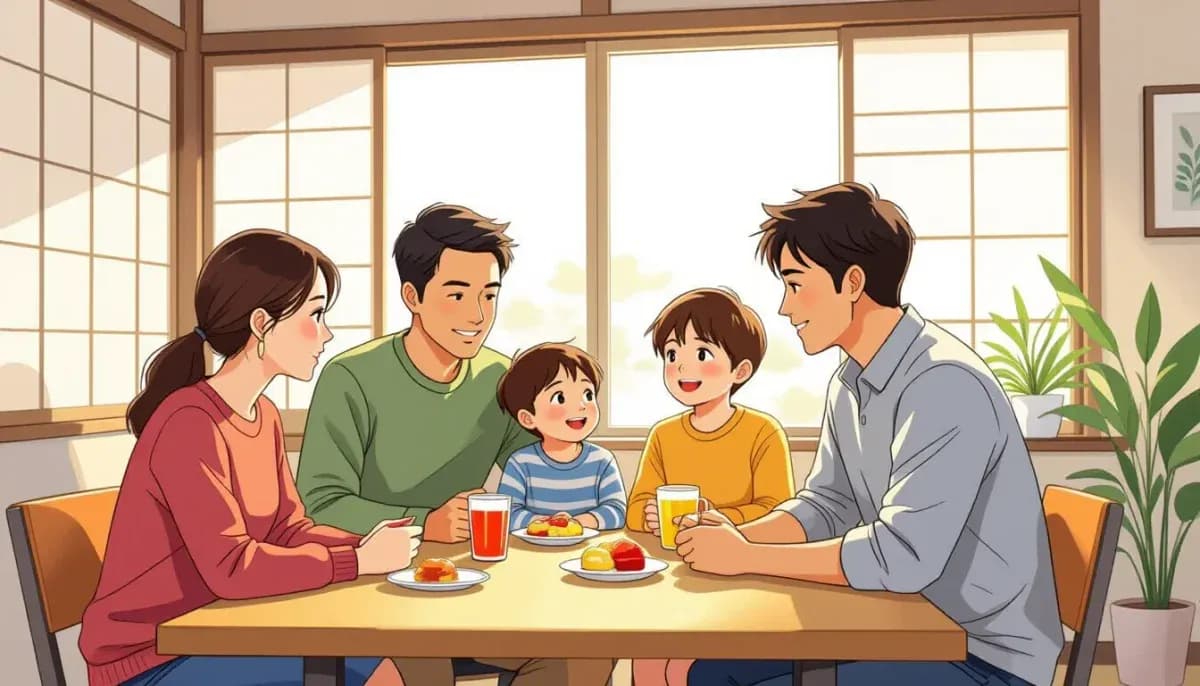
Navigating gender roles in a multicultural family in Japan? Understand traditional expectations, expat realities, and practical strategies for building an egalitarian home in Japan.
Gender Roles and Expectations in Multicultural Families in Japan
Building a family across cultures is one of the most rewarding — and challenging — experiences you can have in Japan. When two people from different cultural backgrounds come together to raise children in a society with deeply ingrained gender norms, the result is a daily negotiation between tradition and modernity, between expectation and reality. For foreign parents and multicultural couples in Japan, understanding the landscape of gender roles isn't just academic: it shapes how you parent, how you relate to your partner, and how your children grow up.
This guide explores what gender roles actually look like in Japanese society, how they affect multicultural families specifically, and practical strategies for navigating — and reshaping — those expectations in your own home.
Understanding Traditional Japanese Gender Roles
Japan's traditional gender framework has deep historical roots in Confucian hierarchies and the ie (household) system, where the eldest male served as the family patriarch. Under this system, men were expected to demonstrate loyalty to their lord and employer, while women were expected to manage the home and be loyal to their husbands and children.
These norms were codified further during the Meiji era and reinforced after World War II through the so-called "corporate family system" — where companies provided lifetime employment and social identity to male workers, while women were expected to be full-time homemakers (専業主婦, sengyō shufu). This system worked as an integrated social unit: the company took care of the salaryman, the salaryman's wife took care of everything at home.
The result today is a society in transition. According to the 2024 Global Gender Gap Report by the World Economic Forum, Japan ranked 118th out of 146 countries — the worst ranking among all G7 nations, with a score of 0.663. Japan placed 120th in economic participation, 113th in political empowerment, 72nd in educational attainment, and 58th in health outcomes. These statistics aren't abstractions: they reflect the daily reality that many multicultural families encounter.
Yet statistics only tell part of the story. Understanding the gap between tatemae (public-facing behavior and social expectations) and honne (actual private feelings and desires) is essential. Many Japanese people privately hold more egalitarian views than they express publicly — a 2023 survey found that while only 40–50% of Japanese people actively support the traditional breadwinner/homemaker model, many still default to it in practice due to social pressure, workplace structure, and family expectations.
The Shufu Role: More Authority Than It Appears
One of the most important concepts for multicultural families to understand is the Japanese concept of shufu (主婦) — often translated as "housewife" or "homemaker." But the word itself is telling: it combines the characters for "master" (主) and "woman" (婦), suggesting a role that carries genuine authority, not mere subordination.
In many Japanese households, the shufu controls the family finances, manages household budgets, makes decisions about children's education, and allocates resources across the family. Urban husbands who work 60+ hours a week often delegate nearly all domestic and child-rearing decision-making to their wives. The retired husband who suddenly enters the domestic space is sometimes humorously referred to as sodai gomi (粗大ゴミ, "oversized trash") — a cultural signal of how thoroughly the household can become the wife's domain.
For foreign partners coming from more egalitarian backgrounds, this can be initially confusing. Is the Japanese spouse being oppressed, or are they exercising real power? The answer, often, is both simultaneously — and multicultural couples need to have honest conversations about what each partner actually wants, separate from what their respective cultures suggest they should want.
For more context on navigating family life in Japan, see our guide on raising bilingual children in Japan and our overview of cultural identity for hafu and mixed-race children in Japan.
How Multicultural Families Experience Gender Pressure
Foreign partners — particularly foreign women — face a distinctive set of challenges in Japan that combine general gender norms with foreigner-specific stereotypes. Research from Japan Today documents what one American expat described as becoming "third class": second-class for being a woman, and third-class for being visibly foreign.
The pressure can be surprisingly specific. Some foreign women report being told to dress more femininely, maintain more "delicate" mannerisms, or tone down assertive communication styles. A British woman working at a Japanese company described switching exclusively to dresses before she felt "seen as a woman" by her colleagues. Others received contradictory messages — simultaneously being told to appear "girly and delicate" and then accused of looking "inappropriate" when they did.
For multicultural families, these external pressures can seep into domestic dynamics in several ways:
- Partner expectations: A Japanese spouse may consciously reject traditional gender roles while still feeling unconscious pull from family, workplace, or social expectations
- In-law pressure: Extended family members — especially grandparents — may have strong opinions about who should be doing what at home
- Childcare norms: Japanese preschool and elementary school systems often assume one parent (typically the mother) is available for daytime events, pickups, and volunteer obligations
- Community assumptions: Neighbors, other parents, and school officials may default to gendered assumptions about who handles what
It's worth noting that foreign men in multicultural families face their own pressures too — pressure to conform to Japanese notions of the responsible male breadwinner, or alternatively, confusion when their foreign expectations of shared parenting conflict with a Japanese spouse's more traditional expectations.
For families with children in Japanese schools, our guide on elementary school in Japan for foreign parents covers the practical realities of school events and parent participation expectations.
Comparing Gender Role Expectations: Japan vs. Common Expat Countries
Understanding where your home country falls on the spectrum of gender equality can help multicultural couples have more productive conversations about where their family wants to land.
| Country | WEF Gender Gap Rank (2024) | Female Political Representation | Female Share of Unpaid Work |
|---|---|---|---|
| Japan | 118th | 10.3% | ~5-6x more than men |
| United States | 43rd | ~28% | ~2x more than men |
| United Kingdom | 14th | ~35% | ~1.5x more than men |
| Germany | 7th | ~35% | ~1.6x more than men |
| Australia | 26th | ~38% | ~1.8x more than men |
| France | 22nd | ~40% | ~1.5x more than men |
| Canada | 36th | ~30% | ~1.8x more than men |
The gap between Japan and most G7 nations is striking. For couples where the foreign partner comes from one of these countries, differences in expectations around division of labor, professional ambitions, and parenting involvement can create significant friction — especially during stressful periods like the first year of a new baby or when children start school.
For legal and visa considerations that affect multicultural family structure, see our guide on visa and legal issues for foreign families with children in Japan.
Practical Strategies for Navigating Gender Roles in Your Family
Multicultural families in Japan don't have to simply accept either the traditional Japanese model or their foreign partner's home-country model. Many find creative ways to build a family culture that works for them. Here are evidence-based strategies:
1. Have explicit conversations early and often. Don't assume your partner shares your expectations about who does what at home. These conversations need to happen before major life events (marriage, pregnancy, school enrollment), not during them.
2. Understand which constraints are cultural and which are structural. Workplace culture that demands long hours from male employees is a structural constraint. In-law expectations about who hosts New Year's are cultural. These require different responses — structural constraints may require negotiating with employers or choosing different career paths, while cultural expectations can sometimes be diplomatically redirected.
3. Learn the *honne* beneath the *tatemae*. Your Japanese partner may express traditional views publicly while privately wanting something different. Create space for honest conversation at home, separate from what either of you says in public.
4. Find your community. Online and in-person communities of multicultural families in Japan can provide enormous support. Organizations like TELL (Telephone Emergency Life Line) provide mental health support for foreign residents navigating identity challenges.
5. Watch for generational differences. Younger Japanese people in urban areas increasingly prefer more flexible, egalitarian gender roles. Your partner's parents' expectations may not reflect your partner's own desires.
6. Be patient with the school system. Japanese schools often operate on gendered assumptions that can feel outdated. Volunteer activities, class communications, and emergency contacts are frequently directed at mothers. This doesn't mean you can't push back — but it helps to know it's coming.
For more on the broader context of raising children in Japan, explore our guides on daycare and hoikuen in Japan and mental health and emotional wellbeing for foreign children in Japan.
Japan's Gender Equality Policies and What They Mean for Families
The Japanese government has made stated commitments to gender equality over the past decade. The womenomics initiative under Prime Minister Abe aimed to increase female workforce participation, and the number of female cabinet ministers has slowly grown — from 2 in August 2022 to 5 after the September 2023 reshuffle. Parental leave laws have been expanded to include stronger paternity leave provisions.
But implementation lags far behind policy. Only 11% of managers and 3% of board members in Japan are women. Under 5% of mayors are women. Only 43% of university-educated women who leave the workforce to have children successfully re-enter at a comparable level. And Japanese women still spend 5–6 times more on unpaid domestic work than men — the highest ratio among all OECD countries.
For multicultural families, this means the legal framework may officially support you more than the social reality does. You have the right to take paternity leave; your husband may still face intense workplace pressure not to. You have the right to work full-time after having children; the school system may still schedule everything during working hours and assume a parent is available.
The White Paper on Gender Equality 2025 from Japan's Cabinet Office provides useful insight into official policy directions. For ongoing coverage of gender issues in Japan, Japan Today's lifestyle section regularly covers expat experiences.
Children and Gender Socialization in Multicultural Households
Children in multicultural households have a unique opportunity: they grow up with explicit exposure to multiple cultural frameworks, which can make gender roles visible and discussable rather than invisible and assumed.
Research on bilingual and multicultural children consistently shows they develop stronger capacity for what psychologists call "code-switching" — understanding that different contexts have different rules. This same cognitive flexibility, when cultivated, can apply to gender roles: children can learn that Japanese school culture has one set of expectations, their home culture has another, and that they get to choose who they want to be.
Practical approaches for multicultural families:
- Model the behavior you want to see. If you want your children to see shared parenting and egalitarian division of labor, practice it visibly at home.
- Name the differences. When children notice that things are done differently at school or at grandparents' homes, use it as an opportunity to talk about cultural differences rather than saying one way is "wrong."
- Celebrate both cultures. Children who feel proud of all parts of their heritage are better equipped to navigate cultural complexity. Our guide on heritage language maintenance for children in Japan discusses this in depth.
For expat families managing gender dynamics in the context of Japan's legal system, our article on child custody and family law in Japan for international families is essential reading.
Further Reading and Resources
Navigating gender roles in a multicultural family in Japan is an ongoing process, not a problem to be solved once. Here are key resources:
- Living in Nihon — Resources for foreigners living in Japan — comprehensive guides for expat life
- For Work in Japan — Career guides for foreign workers — workplace culture and career navigation
- Chuukou Benkyou — Education resources for families in Japan — education-focused guides
- Jobs in Japan — Family Dynamics in Japanese Households — practical guide to Japanese household expectations
- Cultural Atlas: Japanese Family Culture — in-depth cultural framework
- NWEC Gender Statistics Japan 2024 — official statistics on gender in Japan
The most important thing to remember is that your family doesn't have to fit any single cultural mold. Japan is changing, your home country's norms are changing, and multicultural families are often at the frontier of that change — building something new from the best of multiple worlds.

Originally from Vietnam, living in Japan for 16+ years. Graduated from Nagoya University, with 11 years of professional experience at Japanese and international companies. Sharing practical information for foreign parents raising children in Japan.
View Profile →Related Articles
Building a Strong Multicultural Family Identity
Learn how to build a strong multicultural family identity in Japan. Practical strategies for bilingualism, cultural rituals, school navigation, and raising confident bicultural children as an expat family.
Read more →
Navigating Different Education Expectations Between Cultures
Discover how education expectations differ between Japan and Western countries. A practical guide for expat families on Japanese school culture, academic pressure, language barriers, and how to help your child thrive in both worlds.
Read more →
Best Cross-Cultural Parenting Books and Resources
Discover the best books and resources for cross-cultural parenting in Japan. From bilingual strategies to Japanese parenting philosophy, this guide helps multicultural families thrive.
Read more →
Keeping Cultural Traditions Alive When Living Abroad
Practical guide for expat families in Japan on keeping cultural traditions alive abroad — covering language, food, celebrations, community, and digital tools for raising bicultural children.
Read more →
Choosing Names for Children in Multicultural Families
Complete guide to choosing names for children in multicultural families in Japan — legal requirements, bilingual naming strategies, pronunciation pitfalls, kanji selection, and real bicultural name examples.
Read more →
Conflict Resolution in Multicultural Families
Practical strategies for resolving conflict in multicultural families living in Japan. Understand tatemae vs hon-ne, cultural communication styles, and evidence-based techniques for building lasting family harmony.
Read more →