
Extended Family Expectations Across Different Cultures

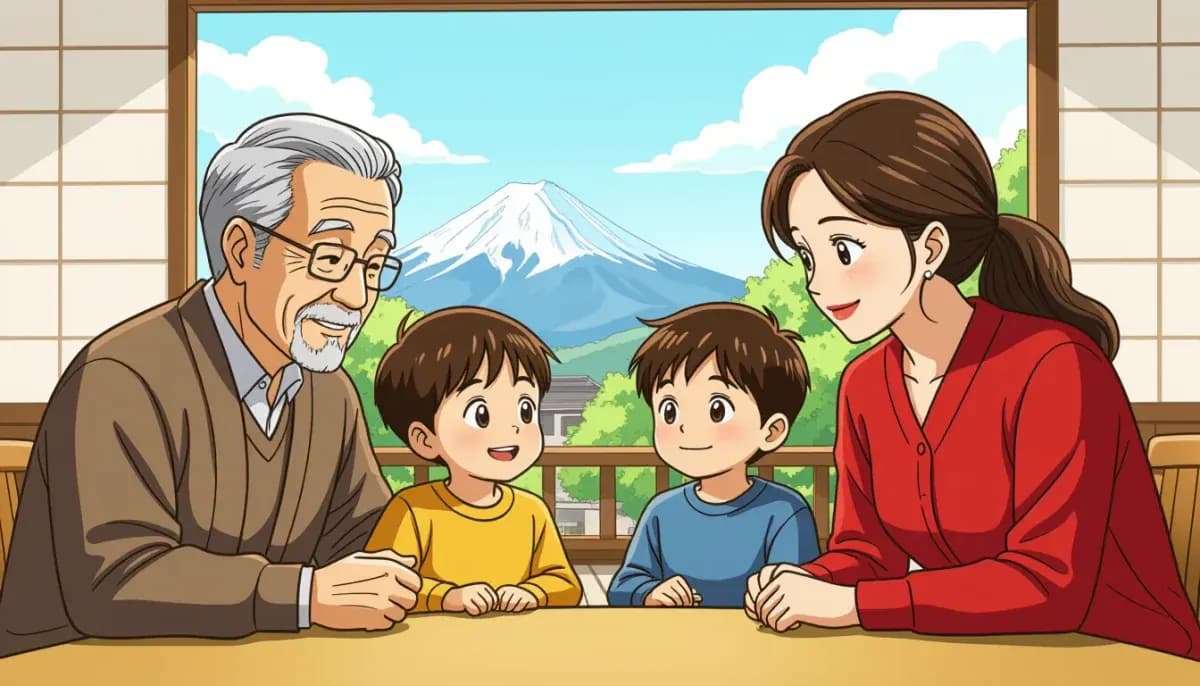
Moving to Japan means navigating very different extended family expectations. Discover how Japanese, Western, and Asian cultures differ on eldercare, living arrangements, and family obligations — and practical tips for expat families.
Extended Family Expectations Across Different Cultures in Japan
When you move to Japan with your family — or marry into a Japanese family — you quickly discover that "family" means very different things depending on where you come from. Extended family expectations vary enormously across cultures, and nowhere is this contrast sharper than when Western, South Asian, Southeast Asian, or Latin American expats encounter Japan's deeply rooted family traditions. Understanding these differences is not just interesting — it can prevent real misunderstandings, strengthen relationships with in-laws, and help you navigate practical issues around eldercare, childcare, and family obligations.
Japan's foreign population reached 3.58 million in 2024, with more families now living together with foreign workers. Whether you are raising children in Japan, planning to bring parents over, or simply navigating a cross-cultural marriage, knowing what different cultures expect from extended family is essential.
How Japan's Traditional Extended Family System Works
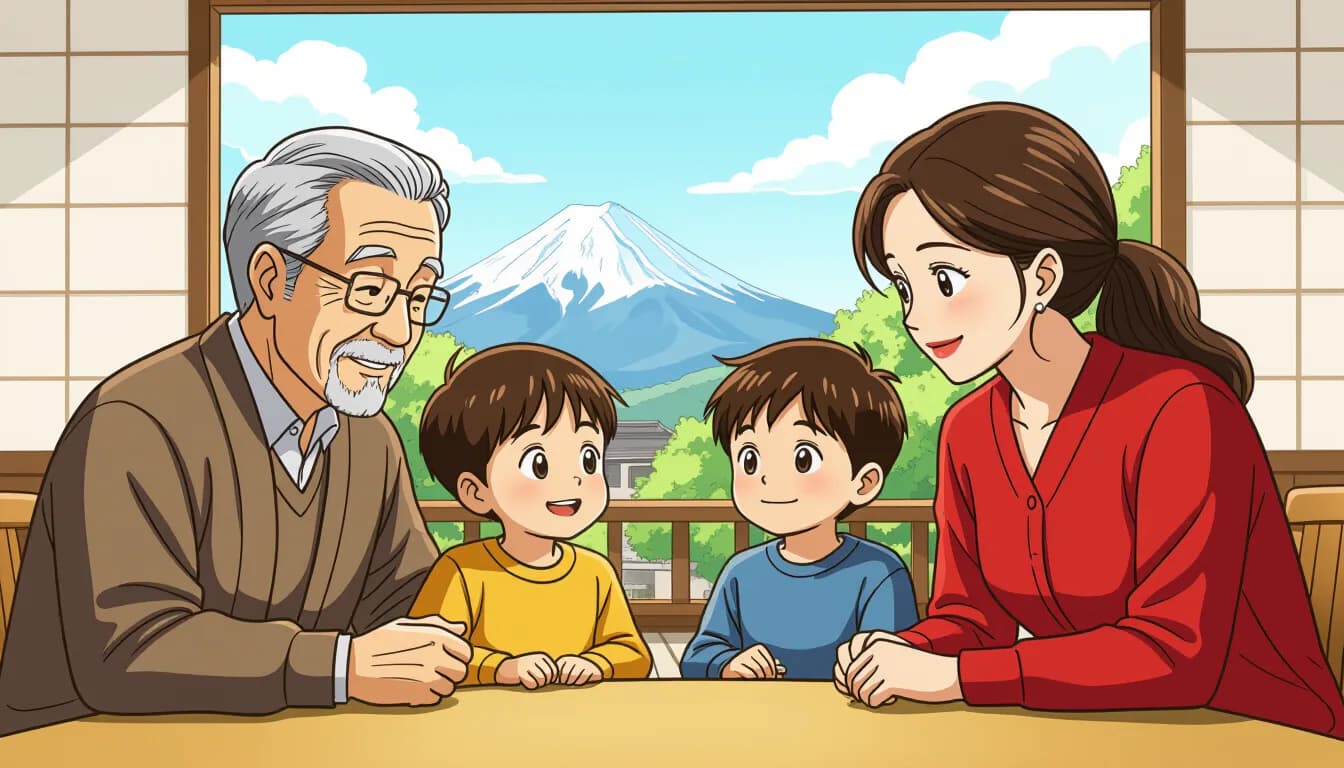
Japan's traditional family structure is rooted in the ie system — a patriarchal, multigenerational household model with deep Confucian origins. Historically, the family was not a collection of individuals but a single social unit. The koseki (family registry) still reflects this: it registers households, not individuals, as the basic unit of Japanese society. Your koseki status affects everything from education enrollment to healthcare to inheritance.
In the traditional model, the eldest son was expected to inherit the family home and take on responsibility for caring for aging parents. Extended family was not just emotionally close — it was legally and financially intertwined. Grandparents, parents, and children often lived together, and even distant relatives and ancestors held active roles in family life through ceremonies like Obon (the festival honoring ancestral spirits) and New Year gatherings.
That said, the idealized three-generation household was historically more aspiration than reality for most Japanese families. Modern Japan has largely shifted toward the nuclear family model, especially in cities. Yet the expectations and emotional obligations of the extended family system persist strongly — particularly for eldest sons and their spouses.
Key statistics that shape this picture:
- 40.7% of Japanese households currently include someone aged 65 or older
- Life expectancy is 87.5 years for women and 81.4 years for men — one of the world's highest, which extends the duration of elder care responsibilities
- Japan's birth rate has fallen to just 1.36 children per couple, intensifying pressure on fewer children to care for aging parents
For more on how this affects families with children in Japan, see our guide to visa and legal issues for foreign families in Japan.
Cross-Cultural Comparison: Extended Family Expectations by Culture
One of the most important things expats and cross-cultural couples can do is understand that their own "normal" is not universal. Here is how extended family expectations differ across major cultural groups in Japan's expat community:
| Cultural Group | Elder Care Expectation | Family Living Arrangement | Filial Piety Level | Financial Obligations |
|---|---|---|---|---|
| Japan (traditional) | Eldest son + spouse primarily responsible | Multigenerational ideal (now mainly rural) | Very high | Strong — may include regular financial support |
| Japan (modern urban) | Mix of family + professional care | Nuclear family predominant | Moderate–high | Varies; care homes now common |
| China / Korea | Strong family obligation; children expected to care for parents | Extended family cohabitation still common | Very high (Confucian) | Strong, especially for eldest sons |
| India / South Asia | Joint family system; parents live with married son | Extended family cohabitation expected | Very high | Full household integration expected |
| USA / UK / Australia | State welfare + personal choice | Nuclear family; independent elderly housing norm | Low–moderate | Minimal cultural obligation |
| Latin America | Family-centered; grandparents key in childcare | Extended family nearby common; multigenerational less formal | High | Strong emotional, moderate financial |
| Southeast Asia | Varies; generally family-first | Often multigenerational especially outside cities | High | Often expected to send money to family |
This table illustrates why cross-cultural marriages in Japan so often generate friction around family obligations. A Japanese eldest son and his Western spouse may have radically different assumptions about whether his aging parents will eventually move in, who will provide daily care, and how much of the household budget should go toward supporting the extended family.
For couples navigating these differences, see our resource on child custody and family law in Japan for international families.
What Foreigners Living in Japan Often Find Surprising
If you come from an individualistic culture (like most Northern/Western European or Anglo-American backgrounds), Japan's family culture will likely surprise you in several ways:
1. Your conduct reflects on your entire family. In Japanese culture, the reputation of individual family members is bound together. A child's behavior at school, a spouse's manners at a company party, or your own performance at work all reflect on your household — not just on you personally.
2. Silence about family problems is expected. Many Japanese families maintain a strong tatemae (public face) — they rarely discuss family conflicts openly or seek outside help. Expats accustomed to talking freely about family struggles with friends may feel isolated, and Japanese spouses or in-laws may find open discussion intrusive.
3. The eldest son's responsibilities are real and ongoing. Even in modern Japan, an eldest son typically feels genuine obligation to care for aging parents — not as a burden, but as a culturally internalized expectation. If you are married to a Japanese eldest son, this will shape major life decisions: where you live, how finances are managed, and eventually, living arrangements.
4. Grandparents play a major role in childcare. With high costs of daycare and the "kyoiku mama" (education mother) culture, grandparents — especially grandmothers — often serve as primary caregivers for young children. If your Japanese in-laws are close by, expect them to take an active role in your children's upbringing. This can be wonderful, but also a source of friction if parenting styles differ.
5. Social isolation among the elderly is a growing crisis. Japan's rapid urbanization and declining birth rate have left many elderly people isolated. So many, in fact, that companies now rent out actors to portray family members for lonely elderly people — a striking indicator of how far the extended family system has deteriorated in practice. If you have Japanese in-laws, proactive relationship-building matters enormously in this context.
For guidance on raising your children with Japanese cultural awareness, see raising bilingual children in Japan and cultural identity for hafu and mixed-race children in Japan.
Practical Realities: Bringing Extended Family to Japan
Many expats want to bring parents or in-laws to Japan, either to help with childcare or because they want to keep aging relatives close. Japan's immigration rules make this significantly harder than many expect.
Dependent visas in Japan are not designed for extended family. They cover spouses and minor children. Bringing parents is generally not possible under standard visa categories. The one exception: holders of the Highly Skilled Professional (HSP) visa can bring a parent or parent-in-law to Japan — but only if they are coming to care for a child under 7 or a pregnant visa holder, and the stay is limited to one or two years.
If your parents or in-laws do come to Japan and stay long-term, health insurance enrollment is a critical practical matter. Under Japan's Social Insurance system:
- Parents can be registered as your dependents if their annual income is under ¥1.3 million (or ¥1.8 million if they are 60 or older)
- Since 2020, dependents must be physically resident in Japan (not just listed as family members) to qualify for coverage
- If you are on National Health Insurance instead of company Social Insurance, each person must enroll separately — there is no dependent system
For complete details on family health insurance in Japan, including what documents you need and how to enroll family members, see 家族の医療・健康保険の手続きと利用法 at For Work in Japan.
Also see our comprehensive guide to government benefits and subsidies for families in Japan for additional financial support available to expat families.
Gender Roles and the Hidden Labor of Extended Family Expectations
Extended family expectations in Japan are not gender-neutral. The burden of meeting family obligations — caring for in-laws, managing household ceremonies, maintaining family relationships — falls disproportionately on women, and particularly on daughters-in-law.
Japanese men average just ~41 minutes per day on unpaid domestic work, compared to over 2 hours in Sweden. When a Japanese mother-in-law moves in, or when grandparents require regular care, it is typically the wife — Japanese or foreign — who absorbs most of that labor.
For foreign women married to Japanese men, this can be a significant cultural shock. In many Western cultures, elder care is a shared responsibility or handled through professional services. In Japan, the expectation that the daughter-in-law will manage the household and extended family care is deeply embedded — even if rarely stated explicitly.
The employment picture adds another layer: only 43% of women who want to rejoin the workforce after childcare actually manage to do so in Japan. Japan does have the world's highest share of single mothers in the workforce (85%), but the structural barriers for married mothers remain high. Extended family support — particularly active grandparents — is one of the key factors that enables mothers to maintain careers.
For more on mental health and wellbeing in this context, see our resource on mental health and emotional wellbeing for foreign children in Japan.
Navigating Extended Family Expectations as an Expat: Practical Tips
Whether you are in a cross-cultural marriage or simply managing relationships with Japanese neighbors and colleagues as a foreign family, these tips can help:
Communicate early and explicitly. Assumptions about extended family obligations are rarely spoken aloud in Japanese culture — they are absorbed over decades. As an outsider, you don't have that background, so explicit conversations about expectations (childcare involvement, financial support, living arrangements) are essential, even if they feel awkward.
Respect Obon and New Year visits. These are not optional social events — they are the primary occasions for extended family to gather, honor ancestors, and reinforce family bonds. If your Japanese partner's family observes these holidays, making the effort to participate is a major relationship investment.
Understand the koseki system's practical effects. Your family's legal status in Japan is recorded in the koseki registry. For international couples, this includes your marriage, children's nationalities, and family structure. If you face divorce, adoption, or custody issues, the koseki is central to how Japanese courts interpret family membership. See our guide on child custody and family law in Japan for details.
Seek community support. Japan has a growing network of resources for expat families. Living in Nihon offers practical guides on cross-cultural integration, international marriage, and navigating Japanese family culture as a foreigner. For work-related family issues including dependent enrollment, For Work in Japan has detailed coverage of health insurance and benefits. Academic exam support is covered at Chuukou Benkyou for families with school-age children.
Build relationships with Japanese in-laws proactively. Given Japan's elder isolation crisis, making the effort to visit, call, and include grandparents in family life will be deeply meaningful — even if it feels one-sided at first. The Japanese family system prizes sustained, quiet effort over dramatic gestures.
Know your limits. It is also legitimate to set boundaries. Extended family expectations in Japan can be genuinely overwhelming for expats — particularly women — who did not grow up in this system. Finding a balance between respecting your partner's cultural background and maintaining your own needs is not a failure of cultural adaptation. It is a reasonable part of any cross-cultural partnership.
For a comprehensive picture of raising children in this cultural context, see the complete guide to the Japanese education system for foreign families.
Further Reading and Resources
- Cultural Atlas: Japanese Family Culture — Comprehensive overview of family identity, gender roles, marriage, and demographics
- Family Dynamics in Japan | Guidable Jobs — How traditional structures are shifting in modern Japan
- The Japanese Family System | Nakasendo Way — Historical context for the ie system and its modern legacy
- Finding Yourself in a Japanese Household | Jobs in Japan — Practical expat perspective on Japanese household dynamics
Extended family expectations are one of the most personal and emotionally charged aspects of cross-cultural life in Japan. Whether your challenges involve eldercare, childcare, inheritance, or simply bridging different assumptions about what families owe each other, understanding the cultural roots of these expectations — and being honest about your own — is the most powerful tool you have.

Originally from Vietnam, living in Japan for 16+ years. Graduated from Nagoya University, with 11 years of professional experience at Japanese and international companies. Sharing practical information for foreign parents raising children in Japan.
View Profile →Related Articles
Building a Strong Multicultural Family Identity
Learn how to build a strong multicultural family identity in Japan. Practical strategies for bilingualism, cultural rituals, school navigation, and raising confident bicultural children as an expat family.
Read more →
Navigating Different Education Expectations Between Cultures
Discover how education expectations differ between Japan and Western countries. A practical guide for expat families on Japanese school culture, academic pressure, language barriers, and how to help your child thrive in both worlds.
Read more →
Best Cross-Cultural Parenting Books and Resources
Discover the best books and resources for cross-cultural parenting in Japan. From bilingual strategies to Japanese parenting philosophy, this guide helps multicultural families thrive.
Read more →
Keeping Cultural Traditions Alive When Living Abroad
Practical guide for expat families in Japan on keeping cultural traditions alive abroad — covering language, food, celebrations, community, and digital tools for raising bicultural children.
Read more →
Choosing Names for Children in Multicultural Families
Complete guide to choosing names for children in multicultural families in Japan — legal requirements, bilingual naming strategies, pronunciation pitfalls, kanji selection, and real bicultural name examples.
Read more →
Conflict Resolution in Multicultural Families
Practical strategies for resolving conflict in multicultural families living in Japan. Understand tatemae vs hon-ne, cultural communication styles, and evidence-based techniques for building lasting family harmony.
Read more →