
Religious and Spiritual Upbringing Decisions for Mixed Families

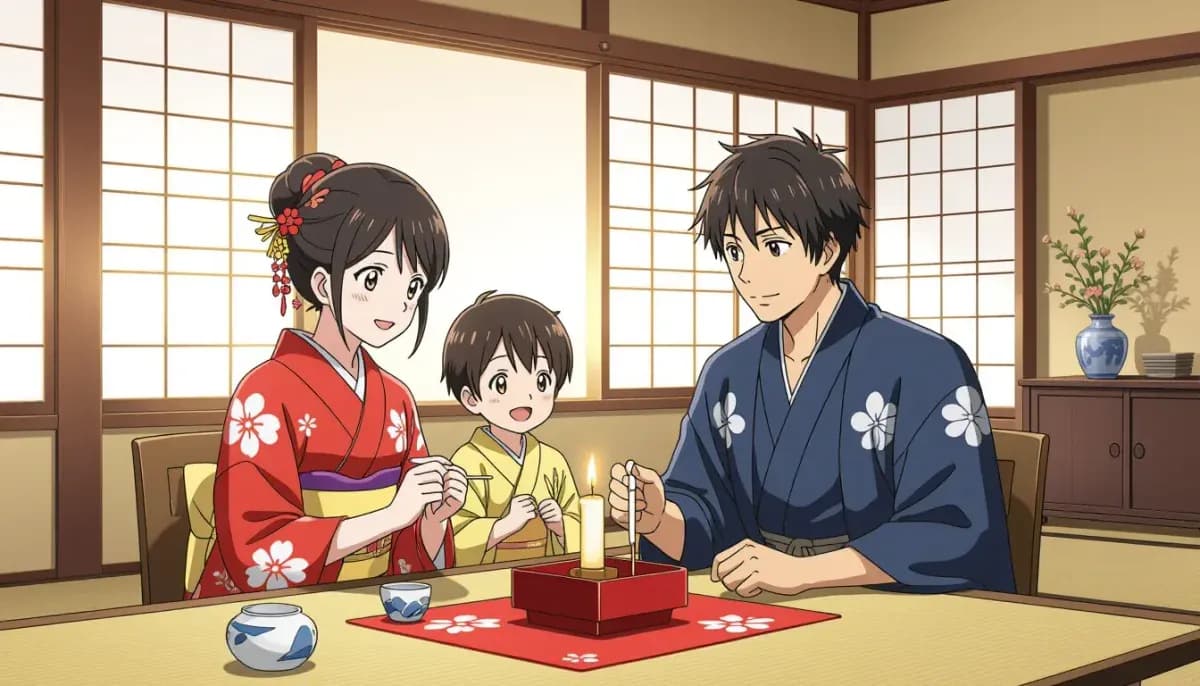
How do mixed and international families navigate religious and spiritual upbringing in Japan? Learn practical strategies for raising children with multiple faith traditions, navigating Japanese schools, and honoring both Japanese and foreign family customs.
Religious and Spiritual Upbringing Decisions for Mixed Families in Japan
Raising children in Japan as part of a mixed or international family comes with a beautiful and sometimes bewildering challenge: how do you navigate religious and spiritual upbringing when you and your partner come from different faith traditions — or when one of you is Japanese and holds an entirely different relationship with religion than the other?
Japan is a country where spirituality is woven into daily life, yet most Japanese people would describe themselves as non-religious. Understanding this apparent contradiction is the first step toward making thoughtful, intentional choices about your children's spiritual upbringing. This guide will walk you through Japan's unique religious landscape, practical approaches for mixed families, and how to honor multiple traditions without creating confusion or conflict.
For a broader introduction to Japan's religious culture, the Living in Nihon religion and spirituality guide offers an excellent foundation for foreign residents navigating this topic.
Understanding Japan's Unique Religious Landscape
Japan's approach to religion is unlike almost anywhere else in the world. The country's religious adherents total approximately 180 million — a number that actually exceeds Japan's actual population of around 124 million. This statistical impossibility exists because dual affiliation is the norm: the vast majority of Japanese families observe both Shinto and Buddhist traditions without seeing any contradiction.
The numbers tell the story:
- Shinto: ~87.2 million adherents (48.6%)
- Buddhism: ~83.2 million adherents (46.4%)
- Christianity: ~1.9 million (1.1%)
- Other religions: small but growing minorities
Yet here's the paradox: roughly 62% of Japanese people self-identify as non-religious. How can so many people practice religion without feeling religious? The answer lies in the cultural rather than doctrinal nature of Japanese spirituality.
A common saying captures this well: Japanese people are "born Shinto, marry Christian, die Buddhist." Babies are taken to Shinto shrines for their first blessings (hatsumode, Shichi-Go-San milestones), many couples hold Christian-style wedding ceremonies, and funerals are typically Buddhist. None of this is considered contradictory because these practices are understood as cultural customs, not theological commitments.
For mixed families, this means the cultural context your children grow up in is already inherently pluralistic. Japan has built-in acceptance for participating in multiple traditions.
Common Religious Backgrounds in Mixed Japanese Families
When international couples settle in Japan, they bring an enormous diversity of faith traditions. Understanding where each partner comes from spiritually — and what role religion played in their own upbringing — is the foundation for any productive conversation about your children.
| Religion/Background | Key Home Country Regions | Core Practices Relevant to Children |
|---|---|---|
| Shinto | Japan | Shrine visits, seasonal festivals, rites of passage |
| Buddhism (Japanese) | Japan | Obon, temple visits, ancestor veneration |
| Christianity (Protestant) | USA, UK, Australia, Korea | Church attendance, Bible education, Christmas/Easter |
| Christianity (Catholic) | Philippines, Brazil, Southern Europe | Mass, baptism, First Communion, confession |
| Islam | Southeast Asia, Middle East, South Asia | Daily prayers, halal diet, Ramadan, Quran study |
| Hinduism | India, Nepal | Puja, festivals (Diwali, Holi), vegetarian diet |
| Judaism | Israel, USA, Europe | Shabbat, bar/bat mitzvah, dietary laws (kosher) |
| Secular/Atheist | Various | Ethical upbringing without religious doctrine |
No single combination is inherently more difficult than another. The key is understanding what each partner considers non-negotiable versus optional in their faith practice — and having that conversation honestly before decisions need to be made.
Practical Approaches for Bicultural and Multi-Faith Families
Bicultural families in Japan have developed a range of strategies for navigating religious upbringing. There is no universally "correct" approach, but these frameworks help many mixed families find balance.
Option 1: The Inclusive/Both Approach
Many international families choose to participate in all relevant traditions. Children attend the Japanese parent's family shrine for hatsumode on New Year's Day and also go to church for Christmas and Easter. This approach mirrors what Japanese society already does with Shinto and Buddhism, so it is culturally intuitive and socially unremarkable.
Pros: Children gain rich cultural knowledge from both heritages; no conflict with grandparents or extended family; mirrors Japan's own pluralist approach.
Cons: Without grounding in either tradition's deeper teachings, children may grow up treating all religion as purely cultural performance.
Option 2: One Primary Religion + Cultural Participation
The family commits to one religion as the primary faith tradition (usually the foreign partner's, since Japanese culture already provides ambient Shinto/Buddhist exposure), while still participating in culturally important Japanese events.
For example, a Muslim family from Malaysia living in Japan might maintain Islamic prayer and dietary practices while still allowing children to attend school Obon activities as a cultural (not religious) event.
Pros: Children have a clear spiritual identity and community; easier for extended religious education.
Cons: Requires nuanced explanation to children about the difference between cultural and religious participation.
Option 3: Secular with Cultural Awareness
Some families — particularly those where both partners are non-religious or where religion has been a source of conflict — choose to raise children outside organized religion while still teaching about multiple traditions as part of cultural literacy.
Pros: Least friction; children learn about religions objectively; no spiritual identity conflict.
Cons: Children may feel disconnected from both grandparents' traditions; harder to participate meaningfully in extended family religious events.
Navigating Japanese Schools, Holidays, and Social Events
One area where religious upbringing decisions become immediately practical is your children's schooling. Japanese public schools do not accommodate religious practices in the way many Western schools might.
What to expect in Japanese public schools:
- No prayer rooms or designated quiet spaces for religious practice
- No halal or vegetarian school lunch options by default (though some schools are increasingly flexible on request)
- School events assume Shinto/Buddhist participation (shrine trips, New Year celebrations)
- Religious holidays not recognized as official school absences
For families where faith practice is central — Islamic families observing daily prayers, Jewish families keeping kosher, or Christian families wanting Sunday church attendance — this requires planning.
Practical solutions:
- Speak directly with the school principal about your family's practices; Japanese schools often accommodate sincere, politely-explained requests
- Pack alternative lunches for days when school meals don't meet dietary requirements
- Use international schools for families where religious education is a high priority (see our international schools guide for options)
- Schedule religious instruction and community activities outside school hours
For families navigating the school system more broadly, our elementary school guide for foreign parents and junior high school guide cover the full landscape of educational options.
The For Work in Japan religious community guide also provides excellent information on English-language religious communities throughout Japan that support mixed families with childcare, educational programs, and peer support.
Finding Your Religious Community in Japan
One of the most important things mixed families can do — regardless of their chosen approach to religious upbringing — is connect with a faith community. Religious communities for expats in Japan offer far more than worship services: they provide crucial social support, childcare networks, multilingual connections, and peer guidance from others navigating the same challenges.
Major faith communities for international families in Japan:
Christianity:
- Tokyo Union Church (Omotesandō/Shibuya area): One of the oldest English-language churches in Japan, with family programs and community events
- International Baptist Church Tokyo, St. Alban's Anglican Church, and dozens of other English-language congregations in major cities
- Korean Christian churches with bilingual services exist throughout Japan
Islam:
- Tokyo Camii (Yoyogi Uehara): Japan's largest mosque, with multilingual support, halal resources, and community programs
- Osaka, Nagoya, and Kobe all have established mosque communities
- Japan Muslim Association maintains a directory of mosques nationwide
Judaism:
- Jewish Community of Japan (Tokyo): Cultural and religious events, Shabbat dinners, Jewish holiday celebrations
- Community of about 1,000 Jewish residents, with active programming
Other traditions:
- Hindu temples and associations in major cities
- Buddhist English-language meditation centers welcoming foreign practitioners
- International Unitarian and interfaith communities welcoming mixed-faith families
Membership costs vary widely: ¥6,000–¥150,000+/month for some formal communities, while many faith communities are free for participants.
Talking to Children About Religion in a Mixed Family
How you explain religious differences to your children matters enormously. Children are naturally curious about why their family does things differently from their Japanese classmates or from their grandparents in another country.
Age-appropriate conversations:
Ages 2-5: Focus on the concrete and sensory. "We go to the shrine because Ojiichan's family has always done this to say thank you." "We say this prayer before dinner because it's how Mommy's family shows gratitude." Children this age don't need theology — they need ritual and explanation.
Ages 6-10: Children can begin to understand that different families believe different things. Books about world religions for children, visits to different houses of worship (approached as learning experiences), and honest answers to "why do some people believe this and we believe that?" are all appropriate.
Ages 11+: Older children and teenagers are developmentally ready for genuine exploration of what they believe and why. Some will naturally gravitate toward one tradition; others will synthesize; some will reject organized religion entirely. Creating space for this exploration, without pressure, is generally the healthiest approach.
For resources on supporting your children's cultural and emotional identity more broadly, see our articles on cultural identity for hafu and mixed-race children in Japan and mental health and emotional wellbeing for foreign children in Japan.
Respecting Grandparents and Extended Family
One of the most sensitive dimensions of religious upbringing decisions is navigating the expectations of grandparents and extended family — both Japanese and foreign.
Japanese grandparents may have strong feelings about:
- Taking grandchildren to the family grave for Obon (ancestor veneration)
- Participating in hatsumode (New Year shrine visit)
- Buddhist memorial services for deceased relatives
- Having a butsudan (Buddhist family altar) or kamidana (Shinto household shrine) in the home
Foreign grandparents may have strong feelings about:
- Baptism, circumcision, or other religious rites of passage
- Religious education (Sunday school, madrasa, Hebrew school)
- Children knowing prayers, religious texts, or rituals central to the family's faith
Navigating these expectations:
- Treat grandparents' religious practices as a form of cultural connection and family identity, separate from questions of doctrinal belief
- Be clear with both sets of grandparents about what your family does and doesn't practice, rather than creating inconsistency or confusion for children
- Where possible, frame participation in extended family religious events as an act of respect and relationship, not theological commitment
Additional guidance on navigating the legal and cultural dimensions of international family life in Japan can be found in our child custody and family law guide and our visa and legal issues guide for foreign families.
For additional perspectives from expat families managing similar decisions, Japan Today's article on how religious Japanese people really are offers helpful cultural context, as does the visitinsidejapan.com piece on real life in multicultural families in Japan.
Summary: Key Principles for Mixed-Family Religious Upbringing
Every mixed family will find its own path. But several principles hold across nearly all situations:
- Talk early and often — Have explicit conversations with your partner about what you each value in a spiritual upbringing and what feels non-negotiable.
- Embrace Japan's pluralism — The "both/and" model is culturally native to Japan. You don't have to choose.
- Connect with community — Faith communities provide support that goes far beyond worship services.
- Follow your children's lead — As children grow, give them increasing agency in their spiritual identity.
- Be consistent but not rigid — Children need predictability, but families also grow and change.
Japan's unique religious landscape is, in many ways, an asset for mixed families. The cultural expectation of participation in multiple traditions means your children won't be seen as unusual for straddling two or more spiritual worlds. What Japan offers is a context in which plurality is not just tolerated but normalized — a rare gift for bicultural families navigating the beautiful complexity of raising children between worlds.
For further reading on Japan's religious environment for foreigners, visit Living in Nihon's comprehensive religion and spirituality guide and the chuukoubenkyou.com study resources for additional tools supporting children's education in Japan.

Originally from Vietnam, living in Japan for 16+ years. Graduated from Nagoya University, with 11 years of professional experience at Japanese and international companies. Sharing practical information for foreign parents raising children in Japan.
View Profile →Related Articles
Building a Strong Multicultural Family Identity
Learn how to build a strong multicultural family identity in Japan. Practical strategies for bilingualism, cultural rituals, school navigation, and raising confident bicultural children as an expat family.
Read more →
Navigating Different Education Expectations Between Cultures
Discover how education expectations differ between Japan and Western countries. A practical guide for expat families on Japanese school culture, academic pressure, language barriers, and how to help your child thrive in both worlds.
Read more →
Best Cross-Cultural Parenting Books and Resources
Discover the best books and resources for cross-cultural parenting in Japan. From bilingual strategies to Japanese parenting philosophy, this guide helps multicultural families thrive.
Read more →
Keeping Cultural Traditions Alive When Living Abroad
Practical guide for expat families in Japan on keeping cultural traditions alive abroad — covering language, food, celebrations, community, and digital tools for raising bicultural children.
Read more →
Choosing Names for Children in Multicultural Families
Complete guide to choosing names for children in multicultural families in Japan — legal requirements, bilingual naming strategies, pronunciation pitfalls, kanji selection, and real bicultural name examples.
Read more →
Conflict Resolution in Multicultural Families
Practical strategies for resolving conflict in multicultural families living in Japan. Understand tatemae vs hon-ne, cultural communication styles, and evidence-based techniques for building lasting family harmony.
Read more →