
Speech Therapy Services for Children in Japan

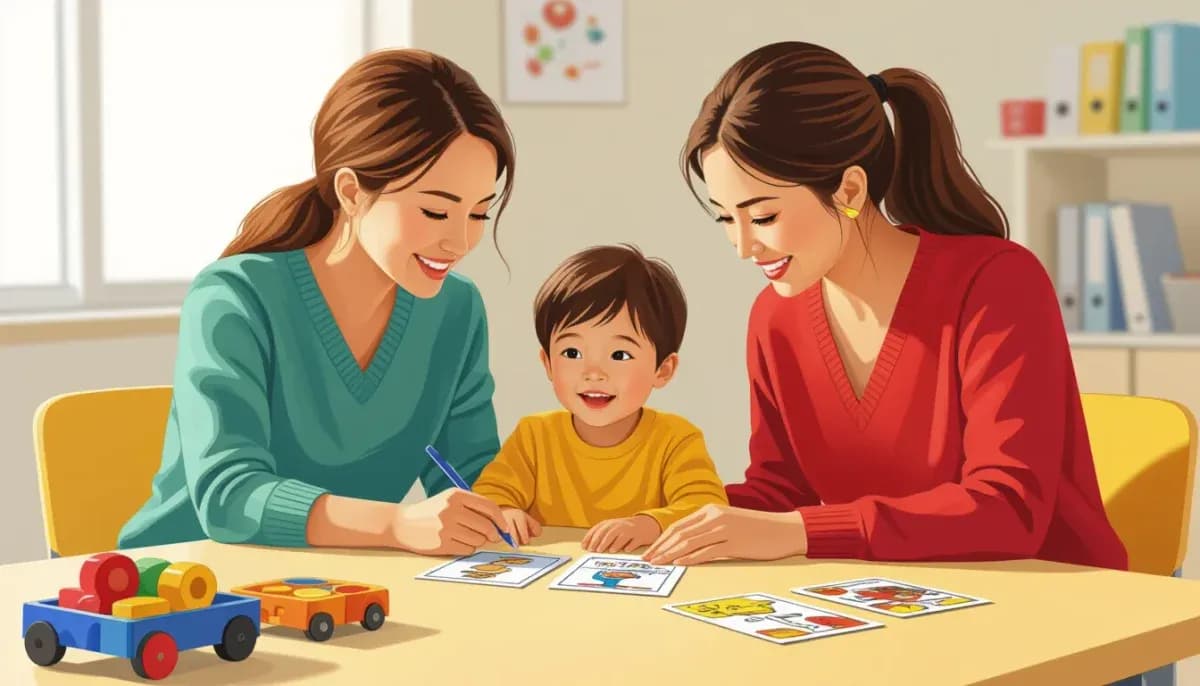
Find English-speaking speech therapy services for children in Japan. Covers providers, insurance, teletherapy options, and how to support your child's development as a foreign family.
Speech Therapy Services for Children in Japan: A Complete Guide for Foreign Families
If your child is showing signs of a speech or language delay, you are not alone — and finding help in Japan as a foreign parent is absolutely possible. Whether your child needs support with articulation, fluency, bilingual language development, or autism-related communication challenges, Japan has a growing network of English-speaking speech-language pathologists (SLPs) ready to help. This guide covers everything you need to know: where to find services, what to expect, how insurance works, and how to support your child at home.
What Is Speech-Language Therapy and Who Needs It?
Speech-language therapy (also called speech-language pathology or SLP) addresses a wide range of communication challenges in children, including:
- Articulation disorders — difficulty pronouncing sounds correctly
- Language delays — slower-than-expected vocabulary or grammar development
- Stuttering and fluency disorders — interruptions in the natural flow of speech
- Social communication difficulties — challenges with turn-taking, eye contact, or topic maintenance (common in autism spectrum conditions)
- Bilingual language development — supporting children who are growing up in two or more languages
- Literacy difficulties — reading, writing, and phonological processing challenges
Research shows that early intervention leads to significantly better outcomes. A 2023 Delphi study published in a peer-reviewed journal found that developmental language disorder (DLD) in Japan frequently co-occurs with intellectual disability, ASD, ADHD, and reading and writing difficulties — making early professional assessment particularly important.
If you have concerns about your child's communication development, the first step is always a professional evaluation by a qualified SLP.
Speech Therapy in Japan: The Basics for Foreign Families
Japan has its own national system of speech-language-hearing therapists (言語聴覚士, gengo-chokaku-shi), but the vast majority of these practitioners work in Japanese only and primarily serve adult patients with acquired communication disorders (such as stroke recovery). Pediatric, English-language services are more limited but growing.
Here are the key things to understand:
Japan's National Health Insurance (NHI) does not cover private, English-language speech therapy. If you use one of the English-speaking private clinics described in this guide, you will pay out-of-pocket. However, many providers can issue detailed invoices for reimbursement through your employer's benefit package or international private health insurance.
English-speaking SLPs are concentrated in Tokyo and near U.S. military installations. Families living elsewhere may need to travel for in-person sessions or rely on teletherapy, which has become widely available and effective.
Bilingual therapy is particularly valuable in Japan. Children growing up in multilingual households face unique challenges that a monolingual Japanese therapist cannot fully address. English-Japanese bilingual SLPs understand how the two languages interact and can distinguish a true language disorder from the natural patterns of bilingual development.
English-Speaking Speech Therapy Providers in Japan
Several well-established providers offer pediatric speech therapy services for foreign families in Japan. Here is an overview of the main options:
| Provider | Location | Languages | Ages Served | Telehealth? |
|---|---|---|---|---|
| Suzuki Speech Therapy | Tokyo (Minato-ku area) | English, Japanese | Birth–15 years | Yes |
| ShisaCare | Okinawa, Yokosuka, Iwakuni, Fussa (Tokyo) | English, Japanese | All ages | Limited |
| LUCREA Tokyo | Tokyo | English, Japanese, French | Children | No |
| Choose Communication | Tokyo | English, Japanese | Children & adults | Yes |
| Global Education Therapy | Online (international) | English | Children | Yes (only) |
Suzuki Speech Therapy
Suzuki Speech Therapy is one of the most well-known English-Japanese bilingual pediatric SLP services in Japan. The practice is led by a therapist with over 20 years of experience working in both the United States and Japan, certified by ASHA (American Speech-Language-Hearing Association) and holding Japan's national SLP license.
Services include parent consultations, comprehensive evaluations, direct therapy interventions, and teletherapy via secure video platform. Areas of practice include articulation, fluency (stuttering), language development, literacy, and social communication.
Suzuki Speech Therapy is not covered by Japan's NHI, but detailed invoices are provided for private insurance or employer benefit reimbursement. Services are available in-person at the office, at the child's school, or remotely.
ShisaCare
ShisaCare is a multi-location clinic specializing in English-language speech therapy, occupational therapy, physical therapy, and ABA for autism. Originally founded to serve U.S. military families, ShisaCare is now open to all foreign families in Japan.
Clinic locations include:
- Okinawa — near Kadena Air Base
- Yokosuka — near the Naval Base
- Iwakuni — near MCAS Iwakuni
- Fussa, western Tokyo — near Yokota Air Base (opened November 2024)
ShisaCare accepts Tricare (the U.S. military insurance) and works with other foreign health insurance plans. About 80% of their patients are newborn to age 15, and they have served approximately 500 clients since opening.
LUCREA Tokyo
LUCREA Tokyo offers multicultural and multilingual clinical and educational services for children in Tokyo, with sessions available in English, Japanese, and French. Founded in 2016, LUCREA focuses on speech-language therapy and developmental support. It is an excellent option for families from French-speaking countries or trilingual households.
Understanding Stuttering and Language Disorders in Japan
Japan has produced important research on childhood speech disorders that is directly relevant to foreign families:
A 2025 multi-community epidemiological study found that 6.5% of 3-year-old children in Japan currently stutter, and 8.9% had experienced stuttering at some point by age 3 (including those who had recovered). The study followed 1,988 children across five Japanese prefectures. Key findings include:
- 85% of stuttering onset occurs before 48 months of age
- The most common onset window is between 30–35 months (42.9% of cases)
- Risk factors include family history of stuttering (3.27× higher odds) and diagnosed developmental disability (2.13× higher odds)
These statistics are similar to international averages, suggesting that a foreign child growing up in Japan faces roughly the same risk of stuttering as children anywhere. Early referral to an SLP is recommended if stuttering persists beyond three months or if the child shows signs of anxiety about speaking.
Teletherapy: A Practical Option for Families Outside Major Cities
If you live outside Tokyo or the main military base areas, teletherapy (online speech therapy via video call) is a practical and clinically effective option. Research consistently shows that online SLP services produce outcomes comparable to in-person therapy for most speech and language goals.
Options include:
- Suzuki Speech Therapy — offers teletherapy in addition to in-person sessions
- Global Education Therapy — fully online service designed for expat children worldwide, offering continuity of care even when families relocate
For families in cities like Osaka, Nagoya, Fukuoka, or rural areas, teletherapy removes geographic barriers entirely. Sessions typically last 30–60 minutes, and most therapists will send materials in advance so children have familiar resources during the call.
Navigating Insurance and Payment
Because NHI does not cover private English-language therapy, most foreign families use one of the following approaches:
- Employer-sponsored benefit packages — Many international companies in Japan include healthcare reimbursement as part of expat packages. Your HR department should be able to confirm whether speech therapy is covered and what documentation you need (typically a diagnostic letter and itemized invoices).
- International private health insurance — Policies from companies like AXA, BUPA, Cigna, or Allianz often include coverage for allied health services including speech therapy. Check your policy's "allied health" or "outpatient specialist" section for limits and pre-authorization requirements.
- Self-pay — For families without applicable coverage, self-pay remains an option. Rates vary significantly by provider and session length, but typical English-language pediatric SLP sessions in Tokyo range from ¥8,000–¥20,000 per 50-minute session.
- Tricare (U.S. military families only) — ShisaCare is a Tricare network provider for speech therapy in Japan. Speech therapy is not available on U.S. military bases in Japan itself, making off-base providers like ShisaCare the primary option for covered services.
Japanese Public System: What's Available for Foreign Children
Japan's public school system includes special support education (特別支援教育, tokubetsu shien kyōiku) and local municipal early intervention programs that may be available to foreign children. Here is what to know:
- Municipal developmental support centers (発達支援センター) exist in most cities and provide evaluation and therapy services for young children with developmental concerns. These are subsidized or free, but services are conducted entirely in Japanese.
- Special support classes (特別支援学級) within public schools may be an option for school-age children with communication-based learning challenges, though again, instruction is in Japanese.
- Child and family support offices (子育て支援センター) at the municipal level can sometimes refer you to bilingual specialists in your area.
For guidance on navigating the Japanese public education system as a foreign family, see our article on healthcare and medical care for children in Japan and our guide on mental health and emotional wellbeing for foreign children in Japan.
How to Support Your Child's Speech Development at Home
Regardless of whether your child is receiving formal therapy, there are many evidence-based strategies you can use at home to support language development:
- Read aloud daily in all of your home languages. Picture books build vocabulary and narrative skills simultaneously.
- Talk through daily routines — narrate what you are doing during meals, bath time, and errands to expose your child to natural language models.
- Follow your child's lead during play. Children who direct their own play with an engaged adult tend to develop richer language faster.
- Avoid correcting directly. Instead of saying "that's wrong," model the correct form naturally in your own sentence.
- Limit screen time and maximize face-to-face conversation, particularly for children under three.
- Don't worry about "language confusion". Research consistently shows that bilingual children are not confused by two languages — they are building two complete linguistic systems simultaneously.
If you are also working on Japanese language acquisition for your child, you may find our article on teaching Japanese to foreign children: methods and resources and our guide on raising bilingual children in Japan helpful companions to professional speech therapy.
When to Seek Help: Red Flags by Age
Use this table as a rough guide. Every child develops at their own pace, but if your child is missing multiple milestones in a category, an SLP evaluation is worth pursuing.
| Age | Typical Development | Consider Evaluation If... |
|---|---|---|
| 12 months | First words appearing | No babbling, no pointing, no response to name |
| 18 months | ~20 words | Fewer than 10 words, no functional communication |
| 24 months | ~50 words, 2-word phrases | Fewer than 50 words, no 2-word combinations |
| 3 years | Short sentences, understood by strangers ~75% | Speech very unclear, persistent stuttering |
| 4 years | Clear speech, complex sentences | Major grammar errors, difficulty following 2-step directions |
| School age | Fluent speech, literacy emerging | Reading difficulties, avoidance of speaking, social isolation |
Early referral is always better than waiting to see if a child "grows out of it." SLPs are accustomed to evaluating children at the earliest stages and can provide reassurance as well as intervention.
Additional Resources for Foreign Families in Japan
For broader support and community connection as a foreign family in Japan, these resources may be helpful:
- Living in Nihon — comprehensive English-language guides on daily life, visas, housing, and education for foreigners in Japan
- For Work in Japan — career and employment guidance for foreign professionals in Japan, including benefit package information
- Chuukou Benkyou — educational resources for families navigating the Japanese academic system
- Therapy in Japan — English-language directory listing therapists and mental health professionals across Japan
- Suzuki Speech Therapy — bilingual English-Japanese pediatric SLP in Tokyo with teletherapy options
You may also find our articles on toddler parenting in Japan (ages 1 to 3) and baby and infant care in Japan for foreign parents helpful for broader early childhood development context.
Finding the right speech therapy support for your child in Japan requires a bit of research, but the services exist and are staffed by dedicated, bilingual professionals. With early intervention, the right provider match, and consistent support at home, children with speech and language challenges can thrive — in Japan and in every language they speak.

Originally from Vietnam, living in Japan for 16+ years. Graduated from Nagoya University, with 11 years of professional experience at Japanese and international companies. Sharing practical information for foreign parents raising children in Japan.
View Profile →Related Articles
Inclusive Education Movement and Progress in Japan
Discover the state of inclusive education in Japan — from legal frameworks and school options to UN criticism and practical advice for foreign families with children with disabilities.
Read more →
English-Language Special Needs Resources in Japan
A complete guide to English-language special needs resources in Japan for expat families, covering education support, therapy services, disability certificates, financial aid, and parent communities.
Read more →
Advocating for Your Special Needs Child in Japanese Schools
A complete guide for foreign parents on navigating Japan's special needs education system — from understanding the three-tier support structure to effective advocacy strategies, English-language resources, and financial assistance.
Read more →
Therapy and Intervention Services for Children in Japan
Complete guide to therapy and intervention services for children in Japan. Find English-language speech therapy, mental health support, and early intervention programs for expat families.
Read more →
Government Support and Benefits for Special Needs Families
Complete guide to government support for special needs families in Japan: disability certificates, cash allowances up to ¥58,450/month, healthcare subsidies, school support, and welfare services for foreign residents.
Read more →
International Schools for Children with Special Needs
A complete guide to international schools and support services for children with special needs in Japan. Learn about inclusive schools, learning support teams, resources for expat families, and how to navigate the admissions process.
Read more →