
Third Culture Kids: Identity and Adjustment Challenges

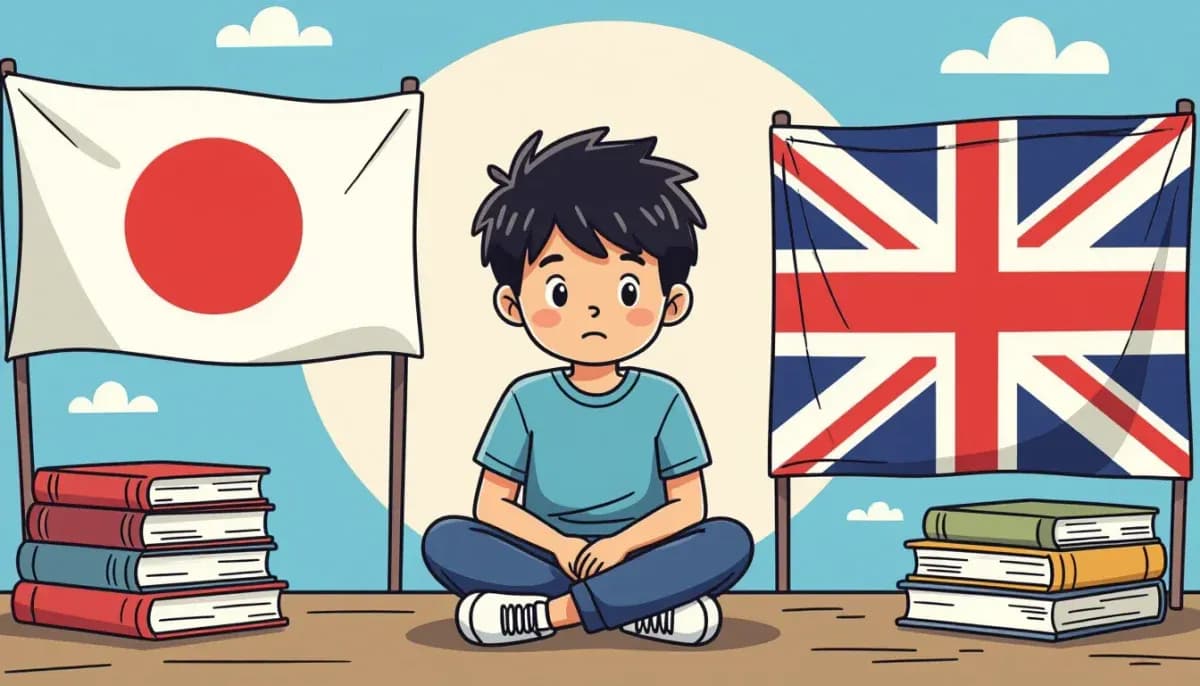
Raising a Third Culture Kid in Japan? Learn about TCK identity challenges, Japan's kikokushijo support system, and practical strategies to help your child thrive across cultures.
Third Culture Kids: Identity and Adjustment Challenges in Japan
Growing up between cultures is one of the most formative — and at times challenging — experiences a child can have. If your family has relocated to Japan, or if you're raising children who have lived in multiple countries, you're likely raising what researchers call a Third Culture Kid (TCK). These are children who spend a significant part of their developmental years outside their parents' passport country, absorbing elements of multiple cultures without fully belonging to any single one.
Japan, with its unique social structures, educational traditions, and language barrier, presents a particularly rich yet complex environment for TCKs. Understanding the identity challenges these children face — and learning how to support them — can make the difference between a child who thrives and one who struggles in silence.
What Is a Third Culture Kid? Understanding the Concept
The term "Third Culture Kid" was first coined by sociologist Ruth Hill Useem in the 1950s to describe children who follow their parents into another culture for a significant period during their developmental years. The "third culture" refers to neither the parents' home culture (first culture) nor the host culture (second culture), but rather the unique blend that the child creates for themselves.
In Japan, this concept has a formal equivalent: kikokushijo (帰国子女). Officially, kikokushijo refers to children born to Japanese parents who lived overseas before age 20 due to parental employment and then returned to mainstream Japanese education. By 2011, the kikokushijo population had grown to 780,000, reflecting Japan's deep engagement with this cross-cultural phenomenon. This has grown significantly since as Japan continues to send employees abroad and as foreign families relocate to Japan.
For foreign-born children living in Japan, the TCK experience takes a different but equally complex form. Your child is building their identity in a country where they may look different, speak differently, and follow different customs at home versus school — all while simultaneously identifying with their parents' home culture, Japanese culture, and the "expat bubble" culture of international communities.
| TCK Type in Japan | Description | Key Challenge |
|---|---|---|
| Foreign children in Japan | Non-Japanese children raised in Japan | Fitting into a homogeneous school culture |
| Kikokushijo | Japanese children returned from abroad | Re-integrating into Japanese society |
| Hafu children | Children with one Japanese parent | Navigating dual cultural identities |
| Diplomat/business expat children | Frequent movers across countries | Lack of stable "home" culture |
| International school students | Mix of TCK types | Building lasting friendships amid frequent moves |
For more on raising children with dual identities in Japan, see our article on Cultural Identity for Hafu and Mixed-Race Children in Japan.
Identity Formation Challenges for TCKs in Japan
Research published in The Group Psychologist (2025) confirms what many expat parents observe intuitively: TCK identity is not defined by geophysical places or nationality, but by relational bonds formed through shared cross-cultural experience. This means your child may feel more kinship with another TCK from a completely different country than with a child from their own passport country who has never lived abroad.
This sounds positive — and it is, in many ways — but it creates real challenges:
The "Where Are You From?" Problem
Few questions cause more anxiety for a TCK than "Where are you from?" A child who was born in Germany, raised in Japan, and holds British nationality has no simple answer. In Japanese schools, this question comes up regularly, and the inability to give a straightforward response can leave children feeling socially isolated or different from peers.
Cultural Code-Switching
TCKs in Japan often become expert cultural code-switchers, shifting behavior and communication styles between Japanese school culture and home culture. While this skill builds incredible intercultural competence, it can also be exhausting. Children may feel they're performing different versions of themselves and struggle to identify which is "really" them.
Belonging Without Roots
Academic research from the systematic review in Frontiers in Psychology (2022) identifies that TCK adjustment involves two key dimensions: psychological wellbeing (mental health, self-esteem, stress levels) and socio-cultural competence (ability to navigate social interactions effectively). Children who develop strong socio-cultural skills may still struggle internally with feelings of not fully belonging anywhere.
The "Third Culture" Identity Gap
In Japan's highly group-oriented (集団主義, shūdanshugi) society, being an outsider — whether linguistically, racially, or culturally — can amplify feelings of exclusion. Japanese school culture emphasizes conformity, group harmony, and shared identity in ways that can be uncomfortable for children who have internalized multiple cultural frameworks.
For support on the emotional and mental health aspects of this journey, our guide on Mental Health and Emotional Wellbeing for Foreign Children in Japan offers practical resources.
Language, School, and Adjustment: The Practical Reality
One of the most frequently asked questions from parents of TCKs in Japan is: how quickly will my child learn Japanese? Research and anecdotal evidence consistently show that children can acquire conversational fluency in approximately 3 months through immersion — far faster than adults. This remarkable adaptability is one of the TCK's greatest assets.
However, language acquisition is only part of the adjustment picture. Children navigating Japanese school culture also need to:
- Master unspoken social rules (e.g., tamate — building relationships through shared activities)
- Adapt to different classroom expectations (group work, teacher-directed learning, strict rules)
- Navigate the social dynamics of iinkai (committee activities) and after-school clubs
International vs. Japanese Schools
One of the first decisions expat families make is whether to enroll children in international schools or Japanese public/private schools. This choice has significant implications for TCK identity development.
| Factor | Japanese Public School | International School |
|---|---|---|
| Language | Japanese immersion | English (or other languages) |
| TCK identity peer support | Limited | High |
| Cultural integration | Deep | Surface level |
| Cost | Low/free | High (¥1.5M–¥3M+/year) |
| Transition to home country | Harder academically | Easier academically |
| Japanese cultural depth | Very high | Variable |
Children in Japanese public schools develop stronger Japanese identity and language skills, but may face a more challenging social adjustment. Children in international schools have more peers who share TCK experiences but may feel more disconnected from Japanese culture.
For a comprehensive breakdown of options, see our guide on International Schools in Japan: The Definitive Guide for Families and Elementary School in Japan: A Complete Guide for Foreign Parents.
You may also find useful resources at Living in Nihon, which covers expat family life in Japan in depth.
How Japan Supports TCK Integration: The Kikokushijo System
Japan stands out internationally for its formal institutional recognition of the TCK experience. The kikokushijo support system, developed over decades of Japanese overseas business expansion, provides a model that other countries have studied and admired.
Key features of Japan's kikokushijo support include:
- Dedicated school sections: Many Japanese schools have special programs or classes designed to help returning students re-integrate
- Modified entrance requirements: Kikokushijo-designated entrance exams for high schools and universities acknowledge the different educational background of returning students
- Academic catch-up assistance: Structured programs help students bridge gaps in Japanese language and core subjects
- Counseling and social support: Schools recognize the psychological dimensions of re-entry
The historical trajectory of kikokushijo status is instructive. For decades, kikokushijo children were stigmatized — seen as having "lost" their Japanese identity by being exposed to foreign cultures. Teachers and peers sometimes treated them as outsiders who were "too Western." Today, that perception has largely reversed: kikokushijo's multilingual abilities and cross-cultural skills are now viewed as valuable assets in an increasingly globalized Japan.
This shift offers an important lesson for all expat families: the challenges TCKs face today may become the strengths that define their adult careers and relationships tomorrow.
For more on Japan's support systems for foreign families, including education subsidies, check out our article on Government Benefits and Subsidies for Families in Japan.
You can also find Japan-specific guidance for working expat families at For Work in Japan.
Practical Strategies for Supporting Your TCK's Identity
Research and lived experience converge on several strategies that help TCKs navigate identity challenges effectively:
1. Validate the "Third Culture" Identity
Explicitly tell your child that their experience — belonging to multiple cultures — is valid and valuable. Avoid framing it as a problem to be solved. Books like Third Culture Kids: Growing Up Among Worlds by David Pollock and Ruth Van Reken can help both parents and children understand and articulate this unique experience.
2. Build Community with Other TCKs
Connection with peers who share similar experiences is one of the most powerful protective factors for TCK wellbeing. Seek out international communities, expat parent groups, and international school networks in your city. Organizations like Japan Intercultural Consulting provide resources and connections for families navigating Japan's cross-cultural landscape.
3. Use Sports and Extracurricular Activities
Research consistently shows that joining sports teams, music clubs, or after-school activities dramatically accelerates peer connection and social adjustment. In Japan, joining a school club (bukatsu, 部活) is one of the most effective ways for children to build friendships and feel part of a group.
4. Maintain Heritage Language and Culture
While Japanese immersion is valuable, maintaining your child's heritage language is equally important. Bilingual children who lose their first language often experience what linguists call "linguistic homesickness" — a disconnection from family roots that can deepen identity confusion. Our guide on Heritage Language Maintenance for Children in Japan offers detailed strategies for keeping heritage languages alive.
5. Create Stability Anchors
Frequent moves and cultural transitions are stressful. Research suggests that stability anchors — consistent family routines, pets, keeping meaningful objects from previous homes — help children maintain psychological stability during transitions. Simple rituals like family dinner traditions that blend elements of multiple cultures can give children a sense of continuity.
6. Prepare for Transition Before It Happens
If you know you'll be moving back to your home country or to a new country, begin preparing your child 3–6 months in advance. TCKs often experience what's called "re-entry shock" when returning to their passport country — finding that "home" is more foreign than the country they just left. For comprehensive support on life transitions, visit Chuukou Benkyou for additional resources.
For guidance on raising bilingual children throughout this process, see our comprehensive resource on Raising Bilingual Children in Japan: Strategies and Tips.
The Long-Term Strengths of Growing Up as a TCK
While it's important to acknowledge the challenges, it's equally important to recognize the remarkable strengths that TCKs typically develop. Academic research published in Frontiers in Psychology and the 2025 identity framework from The Group Psychologist both highlight that TCKs who receive adequate support demonstrate:
- Enhanced intercultural competence: The ability to navigate diverse cultural contexts with sensitivity and flexibility
- Natural cultural humility: An awareness that no single cultural perspective is complete or superior
- Linguistic advantage: TCKs who maintain multiple languages throughout childhood show lasting cognitive and professional advantages
- Broader worldview: Research consistently links TCK backgrounds with careers in international business, diplomacy, NGO work, medicine, and the arts
- Deep empathy: Having experienced being an outsider across multiple contexts builds genuine empathy for others who are different or marginalized
One Japan-based expat family documented spending approximately $40,000 per year maintaining a dual-country life between Japan and the USA — not as an indulgence, but as a deliberate investment in raising children who could move fluently between cultures. While not every family can or should make such choices, the underlying principle holds: investing in your TCK's cross-cultural development is investing in their lifelong potential.
Getting Professional Support When Needed
Some TCKs need more support than parents alone can provide. Watch for signs that your child may benefit from professional guidance:
- Persistent reluctance to go to school or intense school refusal
- Withdrawal from social activities and friendships
- Significant changes in eating or sleeping patterns
- Expressing intense feelings of not belonging or "wishing they were normal"
- Difficulties that persist beyond 6 months after a move or transition
Japan has a growing network of English-speaking child psychologists, school counselors, and family therapists, particularly in major cities like Tokyo, Osaka, and Nagoya. Your child's international school or expat community center can often provide referrals. For a broader overview of healthcare resources for children in Japan, see our guide on Healthcare and Medical Care for Children in Japan.
Conclusion: Raising a TCK Is a Journey, Not a Problem to Solve
Third Culture Kids in Japan are navigating one of the most complex identity journeys that childhood has to offer. They carry multiple languages, cultural frameworks, and social histories within them — assets that are often invisible to the people around them, but that will serve them powerfully throughout their lives.
As a parent, your most important role is not to eliminate the complexity of their experience, but to help them find language for it, community within it, and pride in it. The child who struggles to answer "Where are you from?" today may be the adult who builds bridges between worlds tomorrow.
Japan, with its combination of formal kikokushijo support systems and deeply rich cultural environment, offers TCKs a unique place to grow. With the right support at home, at school, and in the community, your third culture child can thrive — not despite their complex identity, but because of it.

Originally from Vietnam, living in Japan for 16+ years. Graduated from Nagoya University, with 11 years of professional experience at Japanese and international companies. Sharing practical information for foreign parents raising children in Japan.
View Profile →Related Articles

Repatriation Planning: Preparing to Leave Japan with Your Family
Complete guide to repatriation planning when leaving Japan with family. Covers tenshutsu todoke, pension withdrawal, school documents, shipping, tax obligations, and emotional preparation.
Read more →
Moving with Teenagers to Japan: Unique Challenges
A complete guide to moving with teenagers to Japan — covering school enrollment, language barriers, social integration, visa rules, and emotional wellbeing for expat families.
Read more →
Documentation and Paperwork for Moving with Children to Japan
Complete guide to all documents needed for moving to Japan with children: dependent visa, COE, birth certificates, post-arrival registration, health insurance, school enrollment, and My Number setup.
Read more →
Settling Into a New Neighborhood with Kids in Japan
A practical guide for expat families settling into a Japanese neighborhood with children — from neighbor introductions and chonaikai to jidokan, schools, and building a support network.
Read more →
Helping Children Maintain Friendships After Moving
Practical strategies for helping expat children maintain friendships after moving to Japan, from video calls and memory albums to building new bonds at school and local community centers.
Read more →
Emotional Support for Children During Relocation
Moving to Japan with kids? Learn how to support your children emotionally during relocation — from pre-move preparation through adjustment, school choice, and mental health resources in Japan.
Read more →