
What to Bring When Moving to Japan with Kids

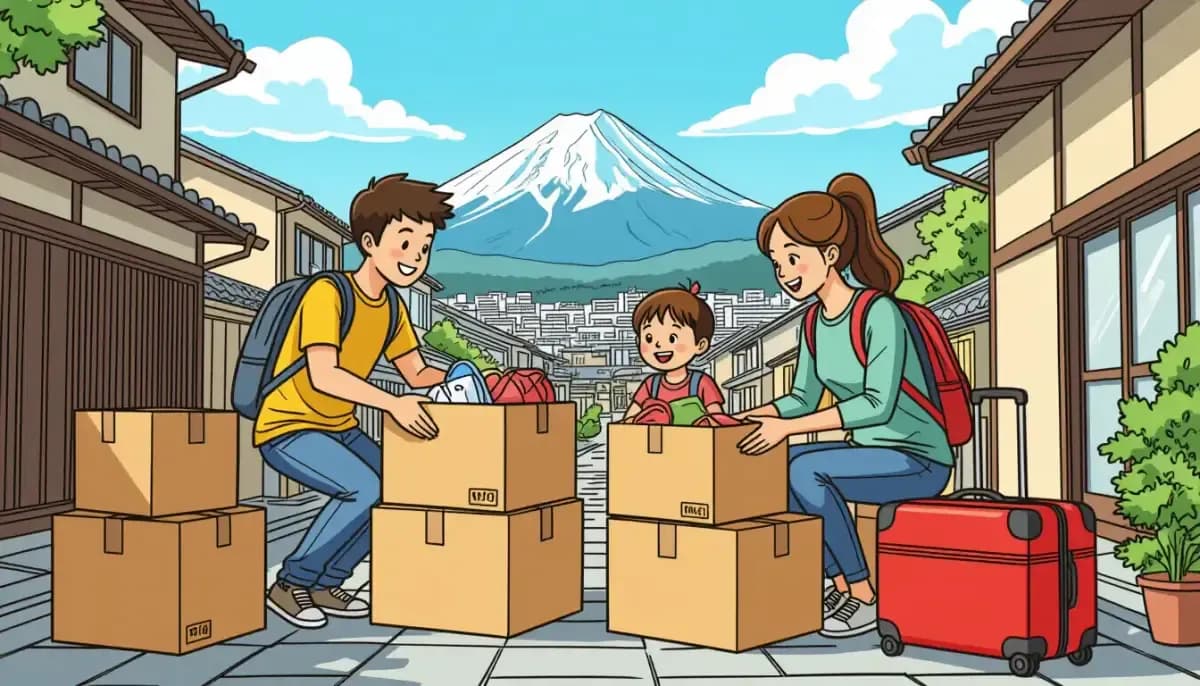
Complete packing checklist for families moving to Japan with children. Documents, medications, baby gear, school supplies, clothing, and what to buy on arrival — all in one guide.
What to Bring When Moving to Japan with Kids: The Complete Family Packing Guide
Moving to Japan with children is one of life's most exciting adventures — and one of its most logistically demanding. Unlike a family vacation, a long-term move requires thinking beyond suitcases and into the world of shipping containers, medication legality, school enrollment documents, and the very specific realities of Japanese retail. This guide covers everything families need to bring, what to leave behind, and what you simply cannot buy (or find affordably) once you arrive.
Whether you're relocating for work, love, or adventure, this checklist will help you arrive prepared — and settle your children in with far less stress.
Essential Documents: Don't Leave Home Without These
Documents are the foundation of your move. Missing a single one can delay school enrollment, health insurance registration, or residency procedures by weeks.
For each child, bring originals and certified copies of:
- Birth certificate — Required for address registration at your local city hall and for school enrollment
- Passport — Ensure it has at least 6 months validity beyond your planned stay
- Vaccination records — Japanese health centers use these to issue free vaccination vouchers for BCG, DTP-IPV, MR, Japanese encephalitis, chickenpox, Hib, HPV, Hepatitis B, and pneumococcal vaccines
- Academic records — Grade reports, teacher evaluations, and a certificate of enrollment from the previous school are needed to determine grade placement in Japanese school
- Medical records — Including any diagnoses, allergy documentation, or specialist letters
- Dependent visa documentation — Your child's dependent visa must be separate from the sponsor's work visa; bring all supporting documents for the application
For the family:
- Family register or marriage certificate (apostilled where required)
- Insurance cards from home country (useful for claims during the transition period)
- Copies of all documents stored digitally in cloud storage
After registering your address in Japan (a legal requirement within 14 days of arrival), you will need to enroll each child in Japanese National Health Insurance. Children covered receive a Medical Care Certificate that effectively makes most pediatric care free until age 15 in most municipalities — one of Japan's most generous family benefits.
For more on navigating visas and legal status for your family, see our guide to Visa and Legal Issues for Foreign Families with Children in Japan.
Medications and Health Supplies: What Japan Doesn't Sell
Japan has an excellent pharmacy system, but foreign families are frequently surprised by what is unavailable, what requires a prescription, and what is illegal. This section can save you from a very stressful first week.
Bring from home:
| Item | Reason to Bring |
|---|---|
| Children's paracetamol (Tylenol, Calpol) | Japanese brands are unfamiliar; pharmacists rarely speak English |
| Children's ibuprofen (Advil, Motrin) | Same availability issue |
| Antacids (TUMS, Pepto-Bismol, Pepcid) | Not available OTC in Japan |
| Antihistamines (child-safe formula) | Local brands differ; hard to verify equivalence without Japanese |
| Eczema creams / prescription topicals | Require a prescription; stock up before leaving |
| Vitamins | Available in Japan but at higher prices and smaller doses |
| Fluoride toothpaste | Japan does not fluoridate its water; Japanese toothpastes have lower fluoride levels |
| Teething gel | Largely unavailable in standard pharmacies |
| Rehydration sachets (Pedialyte etc.) | Japanese versions exist but are often unflavored and expensive |
| Motion sickness tablets (child-safe) | Bring a supply for travel days |
| Mosquito repellent | Reactions to Japanese mosquitoes can be more intense than in other countries |
Critical warning: Japan strictly enforces medication laws. Adderall and most amphetamine-based ADHD medications are illegal in Japan, full stop. Some opioids and other controlled substances also require advance approval from the Ministry of Health, Labour and Welfare before import. Check every prescription medication against Japan's import rules before packing — violations carry severe penalties.
For ongoing healthcare in Japan, see our comprehensive guide on Healthcare and Medical Care for Children in Japan.
Baby and Toddler Essentials
Parents with infants and toddlers face the most complex packing decisions. Japan is exceptionally baby-friendly in many ways — changing rooms are plentiful, strollers are widely accepted on public transport, and convenience store culture means snacks are everywhere — but the product ecosystem is very different from Western countries.
What to bring:
Stroller: Bring a lightweight, foldable model. Japanese apartment elevators and shop aisles are narrow by Western standards, and many older buildings lack elevators entirely. Western-style jogging strollers or large travel systems are difficult to navigate and expensive to replace locally. A compact umbrella-fold stroller is ideal.
Baby formula: Bring your usual brand for the first few weeks. Japanese formula (especially brands like Morinaga and Meiji) is high quality but differs in texture, taste, and nutritional ratios from Western formulas. Transition gradually after arrival to avoid digestive disruption.
Nappies/diapers: Bring only 3–4 days' supply. Japanese diapers — particularly Merries and Goo.N — are widely considered among the best in the world. They are readily available at pharmacies and convenience stores. Note that Japanese sizing runs slightly smaller than Western equivalents.
Baby carrier: A structured carrier is invaluable for crowded trains, temple stairs, and anywhere a stroller is impractical. Useful until age 3–4.
Blackout blinds/portable curtain liners: Japanese curtains often let in significant light, which disrupts children who are sensitive sleepers. A portable blackout solution makes bedtime routines far smoother.
High chair safety straps: Many Japanese restaurant high chairs lack secure harnesses. A portable strap set gives parents peace of mind.
Portable potty seat: Helpful during the toilet-training phase, especially when traveling to onsen towns or rural areas where Western-style toilets are less common (though Japan's famous washlet toilets are everywhere in cities).
See our guide on Baby and Infant Care in Japan for more on navigating Japan's childcare landscape after arrival.
Clothing, Footwear, and Bedding: Size Matters
Japan's retail fashion is outstanding, but sizing presents a real challenge for Western families.
Clothing: Japanese sizing runs small. Adults who wear sizes above US Large (or EU Large) will find very limited in-store options. Uniqlo offers extended sizes online but stock varies. Bring at least a 3-month supply of well-fitting clothes for each family member, and plan to order internationally for ongoing needs.
Children's clothing: Children's sizes are more forgiving, but branded items (especially for school uniform components or sports gear) may need to be ordered from abroad.
Footwear: Plan on 10,000–20,000 steps daily in Japan's walkable cities. Bring:
- Two pairs of walking shoes per person — alternating pairs prevents blisters and extends shoe life
- Easy-slip-on shoes for children — shoes are removed constantly at restaurants, play areas, ryokans, traditional onsen, and many children's museums. Velcro and slip-on designs save enormous time and frustration
Bedding: Japanese bed dimensions are non-standard. A Japanese single (100cm × 200cm) is narrower than a Western single (90cm or 96cm × 190cm), and Japanese queen and king sizes are similarly mismatched. Either bring your own linens or budget to purchase on arrival; Western bedding will not fit Japanese mattresses properly.
Towels: Japanese hotel and home towels are thinner and less plush than Western bath sheets. If texture matters to your family's comfort, bring your favorite bath towels.
School and Educational Supplies
Japan's school system is world-class, but transitioning children into it — whether to a Japanese public school or an international school — requires preparation. For a deep dive into school options, see our guides on Elementary School in Japan and International Schools in Japan.
What to bring:
English-language books: Japan has a limited supply of affordable English children's books outside of major international schools' second-hand sales. A Kindle loaded with age-appropriate titles is a practical alternative to shipping heavy books. Physical books are especially valuable for bedtime routines.
Japanese-language workbooks: If your child will attend Japanese public school, bring one grade level of Japanese language and math workbooks from their home curriculum. Bridging the academic transition is much easier with familiar materials as a baseline.
Stationery: This one cuts both ways. Japanese stationery — erasers, pencil cases, rulers, notebooks — is exceptional and your children will love it. However, if your child has a favorite pencil grip, left-handed scissors, or specialty art supplies from home, bring a supply.
Laptop or tablet: If your child attends a school with a bring-your-own-device policy, confirm whether the device specification is compatible with Japanese systems before leaving.
For strategies on supporting your child's language development, see Raising Bilingual Children in Japan.
Household Items and Technology
Power and electronics: Japan runs on 100V, 50/60Hz with two-flat-prong outlets (Type A plugs). Most modern electronics (laptops, phone chargers, camera chargers) handle 100–240V and work fine with a simple plug adapter. High-power appliances like hair dryers, curling irons, and electric shavers may underperform or require a step-up transformer. Bring a universal plug adaptor for each family member's devices.
Kitchen items you may miss:
- Measuring cups and spoons in imperial measurements (if cooking from English-language recipes)
- Your preferred baking scale
- Specialty baking items (baking powder, vanilla extract, certain flours) — available at international supermarkets but expensive
Personal care:
- Deodorant: Japanese deodorants use spray-only formats and are significantly weaker than Western stick deodorants
- Dental floss: Japanese floss is harsher in texture; bring preferred brand
- Sunscreen: Available in Japan and well-rated, but SPF formulas differ
Comfort and organization:
- AirTags or GPS trackers for children's bags — Japan is extremely safe, but peace of mind for school commutes is invaluable
- Familiar family photos and small sentimental items from home — these help children (and adults) settle into a new space emotionally
What You Don't Need to Bring
Some items are either better purchased in Japan or are readily available locally:
- Diapers: Buy Merries locally — they're excellent
- Baby wipes: Japanese brands are among the softest in the world
- Rice cooker: Buy locally; Japanese rice cookers outperform most Western brands
- Umbrellas: Japan sells high-quality umbrellas everywhere at low prices — tourists and expats buy them constantly
- Convenience store items: Toothbrushes, basic snacks, batteries, phone chargers — available at any konbini 24/7
- Heavy winter gear: Unless moving to Hokkaido or the Japan Alps, Japanese winters in most cities are mild
For additional resources on expat family life, the guides at Living in Nihon provide practical day-to-day tips for foreigners navigating Japanese life. For Work in Japan offers guidance on the career and visa landscape for foreign workers and their families. The community resources at Chuukou Benkyou cover educational transitions for children in Japan.
For even more preparation resources, the Nishimachi International School's moving checklist is one of the most detailed available, and The Tokyo Chapter's packing guide draws on years of expat family experience in Tokyo.
Quick Reference: Master Packing Checklist
| Category | Must Bring | Buy on Arrival |
|---|---|---|
| Documents | Birth certificates, vaccination records, academic records, passports | — |
| Medications | Tylenol, ibuprofen, antacids, antihistamines, vitamins, fluoride toothpaste | Basic OTC cold meds |
| Baby gear | Stroller (lightweight), formula (first weeks), blackout blinds | Diapers, wipes, some baby food |
| Clothing | 3+ months supply for all, easy-slip shoes | Basic everyday items at Uniqlo |
| Bedding | Own linens (or budget to buy), bath towels | Pillows, blankets |
| School | English books, grade-level workbooks, specialty stationery | Japanese stationery (it's better!) |
| Tech | Universal power adapter, AirTags, devices | Rice cooker, umbrella |
| Personal care | Deodorant, dental floss, prescription meds (verified legal) | Sunscreen, shampoo |
Final Thoughts
Moving to Japan with kids is an investment in your family's future — in language, culture, resilience, and perspective. The families who settle in most smoothly are the ones who prepare practically but stay flexible. Japan will surprise you constantly: with its generosity, its systems, and the sheer quality of everyday life.
Come prepared, and trust that most of what you forget, Japan will have — often in a better version than you left behind.
For broader guidance on what awaits your family, explore our Complete Guide to the Japanese Education System for Foreign Families and our resources on Toddler Parenting in Japan.

Originally from Vietnam, living in Japan for 16+ years. Graduated from Nagoya University, with 11 years of professional experience at Japanese and international companies. Sharing practical information for foreign parents raising children in Japan.
View Profile →Related Articles

Repatriation Planning: Preparing to Leave Japan with Your Family
Complete guide to repatriation planning when leaving Japan with family. Covers tenshutsu todoke, pension withdrawal, school documents, shipping, tax obligations, and emotional preparation.
Read more →
Moving with Teenagers to Japan: Unique Challenges
A complete guide to moving with teenagers to Japan — covering school enrollment, language barriers, social integration, visa rules, and emotional wellbeing for expat families.
Read more →
Documentation and Paperwork for Moving with Children to Japan
Complete guide to all documents needed for moving to Japan with children: dependent visa, COE, birth certificates, post-arrival registration, health insurance, school enrollment, and My Number setup.
Read more →
Settling Into a New Neighborhood with Kids in Japan
A practical guide for expat families settling into a Japanese neighborhood with children — from neighbor introductions and chonaikai to jidokan, schools, and building a support network.
Read more →
Helping Children Maintain Friendships After Moving
Practical strategies for helping expat children maintain friendships after moving to Japan, from video calls and memory albums to building new bonds at school and local community centers.
Read more →
Emotional Support for Children During Relocation
Moving to Japan with kids? Learn how to support your children emotionally during relocation — from pre-move preparation through adjustment, school choice, and mental health resources in Japan.
Read more →