
Boshi Techo: Your Maternal and Child Health Handbook Guide

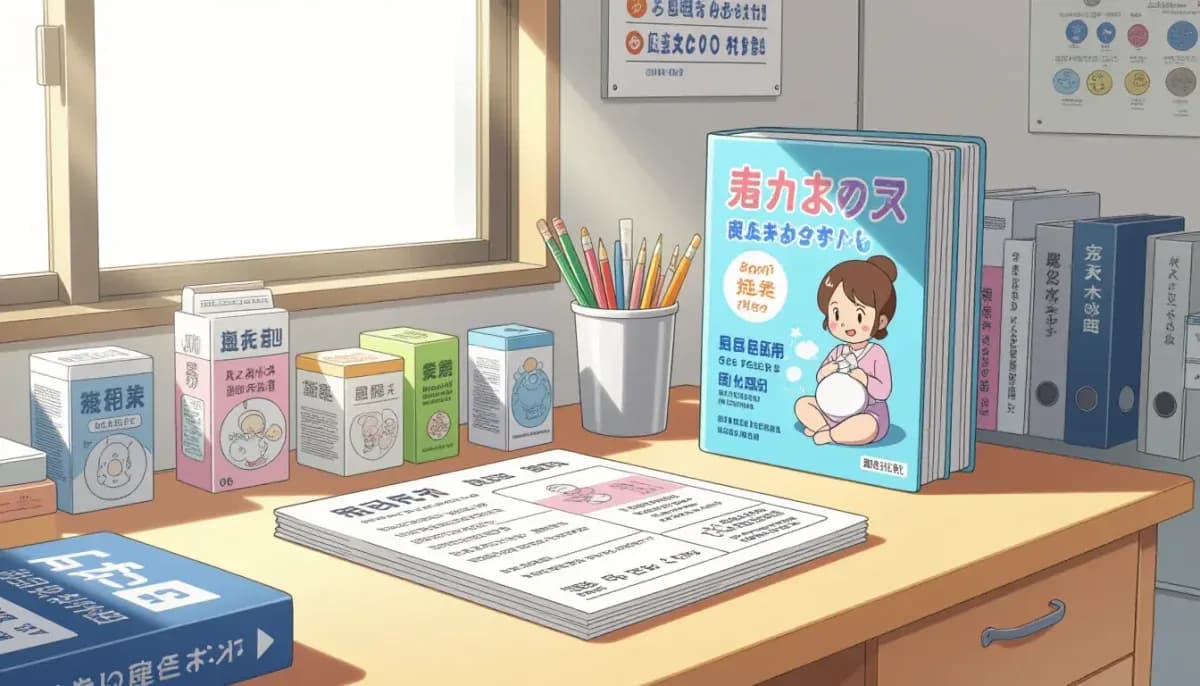
Everything foreign parents need to know about Japan's Boshi Techo (maternal and child health handbook): how to get it, what it contains, languages available, and financial benefits for expats.
Boshi Techo: Your Complete Guide to Japan's Maternal and Child Health Handbook
If you're pregnant in Japan, one of the first things you'll hear about is the boshi techo (母子健康手帳) — Japan's Maternal and Child Health Handbook. This small but mighty booklet becomes your most important document throughout pregnancy and your child's early years. For foreign parents navigating the Japanese healthcare system, understanding how to obtain it, what it contains, and how to use it is essential. This guide walks you through everything you need to know.
What Is the Boshi Techo?
The boshi techo (literally "mother-child health handbook") is an official government-issued booklet provided free of charge to all expectant parents registered in Japan. First introduced in 1948 under the name "Boshi Techo," it was renamed the Boshi Kenko Techo (Maternal and Child Health Handbook) in 1966 under Japan's Maternal and Child Health Act.
The handbook serves as a comprehensive medical record that documents:
- Pregnancy health records — prenatal checkup results, test results, blood pressure, weight gain
- Birth information — delivery details, newborn screening results, birth weight and length
- Child development milestones — growth charts, developmental assessments from infancy through elementary school
- Vaccination records — a complete immunization history for your child
- Health checkup documentation — records from government-mandated health checkups at 1 month, 3–4 months, 6–7 months, 9–10 months, 1 year, 1.5 years, 2 years, and 3 years
You'll carry this handbook to virtually every medical appointment involving your pregnancy or child. Hospitals, clinics, and health centers in Japan expect you to present it at each visit.
Japan's commitment to maternal and child health through this system has paid off: infant mortality dropped from 76.0 per 1,000 live births in 1947 to just 1.8 per 1,000 in 2022, making Japan's infant mortality rate one of the lowest in the world.
How to Get Your Boshi Techo as a Foreigner
Foreign residents in Japan — whether on a spouse visa, work visa, or other long-term status — are entitled to receive the boshi techo just like Japanese nationals, as long as they are registered in Japan's residential registry.
Here's the step-by-step process:
1. Confirm your pregnancy at a clinic or hospital. Visit an OB-GYN (産婦人科, sanfujinka) and confirm the pregnancy. As of April 2025, a pregnancy is officially recognized in Japan once the fetal heartbeat is confirmed at a medical facility. Your doctor will issue a pregnancy confirmation certificate (妊娠届出書, ninshin todokede-sho).
2. Visit your local municipal office (市区町村役場). Take your pregnancy confirmation certificate, your residence card (在留カード), and your national health insurance card to your city hall, ward office, or town office.
3. Complete the pregnancy notification form. Fill out the form (妊娠届, ninshin todoke) at the counter. Staff will register your pregnancy and issue your boshi techo on the spot.
4. Receive your boshi techo and prenatal checkup vouchers. Along with the handbook, most municipalities provide 14 prenatal checkup vouchers (妊婦健康診査受診票) that cover routine prenatal visits at no cost or heavily subsidized cost.
Tip for foreigners: If you need help communicating at the municipal office, many larger cities have multilingual support counters, or you can bring a Japanese-speaking friend. Some municipalities also allow you to request a multilingual version of the handbook.
For a full guide on finding English-speaking medical support, see Finding an English-Speaking OB-GYN in Japan.
Languages Available for Foreign Parents
One of the most foreigner-friendly aspects of Japan's boshi techo system is the availability of multilingual versions. The handbook is available in the following languages depending on your municipality:
| Language | Availability |
|---|---|
| Japanese | All municipalities |
| English | Most major cities and wards |
| Chinese (Simplified & Traditional) | Most major cities |
| Korean | Most major cities |
| Portuguese | Areas with large Brazilian communities |
| Spanish | Many urban areas |
| Tagalog | Available in many areas |
| Vietnamese | Increasingly available |
| Thai | Some urban areas |
| Indonesian | Some urban areas |
| Nepalese | Some urban areas |
Availability varies significantly by location. Tokyo's 23 special wards and major cities like Osaka, Nagoya, Yokohama, and Sapporo typically stock English and several Asian language versions. Smaller rural municipalities may only have Japanese versions, but you can often download a multilingual supplement from the Ministry of Health, Labour and Welfare website, or purchase a bilingual version through the Japan Maternal and Child Health Center.
When visiting your municipal office, simply ask: "Eigo ban wa arimasu ka?" (英語版はありますか?) — "Do you have an English version?"
For more information on navigating the healthcare system in English, check out Finding English-Speaking Pediatricians in Japan.
What's Inside the Boshi Techo: A Section-by-Section Breakdown
The handbook is divided into two main parts: the maternal health section and the child health section.
Maternal Health Section
This portion covers your pregnancy journey from confirmation to the postpartum period:
- Pregnancy records — recorded at each prenatal visit (blood pressure, weight, fundal height, fetal heart rate, test results)
- Delivery record — date, time, delivery method (vaginal or cesarean), complications
- Postpartum health checkup — typically scheduled around 1 month after birth
- Breastfeeding record — notes on feeding and any issues
Child Health Section
This is the section you'll use most frequently after birth:
- Newborn screening results — Japan screens for metabolic disorders shortly after birth
- Growth charts — weight, height, and head circumference plotted over time against national averages
- Developmental assessments — evaluations for walking, talking, vision, hearing, and social-emotional development
- Dental health records — tracking tooth eruption and dental checkup results
- Vaccination records — entries for every vaccine administered, including date and batch number
- Health checkup records — documentation from government-funded health checkups at key developmental stages
The vaccination section is particularly important. Japan has a robust childhood immunization schedule, and the boshi techo is the official record that schools and daycare centers (hoikuen/yochien) require proof of vaccination history. For more information on navigating childcare, see Hoikuen vs Yochien: Which Is Better for Your Child?.
Financial Benefits Connected to the Boshi Techo
The boshi techo is closely tied to Japan's system of maternal and child health benefits. Here's an overview of key financial support available to parents in Japan:
| Benefit | Amount | Who Is Eligible |
|---|---|---|
| Childbirth lump-sum payment (出産育児一時金) | ¥500,000 per child (as of 2024) | All insured persons (health insurance) |
| Prenatal checkup subsidies | Covers 14 checkups | All pregnant residents registered in Japan |
| Child allowance (jidou teate) | ¥15,000–¥30,000/month | Foreign residents with registered children |
| Free childcare (ages 3–5) | Tuition-free preschool/childcare | All children aged 3–5 |
| Free childcare (ages 0–2) | Free for non-taxable households | Lower-income families |
Foreign residents on a valid long-term visa who are enrolled in the national health insurance system are eligible for the childbirth lump-sum payment of ¥500,000 per child to help offset delivery costs (average delivery in Japan costs ¥400,000–¥600,000).
To learn more about child financial support, read our detailed guide on Child Allowance (Jidou Teate) in Japan and the Cost of Raising a Child in Japan.
The Boshi Techo Beyond Japan: A Global Legacy
Japan's boshi techo system has become a model for maternal and child health worldwide. Since 1986, when Japanese pediatrician Dr. Nakamura Yasuhide introduced the concept to Indonesia, the handbook system has been adopted by more than 50 countries across Asia, Africa, and Latin America. Each country has adapted the system to its cultural and medical context, with some adding enhanced illustrations for lower-literacy communities, QR codes for digital data transfer (as in Vietnam), and integration with local vaccination cards.
This global impact reflects just how effective the simple act of centralizing maternal and child health records can be. Research has consistently shown that Japan's remarkable drop in infant mortality — from one of the highest rates among developed nations post-WWII to the lowest in the world today — was partly driven by universal health monitoring tools like the boshi techo.
For a broader look at raising children in Japan as a foreigner, the Living in Nihon Guide to Raising Children and Education in Japan is an excellent resource covering everything from healthcare to schools.
Practical Tips for Foreign Parents Using the Boshi Techo
Here are some tips to make the most of your boshi techo:
Keep it safe. The handbook cannot be easily reissued — if lost, you may need to recreate records from individual medical facilities. Store it in a protective sleeve or dedicated bag.
Bring it to every appointment. This includes prenatal checkups, postnatal checkups, pediatric visits, vaccination appointments, dental checkups, and government health screenings.
Use the prenatal checkup vouchers. These cover costs at participating clinics and can save you a significant amount of money. Make sure to use them for all 14 scheduled checkups.
Request translations if needed. If your handbook is in Japanese, ask your doctor or midwife to explain entries. Many clinics with foreign patient support can provide summaries in English.
Daycare and schools will ask for it. When enrolling your child in hoikuen, yochien, or elementary school, vaccination records from the boshi techo are typically required. See How to Apply for Hoikuen Daycare in Japan for more details.
Keep records even after leaving Japan. If you plan to return to your home country, the boshi techo is a valuable health record. Some countries' healthcare systems accept it as documentation of vaccination history.
For expats working in Japan and navigating family life, For Work in Japan's Family Life Guide offers helpful context on balancing work and family responsibilities.
Additional Resources for Pregnant Foreigners in Japan
Navigating pregnancy in a foreign country can feel overwhelming, but Japan has excellent support systems in place. Here are some resources to help:
- Japan Maternal and Child Health Center — offers multilingual boshi techo versions for purchase
- CLAIR (Council of Local Authorities for International Relations) — provides multilingual living guides for foreign residents
- Your municipal international affairs section — many city halls have dedicated support for foreign residents
- Real Life Japan's Boshi Techo Guide — comprehensive overview with vaccination schedules
- Nippon.com — in-depth feature on the boshi techo's history and global impact
- E-Housing Japan's Pregnancy Guide — practical guide for foreigners giving birth in Japan
For study and education resources related to Japanese school preparation, Chuukou Benkyou covers middle and high school entrance exam preparation that you'll eventually need as your child grows.
Also check out our guides on Essential Baby Products Available in Japan and Toddler Milestones and Development in Japan for practical parenting support.
The boshi techo is more than just a handbook — it's your companion through one of the most significant journeys of your life. As a foreign parent in Japan, getting your boshi techo is one of the first and most important steps you'll take toward ensuring the health and well-being of both you and your child. Register your pregnancy at your local municipal office as soon as your pregnancy is confirmed, and keep this invaluable document safe throughout your years in Japan.

Originally from Vietnam, living in Japan for 16+ years. Graduated from Nagoya University, with 11 years of professional experience at Japanese and international companies. Sharing practical information for foreign parents raising children in Japan.
View Profile →Related Articles
Japanese Birth Customs and Cultural Traditions
Discover Japanese birth customs from Oshichiya naming ceremony to Shichi-Go-San milestone rituals. A complete guide for foreign parents raising children in Japan.
Read more →
Birth Registration for Babies of Foreign Parents in Japan
Step-by-step guide to registering your baby's birth in Japan as a foreign parent. Learn deadlines, required documents, status of residence applications, and more.
Read more →
Post-Birth Hospital Stay and Recovery in Japan
Everything foreign parents need to know about post-birth hospital stays in Japan: duration, daily routine, meals, costs, discharge process, and postpartum recovery support.
Read more →
Managing a High-Risk Pregnancy in Japan
A complete guide for foreign residents managing a high-risk pregnancy in Japan. Learn about hospital types, costs, financial support, language barriers, and how Japan's world-class perinatal care system works for expats.
Read more →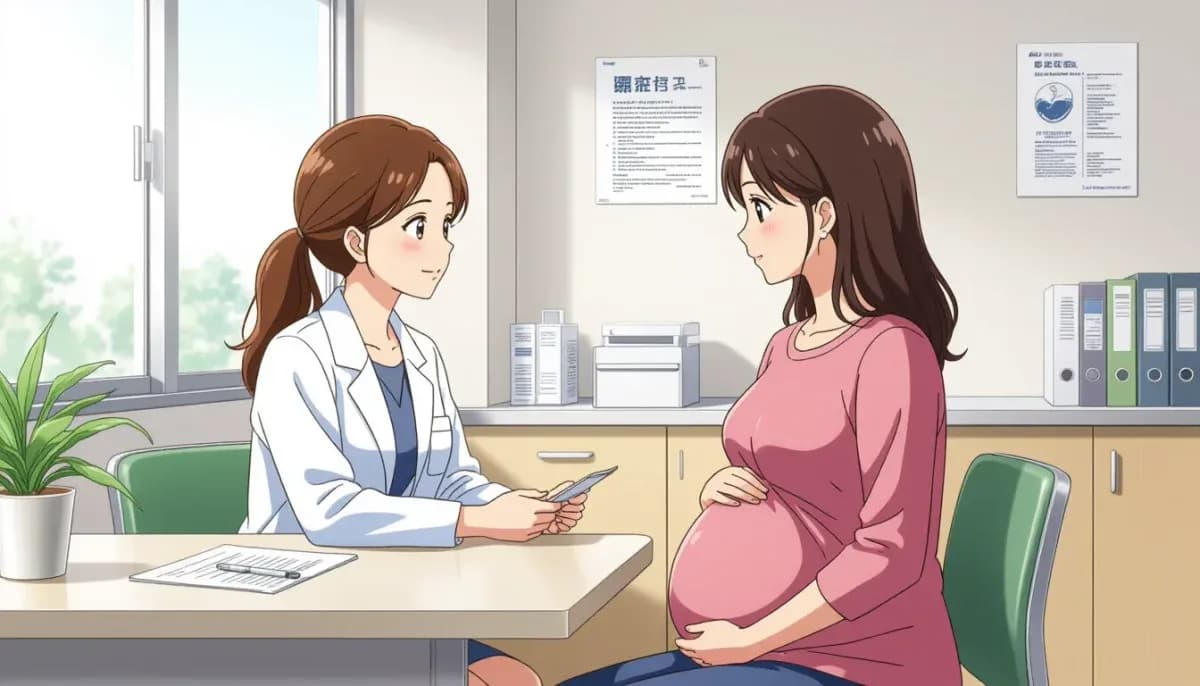
Hospital vs Clinic vs Midwife: Choosing Where to Give Birth
Compare hospitals, maternity clinics, and midwife birth centers in Japan. Learn costs, what to expect, epidural availability, and how to choose the right facility for your birth as a foreigner.
Read more →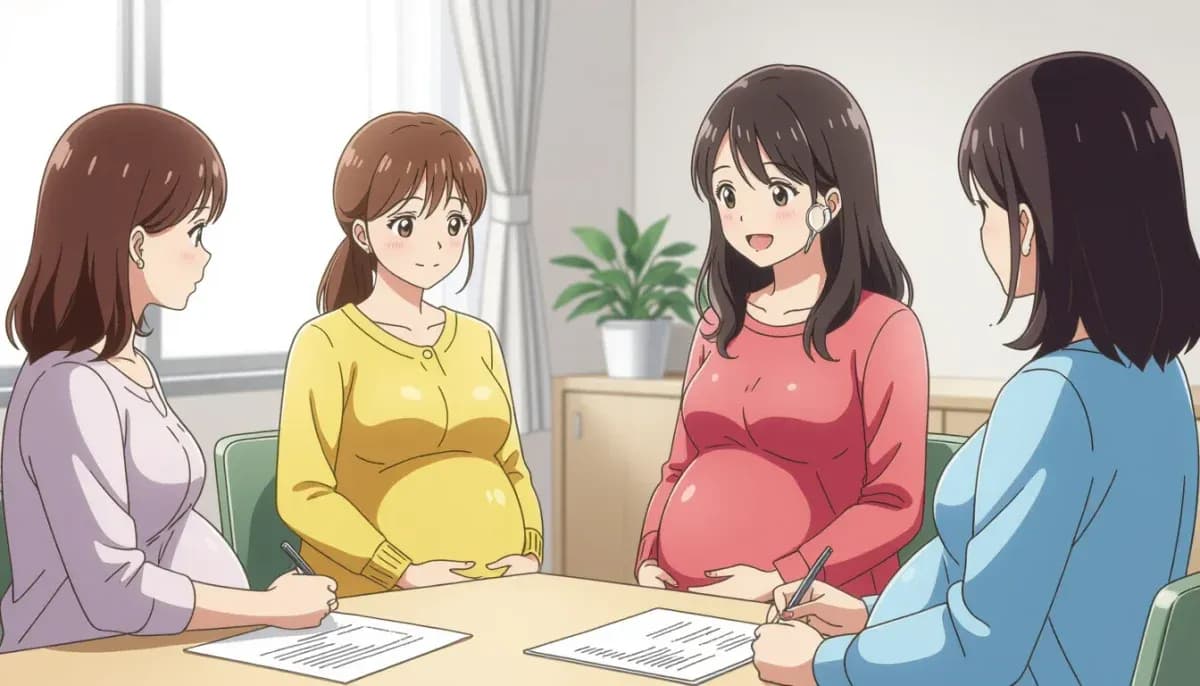
Prenatal Classes and Birth Preparation in Japan
Complete guide to prenatal classes and birth preparation in Japan for foreign parents. Learn about ryoshin gakyu classes, prenatal checkup schedules, costs, choosing a birth facility, and post-birth procedures.
Read more →