
Building an Emergency Supply Kit for Your Family

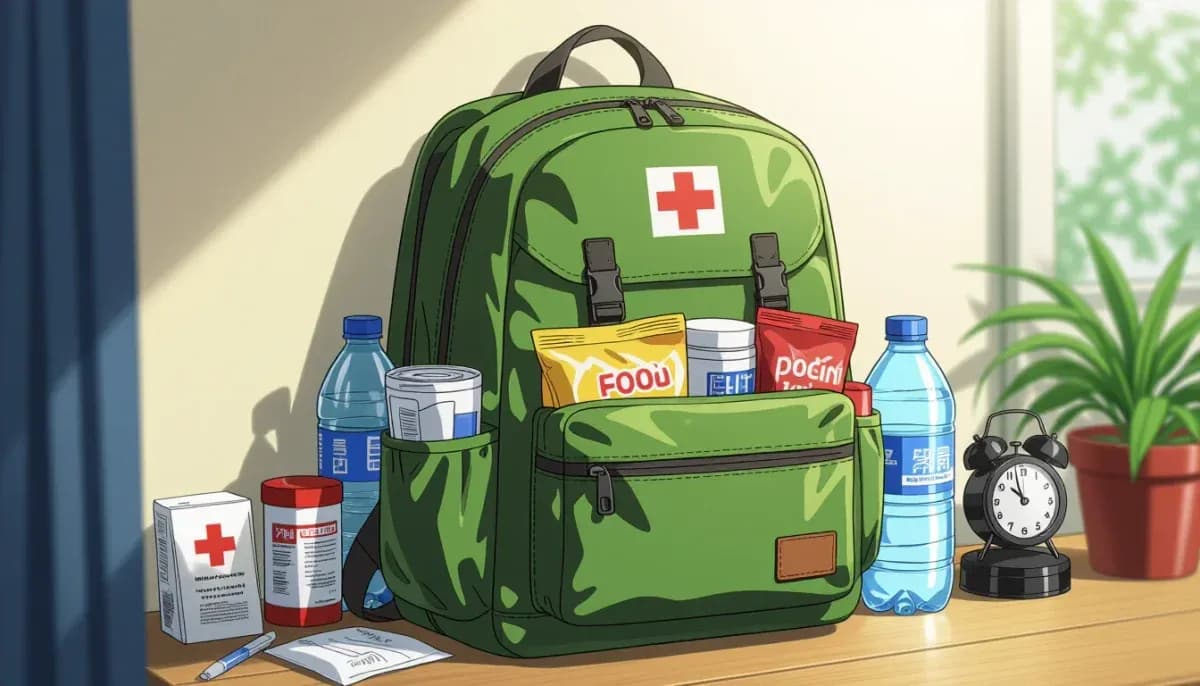
Build the perfect emergency supply kit for your family in Japan. Complete checklist for foreign residents covering food, water, documents, children's needs, and where to buy supplies in Japan.
Building an Emergency Supply Kit for Your Family in Japan
Japan is one of the most disaster-prone countries in the world. With approximately 1,500 earthquakes occurring annually — including 1,563 at magnitude 4 or higher each year — plus typhoons, tsunamis, and volcanic eruptions, being prepared is not optional. It is essential. For foreign families raising children in Japan, building a comprehensive emergency supply kit (非常用持ち出し袋, hijōyō mochidashi bukuro) is one of the most important steps you can take to protect your loved ones.
Despite the risks, research paints a sobering picture: a 2023 academic study found that only 32.5% of foreign residents in Japan had prepared an evacuation bag, and only 53.5% could identify a nearby evacuation site. This guide will help you close that gap — with a practical, family-focused checklist tailored specifically for expats and foreign residents living in Japan.
Why Every Foreign Family in Japan Needs an Emergency Kit
Japan's geographic position on the Pacific Ring of Fire means it is uniquely exposed to natural disasters. The country accounts for 18.5% of all global earthquakes of magnitude 6 or greater. Scientists currently estimate a 70%+ probability of a Nankai Trough earthquake (magnitude 8–9) occurring within the next 30 years — a megaquake that would affect tens of millions of people across central and western Japan.
But earthquakes are just one concern. Typhoons strike regularly during summer and autumn, sometimes triggering landslides and flooding. The January 1, 2024 Noto Peninsula earthquake (magnitude 7.5) caused 703 deaths and forced over 50,000 evacuations — a stark reminder that disasters happen without warning.
For foreign families, the risks are compounded by language barriers, unfamiliarity with local evacuation procedures, and the practical challenges of navigating an emergency in a second language. Having a well-stocked emergency kit — kept ready and accessible — can mean the difference between panic and preparation.
For broader context on keeping your children safe in Japan, see our guide on Emergency Preparedness and Child Safety in Japan.
What the Japanese Government Recommends
The Japanese government (through agencies such as the Cabinet Office and Tokyo Metropolitan Government) provides official guidance on disaster preparedness. Their core recommendations include:
- Maintain a minimum 3-day supply of food, water, and essentials — ideally 7 days' worth
- Store at least 3 liters of water per person per day
- Keep kits near the front door (genkan) so they can be grabbed quickly during evacuation
- Perform a full review of your kit twice a year, refreshing expired food and batteries
- Store a duplicate kit at your workplace in case you cannot return home
The government also recommends downloading emergency apps:
- Safety Tips (Japan Tourism Agency) — multilingual disaster alerts
- NERV — real-time earthquake and disaster notifications
- NHK World — English-language emergency news broadcasts
These are baseline recommendations. Foreign families often need to go further, adding documents and items specific to their situation as non-Japanese residents.
The Complete Emergency Kit Checklist for Foreign Families
Essential Documents Pouch (Waterproof)
| Document | Notes |
|---|---|
| Passport copies (all family members) | Keep originals at home in a fireproof box |
| Residence card (Zairyu card) copies | Required for re-entry and official identification |
| Health insurance card copies | Critical for accessing medical care at shelters |
| Embassy/consulate contact information | Printed on paper — do not rely on your phone alone |
| Evacuation site map | Download and print your ward's hazard map |
| Emergency contacts list | Include local Japanese contacts, family abroad |
| Prescription information | Medications, dosages, doctor's contact |
| Medical history (native language) | Especially important for children with allergies or conditions |
| Cash (¥10,000–¥50,000) | ATMs often fail after major disasters |
| Pet microchip number | If you have pets |
Tip: Photograph all documents and store them in an encrypted cloud folder as a backup. However, always keep physical copies in your kit — digital access may not be available.
Water and Food Supplies
Water is your most critical resource. The recommended minimum is 3 liters per person per day. For a family of four, a 3-day supply means storing 36 liters minimum (ideally 84 liters for 7 days).
| Item | Recommended Quantity (Family of 4) | Notes |
|---|---|---|
| Water (2L bottles) | 18–42 bottles | Rotate every 6–12 months |
| Emergency food rations | 12–28 meal equivalents | Calorie Mate, Datrex bars, retort pouches |
| Rice (vacuum-packed) | 3–5 kg | Long shelf life; can be cooked with minimal water |
| Instant noodles | 12–20 packs | Quick energy; low prep |
| Canned goods (fish, meat, vegetables) | 24+ cans | Choose pull-tab lids; include a can opener |
| Sports drinks / oral rehydration salts | 6–12 packs | Aquarius powder, Pocari Sweat |
| Baby formula / pouched baby food | 3–7 days' supply | If you have infants or toddlers |
| Snacks for children | Crackers, chocolate, familiar comfort foods | Reduces distress in children during emergencies |
Store emergency food in a cool, dark location and away from direct sunlight. Many Japanese supermarkets and Amazon Japan carry long-shelf-life emergency food sets designed for families.
For guidance on feeding children in Japan generally, see our article on Nutrition, School Lunches, and Feeding Children in Japan.
Gear and Equipment
Lighting and Communication
- Battery-powered or hand-crank flashlight (one per family member, plus extras)
- Hand-crank emergency radio — ideally with USB charging capability
- Portable battery pack (solar-powered models are ideal for extended outages)
- Extra batteries (AA and AAA sizes)
- Candles and matches or a lighter (store safely away from children)
Safety Equipment
- Work gloves — for clearing debris without injury
- Dust masks / N95 respirators — for aftershock dust, fire smoke
- Safety helmet or hood — particularly important in Japan's earthquake-prone urban areas
- Emergency whistle — one per family member, worn around the neck or attached to bag
- Reflective safety bands — for nighttime visibility
- Rope (5–10 meters) — for securing loads or assisting evacuation
- Multitool / Swiss army knife
- Duct tape and heavy-duty garbage bags
Warmth and Shelter
- Emergency blankets (mylar / space blankets) — one per person
- Sleeping bag or compact blanket per family member
- Pocket warmers (kairo) — essential for winter emergencies in Japan
- Cooling towels or mini fans — for summer typhoon season
- Slippers or indoor shoes — for navigating broken glass in post-earthquake homes
Hygiene and Sanitation
- Portable emergency toilet (只 8.8% of foreign residents surveyed owned one)
- Sanitary napkins and tampons — critically important and often overlooked
- Antibacterial wipes and hand sanitizer
- Soap bars and towels
- Disposable cutlery, plates, and cups
- Toilet paper (extra rolls)
- Diaper supply — if you have infants; include extra for older toddlers under stress
Children's Specific Needs
Children require special consideration in emergency kit planning. Their physical and emotional needs differ significantly from adults.
| Category | Items to Include |
|---|---|
| Clothing (per child) | Thermal base layer, 2–3 pairs leggings/underwear, socks, fleece jacket, waterproof outer layer |
| Comfort items | A favorite small toy, 1–2 picture books, familiar snacks |
| Medical | Child-specific medications, fever reducers, rehydration sachets, any prescription drugs |
| Identification | Photo of child with name, DOB, address, and parents' contact info (laminated) |
| Formula/feeding | Pre-portioned baby formula, portable bottle sterilizer, pouched baby food |
| Activities | Small drawing pad, crayons, card games — to reduce anxiety during shelter stays |
Discuss emergency plans age-appropriately with your children. Even young children can learn their home address, how to call emergency services (119 for fire/ambulance, 110 for police), and what to do if separated from parents.
For more on your child's wellbeing in challenging situations, see our guide on Mental Health and Emotional Wellbeing for Foreign Children in Japan.
Where to Buy Emergency Supplies in Japan
You do not need to import everything from your home country. Japan has excellent domestic options:
- Pre-made disaster bags: Available at Aeon (イオン), Don Quijote (ドン・キホーテ), and Muji (無印良品), ranging from ¥4,928 to ¥13,900 for family sets
- Daiso (100-yen stores): Affordable individual items — flashlights, whistles, candles, water pouches
- Amazon Japan: Wide selection of emergency food, water storage, and equipment; Subscribe & Save is a useful strategy for rotating food stock
- Tokyu Hands / Loft: Quality emergency gear, portable radios, battery packs
- Supermarkets: Stock rotation items — canned food, mineral water, Calorie Mate, instant meals
If you prefer to buy pre-assembled kits, the Muji Emergency Kit for Two or Iris Ohyama family sets are well-regarded by the expat community.
For more details on where expats buy supplies and equipment, GaijinPot's survival kit guide provides an excellent overview of where to shop and what to look for.
Foreign Resident-Specific Considerations
As a foreign national in Japan, your emergency kit needs extend beyond the standard Japanese checklist. Here are items and steps specifically relevant to foreign residents:
Documents and Legal
- Carry originals and copies of your passport and residence card separately (originals in a fireproof box; copies in your emergency bag)
- Include your embassy's emergency hotline number — Japanese authorities will also contact embassies during major evacuations
- If you have children enrolled in Japanese schools, include a copy of the school's emergency contact and pickup protocol
Language and Communication
- Download an offline translation app (Google Translate offline pack, or Papago) before a disaster strikes — internet access may be unavailable
- Print out key emergency phrases in Japanese for communicating at shelters
- Note that many evacuation shelters display information in Japanese only — your ward/city office may offer multilingual versions; request these proactively
Medical
- Keep prescription medications for at least 2–3 weeks beyond what you normally carry
- Include your kusuri no techō (薬の手帳, medication record book) or a written list of your family's prescriptions — Japanese pharmacists and doctors rely on these
- If family members wear contact lenses, include spare glasses — contact solution may be unavailable in shelters
Financial
- Keep cash in small denominations (1,000-yen bills and coins) — many small shops and vending machines do not accept electronic payment after disasters
- Make a note of your bank account numbers and insurance policy numbers in your documents pouch
For comprehensive guidance on navigating Japanese systems as a foreign resident, see the Japan Disaster Preparedness Guide for Foreigners at Living in Nihon.
Storing and Maintaining Your Kit
Where and how you store your kit matters as much as what is in it.
Storage Location
- Primary kit: Near the front door (genkan) — Japan's traditional entryway is the fastest exit point
- Secondary kit: At your workplace or in your car (note: storing your only kit in a car can be risky if you cannot access it during floods or typhoons)
- Do NOT store in locations you might be unable to reach — avoid attics, locked storage rooms, or the tops of tall shelves
Kit Maintenance Schedule
- Every 6 months: Rotate food and water stocks, check expiration dates, test flashlights and radios
- Annually: Review clothing sizes (children grow quickly), update documents, replenish medications
- After any major local disaster: Replenish any used items immediately
Labeling and Accessibility
- Label your kit clearly in both English and Japanese
- Ensure all family members — including children old enough to understand — know where the kit is stored and how to access it
- Run a family drill at least once a year: practice evacuating the home, grabbing the bag, and meeting at your designated assembly point
For expats planning their family setup in Japan, our guide on Housing and Family-Friendly Neighborhoods in Japan covers how to evaluate your home's disaster resilience.
Emergency Information Resources for Expats in Japan
Knowing where to get reliable information during and after a disaster is critical.
| Resource | URL / Contact | Language |
|---|---|---|
| Japan Meteorological Agency (JMA) | jma.go.jp | English available |
| Safety Tips App | Download from app stores | 14 languages incl. English |
| NERV App | gevnavi.jp | Japanese (excellent maps) |
| NHK World Emergency Broadcasts | nhkworld.com | English, many languages |
| Your municipality's disaster portal | Search "[your city] 防災" | Varies; request English |
| US Embassy Japan Emergency | jp.usembassy.gov | English |
| British Embassy Tokyo | gov.uk/world/japan | English |
Many Japanese wards and cities also offer free disaster prevention experience tours where you can practice earthquake simulations, fire evacuation, and emergency first aid. Tokyo residents can access these for free at the Honjo, Ikebukuro, and Tachikawa Life Safety Learning Centers.
For work-related considerations during emergencies, For Work in Japan provides practical guidance for foreign workers navigating employment and daily life in Japan. For study and educational resources relevant to your family, Chuukou Benkyou offers academic support resources for children in Japan.
Final Thoughts: Start Today
The statistics are clear: foreign residents in Japan are significantly less prepared for disasters than they should be. Only about one in three has an evacuation bag ready. Yet the risks are real, present, and increasing. Japan's disaster frequency is not a distant concern — it is a daily reality.
Building your family's emergency supply kit does not need to happen all at once. Start with the essentials — water, documents, a flashlight, and a radio — and build from there. Set a reminder to review your kit every six months. Talk to your children about what to do. Learn where your local evacuation shelter is.
Being prepared is an act of care for your family. In Japan, it is also simply being a responsible resident.
For additional guidance on staying safe and raising a healthy family in Japan, explore our complete guide on Emergency Preparedness and Child Safety in Japan and Healthcare and Medical Care for Children in Japan.
Sources: Japan Cabinet Office Disaster Preparedness Guidelines; PMC Academic Study on Foreign Resident Preparedness in Japan (2023); The Wagamama Diaries Emergency Kit Guide (updated 2024); Japan Living Guide Emergency Bag; Japan Meteorological Agency.

Originally from Vietnam, living in Japan for 16+ years. Graduated from Nagoya University, with 11 years of professional experience at Japanese and international companies. Sharing practical information for foreign parents raising children in Japan.
View Profile →Related Articles
Helping Children Recover After a Natural Disaster
A practical guide for foreign parents on helping children recover emotionally and mentally after a natural disaster in Japan, with evidence-based strategies and available support resources.
Read more →
Creating a Family Disaster Communication Plan
Learn how to create a family disaster communication plan in Japan as a foreign resident. Covers 171 dial, Safety Tips app, school protocols, and multilingual strategies for expat families.
Read more →
Emergency Contacts and Helplines for Families in Japan
Complete guide to emergency contacts and helplines for families in Japan. Police 110, ambulance 119, English hotlines, disaster messaging, and mental health support for expat families.
Read more →
Fire Safety at Home with Children in Japan
Essential fire safety guide for foreign families in Japan. Learn about smoke detectors, evacuation hatches, emergency procedures, teaching children fire safety, and protecting your home.
Read more →
Water Safety and Drowning Prevention for Kids in Japan
Essential water safety guide for parents raising kids in Japan. Learn about beach rip currents, river dangers, bathtub risks, emergency contacts, and Japan's drowning prevention resources for expat families.
Read more →
Teaching Children About Stranger Danger in Japan
A complete guide for foreign parents on teaching children about stranger danger in Japan, covering the Kodomo 110-ban safety house system, evening chimes, age-appropriate safety conversations, and how Japan's approach differs from Western stranger-danger messaging.
Read more →