
Creating a Family Disaster Communication Plan

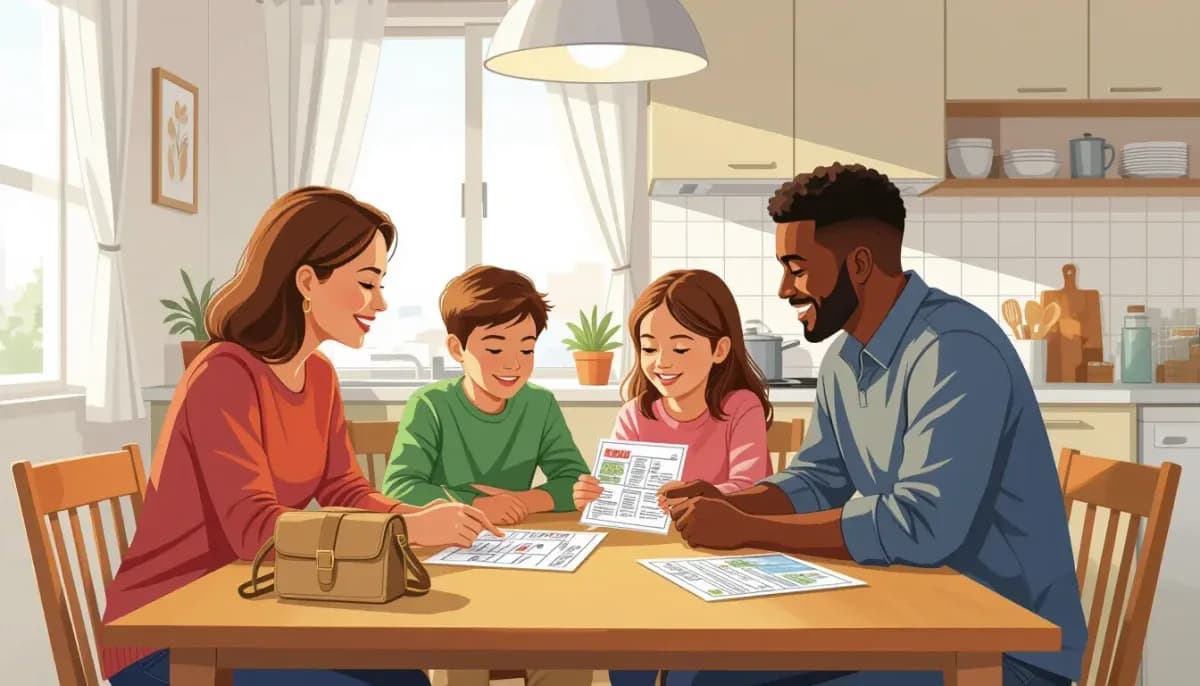
Learn how to create a family disaster communication plan in Japan as a foreign resident. Covers 171 dial, Safety Tips app, school protocols, and multilingual strategies for expat families.
Creating a Family Disaster Communication Plan in Japan
Japan is one of the most disaster-prone countries in the world. With approximately 1,500 earthquakes per year strong enough to be felt, plus regular typhoons, tsunamis, and volcanic activity, living in Japan means accepting that emergencies are not a matter of "if" but "when." For foreign families, this reality requires special preparation — not only gathering supplies and knowing evacuation routes, but also establishing a clear, tested family disaster communication plan.
When a major earthquake or typhoon strikes, mobile networks become instantly overloaded. Schools may be locked down. Parents may be at work while children are in class across town. Without a pre-agreed communication strategy, a family can be left in terrifying uncertainty for hours or even days. This guide walks you through everything you need to know to create a robust, multilingual family disaster communication plan tailored for expat families living in Japan.
Why Foreign Families Face Unique Communication Challenges
Foreign families in Japan face communication challenges that Japanese families may not encounter to the same degree. Language barriers make it harder to read emergency broadcasts, understand evacuation instructions from neighbors, or communicate with local authorities. Research has found that approximately half of international students in Japan had not even decided how they would confirm their safety with family and friends in the event of a disaster — a significant preparedness gap.
Beyond language, foreign families often have key members overseas (grandparents, co-parents, extended family) who will be desperately trying to reach them. Local phone lines in disaster-affected areas become jammed within minutes, but international lines and data networks have different congestion patterns. Building a communication plan that accounts for both local reunification and international check-ins is essential.
Additionally, expat families frequently move or change neighborhoods, which means they may not have deeply rooted local networks to rely on. Knowing Japan's official disaster communication tools — and how to use them before a disaster happens — is the most reliable safety net you can create.
For a broader foundation, see our guide on Emergency Preparedness and Child Safety in Japan and Emergency Evacuation Plans with Children in Japan.
Japan's Official Disaster Communication Systems
Japan has developed a sophisticated set of official communication tools specifically designed for disaster situations. Every family should know these systems before an emergency occurs.
Disaster Emergency Message Dial 171
The most important tool to know is 171 — NTT's Disaster Emergency Message Dial. This voice messaging service requires no internet connection and works even when mobile networks are overloaded.
Here's how it works:
- Dial 171 from any phone (mobile or landline)
- Press 1 to record a 30-second voice message linked to your phone number
- Press 2 to retrieve messages recorded under a specific phone number
Public phones at evacuation shelters also provide access to 171, which is particularly valuable when mobile batteries die. Before a disaster, designate one phone number (typically the home landline or one parent's mobile) as the "family number" everyone checks. Practice dialing 171 during the practice periods NTT holds twice yearly (March 1 and the week of Respect for the Aged Day in September).
Web 171 — Disaster Message Board
Web 171 is the internet-based equivalent. Family members can post and search for text messages linked to phone numbers via the NTT Docomo website. This system remains functional when voice calls are impossible but limited data connections exist.
00000JAPAN Free Wi-Fi
During declared disasters, mobile carriers in Japan activate free public Wi-Fi under the SSID "00000JAPAN" (five zeros). This network requires no password and is available at many locations. Even if your paid data plan is maxed out or payment has lapsed, you can connect to 00000JAPAN to send messages, post to social media, or use disaster message boards.
Carrier Disaster Message Boards
Each major carrier (Docomo, SoftBank, au) maintains its own web-based disaster message board. Messages can be posted and retrieved by phone number, similar to Web 171, but accessible through carrier apps and websites.
Google Person Finder
During major disasters, Google activates its Person Finder tool for Japan. This international platform allows people to post and search "I am safe" or "I am looking for [person]" messages, which is particularly useful for communicating with family members overseas.
For a full list of emergency contact numbers, see our Emergency Contacts and Helplines for Families in Japan.
The 5 Core Elements of a Family Disaster Communication Plan
A solid family disaster communication plan doesn't need to be complicated. It needs to be clear, pre-agreed, and practiced. Here are the five elements every family plan must include:
1. A Designated Out-of-Area Contact Person
When a major disaster hits a region, local phone lines become completely congested — but calls to distant cities or overseas often still go through. Designate one person outside the disaster zone (a grandparent in another country, a friend in a different Japanese city) as your family's communication hub. All family members call or message this person first to report their status, and this person relays information between family members who cannot reach each other directly.
Tell your children this person's name, phone number, and why they are important. Write the number on the emergency card every family member carries.
2. Two Pre-Agreed Meeting Points
Designate two physical meeting points where your family will go if you cannot communicate:
- Meeting Point A: A location near your home (your neighborhood disaster assembly point / 避難場所)
- Meeting Point B: A location further away (your city's main designated evacuation shelter)
Walk these routes with your children before any emergency. Know the location of your designated neighborhood assembly point — this is typically marked with green signs around your neighborhood.
3. A Physical Emergency Contact Card
Digital devices fail, run out of battery, or get lost in disasters. Every family member — including children old enough to carry one — should have a laminated or waterproof physical emergency contact card in their school bag, wallet, or backpack.
The card should include:
- Each family member's name and phone number
- The out-of-area contact person's name and number
- The home address in Japanese
- Meeting Point A and B addresses in Japanese
- The family's blood types (useful for medical emergencies)
- Any medical conditions or allergies
Write the Japanese addresses in kanji/hiragana so that Japanese-speaking neighbors or emergency workers can assist even if the child cannot speak Japanese.
4. School Communication Protocol
Japan's schools take disaster preparedness very seriously. In most schools, children will be held at school — not released — until a parent or designated guardian physically comes to pick them up after a major disaster. This is a critical difference from many other countries.
Find out your school's specific policies:
- Who can pick up your child? (Only parents? Other designated adults?)
- Does the school send messages via a specific app or phone tree?
- What is the school's evacuation site if the main building is unsafe?
Many schools use apps like Mebaeru, Schoolink, or simple LINE groups for emergency communication. Make sure your contact information is current in the school system. See our guide on School Disaster Drills and Safety Education in Japan for more on how schools handle emergencies.
5. International Communication Plan
For family members overseas — especially if one parent is frequently traveling for work — establish a clear protocol:
- Designate one social media platform or messaging app (LINE, WhatsApp, Facebook) for the first safety confirmation
- Agree on a check-in window: "If I don't message you within 3 hours, here is who to contact in Japan"
- Register with your country's embassy or consulate in Japan. Many embassies (including the US Embassy) maintain emergency notification lists for citizens
Essential Apps for Disaster Communication in Japan
| App / Service | Platform | Purpose | Language |
|---|---|---|---|
| Safety Tips | iOS / Android | Earthquake/tsunami/weather alerts | 13 languages incl. English |
| NHK World | iOS / Android | English news and disaster coverage | English |
| Yahoo! Disaster Prevention | iOS / Android | Alerts, shelter maps, river levels | Japanese |
| 171 Voice Message | Any phone | Record/retrieve voice messages | Japanese |
| Web 171 | Browser | Post/retrieve text messages | Japanese |
| Google Person Finder | Browser | Safety status messages | Multilingual |
| Hazard Map Portal | Browser | Official risk maps for your address | Japanese/English |
The Safety Tips app (produced by the Japan Tourism Agency) is the single most important app for foreign families. It delivers multilingual push notifications for earthquake early warnings, tsunami alerts, typhoon advisories, and volcanic eruption warnings. It also includes emergency communication cards in multiple languages. Install it on every smartphone in your household.
For detailed earthquake-specific preparation, see our guide on Earthquake Preparation for Families with Children in Japan.
Communication Strategies for Children
Children need special preparation for disaster communication. They must understand the plan at an age-appropriate level and be able to execute it even if no adults are present.
For younger children (under 8)
- Practice saying and writing their home address and parent's phone number from memory
- Role-play: "If an earthquake happens and mommy/daddy is not here, what do you do first?"
- Use the school's emergency card system — ensure contact details are updated
For older children and teens
- Walk them through the 171 system and let them practice during NTT's public drills
- Show them how to post to Web 171 and Google Person Finder
- Discuss what to do if they are home alone when a disaster strikes
- Ensure they have the physical emergency contact card in their school bag
Language Preparation
In a real emergency, your child may need to communicate with Japanese neighbors, teachers, or emergency workers. Teach them a few key phrases:
- 「助けてください」(Tasukete kudasai) — Please help me
- 「親に連絡してください」(Oya ni renraku shite kudasai) — Please contact my parents
- 「外国人です」(Gaikokujin desu) — I am a foreigner
The physical emergency card with the home address in Japanese can also be shown to any adult for assistance.
Testing and Practicing Your Plan
A plan that has never been practiced will fail under the stress of a real disaster. Build regular practice into your family routine:
- Twice a year: Participate in NTT's public 171 practice periods (March 1 and the Respect for the Aged Day week)
- Once a year: Walk the routes to both meeting points with your children
- After any move: Update your emergency contact cards, school records, and meeting points immediately
Japan conducts nationwide disaster drills on September 1 (Disaster Prevention Day, marking the anniversary of the 1923 Great Kanto Earthquake). Many municipalities hold community evacuation drills around this date — participating as a family is one of the best ways to practice and meet your neighbors at the same time.
For typhoon-specific communication planning, see our guide on Typhoon Safety Tips for Families in Japan.
Building Your Home Communication Binder
Keep a physical emergency binder in an accessible, waterproof location (not locked away) that every family member knows about. Include:
- Family emergency contact cards (one per person, plus spares)
- Copies of passports and residence cards
- Insurance policy numbers and emergency contact numbers
- Bank account information and emergency cash
- Medical information (blood types, allergies, medications)
- Neighborhood evacuation map with routes highlighted
- School emergency contact information
- Your out-of-area contact person's full details
Complement this binder with a well-stocked emergency supply kit. The binder and the kit should be stored near each other and known to all family members.
Additional Resources for Expat Families
For more information on living safely in Japan as a foreign family, the following resources provide excellent English-language guidance:
- Living in Nihon — General Expat Living Guide — Comprehensive guides for everyday life as a foreigner in Japan
- For Work in Japan — Expat Life Resources — Resources on visas, employment, and daily life for foreign workers
- Chuukou Benkyou — Japan Life Support — Japan daily life information
- Japan Living Guide — Emergency Contact Methods — Detailed breakdown of all Japanese disaster communication tools
- Japan Remotely — Natural Disaster Planning Guide — Comprehensive resource for expats planning for Japan's natural disasters
- Emergency & Safety Guide Japan 2025 — Accessible 2025 guide covering meeting points and earthquake response for foreign families
Conclusion
Creating a family disaster communication plan in Japan is one of the most important things you can do as an expat parent. Japan's official systems — Disaster Message Dial 171, Web 171, 00000JAPAN Wi-Fi, and the Safety Tips app — are reliable and accessible even to non-Japanese speakers if you know how they work before a disaster strikes.
The fundamentals are simple: agree on an out-of-area contact, designate two meeting points, carry physical emergency cards, understand your children's school protocols, and practice regularly. For foreign families, the additional steps of multilingual preparation and international communication protocols make your plan complete.
Disasters in Japan are certain. Being prepared is a choice you can make today.

Originally from Vietnam, living in Japan for 16+ years. Graduated from Nagoya University, with 11 years of professional experience at Japanese and international companies. Sharing practical information for foreign parents raising children in Japan.
View Profile →Related Articles
Helping Children Recover After a Natural Disaster
A practical guide for foreign parents on helping children recover emotionally and mentally after a natural disaster in Japan, with evidence-based strategies and available support resources.
Read more →
Emergency Contacts and Helplines for Families in Japan
Complete guide to emergency contacts and helplines for families in Japan. Police 110, ambulance 119, English hotlines, disaster messaging, and mental health support for expat families.
Read more →
Fire Safety at Home with Children in Japan
Essential fire safety guide for foreign families in Japan. Learn about smoke detectors, evacuation hatches, emergency procedures, teaching children fire safety, and protecting your home.
Read more →
Water Safety and Drowning Prevention for Kids in Japan
Essential water safety guide for parents raising kids in Japan. Learn about beach rip currents, river dangers, bathtub risks, emergency contacts, and Japan's drowning prevention resources for expat families.
Read more →
Teaching Children About Stranger Danger in Japan
A complete guide for foreign parents on teaching children about stranger danger in Japan, covering the Kodomo 110-ban safety house system, evening chimes, age-appropriate safety conversations, and how Japan's approach differs from Western stranger-danger messaging.
Read more →
Basic First Aid for Children in Japan
Essential guide to basic first aid for children in Japan. Learn emergency numbers, common injury response, first aid kit essentials, CPR training options in English, and how Japan's pediatric healthcare system works for foreign parents.
Read more →