
Helping Children Recover After a Natural Disaster

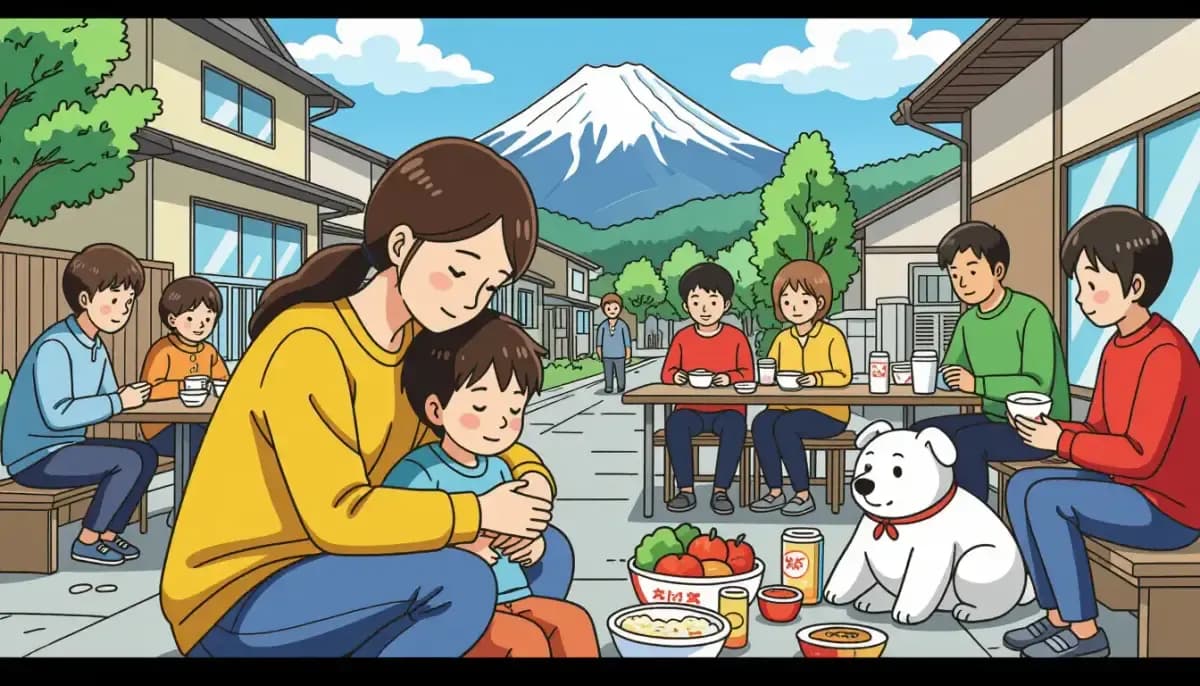
A practical guide for foreign parents on helping children recover emotionally and mentally after a natural disaster in Japan, with evidence-based strategies and available support resources.
Helping Children Recover After a Natural Disaster in Japan
Japan is one of the most disaster-prone countries in the world, ranking 3rd globally in exposure to natural hazards according to the WorldRiskIndex 2024. Earthquakes, tsunamis, typhoons, and floods are part of life here — and for families raising children in Japan, knowing how to help your child recover emotionally and mentally after a disaster is just as important as emergency preparedness. If you're a foreign parent navigating the aftermath of a natural disaster in Japan, this guide will walk you through what to expect, how to support your child, and what resources are available to your family.
Understanding the Scale: How Japan's Disasters Affect Children
The 2011 Great East Japan Earthquake and Tsunami remains one of the most devastating examples of how natural disasters impact families. That single event left approximately 100,000 children homeless and orphaned more than 1,700 children. Major earthquakes have continued since — from the Kumamoto earthquake in 2016 to the Noto Peninsula earthquakes in 2023 and 2024 — reminding us that disaster preparedness and recovery are ongoing concerns for every family in Japan.
Children experience disasters differently from adults. They may not fully understand what has happened, why their home looks different, or where their friends and teachers have gone. Their world has been disrupted in ways they lack the vocabulary to process. Research shows that approximately 25% of children exposed to a natural disaster develop symptoms of PTSD, anxiety, depression, or panic attacks — with rates ranging from 8% to 37% depending on the severity of exposure and family circumstances.
For foreign families, the challenge is compounded. Language barriers, unfamiliarity with Japan's support systems, cultural differences in how grief and trauma are expressed, and social isolation can all slow the recovery process for expat children. Understanding the landscape is the first step toward helping your child heal.
Signs of Trauma in Children After a Disaster
Children process trauma in ways that are not always obvious. As a parent, being able to recognize warning signs early allows you to seek help before problems become entrenched. Common signs of disaster-related trauma include:
- Re-experiencing: Your child re-enacts the disaster during play, has nightmares about it, or behaves as though it is happening again
- Avoidance: Refusing to talk about the event, avoiding places or activities that remind them of it, withdrawing from friends and family
- Emotional numbing: Appearing emotionally flat, losing interest in activities they previously enjoyed, seeming disconnected
- Hyperarousal: Difficulty sleeping, startling easily at loud noises (such as tremors), inability to concentrate at school, increased irritability or aggression
- Regression: Younger children may revert to behaviors they had grown out of, such as bedwetting, thumb-sucking, or separation anxiety
- Delayed symptoms: Research on Japanese children after the 1995 Kobe earthquake and 2011 Tōhoku disaster found that some children first show serious symptoms 3 to 4 years after the event, when the shock of survival fades and the full weight of loss becomes real
One of the most important research findings is that parental trauma is the single strongest predictor of child mental health outcomes. Children look to adults for cues about safety. If parents are visibly overwhelmed, fearful, or unable to function, children absorb that distress. This is not a criticism — it is a call for parents to also seek support for themselves, which directly benefits their children.
For guidance on children's broader mental health in Japan, see our article on Mental Health and Emotional Wellbeing for Foreign Children in Japan.
A Framework for Recovery: The Five Pillars
International disaster mental health researchers studying recovery programs across five countries — including Japan — have identified a five-pillar framework that guides effective recovery support for children. These pillars, studied across more than 16,000 children, are:
| Pillar | What It Means | Practical Examples |
|---|---|---|
| Safety | Children need to feel physically and emotionally safe | Re-establishing routines, reassuring communication, secure shelter |
| Calm | Reducing anxiety through regulated activities | Breathing exercises, quiet play, consistent mealtimes |
| Self-Efficacy | Building a sense of control and competence | Age-appropriate chores, helping in recovery, creative activities |
| Connectedness | Maintaining social bonds with family, friends, community | Contacting classmates, community gatherings, peer groups |
| Hope | Nurturing a positive vision of the future | Celebrating small wins, future-focused conversations, storytelling |
Studies show that structured support programs using this framework improve children's trauma functioning significantly — including affect, sociability, attention, and appetite — within as few as 5 days of beginning activities. Critically, research also confirms that delay in starting support does not significantly reduce its effectiveness, meaning even if weeks have passed since the disaster, beginning recovery activities now is still enormously valuable.
Practical Strategies for Parents at Home
While professional support is important, parents are at the front line of their child's recovery. Here are evidence-based strategies you can use at home, especially as a foreign parent in Japan:
Restore routines as quickly as possible. Familiar routines — regular meals, consistent bedtimes, school attendance — signal safety to children's nervous systems. Even partial routines, maintained in a shelter or temporary housing, help regulate children emotionally. Re-enrolling your child in school as soon as it is safe to do so is one of the most protective steps you can take.
Communicate honestly and age-appropriately. Avoid lying to children about what happened, but calibrate the detail to their age. Young children need simple, reassuring explanations. Older children need honest discussion. Avoid vague statements like "everything is fine" when it clearly is not — children are perceptive and this erodes their trust.
Create space for play and creativity. After the 2011 earthquake, adventure playgrounds and child-friendly spaces were specifically identified as recovery tools because children process inner trauma through play. Arts, drawing, music, and physical play give children a language for feelings they cannot yet put into words. Our articles on Arts, Music, and Creative Development for Children in Japan and Sports and Physical Activities for Children in Japan offer ideas for rebuilding these activities.
Manage your own stress visibly and honestly. Let your child see you cope — not perform perfect calm, but actively regulate. "I'm a bit worried too, but we are safe and we're doing everything we need to do" is far more helpful than either dramatic distress or forced cheerfulness.
Monitor for survivor guilt. Children, especially older ones and those who lost friends or relatives, may develop feelings of guilt — asking why they survived when others did not. This is common after disasters like the 2011 tsunami. Open, honest conversations about loss, repeated gently over time, help prevent this from developing into a deeper psychological wound.
For support with your child's school environment during recovery, see Elementary School in Japan: A Complete Guide for Foreign Parents.
Support Resources Available in Japan
Japan has developed significant institutional infrastructure for disaster mental health support, much of it child-specific. As a foreign parent, knowing what exists helps you navigate the system:
Disaster Psychiatric Assistance Team (DPAT): Japan deploys specialized mental health teams into disaster-affected areas after large-scale events. By September 2011 alone, 57 mental health teams had been deployed. DPAT teams include child psychiatrists who visit evacuation sites and schools.
Rainbow Houses: Established in Sendai, Ishinomaki, and Rikuzentakata following the 2011 disaster, Rainbow Houses are community-based safe spaces for disaster-affected children offering peer support, emotional release rooms, and supervised group activities. If you are in a disaster-affected area, check with local municipal offices or NGOs about similar services.
School-based mental health support: Japanese schools are mandated to integrate disaster education and, in many cases, trauma-aware teacher training into their approach. Teachers are expected to identify signs of distress and coordinate with school counselors. Foreign children may have access to these services through their school — do not hesitate to ask the school directly.
Child-Friendly Spaces (CFS): During emergency response phases, many NGOs and government bodies establish Child-Friendly Spaces — structured environments where children can play, learn, and receive psychosocial support. Psychological First Aid (PFA) trained staff operate these spaces, as was done during the 2016 Kumamoto earthquake.
Annual mental health check-ups: Japan's post-2011 institutional response established systems for ongoing mental health monitoring for affected children, including annual check-ups and teacher-support programs. Ask at your local health center (hokenjo) what is available in your area.
For broader community support options for foreign families, see Community and Support Networks for Foreign Families in Japan.
For more general disaster preparedness information, For Work in Japan's Disaster Preparedness Guide for Foreigners is a useful reference covering emergency supplies, evacuation, and shelter guidance specifically for foreign residents.
Additional research from Nippon.com on Earthquake Orphans' Emotional Healing and the PMC study on children's mental health in disaster-affected areas provides in-depth reading on Japan-specific recovery patterns.
When to Seek Professional Help
Most children show some stress reactions after a disaster — this is normal and expected. However, certain signs indicate that professional evaluation is needed:
- Symptoms persist or worsen after 4–6 weeks
- The child is unable to function at school or in daily life
- There is significant regression in development
- The child expresses hopelessness, worthlessness, or statements about not wanting to live
- There are significant changes in eating or sleeping that do not improve
- The child has been directly bereaved — lost a parent, sibling, close friend, or teacher
In Japan, you can access child psychiatric support through:
- Pediatric or child psychiatry (jido seishin ka) at hospitals — ask your pediatrician for a referral
- School counselors (sukuuru kaunseraa) — available at most public schools and some international schools
- Mental health welfare centers (seishin hoken fukushi sentaa) — local government centers offering consultation and referrals
- TELL Japan (in English): A mental health support service for the international community in Japan, offering counseling and referrals
For children with additional support needs, see Special Needs Education and Support for Children in Japan.
Supporting Long-Term Recovery: The Role of Community
Recovery from a natural disaster is not a short-term process. Research following Japan's 2011 earthquake found that high school students showed fluctuating trauma symptoms extending well beyond the immediate recovery period — and that approximately 10% of trauma-exposed children develop chronic, severe PTSD symptoms, with one-third experiencing moderate symptoms persisting up to a decade.
The most effective long-term recoveries involve collaboration across multiple systems: parents, medical staff, local government, and schools working together rather than relying on any single source of support. For foreign families, building this network proactively — before disaster strikes — makes an enormous difference.
Connect with other foreign parents in your area, join local foreign resident associations, and familiarize yourself with your local ward office's disaster support procedures. Japan's community disaster preparedness infrastructure is extensive, but navigating it as a foreigner requires building relationships in advance.
Resources like Living in Nihon offer practical lifestyle guidance for foreigners living in Japan, while academic resources like the PLOS One Fukushima children mental health study provide deeper evidence on how Japanese children are affected by major disasters. For families navigating Japanese school systems and academic preparation in disaster recovery contexts, Chuukou Benkyou provides guidance on middle and high school education in Japan.
For broader emergency planning as a family, see our comprehensive guide on Emergency Preparedness and Child Safety in Japan.
Natural disasters are an unavoidable reality of life in Japan. But the research is clear: children are resilient, recovery is possible, and parental support is the most powerful factor in that recovery. By understanding the signs of trauma, applying evidence-based strategies, connecting with available support systems, and attending to your own well-being as a parent, you can guide your child through even the most difficult aftermath — and help them emerge stronger on the other side.

Originally from Vietnam, living in Japan for 16+ years. Graduated from Nagoya University, with 11 years of professional experience at Japanese and international companies. Sharing practical information for foreign parents raising children in Japan.
View Profile →Related Articles
Creating a Family Disaster Communication Plan
Learn how to create a family disaster communication plan in Japan as a foreign resident. Covers 171 dial, Safety Tips app, school protocols, and multilingual strategies for expat families.
Read more →
Emergency Contacts and Helplines for Families in Japan
Complete guide to emergency contacts and helplines for families in Japan. Police 110, ambulance 119, English hotlines, disaster messaging, and mental health support for expat families.
Read more →
Fire Safety at Home with Children in Japan
Essential fire safety guide for foreign families in Japan. Learn about smoke detectors, evacuation hatches, emergency procedures, teaching children fire safety, and protecting your home.
Read more →
Water Safety and Drowning Prevention for Kids in Japan
Essential water safety guide for parents raising kids in Japan. Learn about beach rip currents, river dangers, bathtub risks, emergency contacts, and Japan's drowning prevention resources for expat families.
Read more →
Teaching Children About Stranger Danger in Japan
A complete guide for foreign parents on teaching children about stranger danger in Japan, covering the Kodomo 110-ban safety house system, evening chimes, age-appropriate safety conversations, and how Japan's approach differs from Western stranger-danger messaging.
Read more →
Basic First Aid for Children in Japan
Essential guide to basic first aid for children in Japan. Learn emergency numbers, common injury response, first aid kit essentials, CPR training options in English, and how Japan's pediatric healthcare system works for foreign parents.
Read more →