
Safety Considerations for Family Neighborhoods in Japan

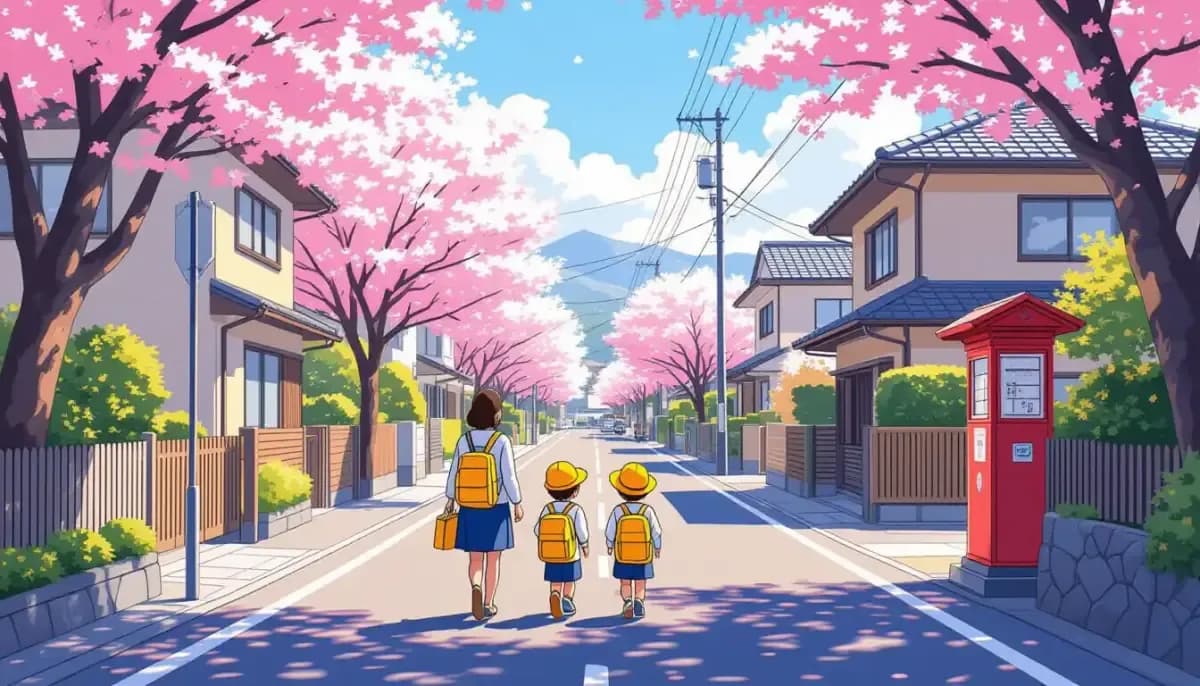
A complete guide to safety considerations for foreign families choosing neighborhoods in Japan — covering crime statistics, natural disaster risk, safest wards, and practical daily safety tips for expat families with children.
Safety Considerations for Family Neighborhoods in Japan
Japan is widely considered one of the safest countries in the world, making it an attractive destination for foreign families looking to raise children in a secure environment. Yet "safe" doesn't mean risk-free — and understanding the specific safety landscape of Japanese neighborhoods will help you choose the right home, prepare for real hazards, and build confidence in your daily life. This guide covers everything from crime statistics and natural disaster risk to practical neighborhood features that matter most for families with children.
Understanding Japan's Overall Safety Reputation
Japan's reputation for safety is well-earned. Walking home late at night, leaving belongings unattended, and letting children walk to school independently are normal parts of life here — practices that would raise eyebrows in many other countries. The nation's strong community culture, strict gun laws, and efficient policing all contribute to its low crime environment.
For foreign families, this safety culture is one of the first pleasant surprises after arriving. Children in Japan gain independence young: it's common to see six- and seven-year-olds commuting to school alone on public transport, wearing their yellow safety hats (黄色い帽子) and walking in supervised neighborhood groups called tōkōhan.
That said, Japan's safety picture has two important dimensions that every family must understand:
- Crime safety — Japan's crime rates are exceptionally low, but not zero. Petty theft (especially bicycle theft) and occasional harassment do occur.
- Natural disaster risk — Japan sits on four tectonic plates and is one of the world's most seismically active nations. Earthquake, tsunami, flooding, and typhoon risks vary significantly by neighborhood and must be evaluated before choosing where to live.
For a broader overview of housing options and neighborhood types, see our guide to Housing and Family-Friendly Neighborhoods in Japan.
Crime Statistics: What the Numbers Really Show
Data from the Tokyo Metropolitan Police provides a revealing picture of urban crime. In 2017, Tokyo's 23 Wards recorded a total of 93,745 crimes — a crime rate of just 0.99% across a population of approximately 9.5 million people. To put that in perspective:
- Heinous violent crimes (murder, assault, robbery): only 543 cases — 0.58% of all crimes
- Bicycle theft: 29,856 cases — 31.8% of all crime, making it by far the most common offense
- 27 neighborhoods reported exactly one crime in the entire year
- The Japan Times reported in January 2026 that Japan's overall crime rate continues to be among the lowest of any developed nation
This means that for families, the realistic concerns are mundane property crimes — securing your bicycle, keeping bags zipped on trains — rather than personal safety threats. Resources from realestate.co.jp tracking Tokyo crime by neighborhood break down statistics ward by ward for those who want to dig deeper.
The Koban System: Safety on Every Corner
One of Japan's most family-reassuring features is the koban (交番) — small neighborhood police boxes staffed 24 hours a day. Kobans serve as first-response points for emergencies, lost property, and directions. Teaching your children to identify the nearest koban and approach it if lost is a fundamental family safety practice in Japan.
Natural Disaster Safety: The Factor Families Often Overlook
For families relocating to Japan, crime safety is often the first thing researched — but natural disaster risk deserves equal attention. In 2024 alone, Japan recorded 1,563 earthquakes of magnitude 4.0 or higher. The Noto Peninsula earthquake (M7.5) in January of that year killed 703 people.
Seismologists place the probability of a major Nankai Trough earthquake — which could affect a wide swath of central and western Japan — at 70–80% within the next 30 years. Families need to understand this risk not to be alarmed, but to choose homes and neighborhoods that minimize exposure.
How to Evaluate a Neighborhood's Disaster Risk
The Japanese government provides a free, powerful tool for this: the 重ねるハザードマップ (Hazard Map Portal, available at disaportal.gsi.go.jp). Enter any address to see flood, earthquake liquefaction, landslide, and tsunami risk overlaid on a detailed map.
Key risk factors to check:
- Elevation: Neighborhoods above 20 meters are generally safest; below 5 meters carries significant flood risk
- Land reclamation: Areas built on reclaimed land (like parts of Koto and Edogawa wards) are more prone to liquefaction
- Building age: Structures built after Japan's 1981 revised earthquake code offer much stronger protection
- Street width: Roads of 6 meters or wider are required for emergency vehicle access and safe evacuation
For detailed emergency preparation guidance including what to keep in your family emergency kit, see Emergency Preparedness and Child Safety in Japan.
Safest and Most Hazardous Neighborhoods: A Ward-Level Comparison
Not all of Tokyo — or Japan's other major cities — carries equal risk. Here is a comparison of key Tokyo wards based on combined crime rate and natural disaster risk rankings:
| Ward | Crime Level | Disaster Risk | Notes for Families |
|---|---|---|---|
| Bunkyo | Very Low | Low | Ranked #1 disaster-resistant ward; excellent schools |
| Shibuya | Very Low | Low | #1 in 2025 disaster-resistance ranking; international schools nearby |
| Minato (Azabu, Hiroo) | Low | Low | Well-patrolled, many expat families; high rent |
| Meguro | Low | Low | Ranked #1 in 2021 resident safety survey |
| Setagaya | Low | Low-Medium | Suburban feel; consistently lowest crime stats; family-popular |
| Chiyoda | Low | Low | Central Tokyo; very safe but less residential feel |
| Arakawa | Medium | High | Ranked most hazardous ward overall |
| Edogawa | Low-Medium | Very High | Parts below sea level; flooding up to 5m in worst-case scenarios |
| Katsushika | Medium | High | Significant flood and liquefaction risk |
| Sumida | Low | High | Historic flooding area; improving infrastructure |
Data sourced from Tokyo Metropolitan Police statistics and the 2025 Tokyo Ward Disaster-Resistance Ranking.
For expat families, popular choices in the safest tier include Setagaya Ward (suburban character, strong community, manageable rent at ¥350,000–¥600,000/month for a 3LDK), Hiroo (English-friendly, Arisugawa Park nearby, ¥600,000–¥850,000/month), and Kichijoji in Musashino City (consistently ranked most desirable place to live; Inokashira Park; ¥300,000–¥500,000/month).
More information on housing choices for families can be found at the Tokyo Relocation Guide's family neighborhoods overview.
Key Safety Features to Look for When Choosing a Family Neighborhood
Beyond ward-level statistics, evaluate potential neighborhoods on these specific features:
Physical Environment
- Wide, well-lit streets with dedicated pedestrian and bicycle paths
- Low traffic volume on residential roads, or designated school routes (スクールゾーン)
- Proximity to parks — children who play outdoors in public spaces build awareness and community connections
- Local elementary school within walking distance — the Japanese school zone (gakkō-ku) system means your child's school is determined by your address, so proximity matters
Community Infrastructure
- Active neighborhood association (jichikai or chōnaikai) — these groups organize disaster drills, crime watches, and community events that significantly increase neighborhood safety
- Koban within 5–10 minutes on foot
- Evacuation shelter (hinanbasho) clearly marked nearby — all Japanese municipalities designate public schools, parks, and community centers as shelters
Building-Specific Checks
- Construction year: Post-1981 is the minimum; post-2000 is strongly preferable for earthquake resistance
- Floor: Living above the 3rd floor reduces flood risk but increases evacuation complexity in earthquakes
- Automated locking entrances in apartment buildings are standard in modern Japanese buildings
For guidance on registering at your local ward office and understanding community resources available to foreign residents, see Community and Support Networks for Foreign Families in Japan.
For comprehensive disaster preparation specifically relevant to foreign families, Living in Nihon's emergency preparedness guide covers everything from building an emergency kit to understanding Japan's 5-level evacuation alert system.
Practical Safety Tips for Expat Families with Children
Beyond choosing the right neighborhood, day-to-day safety practices make a significant difference for foreign families in Japan.
Train and Transit Safety
- If separated on a train: the standard advice is for children to disembark at the very next station and wait on the platform — train staff will assist
- Never run to catch a train — Japan's stations post explicit warnings against this, and the risk of falls or door-trapping is real
- Use staggered boarding when traveling with young children and two adults: one adult boards first, the other follows with the children
Teaching Children What to Do if Lost
- Children should know their parents' full names (not just "Mum" or "Dad")
- At festivals and crowded events, carry a card or write your phone number on your child's wrist
- Teach children to approach mothers with young children or approach a koban for help
- Never let children exit a taxi unaccompanied — Japanese taxis use driver-controlled automatic doors that can close unexpectedly
Japan's Lost Property Culture
Japan's wasuremono (忘れ物) system means lost wallets, phones, and bags are routinely handed in to koban or station offices and returned to their owners. As The Tokyo Chapter's family safety guide puts it: "People over belongings." Never risk personal safety trying to recover property — but do know that the chances of recovering lost items in Japan are exceptionally high.
Building Community Connections
When you move into a new home in Japan, the custom of greeting your neighbors (hikkoshi aisatsu, 引越し挨拶) by visiting the immediate neighbors above, below, and to each side with a small gift is more than etiquette — it builds the community awareness that makes neighborhoods genuinely safer. Your neighbors become an informal safety network.
The For Work in Japan housing guide covers this community integration process in detail, including practical advice on the move-in period and establishing yourself in a Japanese neighborhood.
Emergency Numbers and Must-Have Safety Apps
Every family member old enough to use a phone should have these saved:
| Emergency | Number | Notes |
|---|---|---|
| Police | 110 | Crime, accidents |
| Fire / Ambulance | 119 | Medical emergencies, fires |
| Disaster Information Hotline | 171 | Voice messages during disasters |
| #7119 | Medical consultation | Non-emergency medical advice |
Essential apps for families in Japan:
- Safety Tips (セーフティーティップス): Official Japan Tourism Agency disaster alert app available in 14 languages — push notifications for earthquakes, tsunamis, and weather warnings
- NHK World: English-language disaster news and evacuation information
- Yahoo! 防災速報: Highly-rated Japanese disaster alert app with neighborhood-level precision
For more on navigating Japanese healthcare and emergency medical situations with children, see Healthcare and Medical Care for Children in Japan.
Connecting with Other Expat Families for Safety Information
One of the most practical resources for neighborhood safety information is other expat families who already live there. Online communities, international school parent groups, and local Facebook groups often share real-time information about neighborhood developments, local alerts, and community safety initiatives.
The Japanese government's multilingual resident support services (available through your ward office) can also connect you with neighborhood safety programs that include foreign residents. More on this is covered in our article on community support networks for foreign families.
For broader resources on settling your family in Japan, Chuukou Benkyou provides additional guidance on educational and community integration for families with children in Japan.
Summary
Japan offers foreign families an exceptional safety environment — low crime rates, strong community culture, and well-organized emergency systems. The key is understanding that safety has two components: crime safety (which is excellent nearly everywhere) and natural disaster safety (which varies enormously by location and requires specific research before choosing a home).
Use the government's Hazard Map Portal to check address-level risk, prioritize buildings constructed after 1981, join your neighborhood association, save emergency numbers, and install the Safety Tips app. With these steps in place, your family can fully enjoy the genuine peace of mind that living in Japan provides.

Originally from Vietnam, living in Japan for 16+ years. Graduated from Nagoya University, with 11 years of professional experience at Japanese and international companies. Sharing practical information for foreign parents raising children in Japan.
View Profile →Related Articles
Cost of Family Housing by Region in Japan
Compare family housing costs across Japan's major regions — Tokyo, Osaka, Fukuoka, Sapporo and more. Includes rent tables, move-in cost guide, and tips for foreign families renting in Japan.
Read more →
Parks and Green Spaces Near Family Housing
Complete guide to parks and green spaces near family housing in Japan. Compare Tokyo wards, city rankings, park types, seasonal tips, and what to look for when choosing a family neighborhood with good outdoor access.
Read more →
Moving with Children Within Japan: A Practical Guide
A complete guide to moving with children within Japan for foreign families — school transfers, address change procedures, healthcare continuity, and tips for helping kids adjust emotionally to their new home.
Read more →
School Districts and How They Affect Housing Choices
Learn how Japan's school district (gakku) system works and how it affects housing choices for foreign families. Research districts, understand pricing premiums, and find the right neighborhood for your child's education.
Read more →
International Areas with Diverse Communities in Japan
Discover Japan's most international and diverse communities — from Tokyo's Shin-Okubo Korean Town to Yokohama Chinatown, Osaka's Ikuno Ward, and beyond. A complete expat guide.
Read more →
Family-Friendly Housing Features to Look for in Japan
Looking for family-friendly housing in Japan? Learn what features matter most—3LDK layouts, earthquake safety, school proximity, UR public housing, and practical tips for foreign families renting in Japan.
Read more →