
Special Needs Support in Japanese Public Schools

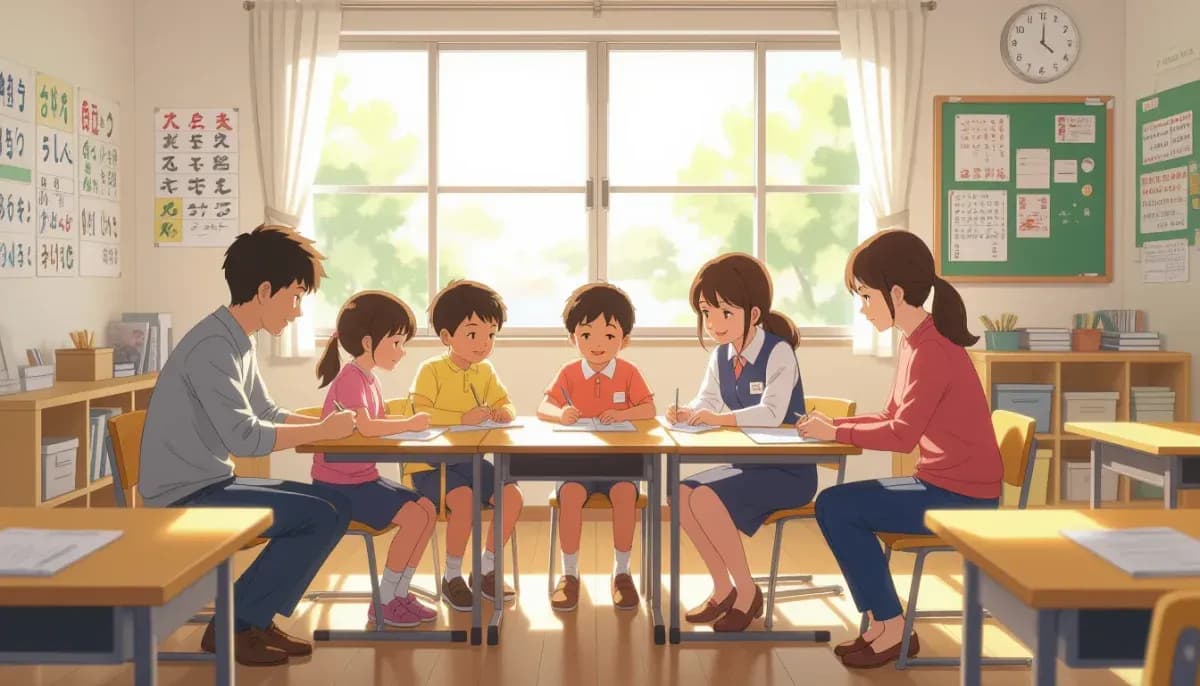
A complete guide for foreign parents on how special needs support works in Japanese public schools, how to enroll your child, and what resources are available for expat families.
Special Needs Support in Japanese Public Schools: A Guide for Foreign Families
Raising a child with special educational needs in a foreign country can feel overwhelming, especially when you're navigating an unfamiliar school system in a different language. Japan's public school system offers a surprisingly comprehensive framework of support for children with disabilities and developmental differences — and foreign children are legally entitled to access it on equal footing with Japanese nationals. This guide explains how special needs support works in Japanese public schools, how to access it as a foreign family, and what resources are available to help you advocate for your child.
Understanding Japan's Three-Tier Special Needs Support System
Japan's public school system addresses special educational needs through a structured three-tier model. Understanding where your child fits on this spectrum will help you know what to ask for when you speak with school administrators.
Tier 1: Inclusive Classroom with Team Teaching The first and most common level of support takes place inside regular classrooms. Schools assign a teaching assistant (支援員, shien-in) to work alongside the homeroom teacher, providing targeted assistance to students who need extra help. Students at this level attend all classes with their peers and receive individualized attention within the mainstream setting.
Tier 2: Resource Room (通級指導, Tsūkyū Shidō) Students who need more intensive intervention without leaving their mainstream class full-time may use the resource room system. A child pulls out of their regular class for several sessions per week to receive specialized instruction — in areas such as speech and language, emotional regulation, or academic skills — from a trained specialist teacher. The student otherwise remains fully enrolled in their regular class. This is one of Japan's most widely used tools for supporting children with mild learning disabilities, ADHD, and speech/language delays.
Tier 3: Special Needs Education Class (特別支援学級, Tokubetsu Shien Gakkyū) For children who need more consistent specialized support, public schools maintain dedicated special needs education classes within the school building. These classes are capped at a maximum of 8 students per teacher, allowing for intensive individual attention. Children in these classes may join their mainstream peers for subjects like music, art, and PE, while receiving core instruction in the smaller class setting. According to Japan's Ministry of Education, Culture, Sports, Science and Technology (MEXT), approximately 62% of Japanese public schools run at least one special needs education class.
It is important to know that Japan also operates dedicated Special Needs Schools (特別支援学校, Tokubetsu Shien Gakkō) for children with more significant needs. However, the vast majority — around 98% — of children with special needs in Japan attend regular public schools, not these dedicated institutions.
Who Qualifies for Support? Conditions Covered
MEXT estimates that approximately 6.5% of school-age children in Japan have some form of developmental disorder requiring educational support. The support system covers a broad range of conditions:
| Condition | Japanese Term | Support Level Typically Used |
|---|---|---|
| Learning Disabilities (LD) | 学習障害 (Gakushū shōgai) | Tier 1 or Tier 2 |
| ADHD | 注意欠陥多動性障害 | Tier 1 or Tier 2 |
| Autism Spectrum Disorder (ASD) | 自閉スペクトラム症 | Tier 2 or Tier 3 |
| Intellectual Disability | 知的障害 | Tier 3 or Special Needs School |
| Physical Disability | 肢体不自由 | Tier 1, 3, or Special School |
| Speech/Language Impairment | 言語障害 | Tier 2 |
| Visual or Hearing Impairment | 視覚・聴覚障害 | Tier 3 or Special School |
| Emotional/Behavioral Disorder | 情緒障害 | Tier 2 or Tier 3 |
Children may also receive support for combinations of the above. A child with ADHD who also has a language delay, for instance, may access both resource room sessions for language support and classroom-level support for attention.
How to Enroll Your Foreign Child and Request Assessment
Foreign children living in Japan are legally entitled to attend public school on the same terms as Japanese children. The enrollment process is the same regardless of nationality, and the right to special needs assessment and support applies equally to foreign students.
Step 1: Register your address When you move to a new area, register your family at the local city or ward office (市区町村役所). This registration (住民登録, jūmin tōroku) is required before you can access public services, including schools.
Step 2: Visit the Board of Education After registering, go to your local Board of Education office (教育委員会, kyōiku iinkai). Let them know you wish to enroll your child and, if your child has diagnosed or suspected special needs, mention this explicitly. The board will assign your child to a school based on your school district.
Step 3: Request an assessment Once enrolled, you can request that the school conduct an educational needs assessment. The school will consult with a team that typically includes teachers, the school's special needs coordinator (特別支援教育コーディネーター, tokubetsu shien kyōiku kōdinētā), and possibly an external advisor. Based on the assessment, the school will recommend the appropriate tier of support.
Step 4: Individual Education Support Plan Every student who receives special needs support at a regular school is entitled to an Individual Education Support Plan (個別の教育支援計画, kobetsu no kyōiku shien keikaku). This written document sets out the child's needs, goals, the support measures in place, and how progress will be reviewed. As a parent, you have the right to participate in developing this plan and to request revisions at regular review meetings.
For a broader overview of how public school enrollment works for foreign children, see our guide to elementary school in Japan for foreign parents and the complete overview of the Japanese education system for foreign families.
Finding Support Before or Outside of School: Key Resources
If you are concerned about your child's development before school age, or if you need support beyond what the school provides, several government-run and private resources are available.
Development Disability Support Centers (発達障害者支援センター) These are government-run centers found in every prefecture. They provide counseling, diagnostic referrals, and links to educational, welfare, and medical services for children and adults with developmental disabilities. Some centers offer multilingual support or can connect you with interpreters. This should be your first point of contact if you suspect your child has a developmental disability and you are not sure where to start.
TELL Counseling Center (Tokyo) TELL (Tokyo English Life Line) offers counseling and psychological assessments in both English and Japanese. If your child needs a formal assessment in a language other than Japanese, TELL is one of the most accessible options for expat families in the Tokyo area.
Litalico Junior (リタリコジュニア) Litalico Junior operates a nationwide network of after-school learning centers specifically for children with developmental differences. Their programs offer individualized curricula and trained specialists, and they work alongside school support plans. This is an excellent supplementary resource if your child needs more than what the public school can offer.
Musashino Higashi Gakuen Located in Tokyo, this school is internationally recognized for its autism education programs. For families whose children have significant needs on the autism spectrum and are looking for a more specialized academic environment, Musashino Higashi Gakuen is worth investigating.
National Rehabilitation Center for Children with Disabilities Located in Itabashi Ward, Tokyo, this national facility provides comprehensive assessment, medical treatment, and rehabilitation for children with disabilities. It is particularly useful for families who need multidisciplinary evaluations or specialized therapeutic services.
For more on navigating Japanese healthcare services for your child, including pediatric referrals and specialist consultations, visit our guide to healthcare and medical care for children in Japan. If your child is also experiencing emotional challenges related to school adjustment, our article on mental health and emotional wellbeing for foreign children in Japan provides additional guidance.
Language Barriers and Advocating for Your Child
One of the biggest challenges for foreign families is navigating the special needs support system in Japanese. Most communication from schools — including assessment results, support plans, and meeting notices — will be in Japanese only. Here are practical strategies for managing this:
- Bring a bilingual friend or advocate to school meetings. Many international parent networks, expat communities, and local foreigner support centers (外国人相談窓口) can help connect you with a volunteer interpreter.
- Request written documents so you can use translation tools or professional translators at your own pace. Schools are generally willing to provide documents in writing.
- Contact the municipal foreigner support desk (多文化共生センター or similar). Many city offices now have multilingual staff who can explain education rights and procedures.
- Use DeepL or Google Translate for initial communication with teachers, but for important meetings about your child's support plan, try to arrange a human interpreter when possible.
- Connect with other expat parents through platforms like Facebook groups (e.g., "Foreign Parents in Japan"), Meetup communities, or international school parent networks. Parents who have already been through the process are often the most practical source of guidance.
For language support strategies for your child inside the classroom, see our resources on teaching Japanese to foreign children and on raising bilingual children in Japan.
Practical Tips for Getting the Best Support
Based on the experience of expat parents who have navigated Japan's special needs system, here are the most important things to know:
Be specific and persistent in your requests. Japanese school culture tends toward consensus and caution. If you feel your child needs more support than what is being offered, it is acceptable — and necessary — to ask directly and repeatedly. Frame your requests in terms of your child's specific needs and goals.
Get diagnoses in writing before arriving or as early as possible. If your child was diagnosed overseas, bring official documentation translated into Japanese. A certified Japanese translation of a foreign diagnosis carries significant weight in assessment conversations.
Understand that placement is not permanent. A child's tier of support can and should be reviewed regularly. If your child progresses well in the resource room, they may move back to full mainstream support. If a child in Tier 1 is struggling, advocate for a move to Tier 2.
Connect with the school's special needs coordinator early. Every Japanese public school with special needs students is required to designate a coordinator. This person is your primary advocate within the school and can help bridge communication between you, the classroom teacher, and external specialists.
For more on navigating Japan's school systems as a foreign family, the comprehensive education guide at Living in Nihon is a valuable starting point.
Additional perspectives on special needs education in Japan for English-speaking parents can be found on Savvy Tokyo's special needs education guide and the official MEXT policy overview. For working parents navigating family life alongside career demands in Japan, For Work in Japan covers employment and work-life balance topics relevant to expat families. Study and exam support resources for school-age children can also be found at Chuukou Benkyou.
What to Expect: A Realistic Picture
Japan's special needs education system has made significant progress, particularly since the 2007 reform of the School Education Law, which replaced a fragmented network of single-disability schools with unified, multi-disability support schools. Funding for special needs education has grown steadily — per-student costs at dedicated special needs schools are approximately 10 times higher than at regular schools, reflecting the intensive resources involved.
That said, foreign families should be prepared for some friction. Not all schools have experience with foreign children who have special needs, and multilingual support is not guaranteed. However, the legal framework is on your side, and most schools — once they understand your child's needs — will make genuine efforts to provide appropriate support. The key is knowing your rights, asking clearly for what your child needs, and building relationships with the school staff who work directly with your child.
Japan had 1,178 dedicated special needs schools as of May 2023, a figure that reflects growing recognition of the importance of specialized educational environments. At the same time, the strong emphasis on inclusion within regular schools means that most children — including those with significant needs — will spend at least part of their school day learning alongside their neurotypical peers. This inclusive approach benefits all children and reflects a broader shift in Japanese educational philosophy toward diversity and belonging.
If you are just starting to navigate family life in Japan more broadly, our complete guide to the Japanese education system for foreign families and the overview of government benefits and subsidies for families in Japan provide additional context for the support structures available to you.
Conclusion
Japan's public school system offers a structured and legal framework for supporting children with special educational needs — and foreign families have the same rights to access this system as Japanese families. The path starts with knowing the three tiers of support available, understanding how to enroll and request an assessment, and connecting with both school-based coordinators and community resources. While language barriers are real, they are not insurmountable, and a growing network of multilingual resources and expat parent communities can help you advocate effectively for your child. With persistence and the right information, your child can receive meaningful support within Japan's public school system.

Originally from Vietnam, living in Japan for 16+ years. Graduated from Nagoya University, with 11 years of professional experience at Japanese and international companies. Sharing practical information for foreign parents raising children in Japan.
View Profile →Related Articles
Inclusive Education Movement and Progress in Japan
Discover the state of inclusive education in Japan — from legal frameworks and school options to UN criticism and practical advice for foreign families with children with disabilities.
Read more →
English-Language Special Needs Resources in Japan
A complete guide to English-language special needs resources in Japan for expat families, covering education support, therapy services, disability certificates, financial aid, and parent communities.
Read more →
Advocating for Your Special Needs Child in Japanese Schools
A complete guide for foreign parents on navigating Japan's special needs education system — from understanding the three-tier support structure to effective advocacy strategies, English-language resources, and financial assistance.
Read more →
Therapy and Intervention Services for Children in Japan
Complete guide to therapy and intervention services for children in Japan. Find English-language speech therapy, mental health support, and early intervention programs for expat families.
Read more →
Government Support and Benefits for Special Needs Families
Complete guide to government support for special needs families in Japan: disability certificates, cash allowances up to ¥58,450/month, healthcare subsidies, school support, and welfare services for foreign residents.
Read more →
International Schools for Children with Special Needs
A complete guide to international schools and support services for children with special needs in Japan. Learn about inclusive schools, learning support teams, resources for expat families, and how to navigate the admissions process.
Read more →