
Academic Pressure in Japanese Junior High Schools

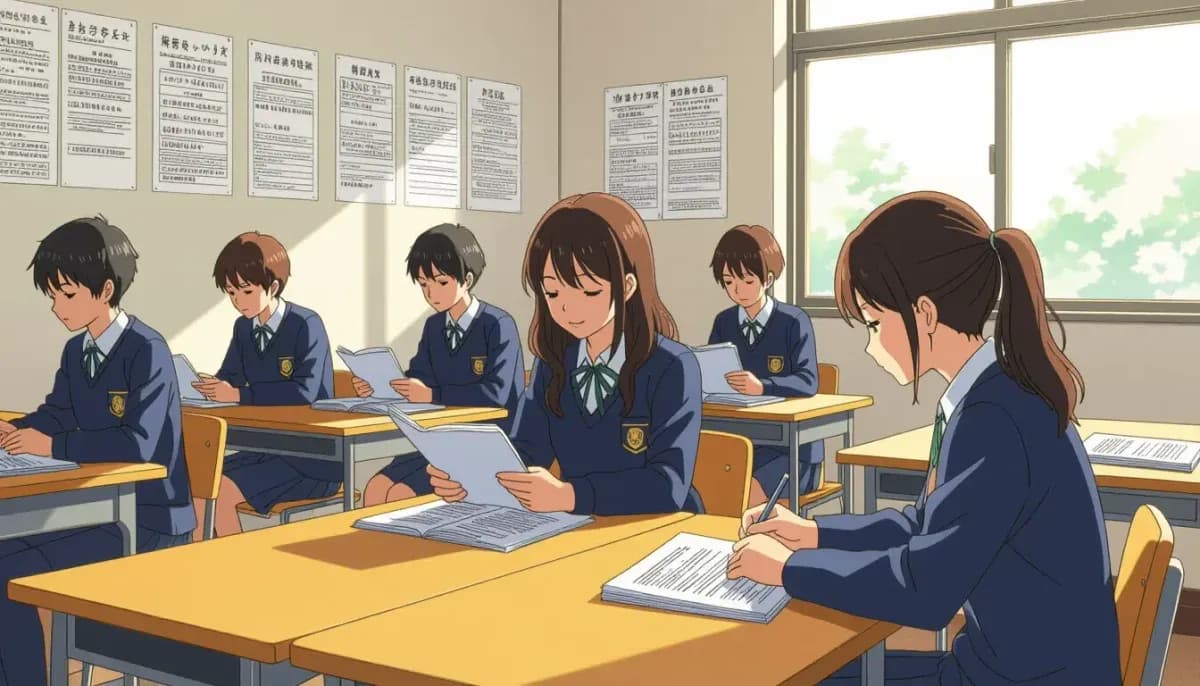
Understand academic pressure in Japanese junior high schools: entrance exams, juku cram schools, mental health impacts, and practical coping strategies for foreign families raising children in Japan.
Academic Pressure in Japanese Junior High Schools: What Every Foreign Family Needs to Know
Japanese junior high school — known as chuugakkou (中学校) — is widely regarded as one of the most academically intense periods in a young person's life in Japan. For foreign families raising children in Japan, understanding the pressures your child may face during these three critical years (grades 7 through 9, ages 12–15) is essential to providing the right support. From relentless exam preparation to after-school cram schools and packed club activity schedules, the academic pressure in Japanese junior high schools can come as a shock — even to families already familiar with Japan's education system.
This guide breaks down the reality of academic pressure in Japanese junior high, why it exists, how it compares to other education systems, and most importantly, practical strategies to help your child thrive.
Why Academic Pressure Peaks in Junior High School
Japan's famous 6-3-3 school system (6 years of elementary, 3 years of junior high, 3 years of high school) places junior high school at a critical crossroads. At the end of 9th grade, every student must pass a high school entrance examination to gain admission to senior high school. Unlike many Western countries where public high school attendance is automatic, Japan requires students to apply and qualify for high school — meaning the entire three years of junior high school effectively serves as preparation for that defining test.
High school entrance exams, typically held in February and March of the student's third year, cover the full three-year curriculum in core subjects: Japanese language, mathematics, English, science, and social studies. The results determine which high school a student can attend, and the high school tier significantly influences university admission prospects and, ultimately, career trajectory. This chain of consequences — junior high scores → high school tier → university → career — creates a pressure system that begins accumulating from the very first day of 7th grade.
Research confirms that for many Japanese middle school students, high school entrance examination preparation is one of the most significant stressors of adolescence. Tokyo Weekender's deep dive into juken culture explores how this exam pressure shapes family life across Japan.
The Role of Juku: Japan's Cram School Culture
One of the most visible signs of academic pressure in Japanese junior high is the widespread attendance at juku (塾), or cram schools. Approximately 60% of Japanese junior high students attend juku alongside their regular school day. These are private, after-school tutoring centers that focus on drilling exam content, strengthening weak subjects, and pushing students to practice at a higher level than what's covered in school.
A typical junior high student attending juku may leave home around 7:30 AM for school, finish regular classes at around 3:30–4:00 PM, head to juku, and not return home until 9:00–10:00 PM — with homework still waiting. This schedule is considered entirely normal in Japan, particularly in the final year before high school entrance exams.
| Type of Support | What It Provides | Typical Cost (Monthly) |
|---|---|---|
| Regular Juku (academic tutoring) | Exam prep across core subjects | ¥20,000–¥80,000 |
| Private Tutor (家庭教師) | One-on-one subject support | ¥15,000–¥50,000/hr |
| Online Study Programs | Self-paced digital learning | ¥5,000–¥20,000 |
| In-School Remedial Support | Free, limited scope | Free |
For families weighing these costs, the financial planning guide for expat families in Japan provides broader context on education-related budgeting.
Mental Health Impacts: The Data Behind the Pressure
The academic pressure in Japanese junior high schools is not just a cultural perception — it has measurable effects on student mental health. According to data from Japan's National Center for Child Health and Development, approximately 24% of junior high school students show symptoms of depression at a moderate or higher level. Additionally, approximately 6% of students from 4th grade onward reported having considered self-harm or suicide.
These statistics highlight a serious concern: the system's emphasis on academic performance and group conformity leaves limited space for children to express struggle, seek help, or deviate from expectations. Japan has a strong cultural norm around not showing weakness publicly, which means many struggling students suffer in silence.
School counselor resources remain critically underfunded relative to need. Despite growing awareness of youth mental health, government investment in school-based mental health services has not kept pace, resulting in insufficient counseling staff to provide regular prevention and intervention. For foreign children facing both academic pressure and language and cultural adjustment challenges, this gap in support can be especially acute. The mental health and emotional wellbeing guide for foreign children covers this topic in depth.
For more on understanding the full scope of Japan's education structure, see The Complete Guide to the Japanese Education System for Foreign Families.
Club Activities (Bukatsu): Time Pressure on Top of Academic Load
Adding to the academic burden is Japan's deeply ingrained culture of bukatsu (部活), or after-school club activities. In junior high, club membership is nearly universal and carries strong social expectations — not joining a club is unusual and can lead to social isolation.
Sports clubs (baseball, soccer, volleyball, basketball, tennis, swimming) typically practice daily after school and often on Saturday mornings, with tournaments or matches on Sundays. Cultural clubs (music, art, calligraphy, science) are generally less demanding but still require regular attendance.
In recent years, Japan's Sports Agency introduced guidelines capping club activities at 2 hours on school days and 3 hours on holidays, with at least 2 rest days per week. As a result, by 2021, only 14.5% of junior high sports clubs practiced both Saturday and Sunday, down from nearly 50% in 2017 — a meaningful but still imperfect improvement.
The combined load of academic study, juku attendance, and bukatsu participation can make a junior high student's schedule more packed than many working adults'. Learning how to manage this time is itself a critical skill that junior high forces students to develop.
How Foreign Students Experience Academic Pressure Differently
Foreign children navigating Japanese junior high face an additional layer of challenge: many are simultaneously learning the Japanese language while trying to keep up with an academically rigorous curriculum taught entirely in Japanese. This double burden — language acquisition alongside exam preparation — can make academic pressure feel overwhelming in ways that Japanese-born peers simply don't experience.
There are, however, important accommodations available. Foreign students who have been in Japan for 3 years or less are typically eligible for the following when taking high school entrance exams:
- Extended time on examinations
- Furigana (phonetic reading guides) printed alongside kanji
- Use of a Japanese dictionary during the test
- Specialized enrollment pathways at many high schools
These accommodations can make a significant difference. It's crucial to confirm with your child's school guidance counselor what provisions are available in your prefecture, as policies vary by region.
For a detailed look at what to expect and how to prepare for the junior high experience, see Junior High School in Japan: Guide for Foreign Families.
You may also want to review the guide to international schools in Japan as an alternative or supplementary option during particularly high-pressure years.
The Living in Nihon guide to raising children in Japan also provides comprehensive advice on navigating school choices and supporting children through Japan's education system as a foreign family.
Coping Strategies: Supporting Your Child Through Junior High Academic Pressure
Understanding the pressure is the first step; providing practical support is the next. Here are evidence-based and culturally-informed strategies for helping your child manage academic pressure in Japanese junior high.
1. Normalize Open Conversations About Stress
In Japan, discussing personal struggles openly is uncommon, particularly among children and teens. As a foreign family, you may have the cultural advantage of creating a home environment where your child can express anxiety, burnout, or frustration without shame. Regular, casual check-ins — not interrogations about grades — build the trust needed for your child to come to you when pressure spikes.
2. Help Structure a Sustainable Study Schedule
Rather than leaving all study planning to your child or to a juku's schedule, collaborate on a weekly timetable that includes protected time for rest, hobbies, physical activity, and family connection. Sleep deprivation is a common problem among high-pressure junior high students in Japan; protecting 8–9 hours of sleep per night should be non-negotiable.
3. Evaluate Juku Attendance Thoughtfully
Not every child needs juku, and not all juku are equal. Some children thrive with the structure; others find it adds stress without adding value. If your child is already performing at grade level and managing well, consider skipping juku or using lighter online alternatives. If you do choose juku, involve your child in selecting one that fits their learning style. For exam prep resources and strategies, Chuukou Benkyou's guide on middle school vs. high school entrance exam choices is a detailed resource on understanding the options.
4. Watch for Warning Signs of Burnout
Burnout in junior high students may look like: persistent fatigue, loss of interest in previously enjoyed activities, increased irritability, physical complaints without clear cause (headaches, stomach aches), declining grades despite studying more, or withdrawal from friends and family. If you observe these signs, consult the school counselor and consider seeking outside support.
5. Leverage Cultural Adjustment as a Strength
Foreign children often develop remarkable resilience through navigating cultural and language differences. This resilience — the ability to adapt, to persist in unfamiliar environments — is a genuine asset when it comes to managing academic pressure. Help your child recognize their own strength by reflecting on how far they've come.
For more on supporting your child's emotional journey in Japan, see the resource on raising bilingual children in Japan and guidance on cultural identity for hafu and mixed-race children.
The For Work in Japan resource hub also has broader resources on family life in Japan that can support parents in understanding the cultural context around education and achievement.
Looking Ahead: From Junior High to High School
The stakes of junior high academic pressure ultimately point toward high school entrance. Understanding the landscape of high school options in Japan — public schools, private schools, and specialized technical programs — helps families make informed decisions well before 9th grade. For detailed guidance, see High School in Japan: Options and Guidance for Foreign Families.
The Think Global People guide to education in Japan for expat families provides an excellent overview of how the Japanese school pathway fits into broader expat family planning.
Additionally, staying current on financial support available — including Japan's 2024 child allowance expansion, which extended coverage through high school and eliminated income restrictions — can ease the burden of juku and exam preparation costs. See the government benefits and subsidies guide for more.
Final Thoughts
Academic pressure in Japanese junior high schools is real, pervasive, and — if not actively managed — can take a serious toll on young people's mental health and wellbeing. For foreign families in Japan, the combination of this systemic pressure with language and cultural adjustment can feel particularly intense. But with the right support structures, realistic expectations, and open communication, your child can navigate these years not just successfully, but with a genuine sense of accomplishment and resilience.
The goal is not to eliminate challenge — it's to ensure your child has the tools to meet it without losing themselves in the process.

Originally from Vietnam, living in Japan for 16+ years. Graduated from Nagoya University, with 11 years of professional experience at Japanese and international companies. Sharing practical information for foreign parents raising children in Japan.
View Profile →Related Articles
Part-Time Rules and Responsibilities for Junior High Students
Can junior high school students work part-time in Japan? Learn the legal restrictions, school regulations, and what foreign families need to know about teen employment rules in Japan.
Read more →
Preparing for High School Entrance Exams in Japan
Complete guide for foreign families preparing for Japanese high school entrance exams (koukounyuushi). Covers special provisions for foreign students, naishinsho, juku, study strategies, and exam timeline.
Read more →
Student Council and Leadership in Japanese Junior High
A complete guide to student council (seitokai) in Japanese junior high schools — how elections work, leadership roles, responsibilities, and how foreign children can participate in school governance.
Read more →
Technology and Computer Education in Junior High Japan
Discover how technology and computer education works in Japanese junior high schools. Learn about Gijutsu Katei, the GIGA School Program, mandatory programming, and what foreign families can expect.
Read more →
English Education in Japanese Junior High Schools
Comprehensive guide to English education in Japanese junior high schools: curriculum, ALT teachers, proficiency data, tips for foreign families, and entrance exam preparation advice.
Read more →
Private Junior High School Entrance Exams in Japan
Everything foreign families need to know about private junior high school entrance exams in Japan: subjects, competition ratios, returnee pathways, costs, and how to prepare.
Read more →