
Balancing Digital and Outdoor Activities for Children

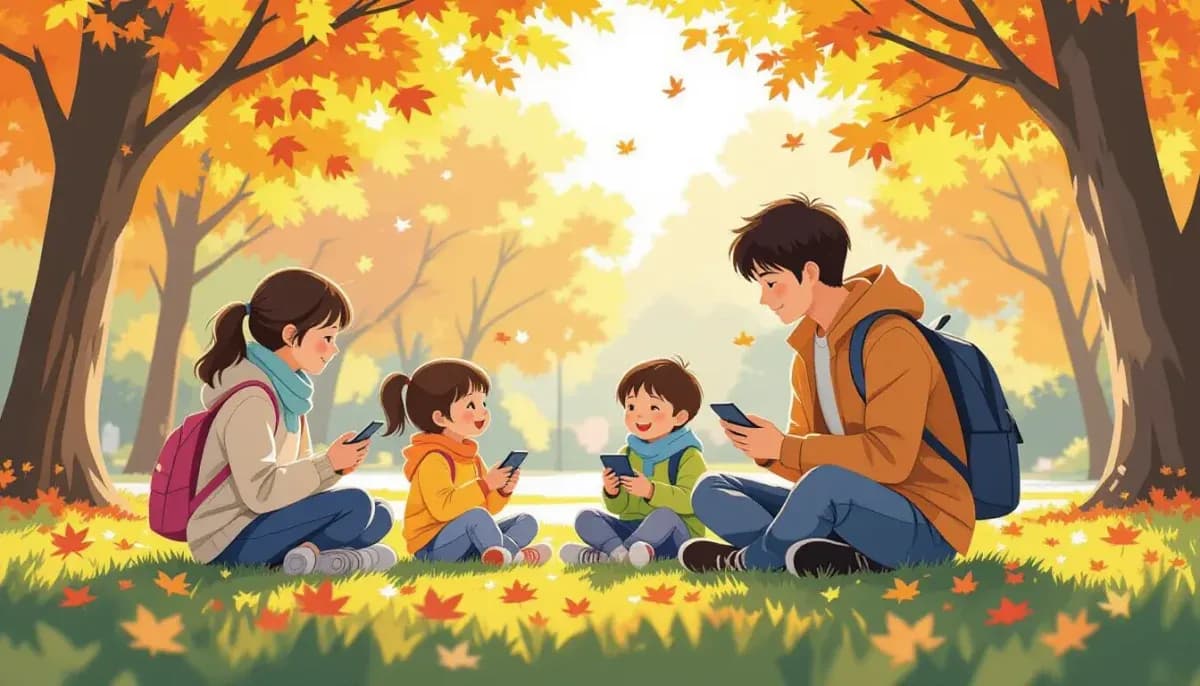
Practical guide for expat families on balancing screen time and outdoor play in Japan. Research-backed strategies, Japanese seasonal activities, and school-level tips for raising healthy, balanced children.
Balancing Digital and Outdoor Activities for Children in Japan
Raising children in Japan as a foreign parent comes with a unique set of challenges and opportunities — and one of the most pressing questions modern expat families face is how to balance screen time with outdoor play. Japan's hyper-connected digital culture coexists with a deep tradition of outdoor education, seasonal festivals, and community play. Finding that equilibrium matters more than ever: research consistently shows that children who spend more time outdoors have better developmental outcomes, while those glued to screens may fall behind in communication, motor skills, and social development.
This guide is written specifically for foreign families raising children in Japan, offering practical, research-backed strategies to help your kids thrive — digitally savvy and physically active.
Understanding Screen Time Among Children in Japan
Japan has some of the most robust research on children's screen time in the world, and the findings should inform every parent's approach. According to the Japan Environment and Children's Study (JECS), a landmark cohort of 57,980 children, 26% of 1-year-olds watched TV or videos for 2+ hours daily — and that figure rose to 30% by age 3. Among elementary school children in grades 4–6, nearly 30% exceeded 3 hours of screen time per day, with boys significantly higher than girls (34.9% vs. 24.8%).
Perhaps most striking is the developmental impact. Children with more than one hour of daily screen time at age 1 showed measurably lower scores in communication, motor skills, and personal-social development by age 2. This bidirectional relationship — where screens reduce development, and developmental delays increase screen use — makes early intervention critical.
For expat families, understanding these trends is the first step. Japan's rich research base, including studies published in JAMA Pediatrics and the Journal of Environmental Medicine, gives you a solid foundation for making informed decisions. For a broader overview of raising children as a foreigner in Japan, see our guide on the Japanese education system for foreign families.
Japan's Outdoor Play Tradition: A Resource for Expat Families
Japan's educational philosophy has long valued outdoor play as essential to childhood development. The national curriculum for hoikusho (nursery schools) and yochien (kindergarten) explicitly includes structured outdoor time, seasonal nature activities, and community play. Events like undokai (sports day) and ensoku (school excursions) are foundational to Japanese childhood — and your children, as students in the Japanese system, will benefit from these too.
Outdoor activities in Japan offer:
- Structured nature play through school programs (satoyama activities, gardening, nature walks)
- Neighborhood parks and adventure playgrounds (bōken asobi-ba) available in most cities
- Community sports clubs (yakyu, soccer, swimming) which run year-round at low cost
- Seasonal traditions like cherry blossom picnics, firefly viewing, autumn leaf gathering, and snow play
- After-school programs (gakudou) that often include outdoor components
Research from MDPI's Sustainability journal confirms that outdoor playtime among Japanese preschoolers is strongly protective — children who go outside regularly have lower screen time and higher developmental scores, even controlling for urban or rural setting.
If you're still navigating the childcare options available to your family, our detailed guide on daycare and hoikuen in Japan for foreign parents explains how to access these outdoor-rich programs.
Setting Effective Screen Time Rules: What the Research Shows
Here's the most actionable finding from Japan's screen time research: family rules work. A study of over 13,000 Japanese elementary schoolchildren found that 82% of Japanese families had explicit rules limiting screen time — far higher than the US (60.9%) or Czech Republic (36.1%). Children in homes without rules were 2.41 times more likely to have excessive screen time.
This is good news for expat parents. It means you can take a clear, firm stance on screen time — and you'll be aligned with mainstream Japanese parenting culture, not swimming against it.
Recommended Screen Time Guidelines
| Age Group | WHO/AAP Recommendation | Notes for Japan |
|---|---|---|
| Under 2 years | No screen time (video calls excepted) | Japan JECS data: 26% of 1-year-olds exceed this |
| 2–5 years | Max 1 hour/day, high-quality content only | Prioritize Japanese-language educational content if learning language |
| 6–12 years | Consistent limits, balance with sleep/exercise | School homework apps may require screen time — factor in separately |
| Teenagers | Negotiate limits; ensure sleep isn't disrupted | Japan WEF 2025 report highlights rising smartphone addiction risk |
Parental behavior matters just as much as rules. A Japanese study on parental internet use found that fathers who used the internet 2+ hours/day made their children 2.35 times more likely to have excessive screen time — and mothers' usage was even more influential (OR 2.55). Modeling the behavior you want to see is not cliché — it's science.
For additional reading on how children's emotional health connects to screen habits, see our article on mental health and emotional wellbeing for foreign children in Japan.
Practical Strategies for Digital-Outdoor Balance in Japan
Balancing screens and outdoor play in Japan is both a parenting philosophy and a practical scheduling challenge. Here are strategies that work for expat families living in Japanese cities, suburbs, and rural areas alike.
1. Use Japan's Seasonal Calendar as Your Framework
Japan's four distinct seasons offer a natural rhythm for outdoor engagement. Plan outdoor activities around each season's traditions rather than fighting against homework or screen pressure:
- Spring (March–May): Hanami (cherry blossom) picnics, school sports days, cycling along rivers
- Summer (June–August): Festivals (matsuri), pool days, insect collecting (a beloved Japanese childhood tradition), camping
- Autumn (September–November): Momiji (maple leaf) viewing, hiking, school cultural festivals
- Winter (December–February): Snow play, kite flying, hatsumoude (New Year shrine visits)
2. Leverage Japan's Community Sports and Activity Infrastructure
Japan's sports club culture (bukatsu for school-age children, or community clubs for younger kids) is an excellent, affordable way to guarantee structured outdoor time. Swimming lessons, soccer, baseball, martial arts, and dance are widely available, often starting from as young as age 3. For expat families, these clubs also accelerate Japanese language acquisition and social integration.
3. Create a Family Screen Agreement
In Japan, schools increasingly send home "media contracts" asking parents and children to agree on screen time rules. Adopt this approach at home by creating a simple written agreement that covers:
- Total daily screen time limits per day (weekday vs. weekend)
- Approved content categories (education, entertainment, gaming)
- Screen-free zones (dining table, bedrooms after 9 PM)
- Outdoor activity requirements before screen time begins
- Consequences for violations — agreed in advance by the child
4. Use Educational Apps Strategically
Not all screen time is equal. Japanese children have access to excellent educational digital tools, including apps for learning kanji, practicing math, and exploring science. Apps like Gakken's educational titles, NHK for School (free, curriculum-aligned content), and Duolingo (for heritage language maintenance) can make screen time productive. For families raising bilingual children, see our guide on raising bilingual children in Japan.
Navigating Screen Time and Outdoor Balance Across School Levels
The right approach changes as children grow. Here's how to adapt your strategy at each stage of Japan's school system.
Infants and Toddlers (0–3)
This is the highest-risk period for screen time developmental impact, per JECS research. Keep screens minimal. Instead, prioritize sensory outdoor play — sandboxes, water play, parks, and walks in a baby carrier. Japan's hoikusho (daycare) system provides excellent outdoor play structure if you enroll early. Our guide on toddler parenting in Japan for ages 1–3 has more practical advice.
Kindergarten (3–6)
Japanese yochien and kindergarten are structured to include significant outdoor play — up to 2–3 hours per day in many programs. Complement school outdoor time with weekend nature outings. Limit home screen time to 30–60 minutes of high-quality content. See our detailed guide on kindergarten (yochien) in Japan for foreign parents.
Elementary School (6–12)
Homework and academic pressure begin to compete with outdoor time at this stage. Work with your child to schedule outdoor activity as a non-negotiable daily block — even 30 minutes of park play after school makes a measurable difference. Our guide on elementary school in Japan for foreign parents covers the academic expectations you'll need to plan around.
Junior High and High School (12+)
Japan's smartphone addiction risk spikes significantly in this age group — the World Economic Forum has flagged Japan as a country of concern. Teenagers in Japan face enormous academic pressure, especially around high school entrance exams. Create space for daily outdoor exercise (even commuting by bicycle counts), and maintain device-free evenings. Our guides on junior high school in Japan and high school in Japan provide context on what your teen is navigating academically.
External Resources and Further Reading
Building a healthy digital-outdoor balance isn't something you figure out alone. These resources are valuable for expat families in Japan:
- Living in Nihon: Raising Children and Education in Japan Guide — comprehensive overview of parenting in Japan for foreigners
- For Work in Japan: Family Life in Japan for Foreigners — practical guide to family logistics in Japan
- Chuukou Benkyou: Exam Student Lifestyle and Health Management — useful for families with children approaching middle or high school entrance exams
- Japan Handbook: Daycare and Kindergarten Options for Expat Families — practical guide to childcare enrollment
Conclusion
Balancing digital and outdoor activities for your children in Japan is both simpler and more important than many parents realize. The research is clear: outdoor play protects children's development, family rules around screens work, and parental modeling matters more than any app or parental control software.
Japan's culture and infrastructure — from hoikusho outdoor programs to neighborhood sports clubs to seasonal outdoor traditions — gives expat families remarkable tools for building healthy habits. Combine these resources with clear family agreements, strategic use of educational technology, and age-appropriate adjustments as your children grow, and you'll raise kids who are both digitally literate and genuinely connected to the world around them.
For more guidance on raising children in Japan, explore our full pillar on the Japanese education system for foreign families or learn about heritage language maintenance for your children.

Originally from Vietnam, living in Japan for 16+ years. Graduated from Nagoya University, with 11 years of professional experience at Japanese and international companies. Sharing practical information for foreign parents raising children in Japan.
View Profile →Related Articles
Impact of Technology on Child Development in Japan
A comprehensive guide for foreign parents on screen time, AI use, and digital education in Japan. Backed by Japanese research data and practical parenting tips for expat families.
Read more →
Coding and Programming Classes for Kids in Japan
Find the best English-friendly coding classes for kids in Japan. Compare Tokyo Coding Club, Little Hackers, Coding Lab Japan, and more — with prices, ages, and enrollment tips for foreign families.
Read more →
Parental Controls and Monitoring Tools Available in Japan
Complete guide to parental controls and monitoring tools for families in Japan. Covers Apple Screen Time, Google Family Link, LINE safety, Japanese regulations, and expert tips for foreign parents raising kids in Japan.
Read more →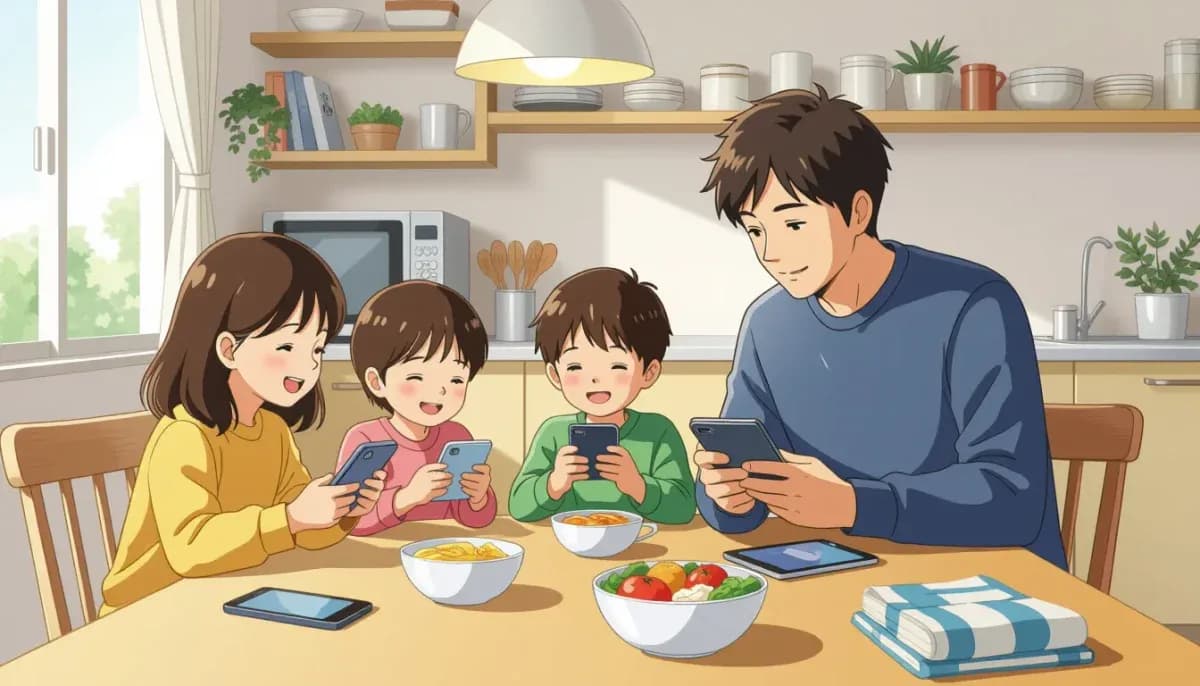
Cyberbullying Prevention and Online Safety for Kids
Learn how to protect your child from cyberbullying in Japan. Covers warning signs, laws, English-language resources, and practical online safety rules for foreign families.
Read more →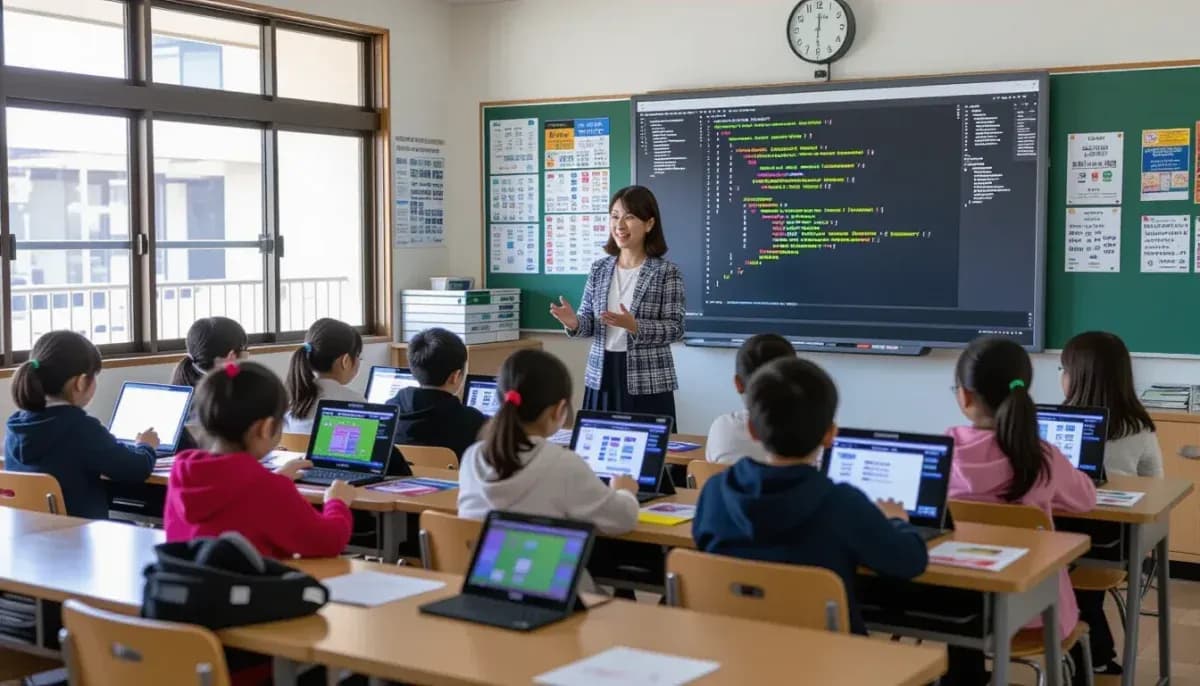
Digital Literacy Education in Japanese Schools
Complete guide to digital literacy education in Japanese schools for foreign families. Covers GIGA School initiative, mandatory programming, Information I entrance exam, and tips for expat children.
Read more →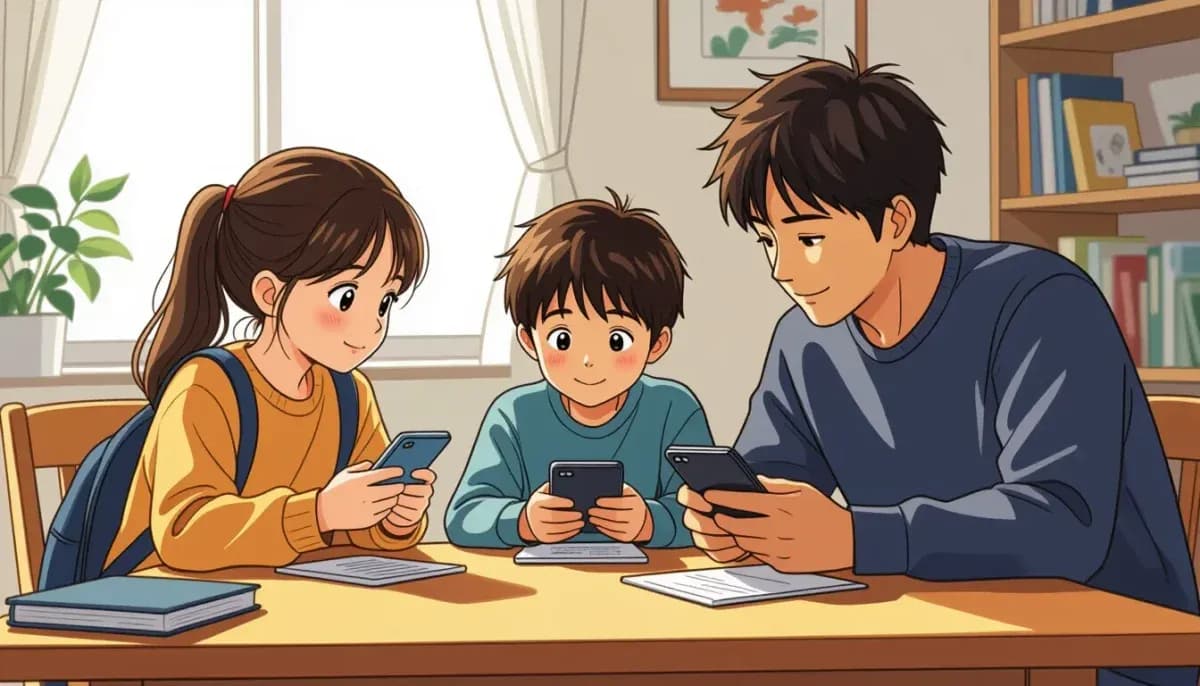
Smartphone Rules and Policies for Children in Japan
Complete guide to smartphone rules and policies for children in Japan — school bans, regional ordinances, screen time data, and practical tips for foreign families navigating Japanese digital culture.
Read more →