
Cyberbullying Prevention and Online Safety for Kids

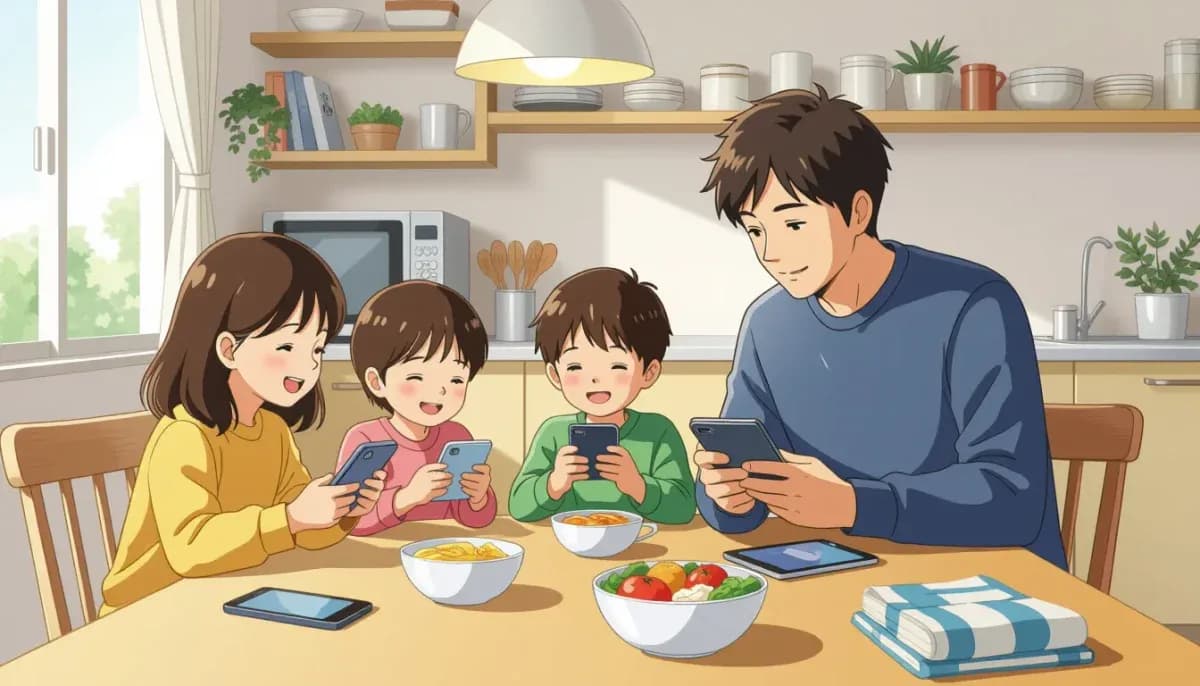
Learn how to protect your child from cyberbullying in Japan. Covers warning signs, laws, English-language resources, and practical online safety rules for foreign families.
Cyberbullying Prevention and Online Safety for Kids in Japan: A Complete Guide for Foreign Families
Japan's children are among the most connected in the world — and that brings real risks. With 98.7% of Japanese minors between ages 10 and 17 using the internet and 83.2% owning smartphones, the digital landscape is a daily part of your child's life. For foreign families navigating Japan's school system, understanding cyberbullying prevention and online safety is not optional — it's essential.
In FY2024, Japan's Ministry of Education reported a record 769,022 total bullying cases across all school levels, with approximately 23,920 of those classified as cyberbullying in recent data. This guide explains what cyberbullying looks like in Japan, how to protect your child, what laws exist to help, and where to get support as a foreign family.
What Is Cyberbullying in Japan? Understanding "Net Ijime"
In Japan, cyberbullying is often called "net ijime" (ネットいじめ) or "online harassment". Japan's Ministry of Education (MEXT) explicitly includes online harassment in its official definition of bullying (ijime), meaning schools are legally obligated to address it.
Common forms of cyberbullying among Japanese children include:
- Exclusion from group LINE chats — Being deliberately removed from class or club LINE groups is one of the most common forms of social exclusion in Japan. LINE is used by 95% of youth ages 10–19.
- Slanderous posts on social media — Insulting comments on Instagram, TikTok, or X (Twitter) about a specific student
- Sharing photos or personal information without consent — Posting someone's address, photos, or embarrassing content
- Repeated insulting messages — Harassment via direct messages, often in group settings
- Fake profiles — Creating accounts pretending to be another student to damage their reputation
What makes Japanese cyberbullying particularly complex is that victims usually know their tormentors — most cases involve classmates, not strangers. About 80% of victims are targeted by groups rather than individuals.
The Scale of the Problem: Cyberbullying Statistics in Japan
Understanding the scope of cyberbullying in Japan helps foreign parents recognize that this is a systemic issue, not just isolated incidents.
| Indicator | Data |
|---|---|
| Total bullying cases (FY2024) | 769,022 (record high, +5% YoY) |
| Serious bullying cases (FY2024) | 1,405 |
| Cyberbullying cases by schools (FY2022) | ~23,920 |
| Middle school cyberbullying cases | ~11,400 (largest share) |
| Elementary school cyberbullying cases | ~9,690 |
| Internet usage among minors 10–17 | 98.7% |
| Smartphone ownership among minors | 83.2% |
| Average daily online time (high schoolers) | 6 hours 14 minutes |
| Cybervictimization rate (Kyoto study) | 12.5% of elementary students |
| Cyberbullying perpetration (Kyoto study) | 10.6% of elementary students |
Research by Japan's National Institute for Educational Policy Research shows that cyberbullying peaks during middle school (ages 12–14), though elementary school cases have risen sharply in recent years.
For more on the broader school environment, see our guide on Junior High School in Japan for Foreign Families and our overview of the Elementary School in Japan for Foreign Parents.
Warning Signs Your Child May Be a Victim
Children rarely volunteer that they are being cyberbullied. As a parent — especially a foreign parent who may not be plugged into the local school social network — you'll need to watch for behavioral clues.
Behavioral warning signs:
- Sudden reluctance to go to school or attend club activities
- Loss of friendships or withdrawal from social activities
- Becoming secretive or anxious when using devices
- Excessive phone preoccupation or, conversely, suddenly avoiding their phone entirely
- Unexplained physical symptoms (stomachaches, headaches before school)
- Changes in mood, especially after being online
- Silence when asked about school or friends
Online warning signs:
- Deleting accounts or asking to change phone numbers
- Refusing to show you messages or social media
- Upset or distressed after using their device
If you notice these signs, stay calm and keep communication open. Children who feel they will be punished for what happened online are less likely to report cyberbullying. Fewer than 25% of bullying victims in Japan tell their homeroom teacher.
Japan's Legal Framework for Cyberbullying Protection
Japan has steadily strengthened its legal response to cyberbullying over the past decade, and foreign families should be aware of their rights within this system.
Key legislation:
- 2013 Ijime Prevention Methods Promotion Law (Act 71): Requires schools to investigate bullying cases, report serious cases to local education boards, develop prevention programs, and provide staff training. Schools have a legal duty of care.
- 2021 Amendments to Online Harassment Laws: Triggered by the 2020 death of professional wrestler Hana Kimura following intense social media harassment, these amendments streamlined court proceedings for cyberbullying victims to identify anonymous offenders.
- 2024 Information Distribution Platform Act: Requires large social media platforms operating in Japan to remove illegal content more swiftly.
- Mobile Carrier Filtering Law (2008): Requires mobile carriers to implement content filtering for users under 18 by default.
Additionally, Instagram launched Teen Accounts in Japan in January 2025 — private-by-default profiles with restricted messaging for users under 17, reflecting growing regulatory pressure on platforms.
For more on legal rights and protections for foreign families in Japan, see our article on Visa and Legal Issues for Foreign Families with Children in Japan.
Practical Online Safety Rules for Children in Japan
Japan's schools often set specific rules around device use that differ from what many foreign families are accustomed to. Understanding and extending these rules at home creates consistency.
School-recommended rules (commonly used across Japanese schools):
- No phone use during meals or study time
- 9 p.m. device curfew (devices charged in a common area, not bedrooms)
- Content filters applied on all school-registered devices
- Never share phone numbers or home addresses online without parental permission
- Never agree to meet someone in person that you only know online
- "Consider how your message will be received before you send it"
- Do not participate in messaging groups you are pressured into joining
Rules to implement at home:
- Establish a family media agreement — Write down agreed rules and post them somewhere visible
- Keep devices in common areas — Avoid allowing children to use phones or tablets in private
- Enable parental controls — Use built-in screen time settings on iOS/Android and carrier-level filtering
- Review privacy settings — Set all accounts to private; check who follows your child on each platform
- Know your child's platforms — The most-used platforms by Japanese youth 10–19 are LINE (95%), YouTube (94.3%), Instagram (72.9%), TikTok (70%), and X/Twitter (65.7%)
- Model good digital behavior — Children mirror how adults behave with devices
Platform-specific guidance on Instagram's Teen Accounts feature and tools for protecting kids online is covered in resources from Nippon.com's digital child safety research.
What to Do If Your Child Is Being Cyberbullied
If your child is being cyberbullied in Japan, take systematic action. Acting quickly and with documentation is essential in the Japanese system.
Step 1: Stay calm and listen Your child needs to know they are not in trouble. Validate their feelings before asking questions. If they feel blamed or shamed, they may shut down.
Step 2: Document everything Take screenshots of all offensive messages, posts, or accounts. Note dates, times, and platforms. This documentation is essential for school and, if needed, police involvement.
Step 3: Report to the school Contact your child's homeroom teacher (担任, tantou) and, if needed, escalate to the principal. Japan's 2013 Bullying Law requires schools to formally investigate. Request a written record of their response.
Step 4: Use platform reporting tools Report the harassing content directly to the platform (LINE, Instagram, TikTok, etc.). Platforms are required under the 2024 law to respond more quickly to removal requests involving minors.
Step 5: Contact support services You do not have to navigate this alone, especially as a foreign family. See the support resources listed below.
Step 6: Consider police involvement (for serious cases) If threats, extortion, or sharing of private images is involved, cyberbullying may constitute a criminal offense under Japan's Penal Code or the Act on Punishment of Activities Relating to Child Prostitution and Child Pornography. The 2021 amendments make it easier to identify anonymous offenders.
For more on supporting your child's emotional health through difficult experiences, see our article on Mental Health and Emotional Wellbeing for Foreign Children in Japan.
English-Language Support Resources in Japan
One of the greatest challenges for foreign families in Japan is accessing support in their own language. Fortunately, several organizations offer English-language assistance.
| Resource | Contact | Details |
|---|---|---|
| TELL Lifeline | 0800-300-8355 | English counseling, 9 a.m.–11 p.m. daily |
| Tokyo Metro Education Consultation | 03-3360-4175 | English support, Fridays 1–5 p.m. |
| Childline Japan | 0120-99-7777 | For children, available daily |
| MEXT Bullying Consultation | Via school/BOE | Japanese-language, request an interpreter |
| Savvy Tokyo Bullying Guide | savvytokyo.com | English-language expat resource |
| TELL Japan Bullying Resources | telljp.com | English-language support for foreigners in Japan |
Living in Nihon and For Work in Japan also provide broader guides for foreign families navigating life in Japan. For children navigating both cultures, Chuukou Benkyou offers academic support resources.
Talking to Your Child About Online Safety: A Parent's Conversation Guide
Research consistently shows that open communication is the most effective prevention tool. Children who can talk to their parents about online experiences are more likely to report problems early — and less likely to engage in cyberbullying themselves.
Conversation starters by age:
Elementary school (ages 6–11):
- "What games or apps do your friends use at school?"
- "If something online made you feel bad, would you tell me?"
- "Let's look at your privacy settings together."
Middle school (ages 12–14):
- "Have you ever seen anyone being left out of a group chat? How did that feel?"
- "What would you do if someone sent you a mean message?"
- "Do any of your classmates talk about things that happen online?"
High school (ages 15–18):
- "Have you heard of anyone at school having problems online lately?"
- "If you saw someone being harassed on social media, what would you do?"
- "Let's talk about what's appropriate to share and what's not."
The goal is not to create fear but to build trust and open channels of communication before a crisis occurs. Children are more likely to come to you when something happens if they believe you will listen without overreacting.
Preventing Your Child From Becoming a Cyberbully
Prevention must address both sides: protecting victims and preventing your child from becoming a perpetrator. Research from Kyoto showed that 10.6% of elementary-aged children admitted to cyberbullying others — a rate higher than many parents expect.
How to raise a responsible digital citizen:
- Teach empathy online — Remind children that real people with real feelings are on the other side of every message
- Discuss consequences — Be clear that cyberbullying can result in school discipline, legal consequences, and harm to others' mental health
- Set expectations for group chats — Excluding classmates from LINE groups is treated as bullying under Japan's official definition
- Monitor without surveillance — Spot-check devices with your child's knowledge; explain this is about keeping them safe, not spying
- Praise positive behavior — Acknowledge when your child is kind online, not just when they avoid being mean
If your child is accused of cyberbullying, treat it seriously. Contact the school proactively, listen to all sides, and work with your child on genuine accountability rather than just punishment.
Staying Informed: Japan's Evolving Digital Safety Landscape
Japan's digital safety landscape for children is changing rapidly. As a foreign parent, staying informed about the latest developments helps you respond proactively.
Key recent developments:
- January 2025: Instagram's Teen Accounts launched in Japan — private-by-default, restricted messaging for under-17s
- 2024: Information Distribution Platform Act passed — major platforms must remove illegal content faster
- November 2024: Japan's Children and Families Agency established a new working group on child digital safety
- 2023: Age of consent raised from 13 to 16 via legislative revision, closing a long-standing legal gap
Despite these advances, Japan's government has acknowledged that social networking companies currently face "no legal obligation to take steps to protect children from dangerous content and contacts" — meaning platform safety tools remain largely voluntary and parental vigilance remains essential.
For the broader context of raising children safely in Japan, explore our complete guide to Mental Health and Emotional Wellbeing for Foreign Children in Japan, and our pillar resource on the Japanese Education System for Foreign Families.
Conclusion
Cyberbullying and online safety are not niche concerns for foreign families in Japan — they are mainstream challenges that every parent with school-age children must navigate. Japan's legal framework is strengthening, platforms are adding protections, and schools are legally required to respond. But your role as a parent — setting household rules, keeping communication open, knowing the warning signs, and building your child's digital resilience — remains the most powerful factor of all.
Document incidents if they occur, use English-language resources like TELL Japan, work with your child's school through official channels, and remember: you are not alone in this. Thousands of expat families across Japan are navigating the same landscape, and support is available.

Originally from Vietnam, living in Japan for 16+ years. Graduated from Nagoya University, with 11 years of professional experience at Japanese and international companies. Sharing practical information for foreign parents raising children in Japan.
View Profile →Related Articles
Impact of Technology on Child Development in Japan
A comprehensive guide for foreign parents on screen time, AI use, and digital education in Japan. Backed by Japanese research data and practical parenting tips for expat families.
Read more →
Balancing Digital and Outdoor Activities for Children
Practical guide for expat families on balancing screen time and outdoor play in Japan. Research-backed strategies, Japanese seasonal activities, and school-level tips for raising healthy, balanced children.
Read more →
Coding and Programming Classes for Kids in Japan
Find the best English-friendly coding classes for kids in Japan. Compare Tokyo Coding Club, Little Hackers, Coding Lab Japan, and more — with prices, ages, and enrollment tips for foreign families.
Read more →
Parental Controls and Monitoring Tools Available in Japan
Complete guide to parental controls and monitoring tools for families in Japan. Covers Apple Screen Time, Google Family Link, LINE safety, Japanese regulations, and expert tips for foreign parents raising kids in Japan.
Read more →
Digital Literacy Education in Japanese Schools
Complete guide to digital literacy education in Japanese schools for foreign families. Covers GIGA School initiative, mandatory programming, Information I entrance exam, and tips for expat children.
Read more →
Smartphone Rules and Policies for Children in Japan
Complete guide to smartphone rules and policies for children in Japan — school bans, regional ordinances, screen time data, and practical tips for foreign families navigating Japanese digital culture.
Read more →