
Coding and Programming Classes for Kids in Japan

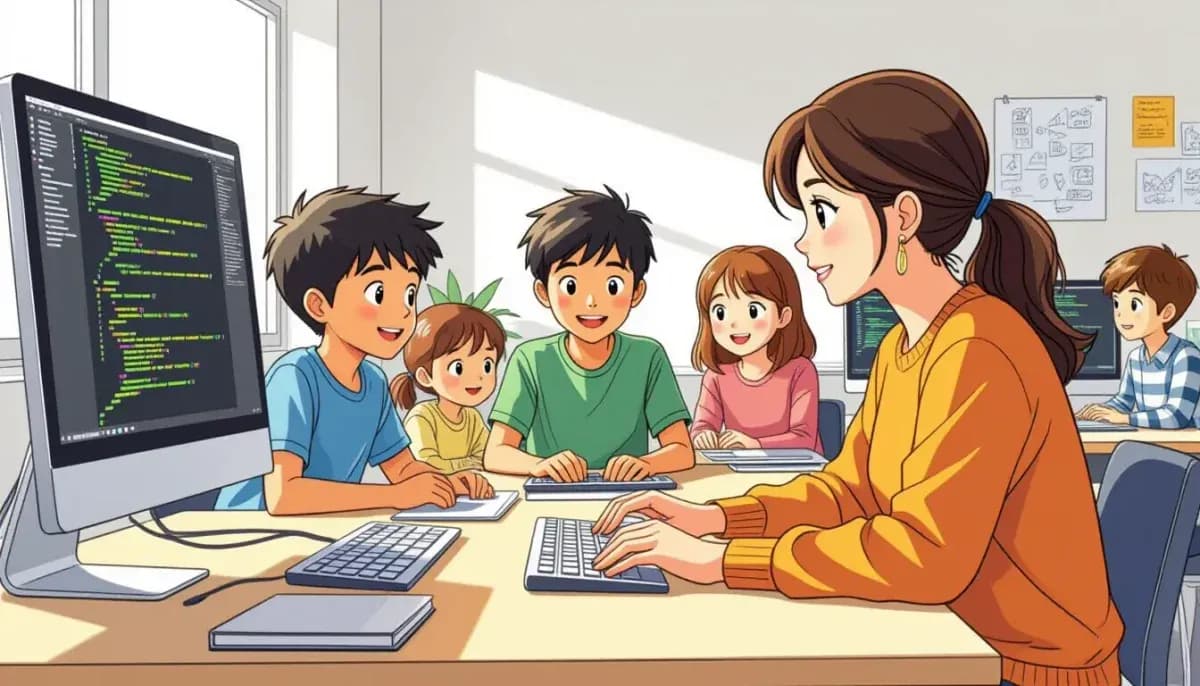
Find the best English-friendly coding classes for kids in Japan. Compare Tokyo Coding Club, Little Hackers, Coding Lab Japan, and more — with prices, ages, and enrollment tips for foreign families.
Coding and Programming Classes for Kids in Japan: The Complete Guide for Foreign Families
Japan is rapidly becoming one of Asia's most exciting places for children to learn coding and technology skills. With programming now mandatory in public elementary schools and a booming private coding school market worth nearly ¥20 billion, the opportunities for your child to develop tech skills in Japan are better than ever. For foreign families, the great news is that many of the best coding schools teach entirely in English — making them perfect for expat children of all backgrounds.
Whether you're looking for after-school classes, weekend workshops, or holiday coding camps, this guide covers everything you need to know about coding and programming education for kids in Japan.
Why Learn Coding in Japan?
Japan's commitment to technology education is backed by government policy and significant investment. Programming became mandatory in Japanese public elementary schools nationwide in 2020, starting from 5th grade. The country's "Code for All" initiative aims to reach 80% of all elementary students with hands-on coding education by 2025.
The private market has followed suit. Japan's children's programming education industry reached approximately 19.9 billion yen (roughly $130 million USD) in 2022, with strong growth projected through 2030. Japan is now among the fastest-growing markets for children's coding education in the Asia-Pacific region.
For foreign children living in Japan, learning to code offers several unique advantages:
- Builds a universal skill that transcends language barriers
- Connects with Japanese peers through shared tech interests like Minecraft and Roblox
- Prepares for Japan's tech-focused job market as children grow
- English-medium classes help maintain English skills while learning in Japan
- Develops logical thinking valued in Japan's education culture
With approximately 129,000 foreign elementary and middle school students in Japan as of 2024 — a 9.0% year-over-year increase — demand for English-friendly extracurricular activities has never been higher.
Top English-Friendly Coding Schools in Japan
Tokyo Coding Club
Tokyo Coding Club (TCC) is widely regarded as the premier English-medium coding school for children in Japan, and for good reason. Established in 2012, TCC has grown into a comprehensive technology education center serving students aged 5 to 18.
Locations:
- Nishiazabu Center — Hirose Building 3F, Minato-ku, Tokyo (high expat-density area)
- Futako Tamagawa Center — LIBERLA Futako B1F, Setagaya-ku, Tokyo
Programs available:
- Scratch and visual programming (ages 5–8)
- Python and JavaScript (ages 10+)
- Minecraft Engineering and Roblox creation (ages 5–12)
- Game development with Unreal Engine and Unity (ages 12+)
- Robotics with Arduino, Raspberry Pi, and Micro:bit
- Digital Arts, 3D Printing, and Video Production
Pricing:
- ¥8,000 per 1-hour session
- ¥12,000 per 1.5-hour session
- Annual programs: ¥60,000–¥504,000 depending on frequency
- Spring/summer intensive "Code Quest" camps: ¥60,000 for 5 days
Free trial lessons are available — a great way to test the fit before committing. Contact them at info@tokyocodingclub.com or call 050-6868-2120 (11AM–7PM daily).
Read a detailed profile of the school at Savvy Tokyo's Tokyo Coding Club feature.
Little Hackers Japan
Little Hackers offers a unique dual-purpose approach: children learn programming in English, making it particularly valuable for expat families who want their kids to maintain English language skills alongside gaining coding knowledge.
The school was founded by a 30-year programming veteran with international school teaching experience — someone who truly understands the needs of foreign children in Japan.
Programs:
- Scratch Programming (Grades 1–6, approximately ages 6–12): Visual programming fundamentals through game creation
- Roblox / Lua Programming (Grade 4 through junior high, approximately ages 9–15): Real scripting language used in professional game development
Important update: As of April 2025, Little Hackers moved to a fully online format, which means children anywhere in Japan can now enroll. This is excellent news for expat families outside of central Tokyo.
Visit Little Hackers Japan to learn more or book a trial class.
Coding Lab Japan
Coding Lab Japan caters to a wide age range — from 4 to 18 years old — with a thoughtful curriculum progression designed to grow with your child:
| Age Group | Level | Tools Used |
|---|---|---|
| Ages 5–6 | Beginner | Scratch Jr, LEGO Robots |
| Ages 7–9 | Elementary | Scratch |
| Ages 10–12 | Intermediate | MIT App Inventor |
| Ages 13+ | Advanced | Python |
Classes run for 2 hours once a week, with free trial lessons available both in-person and online. Visit Coding Lab Japan for locations and enrollment.
QUREO / Tech Kids School (CyberAgent)
For Japanese-medium instruction, QUREO Programming School, operated by CyberAgent's Tech Kids School division, is described as Japan's No. 1 programming school. Since 2013, it has served over 30,000 students and has locations throughout Japan. While classes are primarily in Japanese, the curriculum is game-based and visually intuitive, making it accessible even for children with basic Japanese.
Choosing the Right Coding School: What to Consider
Before enrolling your child, think through these factors:
Language of instruction: Most expat families prefer English-medium schools. Tokyo Coding Club and Little Hackers both teach entirely in English. For bilingual households, a Japanese-medium school like QUREO can also help improve Japanese alongside coding skills.
Age and experience level: All major schools accept complete beginners with no prior coding knowledge. Tokyo Coding Club starts as young as age 5; Coding Lab Japan accepts children from age 4.
Location and format: Tokyo Coding Club has physical classrooms in Minato and Setagaya (both expat-popular areas). Little Hackers is now fully online, which works well for families in Osaka, Kyoto, Kobe, or other cities outside Tokyo.
Commitment level: Weekly classes require long-term commitment. If you're unsure, holiday camps like TCC's "Code Quest" let your child try intensive coding for a week before committing to a full program.
Budget: Coding classes in Japan typically cost ¥7,000–¥12,000 per session. Annual costs can range from ¥60,000 to ¥500,000+ depending on frequency. See our financial planning guide for expat families for tips on budgeting education costs in Japan.
How Japanese Public Schools Handle Coding
Since 2020, coding has been part of Japan's national curriculum. Here's what your child will encounter if they attend a Japanese public school:
- 5th and 6th grade (ages 10–12): Hands-on programming projects such as drawing shapes with code, programming LED lights, and creating simple interactive programs
- Middle school (ages 12–15): Technology classes (技術科, gijutsu-ka) include programming units
- High school: Information science (情報, jōhō) became a required subject in 2022
The curriculum emphasizes "programming thinking" — a constructionist, project-based approach that encourages experimentation without fear of failure. This pedagogical style is actually well-suited to children from diverse backgrounds.
For more on how the Japanese school system works, see our complete guide to the Japanese education system for foreign families and our guide to elementary school in Japan for foreign parents.
Comparing School Options at a Glance
| School | Ages | Language | Format | Price/Session | Free Trial |
|---|---|---|---|---|---|
| Tokyo Coding Club | 5–18 | English | In-person + camps | ¥8,000–¥12,000 | ✅ Yes |
| Little Hackers Japan | Grades 1–JHS | English (bilingual) | Online only | Not listed | ✅ Yes |
| Coding Lab Japan | 4–18 | Japanese/English | In-person + online | Not listed | ✅ Yes |
| QUREO / Tech Kids School | 5–15 | Japanese | In-person | Varies | ✅ Yes |
Tips for Enrolling as a Foreign Family
Book a free trial first. Every major school offers free or low-cost trial classes. Use this to assess whether your child connects with the teaching style and environment before paying for a full program.
Check the school calendar. Japan's academic year runs April to March, and many schools align their programs accordingly. Enrollment peaks in March–April. Holiday camps in August (summer) and March (spring) are excellent entry points for flexible families.
Communicate your child's level. Even if your child has never coded before, mention any related experience — Scratch at school, Minecraft at home, or interest in making games. This helps instructors place them in the right group.
Consider online options for non-Tokyo families. If you're living outside Tokyo, Little Hackers Japan's fully online format and Coding Lab Japan's online options make quality English coding education accessible nationwide.
Look for bilingual support. Schools like Little Hackers have bilingual (English/Japanese) teachers who can help bridge any communication gaps for children still learning Japanese.
For more ideas on keeping your child engaged outside of school hours, see our guides on after-school activities and juku in Japan, sports and physical activities for children in Japan, and arts, music, and creative development.
Is Coding Education Worth the Investment?
Japan's technology sector is one of the world's largest, and digital literacy is increasingly valued across all industries. For children growing up in Japan — whether they stay long-term or eventually move abroad — coding skills provide a competitive edge in university applications and careers.
Beyond career benefits, coding teaches transferable skills: logical thinking, problem decomposition, persistence when debugging, and creative thinking. These qualities are universally valued in Japanese schools and workplaces.
For expat families, English-medium coding schools also serve a secondary purpose: they provide a community of like-minded international kids who share interests in technology, gaming, and creation — a social anchor that can be invaluable for children navigating life in Japan.
For a broader perspective on managing your child's education and digital life in Japan, see our article on digital life, screen time, and online safety for children in Japan and our guide on raising bilingual children in Japan.
Additional Resources
- Living in Nihon — Extracurricular Activities and Juku Guide for Expats
- For Work in Japan — Career and Skills Development Resources
- Chuukou Benkyou — Exam Prep and Study Resources for Students in Japan
- Savvy Tokyo — Tokyo Coding Club Feature
- Tokyo Coding Club Official Website
- Little Hackers Japan — English Coding School
- Coding Lab Japan

Originally from Vietnam, living in Japan for 16+ years. Graduated from Nagoya University, with 11 years of professional experience at Japanese and international companies. Sharing practical information for foreign parents raising children in Japan.
View Profile →Related Articles
Impact of Technology on Child Development in Japan
A comprehensive guide for foreign parents on screen time, AI use, and digital education in Japan. Backed by Japanese research data and practical parenting tips for expat families.
Read more →
Balancing Digital and Outdoor Activities for Children
Practical guide for expat families on balancing screen time and outdoor play in Japan. Research-backed strategies, Japanese seasonal activities, and school-level tips for raising healthy, balanced children.
Read more →
Parental Controls and Monitoring Tools Available in Japan
Complete guide to parental controls and monitoring tools for families in Japan. Covers Apple Screen Time, Google Family Link, LINE safety, Japanese regulations, and expert tips for foreign parents raising kids in Japan.
Read more →
Cyberbullying Prevention and Online Safety for Kids
Learn how to protect your child from cyberbullying in Japan. Covers warning signs, laws, English-language resources, and practical online safety rules for foreign families.
Read more →
Digital Literacy Education in Japanese Schools
Complete guide to digital literacy education in Japanese schools for foreign families. Covers GIGA School initiative, mandatory programming, Information I entrance exam, and tips for expat children.
Read more →
Smartphone Rules and Policies for Children in Japan
Complete guide to smartphone rules and policies for children in Japan — school bans, regional ordinances, screen time data, and practical tips for foreign families navigating Japanese digital culture.
Read more →