
Impact of Technology on Child Development in Japan

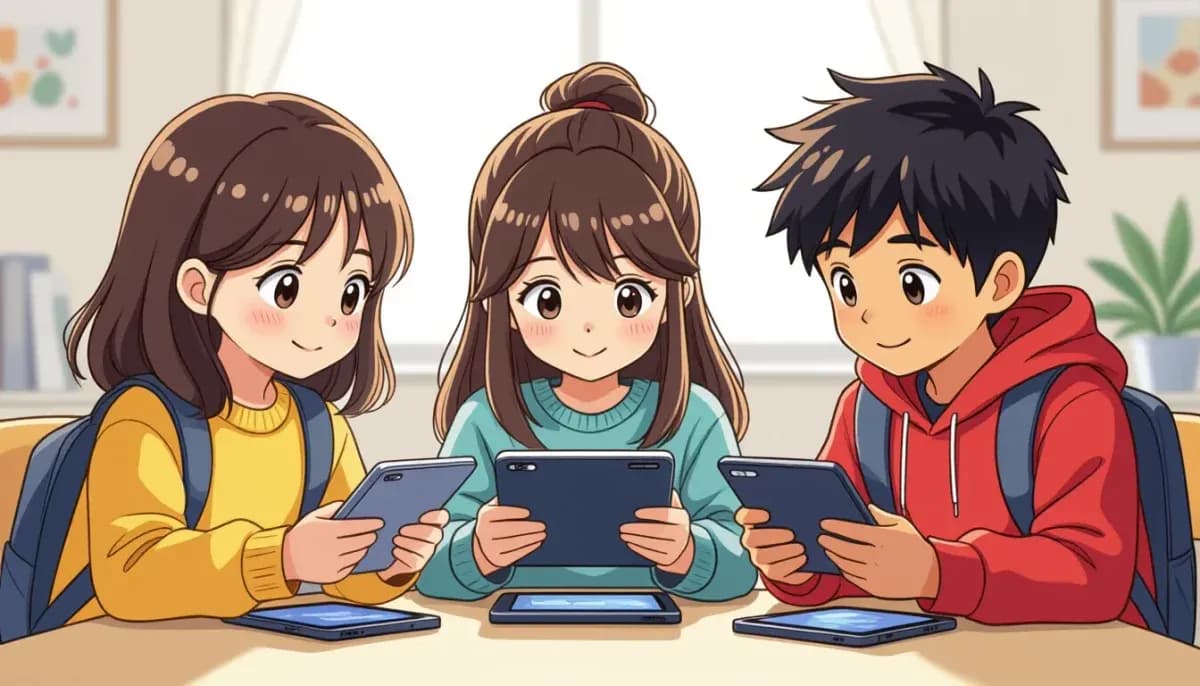
A comprehensive guide for foreign parents on screen time, AI use, and digital education in Japan. Backed by Japanese research data and practical parenting tips for expat families.
Impact of Technology on Child Development in Japan: A Guide for Foreign Parents
As a foreign parent raising children in Japan, navigating the country's rapidly evolving digital landscape can feel overwhelming. Japan sits at an interesting crossroads — a society that is simultaneously tech-forward and deeply traditional — and this tension plays out in real ways in how Japanese children are growing up with screens, AI, and digital devices. Whether you're concerned about screen time, curious about how Japan's schools are embracing technology, or trying to set healthy boundaries at home, this guide will walk you through the key issues every expat parent needs to know.
How Widespread Is Technology Use Among Children in Japan?
Technology has become deeply embedded in Japanese children's lives, often earlier than parents expect. According to a 2025 survey of 1,430 children conducted by Nifty, 84% of elementary school students and 80.4% of junior high students have already used a digital assistant such as Alexa or Siri. More strikingly, over 50% of elementary school children and 62.5% of junior high students have used generative AI tools like ChatGPT — and the vast majority (87.5%) do so without any formal rules guiding that use at home or school. (Source: Nippon.com)
On the device ownership front, a large-scale study from the Hokkaido Study on Environment and Children's Health found that 81.3% of children aged 7–17 in Japan already owned their own mobile device. The median age of first device use was just 7 years old, meaning many children are navigating smartphones and tablets well before they enter junior high school.
For foreign parents accustomed to different norms, this level of early adoption can be both reassuring (your child won't be left out) and concerning (what are the developmental effects?). The short answer is: the research is nuanced, and context matters enormously.
What Does the Research Say About Screen Time and Development?
Japan has been home to some of the world's most rigorous longitudinal research on children's screen time. One of the most significant is the Japan Environment and Children's Study (JECS), which followed 57,980 children from infancy through early childhood.
Key findings include:
- Children who watched TV or DVDs for 2 or more hours per day at ages 1–3 showed measurably lower developmental scores by ages 2–3.
- Communication skills were the most vulnerable domain at early ages.
- Fine motor skills and personal-social development showed the largest negative effect sizes (β = −0.07 to −0.12) — meaning these were the areas most negatively associated with heavy screen time.
- Only 25–29% of children aged 2–3 actually met Japan's guideline of under 1 hour of screen time per day. (Source: PMC/JAMA Pediatrics)
A separate study on mobile device use (Hokkaido Study, 3,021 children aged 7–17) found that earlier age of first device use and longer total duration were both significantly correlated with emotional problems, hyperactivity, and peer relationship difficulties — with elementary-aged children showing the strongest effects.
These findings don't mean that screens are uniformly harmful. Educational content, interactive apps, and monitored use can all be positive. But unregulated, passive screen consumption — particularly at very young ages — does appear to carry real developmental costs in the Japanese context.
| Age Group | Key Risk | Research Source |
|---|---|---|
| 0–2 years | Communication, social delays | JECS (57,980 children) |
| 3–6 years | Fine motor, personal-social | JECS longitudinal data |
| 7–12 years | Behavioral problems, hyperactivity | Hokkaido Study |
| 13–17 years | Emotional issues, peer relationships | Hokkaido Study |
| All ages | Device addiction (45% self-report) | USC Annenberg Survey |
Technology in Japanese Schools: What Foreign Parents Should Know
Japan's educational system has historically been cautious about technology — classrooms were largely paper-and-pencil well into the 2010s. That changed dramatically with the GIGA School Programme, a government initiative that placed one device per student in primary and middle schools nationwide by 2021. According to Statista data, by 2021, nearly 90% of students aged 9–12 were using computers or tablets at school.
The government's 2022 Educational Data Roadmap sets an ambitious target: full digital integration in Japanese education by 2030. This includes digital textbooks, AI-powered tutoring, and data-driven assessment — a dramatic shift for a system historically focused on uniformity and rote memorisation.
For foreign parents, this shift has important implications:
- Your child's school likely has a device — understand the school's rules on home use vs. school use.
- Homework increasingly involves apps and online platforms — particularly in international schools and progressive public schools.
- AI literacy is becoming part of curricula — but policies are inconsistent. 87.5% of children in the 2025 Nifty survey reported no rules at home or school around AI use.
If your child attends a Japanese public school, ask the homeroom teacher (担任の先生, tantō no sensei) about the school's digital learning policies and whether the school-issued tablet has content filters. For more on navigating Japanese school systems as a foreigner, see our guide to elementary school in Japan for foreign parents and junior high school in Japan for foreign families.
Setting Healthy Tech Boundaries: Japanese Context for Foreign Families
One of the most consistent findings across Japanese research is that parental behavior is the strongest predictor of children's screen time. A major study (Super Shokuiku School Project) found that prolonged screen use in Japanese children was strongly linked to:
- Parents who themselves used the internet heavily
- No household rules on screen time
- Late bedtimes (screens displace sleep)
- Physical inactivity
- Mothers with full-time employment (more unsupervised device use)
The good news: setting rules works. Japanese families that established clear screen-time boundaries had children with significantly better outcomes. The challenge for expat families is that you may be navigating this in a second language and without the same social support network that Japanese parents rely on.
Some practical approaches:
- Establish a "media diet" early — decide as a family what apps, content, and time limits are appropriate before handing over a device.
- Use Japan's parental control tools — iOS Screen Time and Android Digital Wellbeing are available in Japanese and are widely used by local parents.
- Talk to your child's school — many Japanese schools now send home "media usage agreements" (メディア利用の約束, media riyō no yakusoku) that can be a useful framework.
- Model the behavior you want — given that parental internet use is the top risk factor, this isn't just about the children.
- Prioritize outdoor and physical play — Japan's parks, community centers, and sports clubs (スポーツ少年団, supōtsu shōnendan) provide excellent alternatives.
For broader context on supporting your child's wellbeing in Japan, the mental health and emotional wellbeing guide for foreign children in Japan is a valuable companion resource.
AI Tools, Homework, and the New Frontier
The arrival of generative AI tools has added a new dimension to the technology-and-children conversation in Japan — and globally. Japan is navigating this with characteristic caution. As of 2025:
- Over 62% of Japanese junior high students have used ChatGPT or similar tools.
- 36–44% of children report using AI specifically for studying or homework.
- Yet 87.5% had no defined rules governing this use.
This creates a real challenge for parents trying to support their children's learning while also ensuring they develop foundational academic skills. For expat families, the language barrier adds another layer — your child may be using Japanese-language AI tools you can't easily monitor.
Practical guidance:
- Discuss AI with your child openly — frame it as a tool, not a cheat, and help them understand when it's appropriate.
- Check your child's school policy — policies range from outright bans (rare) to fully integrated AI literacy programs.
- Use AI tools together — sitting with your child while they use ChatGPT or similar tools turns it into a learning opportunity.
- Focus on outputs, not inputs — instead of worrying whether they used AI, focus on whether they can explain and apply what they submitted.
For more on supporting bilingual learning and Japanese language acquisition, see our guide to raising bilingual children in Japan and teaching Japanese to foreign children.
Japan vs. Global Comparisons: How Does Japan Stack Up?
Foreign parents moving to Japan often wonder whether device use norms here are stricter or more permissive than back home. A comparative USC Annenberg study provides useful data:
- 45% of Japanese teens self-identify as addicted to mobile devices — comparable to US peers.
- 61% of Japanese parents believe their teen is addicted (vs. similar figures in the US).
- Japanese teens are less likely than US teens to feel their parents prioritize devices over them (20% vs. 6% — though the Japan figure is still concerning).
- 23% of Japanese parents feel devices harm the parent-child bond, vs. 15% in the US. (Source: USC Annenberg)
The takeaway: Japan is not a low-tech haven for children. Device addiction, screen time excess, and AI use without guardrails are real issues here, much as they are in other developed countries. But Japan does offer some structural advantages — a safer physical environment that supports outdoor play, strong school sports and club activity culture, and a growing awareness in the education sector of the need for digital literacy frameworks.
Additional Resources for Foreign Parents in Japan
Navigating technology, parenting, and culture in Japan is easier with good information sources. These external resources are particularly useful:
- Living in Nihon — Raising Children and Education in Japan: A comprehensive hub for foreigners raising children in Japan, covering education systems, cultural norms, and practical tips.
- For Work in Japan: Practical resources for expats working and living in Japan, including family-related guidance.
- Chuukou Benkyou: Resources on middle and high school education in Japan — useful for parents of older children navigating academic technology use.
For academic reference, the key studies cited in this article are:
- JECS Screen Time Study (PMC/JAMA Pediatrics)
- Hokkaido Study on Mobile Device Use and Child Behavior (PMC)
- 2025 AI Use Survey — Nippon.com
Technology is not going away, and nor should it — used well, it is a powerful educational tool. The goal for foreign parents in Japan is not to shield children from technology, but to help them develop the habits, critical thinking, and self-regulation skills that will serve them well in a digitally saturated world. Japan's combination of rigorous academic expectations and a rich non-digital culture actually provides a useful framework for that balance — if parents are intentional about using it.
For a broader view of raising children successfully as a foreigner in Japan, explore our guide to the Japanese education system for foreign families and our complete resource on baby and infant care in Japan for foreign parents.

Originally from Vietnam, living in Japan for 16+ years. Graduated from Nagoya University, with 11 years of professional experience at Japanese and international companies. Sharing practical information for foreign parents raising children in Japan.
View Profile →Related Articles
Balancing Digital and Outdoor Activities for Children
Practical guide for expat families on balancing screen time and outdoor play in Japan. Research-backed strategies, Japanese seasonal activities, and school-level tips for raising healthy, balanced children.
Read more →
Coding and Programming Classes for Kids in Japan
Find the best English-friendly coding classes for kids in Japan. Compare Tokyo Coding Club, Little Hackers, Coding Lab Japan, and more — with prices, ages, and enrollment tips for foreign families.
Read more →
Parental Controls and Monitoring Tools Available in Japan
Complete guide to parental controls and monitoring tools for families in Japan. Covers Apple Screen Time, Google Family Link, LINE safety, Japanese regulations, and expert tips for foreign parents raising kids in Japan.
Read more →
Cyberbullying Prevention and Online Safety for Kids
Learn how to protect your child from cyberbullying in Japan. Covers warning signs, laws, English-language resources, and practical online safety rules for foreign families.
Read more →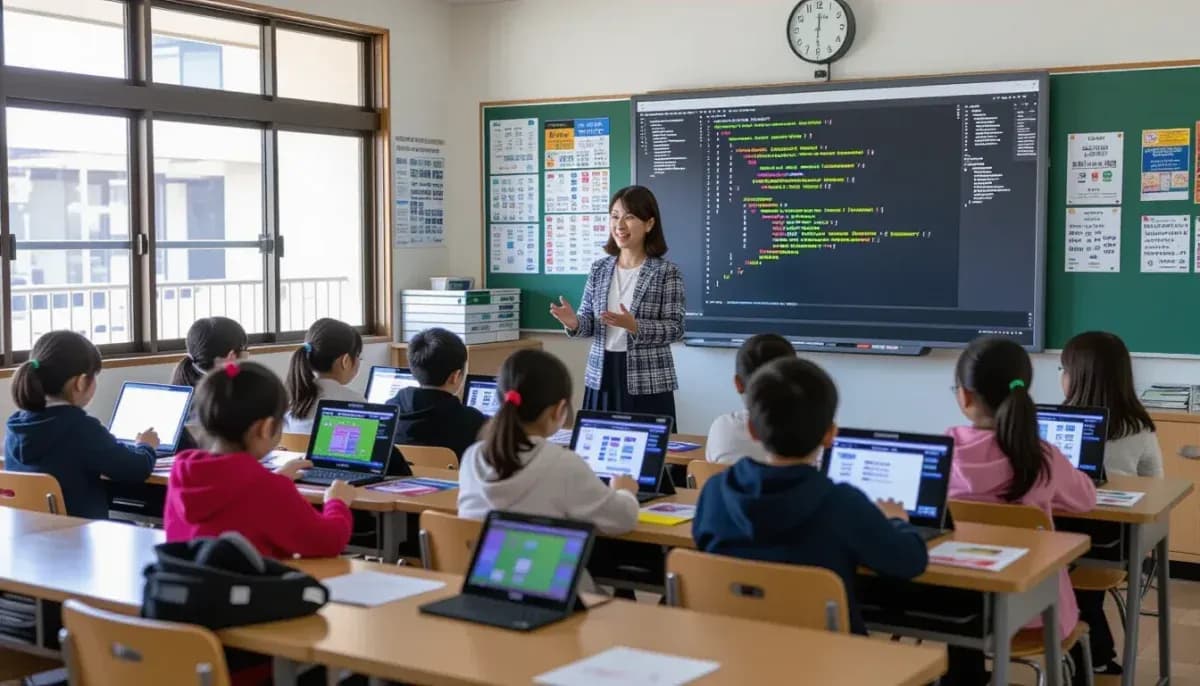
Digital Literacy Education in Japanese Schools
Complete guide to digital literacy education in Japanese schools for foreign families. Covers GIGA School initiative, mandatory programming, Information I entrance exam, and tips for expat children.
Read more →
Smartphone Rules and Policies for Children in Japan
Complete guide to smartphone rules and policies for children in Japan — school bans, regional ordinances, screen time data, and practical tips for foreign families navigating Japanese digital culture.
Read more →