
Child Safety Laws and Practices in Japan

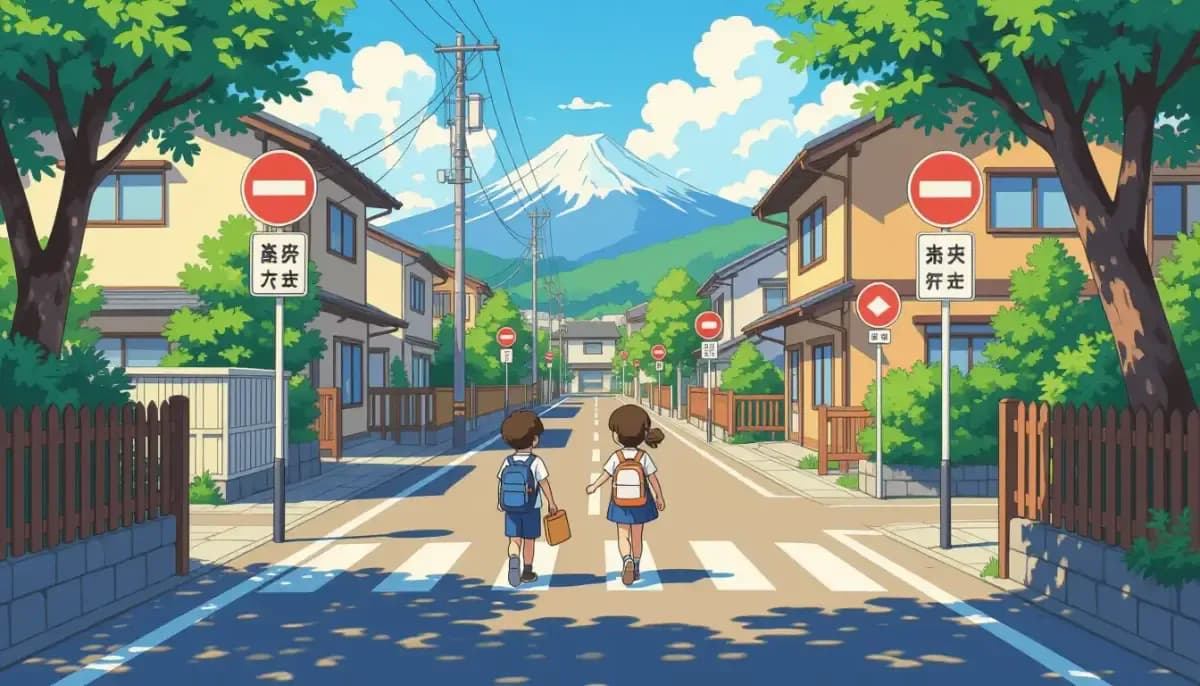
A comprehensive guide to child safety laws and practices in Japan for foreign families — covering the Child Abuse Prevention Act, Kodomo 110-ban safety houses, school walking routes, car seat laws, and practical safety tips for expat parents.
Child Safety Laws and Practices in Japan: A Complete Guide for Foreign Families
Japan is widely regarded as one of the safest countries in the world for children. It is not unusual to see young children as young as six years old commuting to school alone on trains or walking in groups along designated routes without adult supervision. For foreign parents raising children in Japan, understanding the legal framework and cultural practices around child safety is essential to keeping your family secure and integrated into the community.
This guide covers Japan's key child safety laws, the school safety systems taught to children from an early age, traffic and car safety regulations, child abuse prevention policies, and practical safety strategies for expat families.
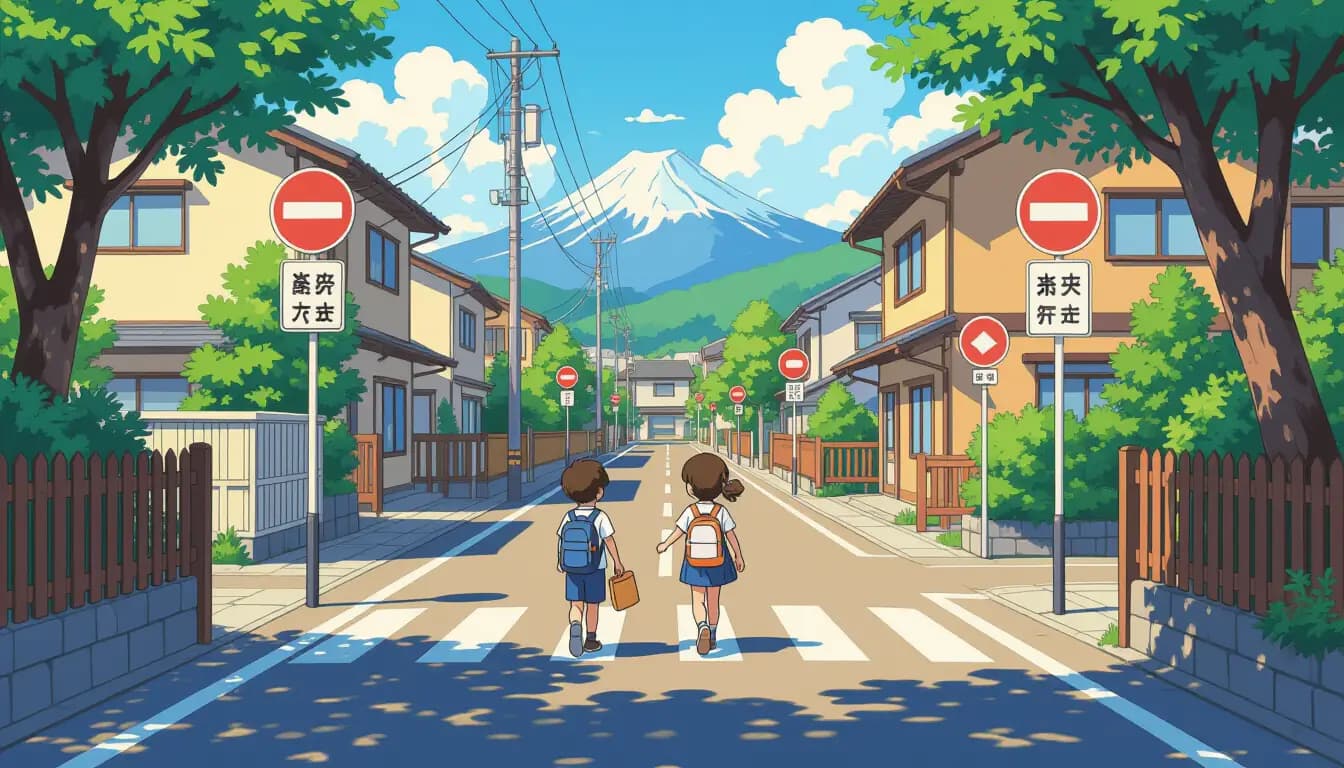
Japan's Legal Framework for Child Protection
Japan's approach to child safety is built on two major pieces of legislation: the Child Welfare Act (児童福祉法, Jidō Fukushi-hō) and the Child Abuse Prevention Act (児童虐待の防止等に関する法律, enacted 2000).
Child Welfare Act
The Child Welfare Act defines a "child" as any person under 18 years of age, further subdivided into:
- Infant (乳児): Under 1 year of age
- Toddler (幼児): Age 1 through school entry (approximately age 6)
- Juvenile (少年): School age through 18 years old
Under this law, the state, prefectures, and municipalities share joint responsibility — alongside parents and guardians — for ensuring children's welfare, development, and protection. Municipal welfare officers (民生委員, minsei-iin) serve as community-level monitors who conduct home visits and welfare checks, particularly for vulnerable families. Prefectures operate Child Guidance Centers (児童相談所, jidō sōdansho), which are specialist intervention agencies that investigate abuse reports, arrange temporary protective custody, and coordinate long-term care.
Child Abuse Prevention Act (2000)
Before 2000, Japan had no legal definition of child abuse. The landmark Child Abuse Prevention Act changed this, legally defining four categories of maltreatment:
- Physical abuse — hitting, kicking, burning, or other physical harm
- Sexual abuse — any sexual contact or exposure
- Neglect — failure to provide food, clothing, medical care, or education
- Emotional abuse — verbal harm, threats, exposure to domestic violence, and psychological harm
The 2004 amendment expanded the definition of emotional abuse to include children who witness domestic violence in the home — a significant expansion that partly explains the dramatic rise in reported cases in subsequent years. A dedicated child abuse reporting hotline (189, nicknamed "Ichihayaku" or "quickly") was established in 2015.
For foreign families navigating Japan's legal system more broadly, the guide on visa and legal issues for foreign families with children in Japan provides a useful overview of your rights and obligations as a resident.
Child Abuse Statistics: What the Numbers Show
Japan's child maltreatment statistics have risen dramatically since 1990, which can be alarming at first glance. However, context matters significantly.
| Indicator | Japan | United States |
|---|---|---|
| Reported cases per 1,000 children (2022) | 12.4 | ~8.9 |
| Child fatality rate per 100,000 children | 0.3 | 2.7 |
| Most common abuse type | Emotional (59.1%) | Neglect (~60%) |
| Year of first legal definition of abuse | 2000 | Varies by state (1960s–1970s) |
| Global child safety index score | 63.8 / 100 | N/A |
The reported rate increased 309-fold between 1990 and 2022 (from 0.04 to 12.4 per 1,000 children), driven primarily by legal changes that broadened the definition of abuse and improved reporting infrastructure — not a genuine surge in harm. Japan's child fatality rate from abuse is approximately nine times lower than that of the United States (0.3 vs. 2.7 deaths per 100,000 children).
In 2022, the breakdown of reported abuse types was:
- Emotional abuse: 59.1%
- Physical abuse: 23.6%
- Neglect: 16.2%
- Sexual abuse: 1.1%
Japan scored 63.8 out of 100 on a global child safety index, with its universal healthcare system and free infant health check-ups credited as major contributors to its low fatality rate. For more information on Japan's healthcare protections for children, see the article on healthcare and medical care for children in Japan.
For a research-backed look at how Japan's child maltreatment trends compare internationally, the PMC/NIH study on child maltreatment in the US and Japan provides detailed academic analysis.
School Safety Systems: What Japanese Children Are Taught
Perhaps the most distinctive aspect of child safety in Japan is the highly structured school-based safety education that begins in elementary school. Japan's approach treats safety as a community and civic responsibility, not just a parental one.
Fixed Walking Routes (通学路, Tsūgakuro)
Every elementary school designates official walking routes to school. Children are expected to follow these routes exactly — no shortcuts, no detours — and to walk in groups (登下校班, tōgekkō-han) supervised by rotating parent volunteers and crossing guards known as Midori Obasan (Green Aunts), recognizable by their yellow flags and green sashes.
Children are taught specific safety rules from their first week of school:
- Always walk on the left side of the road
- Never accept rides or gifts from strangers
- Memorize your parents' full names and phone numbers
- Know where your nearest Kodomo 110-ban (child safety house) is located
Kodomo 110-ban (こども110番): Japan's Neighborhood Safety House Network
One of Japan's most effective child safety innovations is the Kodomo 110-ban program. Businesses, shops, and private homes throughout Japan voluntarily display a yellow triangle sticker indicating they are a safe refuge for children in distress.
If a child feels followed, threatened, or lost, they are taught to run into any Kodomo 110-ban location, where staff or residents will call police and stay with the child until help arrives. In urban areas, these stickers appear on convenience stores, post offices, pharmacies, and restaurants — ensuring that a child is rarely more than a few minutes from a safe house.
Curfew Chimes and Return-Home Rules
Many Japanese municipalities broadcast a musical chime at set times in the evening — 5:00 p.m. in winter months and 6:00 p.m. in spring and summer — as a signal for children to head home. Children are taught to:
- Return home before the evening chime
- Inform parents of their location before going out to play
- Never play in areas not approved by parents
These practices are reinforced both at home and in classroom lessons on personal safety.
For context on the broader school environment, the guide on elementary school in Japan for foreign parents explains how the school day is structured and what to expect from Japanese educators.
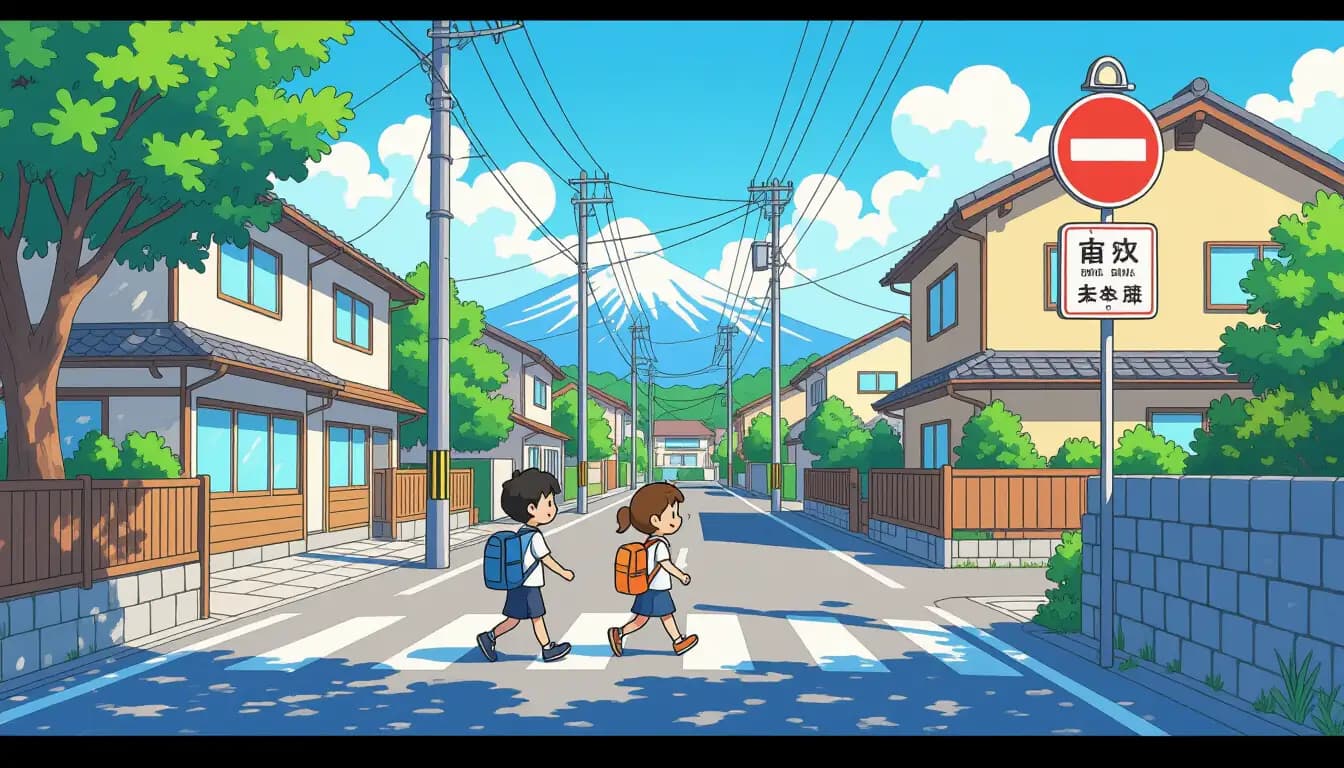
Traffic and Car Safety Laws
Child Car Seat Requirements
Under Japan's Road Traffic Act, all children under 6 years of age must be secured in an approved child safety seat when riding in a private vehicle. The penalty for non-compliance is 1 demerit point on the driver's license — relatively mild compared to many Western countries, but still enforced.
Key points for foreign families:
- Children in taxis and buses are legally exempt from the child seat requirement
- The Japan Automobile Federation (JAF) updated its recommendation in 2025, raising the suggested height for booster seat use from 140 cm to 150 cm — meaning children should ideally remain in booster seats until approximately age 12
- Infant-facing rear seats are legally required for infants under approximately 9 kg or 9 months of age
Bicycle Safety
Japan has one of the world's highest rates of child bicycle use, and bicycle safety is included in school safety curricula. Children under 13 are legally permitted to ride on sidewalks; helmets are strongly recommended but not universally legally required for children (though municipalities increasingly mandate them).
Internet and Online Safety for Children
Japan's Act on Development of an Environment that Provides Safe and Secure Internet Use for Young People (2008) requires mobile carriers to activate content filtering by default for minors' devices. Providers must offer "youth mode" filtering unless parents explicitly opt out in writing.
Schools increasingly incorporate digital literacy and online stranger danger into safety education, teaching children:
- Never share personal information (school name, home address, photo) online
- Tell a trusted adult immediately if someone online makes them uncomfortable
- Recognize that online relationships with unknown adults require extreme caution
For families concerned about their child's emotional wellbeing in Japan's digital-heavy school culture, the resource on mental health and emotional wellbeing for foreign children in Japan is a valuable companion guide.
Practical Safety Tips for Foreign Families in Japan
Foreign families in Japan face an added layer of complexity: navigating safety systems that are primarily Japanese-language and culturally embedded. Here are key practical steps:
1. Learn and register your local Kodomo 110-ban locations Walk your child's school route with them before school starts and identify at least three Kodomo 110-ban safe houses. Take photos and save the addresses.
2. Teach your child to communicate key information in Japanese Even if your child attends an international school, ensure they can say their name, your phone number, and "Help me, please" (助けてください, tasukete kudasai) in Japanese.
3. Register with your local ward office's welfare network Many ward offices (区役所, kuyakusho) have multilingual family support coordinators who can alert you to local safety programs, emergency drills, and community safety initiatives.
4. Join the PTA safety committee Most elementary school PTAs have a safety committee (安全委員会) that organizes morning walking guard rosters. Joining connects you with local parents and ensures your child's route is supervised.
5. Understand the Child Guidance Center process If you ever need to report a child welfare concern — including concerns about your own children's wellbeing — Japan's Child Guidance Centers (児童相談所) are the correct contact point. The national hotline is 189 (available 24 hours, though multilingual support varies by center).
For a comprehensive look at how to prepare your family for Japan's various emergency systems, the main guide on emergency preparedness and child safety in Japan covers earthquake drills, evacuation plans, and the broader safety infrastructure.
Note that academic pressure is also a child safety concern in Japan. The intense focus on school entrance exams can affect children's mental health — the Chuukou Benkyou guide on education reform and entrance exams provides useful context on the competitive exam culture that foreign families should be aware of.
Expat community resources like Living in Nihon's guide to raising children in Japan and For Work in Japan's family life guide offer helpful community perspectives from foreigners living in Japan. The Savvy Tokyo guide on Japanese school safety tips is also an excellent practical reference for parents new to the Japanese school system.
How Japan Compares Internationally
Japan's child safety record stands out globally for several reasons:
| Metric | Japan's Standing |
|---|---|
| Child street safety | Among the highest globally — children commute alone from age 6–7 |
| Child fatality from abuse | Among the lowest globally (0.3 per 100,000) |
| School violence | Extremely low rates of in-school violence |
| Online safety legislation | Comprehensive mobile filtering laws since 2008 |
| Community safety infrastructure | Kodomo 110-ban, curfew chimes, structured walking groups |
The cultural expectation that the entire community is responsible for children's safety — not just parents — creates a uniquely protective environment. Neighbors, shop owners, and commuters all participate informally in watching over children. This collective responsibility is one reason why Japan can safely permit young children to navigate public spaces independently in ways that would be considered risky in many other countries.
For academic research on Japan's child welfare system and how it compares to other nations, the Nippon.com report on child abuse cases in Japan and the Japanese Law Translation database provide authoritative primary sources.
Conclusion
Japan offers a remarkably safe environment for children, backed by a combination of strong legislation, deeply embedded cultural safety practices, and community-level infrastructure like the Kodomo 110-ban network. For foreign families, understanding these systems — and actively participating in school safety programs — is the key to making the most of what Japan has to offer.
Start by walking your child's school route, locating your nearest child safety houses, and connecting with your school's PTA safety committee. With a little preparation, your family can embrace Japan's uniquely child-friendly culture with confidence.
For more on keeping your family safe in Japan's various emergency scenarios, explore the full emergency preparedness and child safety pillar and related articles on earthquake preparation for families, teaching children about stranger danger, and building a family emergency supply kit.

Originally from Vietnam, living in Japan for 16+ years. Graduated from Nagoya University, with 11 years of professional experience at Japanese and international companies. Sharing practical information for foreign parents raising children in Japan.
View Profile →Related Articles
Helping Children Recover After a Natural Disaster
A practical guide for foreign parents on helping children recover emotionally and mentally after a natural disaster in Japan, with evidence-based strategies and available support resources.
Read more →
Creating a Family Disaster Communication Plan
Learn how to create a family disaster communication plan in Japan as a foreign resident. Covers 171 dial, Safety Tips app, school protocols, and multilingual strategies for expat families.
Read more →
Emergency Contacts and Helplines for Families in Japan
Complete guide to emergency contacts and helplines for families in Japan. Police 110, ambulance 119, English hotlines, disaster messaging, and mental health support for expat families.
Read more →
Fire Safety at Home with Children in Japan
Essential fire safety guide for foreign families in Japan. Learn about smoke detectors, evacuation hatches, emergency procedures, teaching children fire safety, and protecting your home.
Read more →
Water Safety and Drowning Prevention for Kids in Japan
Essential water safety guide for parents raising kids in Japan. Learn about beach rip currents, river dangers, bathtub risks, emergency contacts, and Japan's drowning prevention resources for expat families.
Read more →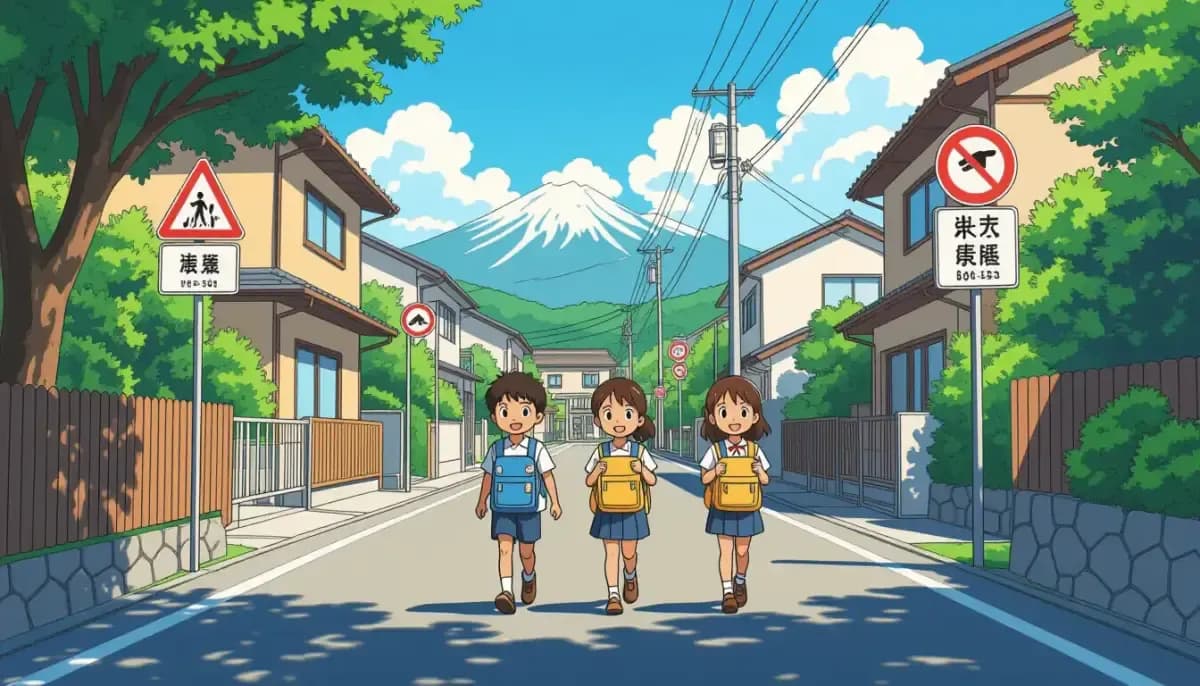
Teaching Children About Stranger Danger in Japan
A complete guide for foreign parents on teaching children about stranger danger in Japan, covering the Kodomo 110-ban safety house system, evening chimes, age-appropriate safety conversations, and how Japan's approach differs from Western stranger-danger messaging.
Read more →