
Dental Care for Children in Japan: Complete Guide

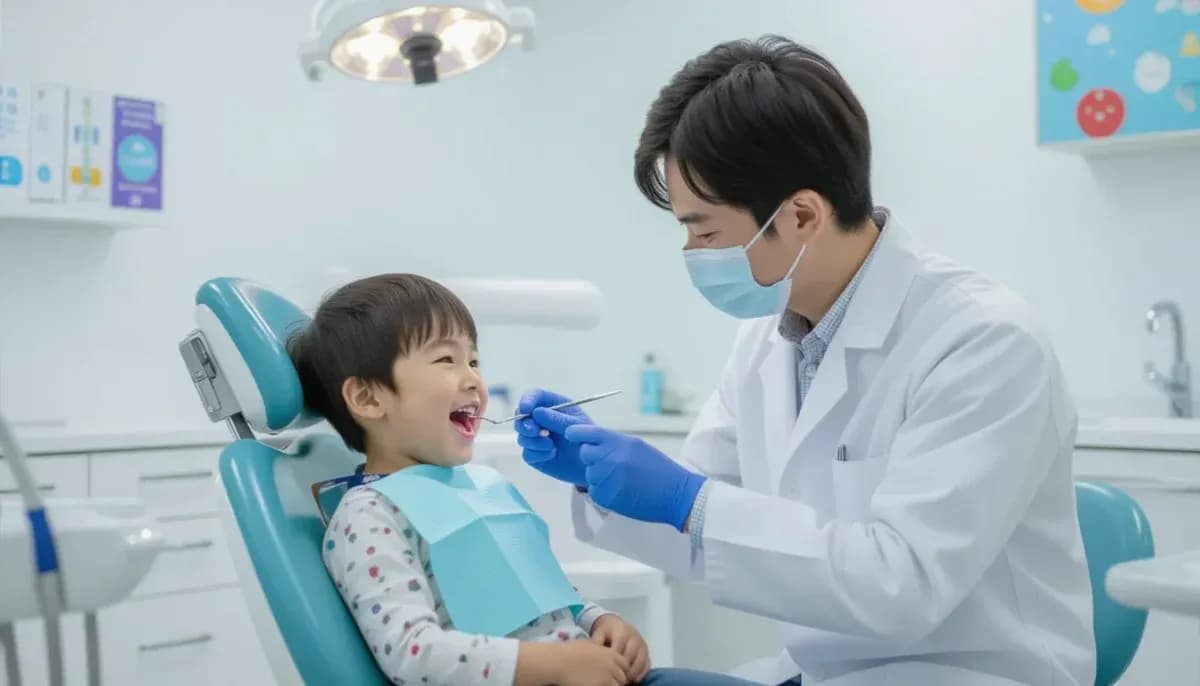
Complete guide to dental care for children in Japan: insurance coverage, free checkup schedule, how to find a pediatric dentist, school dental referrals, costs, and tips for expat parents.
Dental Care for Children in Japan: Complete Guide for Expat Parents
Navigating dental care for your children in a foreign country can feel overwhelming — but Japan's dental health system is actually one of the most child-friendly in the world. From mandatory free school screenings to heavily subsidized treatment costs, Japan makes it remarkably easy for expat families to keep their children's teeth healthy. This complete guide covers everything you need to know: how the insurance system works, what the checkup schedule looks like, how to find a pediatric dentist, and what to expect at a Japanese dental clinic.
Japan's Dental Health System: What Expat Parents Need to Know
Japan operates a universal health insurance system, and all legal residents — including foreign nationals holding valid residency status — are enrolled in either National Health Insurance (NHI) or Social Health Insurance (SHI) through their employer. This means your children are covered for dental care from the moment you register them with your local municipal office.
Under standard Japanese health insurance, 70% of basic dental treatment costs are covered, leaving you to pay only 30% out of pocket. However, for children, the actual out-of-pocket cost is often much lower — or even zero — thanks to municipal child healthcare subsidy programs known as kodomo iryohi josei (子ども医療費助成).
These municipal programs vary by prefecture and city, but in many areas they cover children's healthcare expenses (including dental) up to age 15 or even 18. When you combine national health insurance coverage (70%) with municipal subsidies (up to 30%), your child's dental treatment at a licensed clinic can cost your family nothing at all. Check with your local ward office (kuyakusho) or city hall immediately after arriving to confirm what age ceiling applies in your area.
Treatments covered by health insurance include:
- Fillings (amalgam or composite resin)
- Tooth extractions
- Root canal treatment (endodontics)
- X-rays and diagnosis
- Crowns and dental bridges
- Oral surgery
Not covered (self-pay):
- Orthodontics / braces (unless medically necessary)
- Dental implants
- Teeth whitening
- Purely cosmetic procedures
- Most routine preventive cleaning (for adults)
For children, preventive services like fluoride application and dental sealants are frequently provided free through municipal and school public health programs — separate from the standard insurance system.
Children's Dental Checkup Schedule in Japan
Japan has a well-structured system of government-mandated dental checkups for children. Understanding this schedule helps expat parents stay on top of their child's oral health without having to organize everything themselves.
| Checkup | Age | Provider | Cost |
|---|---|---|---|
| Infant oral exam | 18 months (1.5-year checkup) | Municipal health center | Free |
| Toddler oral exam | 3 years (3-year checkup) | Municipal health center | Free |
| Annual school dental exam | Every year in school | School dentist (gakko shika-i) | Free |
| Routine dental clinic visit | Every 6 months recommended | Private dental clinic | Covered by insurance |
18-Month and 3-Year Municipal Checkups
These mandatory public health checkups — established under Japan's Maternal and Child Health Act — include dental examinations along with general developmental assessments. They are conducted at local community health centers (hokenjo) or designated pediatric clinics, and participation rates exceed 87%. If your child is in Japan at these ages, you should receive a notification card (tsuchi) from your municipality with details on when and where to go. These exams are free of charge.
Annual School Dental Examinations
This is one of Japan's most impressive public health programs. Every public elementary school, junior high school, and senior high school has a designated school dentist (gakko shika-i), and all enrolled students receive a mandatory annual oral health examination. As of 2014, Japan had 44,600 school dentist positions across the country — nearly one per school.
The school examination screens for dental caries, gum disease, malocclusion, and plaque accumulation. No treatment is performed at school — instead, if a problem is detected, your child will come home with a referral note (shiryosho) directing you to take them to a dental clinic for treatment. The treatment at a private clinic is then covered by health insurance as normal.
Japanese dental guidance also recommends your first private clinic dental visit around age 1, with follow-up every 6 months for routine preventive care throughout childhood.
Japan's Remarkable Dental Health Record for Children
The data on children's dental health in Japan is genuinely impressive, and understanding the trend helps put the system in context. Japan has achieved one of the largest documented declines in childhood dental caries of any developed nation.
| Metric | 1957 | 2016 | Change |
|---|---|---|---|
| Caries rate in 3-year-olds | 81.8% | 8.6% | -90% |
| Caries rate in 5-year-olds | 94.5% | 39.0% | -59% |
| DMFT index (12-year-olds) | 4.6 | 0.8 | -83% |
This dramatic improvement is attributed to multiple factors: the mandatory school examination program, widespread fluoride toothpaste adoption (from 12% market share in 1985 to 91% in 2015), topical fluoride application programs, and a significant reduction in sugar consumption (from 27.5 kg/person/year in 1970 to 16.1 kg/person/year in 2015).
Regional differences still exist — in 2015, Okinawa Prefecture had the highest caries rate for 3-year-olds (28.9%) while Aichi Prefecture had the lowest (11.2%), highlighting that local diet and program implementation matters.
For expat families who are concerned about adjusting to a new environment, the statistics are reassuring: Japan's public dental health infrastructure for children is genuinely excellent by global standards.
For more on navigating Japanese health services as an expat parent, see our guide on Finding English-Speaking Pediatricians in Japan.
How to Find a Pediatric Dentist in Japan
Finding the right dentist for your child is one of the most common concerns for expat parents. Here is a practical approach.
Look for the 小児歯科 Sign
The Japanese term for pediatric dentistry is 小児歯科 (shōni shika). Clinics that specialize in children will display this on their sign or website. General dental clinics (一般歯科, ippan shika) also treat children and are often perfectly suitable, but if you want a child-specialist, look for the 小児歯科 designation.
Finding English-Speaking Dentists
English-speaking dental clinics are concentrated in major urban centers — Tokyo, Osaka, Yokohama, Nagoya, Kyoto, and Fukuoka. To find one:
- Ask at your local ward office (kuyakusho) — they often maintain lists of medical facilities that provide multilingual services
- Check expat community groups on Facebook or platforms like Meetup
- Use directories on expat websites such as Japan Dev's English-speaking dentist listings
- Ask your child's school — international schools often have referral lists for English-speaking specialists
For a comprehensive guide to dental care in Japan from a foreigner's perspective, BELONGING JAPAN's dentist guide is an excellent resource. JoynTokyo also maintains a helpful guide at joyn.tokyo covering navigating the system as a foreigner.
Making an Appointment
Walk-in appointments are rarely accepted at Japanese dental clinics. You must call or book online in advance. If your Japanese is limited, consider:
- Having a Japanese-speaking friend assist with the phone call
- Using the clinic's online booking system (many modern clinics offer this)
- Asking a Japanese colleague or neighbor to help
What to Bring to the First Visit
On your child's first visit to any dental clinic, bring:
- Health insurance card (hokensho) — essential for insurance billing
- Photo ID (yours as the parent/guardian)
- Municipal subsidy card if your municipality issued one (jyosei iryohi card or similar)
- The school referral note (shiryosho) if applicable
You will fill out a new patient registration form (shinryo moushikomisho) and receive a patient card (shinsatsukken) specific to that clinic — keep this card as you will need it for every subsequent visit.
If you are still looking for an OB-GYN or general expat health resources, our guide on Finding an English-Speaking OB-GYN in Japan covers similar navigation strategies.
Common Dental Treatments for Children in Japan
Understanding what treatments your child may receive — and what they involve — helps reduce anxiety for both parent and child.
Preventive Treatments
- Fluoride varnish application (topical fluoride): Applied directly to teeth at clinic visits and through school/municipal programs. Highly effective and very low cost or free for children.
- Fissure sealants: Plastic coating applied to the grooves of back molars to prevent decay. Covered by insurance.
Restorative Treatments
- Composite resin fillings: Tooth-colored fillings used for cavities. Covered by insurance.
- Silver Diamine Fluoride (SDF): A liquid applied to stop cavity progression without drilling — useful for young children who may struggle with conventional treatment.
- Pulpotomy (baby tooth root canal): Used when decay reaches the nerve of a baby tooth. Covered by insurance.
- Tooth extraction: When a tooth cannot be saved. Covered by insurance.
Orthodontic Assessment
Orthodontic treatment (braces, retainers) is generally not covered by health insurance unless it is medically necessary (such as a severe jaw malocclusion affecting eating or speech). Most cosmetic orthodontic treatment is paid out of pocket. If orthodontic treatment is being considered for your child, consult both a general dentist and an orthodontist (矯正歯科, kyousei shika) for evaluation.
For additional resources on navigating expat life with children in Japan, Living in Nihon (livinginnihon.com) and For Work in Japan (forworkinjapan.com) provide helpful guides for daily life topics. For academic resources and study support in Japan, Chuukou Benkyou (chuukoubenkyou.com) is worth exploring.
Dental Hygiene Tips for Children: What Japanese Parents Do
Japan's high dental health standards are maintained not just through clinical programs but through strong preventive habits at home. Here is what the data and Japanese parenting guidance recommend:
At-Home Dental Routine for Children
- Start early: Begin cleaning your baby's gums with a damp cloth even before teeth emerge. Once teeth appear, use a soft infant toothbrush.
- Assist with brushing: Japanese guidelines recommend that parents brush their child's teeth (or check/re-brush after the child brushes independently) until at least age 6–8. A 2020 survey found that approximately 54% of Japanese parents still check or re-brush their child's teeth after the child brushes on their own — a habit that has contributed significantly to Japan's caries decline.
- Use fluoride toothpaste: Fluoride toothpaste is now used by 91% of Japanese households (up from 12% in 1985) and is a key driver of improved dental health.
- Limit sugary drinks and snacks: Sugar consumption in Japan has dropped significantly over decades. Limiting juice, sports drinks, and sticky snacks — especially before bedtime — is strongly recommended.
- Regular clinic visits: Even with the excellent school examination program, Japan's dental guidelines recommend private clinic checkups every 6 months for ongoing preventive care and early intervention.
For more on supporting your child's overall health and development in Japan, see our article on Toddler Milestones and Development in Japan and our guide to Essential Baby Products Available in Japan.
Navigating Your Child's School Dental Referral Note
One of the most common moments of mild confusion for new expat parents in Japan is receiving a dental referral note (shiryosho) from their child's school after the annual dental examination. Here is exactly what to do with it.
What the note says: It typically states that your child's school dentist has detected a potential issue — a cavity, gum inflammation, early malocclusion, or another concern — and is recommending a follow-up visit to a private dental clinic.
What to do:
- Do not panic — the school exam is screening, not diagnosis. Many referral notes are precautionary.
- Book an appointment at a local dental clinic as soon as reasonably possible (within a few weeks for most non-urgent issues; sooner for pain or visible problems).
- Bring the referral note with you — the dentist may reference it, though treatment decisions will be based on their own examination.
- Bring your child's insurance card and municipal subsidy card — treatment will be covered.
The referral system is one of the most effective parts of Japan's child dental health infrastructure — it ensures that issues detected at school screenings actually get followed up with professional treatment. Take the notes seriously, even if your child is not complaining of pain.
For more on how Japan's school system works and what to expect as an expat family, our guide to The Complete Guide to the Japanese Education System for Foreign Families is highly recommended reading.
For further reading on dentistry in Japan for foreigners, check out Japan Handbook's dental guide and Expatica's guide to finding a dentist in Japan.
Summary: Key Action Steps for Expat Parents
Getting started with dental care for your children in Japan is straightforward once you understand the system. Here are the essential steps:
- Register your child with health insurance immediately after arrival — this activates all benefits.
- Visit your ward office to confirm your municipality's child healthcare subsidy program and pick up your child's subsidy card.
- Attend the 18-month and 3-year municipal checkups — they include free dental screenings.
- Find a local dental clinic (look for 小児歯科 for pediatric specialists) and schedule your child's first visit around age 1.
- Act promptly on school referral notes — book a dental clinic appointment when your child brings one home.
- Maintain good home routines — assist with brushing, use fluoride toothpaste, and limit sugary snacks.
Japan's dental infrastructure for children is genuinely one of the best in the world. With universal insurance coverage, municipal subsidies that often make treatment free, mandatory school screenings, and a strong preventive care culture, expat families can feel confident that their children's dental health is well-supported.

Originally from Vietnam, living in Japan for 16+ years. Graduated from Nagoya University, with 11 years of professional experience at Japanese and international companies. Sharing practical information for foreign parents raising children in Japan.
View Profile →Related Articles
Children's Health Checkup Timeline in Japan
Complete guide to Japan's children's health checkup timeline for foreign parents. Learn about free municipal checkups, vaccination schedules, costs, and tips for expats navigating the Japanese healthcare system.
Read more →
When Your Child Is Hospitalized in Japan
Navigate your child's hospitalization in Japan with confidence. Learn about admission procedures, costs, insurance coverage, what to bring, communicating with staff, and discharge in Japan's pediatric system.
Read more →
Understanding Medical Forms and Documents at Japanese Schools
A complete guide to understanding medical forms and health documents at Japanese schools for foreign families, including school health checkups, vaccination records, allergy forms, and enrollment documents.
Read more →
Traditional Japanese Remedies and Home Treatments for Kids
Discover traditional Japanese home remedies for children: okayu, hachimitsu daikon, shoga-yu, umeboshi, and Kampo medicine. Practical guide for foreign parents in Japan.
Read more →
Mental Health Services for Children in Japan
Navigate mental health services for children in Japan as a foreign parent. Find English-speaking therapists, understand insurance coverage, and access crisis resources for your child.
Read more →
Eye Care and Vision Screening for Children in Japan
Complete guide to children's eye care in Japan: mandatory school vision screenings, ganka clinics, myopia statistics, insurance coverage, and tips for expat families navigating Japan's eye health system.
Read more →