
Internet Safety for Children in Japan: A Parent's Guide


Comprehensive guide to internet safety for children in Japan for expat parents. Learn about risks, Japanese laws, parental controls, carrier filtering, and how to talk to your kids about online safety.
Internet Safety for Children in Japan: A Parent's Guide
As a parent raising children in Japan, you likely feel fortunate to be in one of the world's safest countries for families. Japan's streets are famously safe, crime rates are low, and children often walk to school independently from a young age. But when it comes to the digital world, the landscape is far more complex — and the risks are just as real here as anywhere else.
Japan is a highly connected society. According to the Children and Families Agency (2023), 98.7% of Japanese minors aged 10–17 use the internet, and 83.2% do so via smartphones. High school students spend an average of 6 hours and 14 minutes online every weekday — more than a quarter of their waking hours. For expat parents navigating a new culture and language, understanding Japan's specific digital landscape and how to protect your children within it is essential.
This guide covers the key risks, Japanese laws, practical safety tools, and how to have productive conversations with your children about staying safe online in Japan.
The Digital Landscape for Children in Japan
Japan may have a reputation for discipline and structured education, but children here are deeply embedded in digital culture — often more than their parents realize.
The most popular platforms among children and teens aged 10–19 in Japan are:
| Platform | Usage Rate (Ages 10–19) |
|---|---|
| LINE | 95.0% |
| YouTube | 94.3% |
| 72.9% | |
| TikTok | 70.0% |
| X (Twitter) | 65.7% |
LINE is particularly dominant and functions as the primary communication tool for school groups, friend circles, and club activities. If your child attends a Japanese school, LINE messages are almost certainly flowing 24/7. Understanding how each platform works — and what the risks are — is step one for any parent.
Beyond social media, children in Japan also engage heavily with online gaming, video streaming, and increasingly, AI chatbots. The average child spends 56 minutes daily on social media on weekdays, jumping to 80 minutes on weekends, with video platform usage far higher at 112 minutes (weekdays) and 174 minutes (weekends).
Key Online Risks for Children in Japan
Despite Japan's relatively safer statistics compared to global norms — only 24% of Japanese children are exposed to cyber risks, compared to the global average found by the DQ Institute's Child Online Safety Index — the risks are real and growing.
Cyberbullying (ネットいじめ)
Cyberbullying is one of the most prevalent online risks in Japan. It often occurs within LINE group chats, anonymous bulletin boards, and gaming platforms. Unlike physical bullying, it follows children home and can be relentless. Research has linked cyberbullying in Japan to school absenteeism and, in documented cases, suicide. If your child is experiencing signs of stress or anxiety, it's worth considering whether online harassment could be a factor.
Grooming and Sexual Exploitation
Every year, 1,665 to 2,082 elementary school-aged children are victimized through social media crimes in Japan. Grooming — where an adult builds trust with a child to exploit them — often begins on popular apps. Japan's 2023 Penal Code revision raised the age of consent from 13 to 16 and introduced new grooming penalties, but risks remain for children who share personal information online.
"Yami Baito" — Illegal Job Recruitment
A uniquely Japanese danger is "yami baito" (闇バイト), where organized crime groups use social media to recruit teenagers for illegal jobs with promises of easy money. These ads circulate on TikTok, Instagram, and X, targeting financially motivated high school students.
Comparison Culture and Mental Health
46% of surveyed Japanese minors reported experiencing difficulties due to internet use, with the most common complaint being stress from comparing their posts with others' curated content. This social comparison effect is particularly acute among junior high school girls.
Japanese Laws Protecting Children Online
Japan has a growing legal framework around online child safety, though experts note significant gaps remain.
Act on Enhanced Environment for Youth's Safe and Secure Internet Use (2008, revised 2018): This is the cornerstone law. It requires all mobile phone carriers to automatically apply content filtering for users under 18, unless a parent explicitly opts out. When purchasing a phone or SIM for your child in Japan, ask the carrier about their youth filtering options.
Child Pornography Act (revised 2014) and Revenge Porn Prevention Act (2014): These laws criminalize the creation and distribution of child sexual abuse material, as well as non-consensual intimate image sharing — a risk for teenagers who share photos impulsively.
Information Distribution Platform Act (2024): Large platforms operating in Japan are now required to remove illegal content more promptly.
Age Restrictions: Japan does not yet have a national social media age ban like Australia's (which bans under-16s from social media), but a government working group is actively studying the issue as of 2025–2026.
For a broader look at navigating Japan's systems as a foreign family, Living in Nihon's guide to raising children in Japan is an excellent starting resource.
Practical Parental Controls and Safety Tools
Carrier-Level Filtering
All major Japanese carriers — docomo, SoftBank, au, and major MVNOs — offer free or low-cost parental filtering services. These block access to adult content, gambling sites, and harmful communities at the network level.
- docomo: "あんしんフィルター for docomo" (Anshin Filter)
- au: "安心フィルタリング" (Anshin Filtering)
- SoftBank: "ウェブ使用制限" (Web Use Restriction)
If your child is on a MVNO or family SIM plan, check with your carrier specifically. As a legal requirement for under-18s, this filtering should be enabled by default unless you've opted out.
Built-In Device Controls
iPhone (Screen Time): Found in Settings > Screen Time. You can set daily app limits, schedule downtime (e.g., no apps after 9 pm), restrict explicit content, and require a passcode to change settings.
Android (Family Link): Google Family Link allows parents to approve app downloads, set screen time limits, and remotely lock a child's device. Particularly useful for the school-issued GIGA School devices that many Japanese students now use.
App-Specific Controls
- LINE: Parents can set "LINE Kids" mode, which restricts who can contact the child and limits features.
- YouTube: YouTube Kids is available in Japanese and filters age-inappropriate content.
- Instagram: As of January 2025, Instagram launched Teen Accounts in Japan — accounts for users under 16 are now private by default, and changing safety settings requires parental permission.
For information about the broader challenges of raising children between cultures, For Work in Japan offers insights on expat family life.
Having the Conversation: Talking to Your Child About Online Safety
Technology controls only go so far. Research consistently shows that children who feel they can openly discuss online problems with their parents are far better protected than those whose devices are simply monitored or restricted without explanation.
Here are age-appropriate conversation starting points:
For Primary School Children (小学生):
- "If someone online makes you uncomfortable, you can always tell me — you won't get in trouble."
- "We never share our address, school name, or phone number with people we don't know in real life."
- "A real friend online would never ask you to keep secrets from your parents."
For Junior High Students (中学生):
- "Screenshots last forever. Before you send something, ask yourself if you'd be okay with anyone seeing it."
- "If someone offers you a job online that seems easy and pays a lot, it's almost certainly a scam — tell me immediately."
- Discuss cyberbullying openly. Ask if anything has happened in their LINE groups.
For High School Students (高校生):
- Have frank discussions about grooming, consent, and intimate image sharing.
- Talk about social media's effects on mental health and the curated nature of what people post.
- Revisit and update the household rules together — teenagers respond better when they have input.
For academic pressure-related stress in Japan's school system, also see Signs of Stress and Anxiety in Expat Children and our guide to Understanding the Japanese School System.
School-Based Safety Education in Japan
Japanese schools generally teach some level of online safety, particularly around personal information and not meeting strangers. A typical Japanese school's internet safety rules might include:
- Never agree to meet in person with someone met online
- Do not share your phone number or LINE ID with strangers
- Avoid websites that ask for personal information
- Do not answer calls or messages from unknown numbers
- No smartphone use during class or meals (family rule enforcement)
However, the depth of coverage varies widely by school. International schools and some private schools tend to have more comprehensive digital citizenship curricula. If you're unsure what your child's school covers, asking their homeroom teacher (担任の先生) is perfectly acceptable.
For expat families navigating Japanese school options, our Complete Guide to International Schools in Japan may help you compare approaches.
Setting Family Rules That Work in Japan
Every household needs clear, age-appropriate digital boundaries. Here is a framework that many expat families in Japan find effective:
| Rule | Elementary | Junior High | High School |
|---|---|---|---|
| Daily screen time | 1–2 hours | 2–3 hours | Parent-agreed |
| Phone off at night | 8:30 pm | 9:00 pm | 10:00 pm |
| Charging location | Common area | Common area | Common area |
| New apps | Parent approval | Parent awareness | Discussion |
| Gaming | 30–60 min/day | 60–90 min/day | Agreed limits |
Note: Kagawa Prefecture famously passed an ordinance in 2020 limiting gaming to 60 minutes/day on weekdays and 90 minutes on weekends for minors. While it's not nationally enforced, it reflects Japan's ongoing policy debate about healthy screen time limits.
The key is consistency. Rules applied only when you're worried tend to feel punitive; rules established early as family norms are more likely to stick. For more on family wellbeing in Japan, Chuukou Benkyou offers helpful resources for families navigating education in Japan.
Resources for Parents in Japan
If you need additional support or want to report a problem:
- Safer Internet Japan (SIJ): The Japanese node of the global Safer Internet network — provides educational materials and a helpline.
- Children's Rights Counseling Line (子どもの人権110番): Free hotline (0120-007-110) for children experiencing bullying or harassment.
- Cybercrime Consultation Services: Each prefectural police department has a cybercrime consultation window (サイバー犯罪相談窓口).
- UNICEF Japan: Runs awareness campaigns on child online safety in Japan.
For further reading on Japan's internet safety policies, this deep-dive from Nippon.com on keeping children safe in cyberspace is highly recommended, as is their piece on Japan's approach to social media risks for children.
Practical on-the-ground advice from other expat families can be found at Savvy Tokyo's guide to child safety in Japanese schools and The Tokyo Chapter's family safety rules.
Conclusion
Raising children safely in Japan's digital environment requires the same intentional parenting as anywhere else — perhaps more so, given how deeply integrated digital tools are into Japanese school and social life. The good news is that Japan has legal protections in place, carriers are required to offer filtering, and platforms are increasingly adding safety features tailored to the Japanese market.
The most powerful tool, however, remains open dialogue. A child who knows they can come to you with anything they encounter online — without fear of punishment — is the best-protected child of all. Combined with sensible household rules, carrier-level filtering, and awareness of Japan-specific risks like yami baito and LINE-based bullying, you can help your child navigate the digital world safely.
For more on raising confident, healthy children in Japan, explore our Complete Guide to the Japanese Education System for Foreign Families and our article on the Benefits of Raising Bilingual Children in Japan.

Originally from Vietnam, living in Japan for 16+ years. Graduated from Nagoya University, with 11 years of professional experience at Japanese and international companies. Sharing practical information for foreign parents raising children in Japan.
View Profile →Related Articles
Impact of Technology on Child Development in Japan
A comprehensive guide for foreign parents on screen time, AI use, and digital education in Japan. Backed by Japanese research data and practical parenting tips for expat families.
Read more →
Balancing Digital and Outdoor Activities for Children
Practical guide for expat families on balancing screen time and outdoor play in Japan. Research-backed strategies, Japanese seasonal activities, and school-level tips for raising healthy, balanced children.
Read more →
Coding and Programming Classes for Kids in Japan
Find the best English-friendly coding classes for kids in Japan. Compare Tokyo Coding Club, Little Hackers, Coding Lab Japan, and more — with prices, ages, and enrollment tips for foreign families.
Read more →
Parental Controls and Monitoring Tools Available in Japan
Complete guide to parental controls and monitoring tools for families in Japan. Covers Apple Screen Time, Google Family Link, LINE safety, Japanese regulations, and expert tips for foreign parents raising kids in Japan.
Read more →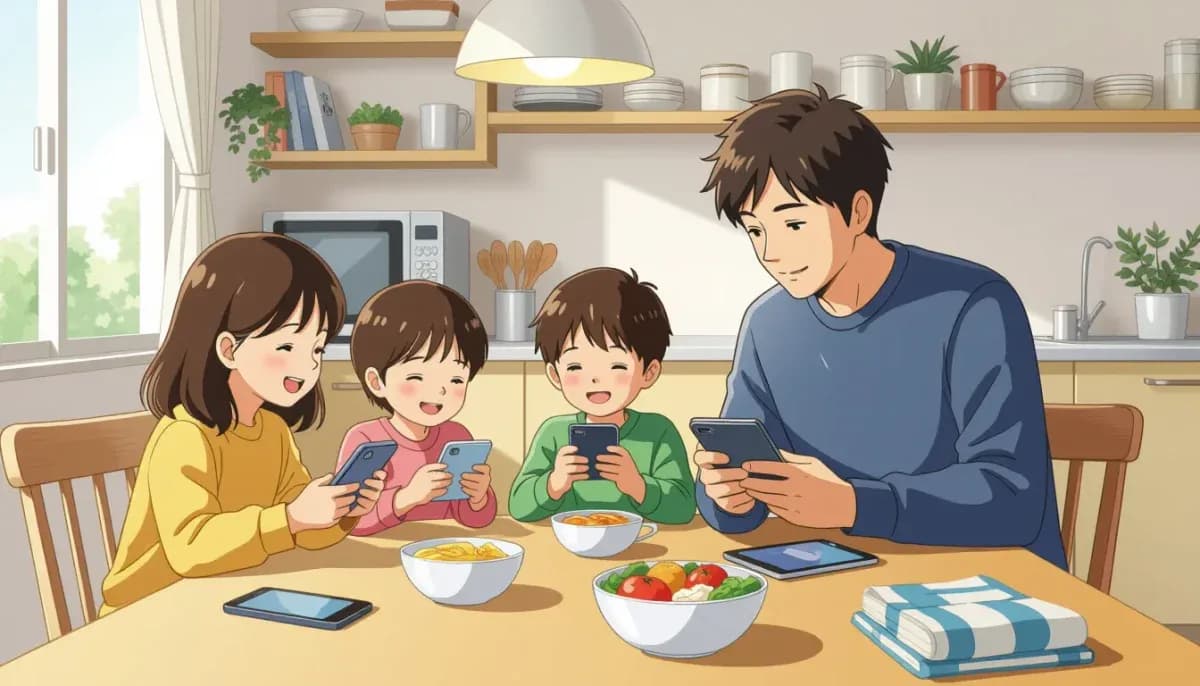
Cyberbullying Prevention and Online Safety for Kids
Learn how to protect your child from cyberbullying in Japan. Covers warning signs, laws, English-language resources, and practical online safety rules for foreign families.
Read more →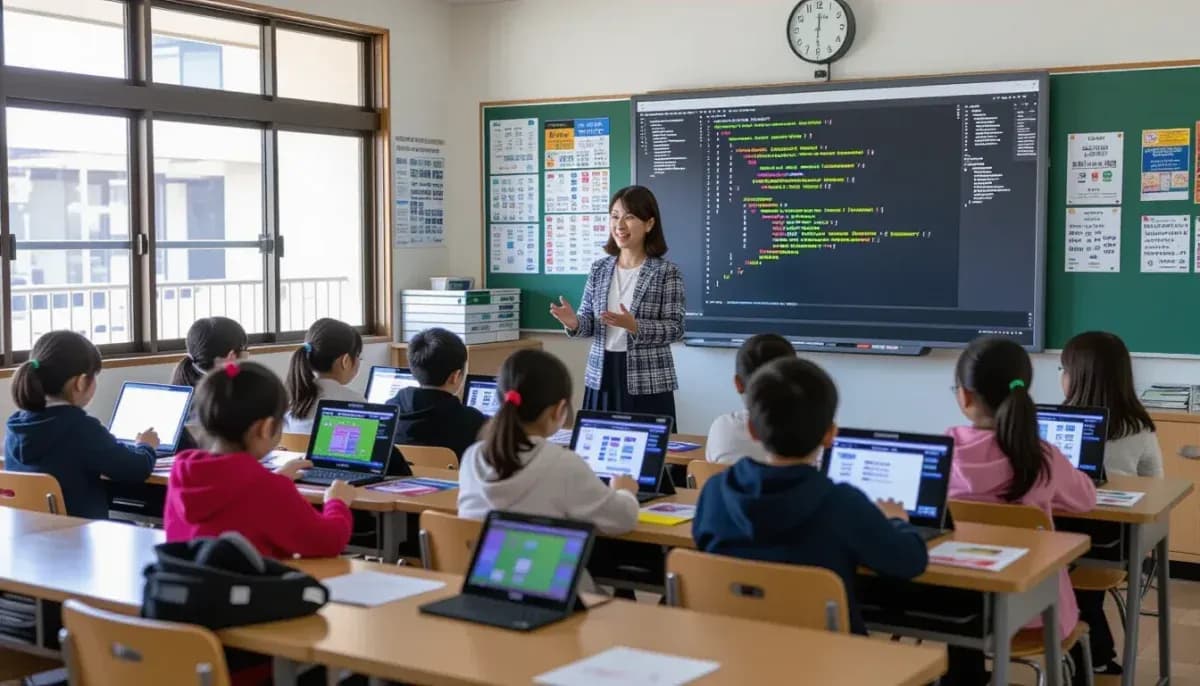
Digital Literacy Education in Japanese Schools
Complete guide to digital literacy education in Japanese schools for foreign families. Covers GIGA School initiative, mandatory programming, Information I entrance exam, and tips for expat children.
Read more →