
Japanese Calligraphy (Shodo) for Children

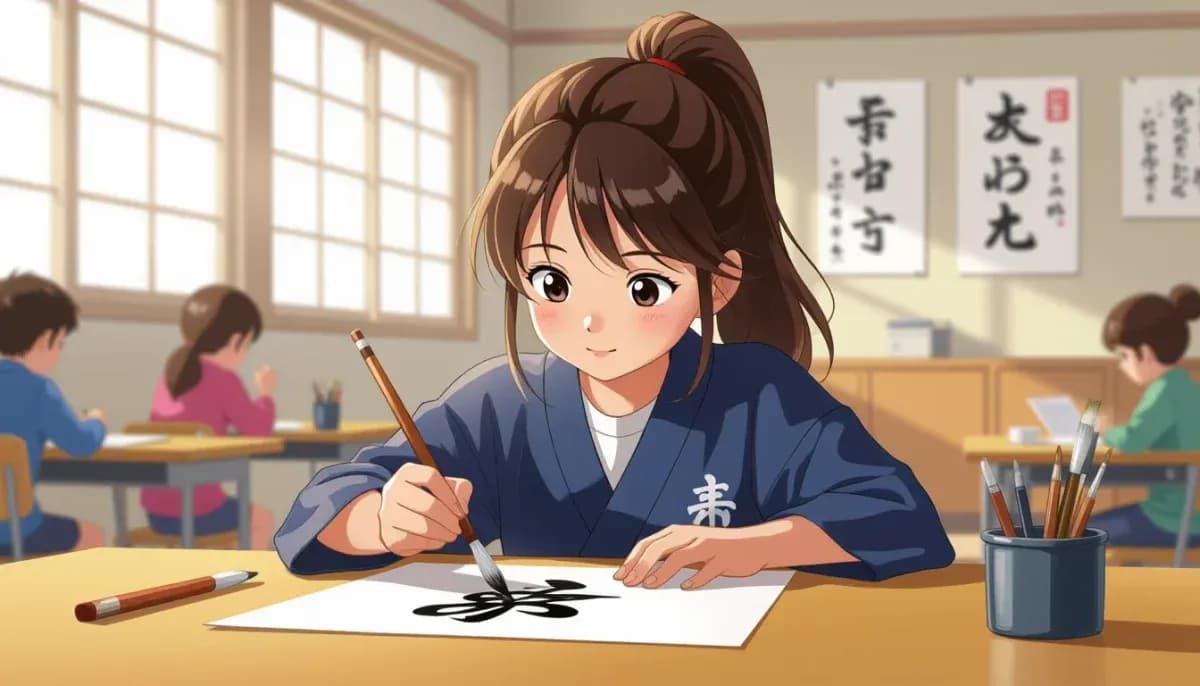
Everything foreign parents need to know about shodo (Japanese calligraphy) for children in Japan — school curriculum, benefits, tools, classes, and tips for expat families.
Japanese Calligraphy (Shodo) for Children: A Complete Guide for Foreign Families in Japan
If you're raising children in Japan, you've likely seen them come home with ink-stained fingers and proud artwork on washi paper. Japanese calligraphy — known as shodo (書道) — is far more than a school subject. It's a living cultural tradition that shapes how children develop focus, discipline, and a deep connection to Japanese heritage. For foreign families, shodo offers a unique window into Japanese culture that your child can genuinely participate in, even without fluent Japanese language skills.
This guide covers everything you need to know about shodo for children in Japan: how it's taught in schools, what benefits it provides, how to support your child at home, and how expat families can get involved.
What Is Shodo? A Brief Overview
Shodo (書道) literally means "the way of writing." It is the Japanese art of calligraphy — using a brush, ink, and traditional paper to create beautifully rendered kanji and kana characters. Unlike everyday handwriting, shodo is considered both a discipline and an art form.
Shodo arrived in Japan in the 6th century, carried by Buddhist monks from China who brought sutras written in Chinese characters. Over the following centuries, Japanese artists and scholars adapted the practice, developing distinct Japanese styles and eventually incorporating hiragana and katakana scripts. By the Heian period (794–1185), shodo was considered one of the highest forms of artistic expression — alongside poetry and music — and was a required skill for the Japanese nobility.
Today, approximately 20 million Japanese people practice shodo in some form, whether in schools, community classes, or as a personal hobby. The art has found renewed interest among younger generations, and high school shodo clubs compete in national championships with large-scale dramatic performances.
Shodo in Japanese Schools: What Your Child Will Learn
One of the most important things to understand as a foreign parent is that shodo is mandatory in Japanese public schools. Children begin formal shodo practice in 3rd grade (age 8-9) and continue through junior high school. This means that if your child attends a Japanese public or private school, they will be practicing calligraphy as part of their regular curriculum.
Japanese schools distinguish between three related practices:
- Shosha (書写) — Everyday handwriting practice, focusing on correct stroke order and neat characters. Taught from Grade 1.
- Shuji (習字) — Practice writing using a brush, emphasizing proper form. Often used interchangeably with shodo at the elementary level.
- Shodo (書道) — The full artistic practice incorporating style, expression, and creativity. Emphasized from junior high onward.
In the classroom, children learn to write in kaisho (楷書), the block script style, before gradually progressing to more fluid styles. They are graded not just on the beauty of the result, but on their posture, brush control, and attention to the teacher's model.
| Grade Level | Focus | Script Style |
|---|---|---|
| Grade 1-2 | Shosha (pencil handwriting) | Hiragana, Katakana, Basic Kanji |
| Grade 3-4 | Shuji (brush basics) | Kaisho (block script) |
| Grade 5-6 | Shuji + introduction to shodo | Kaisho, simple Gyosho |
| Junior High 1-3 | Shodo (full practice) | Kaisho, Gyosho, Sosho |
| High School | Elective shodo | All five styles |
For foreign children attending Japanese schools, shodo class can feel challenging at first — both because of the language barrier and the unfamiliar tools. However, many children find that shodo is actually one of the more accessible subjects, since the evaluation is visual and the teacher's model provides a clear template to follow. For tips on supporting your child's overall experience in Japanese school, see our Complete Guide to Elementary School in Japan for Foreign Parents.
The Five Styles of Japanese Calligraphy
As children advance in their shodo studies, they are introduced to the five classical script styles. Understanding these can help you appreciate your child's work and talk about it meaningfully with them.
- Tensho (篆書) — Seal Script: The oldest style, developed in China over 2,000 years ago. Characterized by rounded, symmetrical strokes. Rarely taught in schools but appears on official seals and stamps.
- Reisho (隷書) — Clerical Script: Bold and commanding, with horizontal strokes that flare outward. Common in official signage and temple nameplates.
- Kaisho (楷書) — Regular Script: The style children begin with. Clear, precise, and upright — comparable to block capitals in the Latin alphabet. Each stroke is distinct and deliberate.
- Gyosho (行書) — Semi-Cursive Script: An intermediate style with flowing connections between strokes. More natural for daily writing, often taught in upper elementary and junior high.
- Sosho (草書) — Cursive Script: The most advanced and expressive style. Strokes flow together and some characters are highly abbreviated. Taught at the high school level and beyond.
Most children in Japanese schools will primarily work in kaisho throughout elementary school, with gyosho introduced in junior high. The progression mirrors learning to print before learning to write in cursive — each style builds on the previous one.
The Benefits of Shodo for Children
Why does Japan continue to mandate shodo when most writing is done digitally? Research and decades of educational experience point to significant developmental benefits that go well beyond penmanship.
Concentration and Mindfulness: Shodo cannot be erased or corrected. A single stroke is final. This teaches children to be fully present and intentional — a form of mindfulness practice that carries over into other areas of study.
Posture and Body Awareness: Shodo is a whole-body activity. Students are taught to sit upright, position their feet flat on the floor, hold the brush correctly, and breathe steadily. The physical discipline required is more demanding than most people expect.
Observation and Attention to Detail: Children spend significant time studying the teacher's model before writing. This careful observation builds analytical skills and attention to nuance — skills that transfer to reading, mathematics, and science.
Stroke Order and Kanji Retention: Shodo reinforces the correct stroke order for kanji and kana. Research published in academic literature confirms that physical handwriting practice improves character retention more effectively than typing or passive reading. This is particularly valuable for foreign children who are simultaneously learning Japanese. For more on supporting your child's Japanese language development, see our guide on Teaching Japanese to Foreign Children: Methods and Resources.
Cultural Connection: For children growing up in Japan — especially those from mixed or foreign families — shodo provides a tangible connection to Japanese culture and history. It is a shared experience across generations and social backgrounds. Read more about navigating cultural identity in our article on Cultural Identity for Hafu and Mixed-Race Children in Japan.
Emotional Regulation: The meditative, unhurried nature of shodo practice is particularly valuable in an age of digital stimulation. Many teachers and parents report that children who practice shodo regularly show greater patience and emotional stability.
For further context on extracurricular activities in Japan, including after-school shodo classes, check out our guide to After-School Activities, Juku, and Extracurriculars in Japan.
Essential Tools: What You Need for Shodo at Home
If your child is practicing shodo at school or in an after-school class, you may want to set up a practice space at home. The tools required are known as the bunbo shiho (文房四宝) — the "Four Treasures of the Study."
| Tool | Japanese | Description | Beginner Tip |
|---|---|---|---|
| Brush | 筆 (fude) | Made from animal hair (goat, horse, rabbit). Comes in sizes for different characters. | Start with a medium-sized brush. Rinse thoroughly after each use. |
| Ink Stick | 墨 (sumi) | Traditional pressed ink, ground on an inkstone with water. Ready-made liquid ink is fine for beginners. | Bottled ink (bokujū) is much easier for home practice. |
| Inkstone | 硯 (suzuri) | Stone used to grind ink stick with water to produce ink. | Can skip if using bottled ink. |
| Calligraphy Paper | 半紙 (hanshi) | Thin washi paper, usually sold in packs of 100 sheets. | Available at 100-yen shops (Daiso). |
Additional supplies:
- Shitajiki (下敷き): A soft felt mat placed under the paper to absorb brush pressure.
- Bunchin (文鎮): A metal paperweight to hold the paper in place while writing.
- Apron or smock: Sumi ink is notoriously difficult to remove from clothing.
Most elementary school supply lists will include these items. They are widely available at stationery shops, 100-yen stores (especially Daiso and Seria), and online. The school co-op (PTA shop) often stocks calligraphy sets at reasonable prices at the start of the school year.
Shodo Classes for Expats and Foreign Families
If your child is not enrolled in a Japanese school, or if you'd like your child to experience shodo in a more structured setting, there are excellent options for foreign families throughout Japan.
After-School Calligraphy Classes (Shuji Juku): Across Japan, local calligraphy studios (often run by certified instructors called shodo-ka) accept children as young as 5 or 6. Many of these accept foreign children, and while classes are conducted in Japanese, the visual and hands-on nature of the subject makes participation feasible even for beginners. Monthly fees typically range from 3,000–8,000 yen.
Community Center Classes: Most Japanese municipal community centers (公民館, kominkan) offer calligraphy courses for adults and children. These are subsidized by the city and are very affordable, usually 500–2,000 yen per session.
English-Language Experiences in Tokyo and Kyoto: For families new to Japan or those wanting an introductory session, several bilingual providers offer shodo workshops in English:
- MAIKOYA offers English-guided sessions in Tokyo and Kyoto, with all materials provided.
- Tokyo Calligraphy Experience — Tokyo Cheapo's roundup of accessible workshops.
- Japan Society Calligraphy offers structured language and cultural programs.
Online Shodo Lessons: Remote calligraphy instruction has grown significantly. Several Japanese instructors now offer live Zoom classes where they observe and correct students' technique in real time. This is a great option for families in rural areas or those with scheduling constraints.
For broader guidance on activities and cultural programs for expat children, see our guide on After-School Activities, Juku, and Extracurriculars in Japan.
Supporting Your Child's Shodo Practice as a Foreign Parent
As a foreign parent, you don't need to be a calligraphy expert to meaningfully support your child's shodo practice. Here are practical tips:
Create a dedicated practice space: Set up a clean, low table or clear a section of the dining table. Use an old newspaper layer to protect surfaces. Having a consistent space makes practice feel intentional rather than burdensome.
Respect the ritual: Shodo has a ceremonial quality. Encourage your child to set up their tools carefully, sit properly, and approach the practice with focus. This ritual preparation is itself part of what shodo teaches.
Frame and display their work: Shodo artwork makes beautiful wall decorations. Displaying your child's work at home signals that you value their effort, and children tend to take more pride in their practice when it is celebrated.
Attend school calligraphy exhibitions: Japanese schools frequently hold cultural festivals (bunkasai) where student artwork — including shodo — is displayed. Make a point of attending to show your child their work matters to you.
Learn alongside them: You don't need to become proficient, but sitting down and attempting a few characters yourself is a wonderful bonding activity and a concrete expression of interest in Japanese culture. Expat parents often find shodo workshops a relaxing and satisfying experience. For more on engaging with Japanese culture as a foreign parent, see our guide on Understanding Japanese Parenting Culture as a Foreign Parent.
For more context on raising children across cultures in Japan, resources from Living in Nihon cover a wide range of expat family topics, while For Work in Japan offers practical guidance for those navigating life and family in Japan as working professionals. If your child is studying Japanese alongside calligraphy, Chuukou Benkyou provides study support resources for the Japanese curriculum.
Shodo as a Window into Japanese Culture
Beyond the practical benefits, shodo offers something harder to quantify: a genuine connection to Japan's cultural soul. When your child practices shodo, they are joining a 1,400-year tradition that connects samurai, monks, emperors, and schoolchildren across centuries.
Every December 12th, Japan celebrates Kanji no Hi (Kanji Day), when the Japan Kanji Aptitude Testing Foundation announces the "Kanji of the Year" in a public shodo ceremony at Kiyomizu Temple in Kyoto. The head priest writes the chosen character with a giant brush, in front of crowds of onlookers and national television cameras. The chosen kanji reflects the defining mood of the nation for that year.
This ceremony captures something essential about shodo: it is not merely a technical skill but a form of cultural expression and communication. When your child writes a character with care and intentionality, they are participating in that same tradition.
For families raising multilingual or multicultural children, experiences like shodo can serve as meaningful anchors. For more on this, see our articles on Heritage Language Maintenance for Children in Japan and Raising Bilingual Children in Japan.
For research-backed information on shodo in Japanese schools, Kids Web Japan offers excellent English-language resources written for and about young learners, and Japan Guide's calligraphy overview provides a thorough cultural context suitable for newcomers to Japan.
Japanese calligraphy is one of those rare school subjects that is simultaneously a practical skill, an art form, and a cultural practice. For foreign children growing up in Japan, it is an opportunity to participate in something deeply Japanese — and to develop patience, focus, and pride in their work along the way. Whether through school lessons, an after-school class, or occasional family workshops, shodo is well worth embracing as part of your family's Japan experience.

Originally from Vietnam, living in Japan for 16+ years. Graduated from Nagoya University, with 11 years of professional experience at Japanese and international companies. Sharing practical information for foreign parents raising children in Japan.
View Profile →Related Articles
Cultural Arts Festivals and Children's Participation
Complete guide to cultural arts festivals and children participation in Japan for expat families. Covers bunkasai, Shichi-Go-San, Kodomo no Hi, matsuri traditions, and how foreign children can participate fully.
Read more →
How to Support Your Creative Child in Japan
Discover how to nurture your creative child in Japan through traditional crafts, naraigoto lessons, bilingual expression, and smart use of Japan's generous family support programs. A complete guide for foreign parents.
Read more →
Art Competitions and Exhibitions for Children in Japan
Complete guide to art competitions and exhibitions for children in Japan. Discover Pentel ICAE, JQA Environmental Drawing Contest, top museums, and tips for expat families supporting young artists.
Read more →
Digital Art and Animation Classes for Kids in Japan
A complete guide for expat families: find English-friendly digital art and animation classes for kids in Japan, from iPad studios to bilingual workshops in Tokyo and beyond.
Read more →
Community Art Programs and Workshops for Kids
Discover community art programs and workshops for kids in Japan. Find English-friendly studios, costs, and tips for expat families to enroll children in art classes.
Read more →
Best Museums and Art Galleries for Children in Japan
Discover the best museums and art galleries for children in Japan — from Tokyo's Ghibli Museum and teamLab to Railway Museum and Kids Plaza Osaka. Practical tips, admission prices, and age-by-age recommendations for foreign families.
Read more →