
Kanji Learning Strategies for Non-Native Children

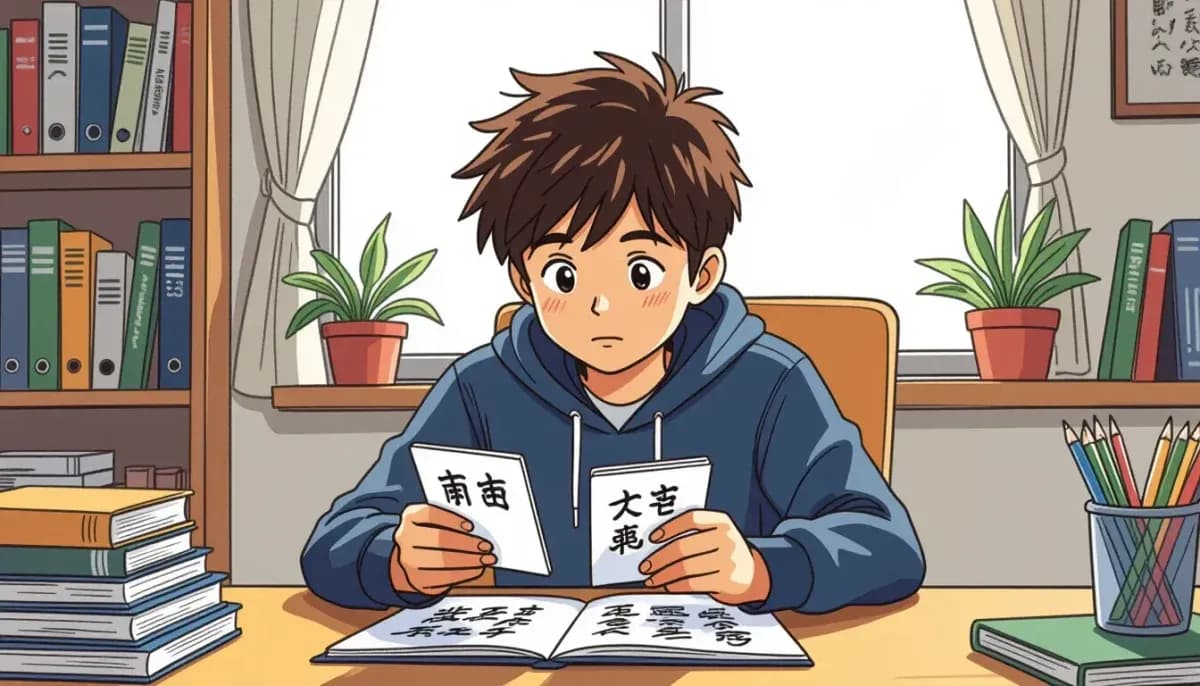
Practical kanji learning strategies for non-native children in Japan. Covers radicals, spaced repetition, handwriting practice, and daily routines to master 1,006+ kyoiku kanji alongside the Japanese school curriculum.
Kanji Learning Strategies for Non-Native Children in Japan
When a foreign family moves to Japan, one of the biggest challenges children face is tackling kanji — the complex Chinese-derived characters that make up a huge portion of written Japanese. Unlike native Japanese children who grow up surrounded by kanji from birth, non-native children must learn these characters while simultaneously adjusting to a new culture, language, and school environment. The good news? With the right strategies, non-native children can absolutely master kanji — and in some ways, their fresh approach gives them unique advantages.
This guide covers everything you need to know about helping your child learn kanji effectively, from understanding the Japanese school curriculum to the best apps, techniques, and daily habits that work for non-native learners.
Understanding the Kanji Curriculum in Japan
Before diving into strategies, it helps to understand exactly what your child is up against. Japanese elementary schools follow the kyoiku kanji (教育漢字) list — a set of 1,006 characters that students are expected to master by the end of Grade 6.
Here is how the learning load breaks down by school year:
| Grade | Kanji to Learn | Cumulative Total |
|---|---|---|
| Grade 1 | 80 | 80 |
| Grade 2 | 160 | 240 |
| Grade 3 | 200 | 440 |
| Grade 4 | 200 | 640 |
| Grade 5 | 185 | 825 |
| Grade 6 | 181 | 1,006 |
| Junior High | 1,130 | 2,136 |
By the end of junior high school, students are expected to know all 2,136 jouyou kanji (常用漢字) — the full set of standard-use characters required for everyday reading in Japan.
For non-native children who join Japanese schools mid-stream — say, in Grade 3 or 4 — this represents a significant catch-up challenge. Understanding where your child sits within this progression is the first step to building a realistic learning plan. For more on navigating the Japanese school system as a foreign family, see our guide to Elementary School in Japan.
Strategy 1: Master Radicals First
The single most powerful shortcut for learning kanji is understanding radicals (部首, bushu) — the building blocks from which almost all kanji are constructed. There are approximately 200 core radicals, and once a child recognizes them, they can start making educated guesses about the meaning and sometimes pronunciation of unfamiliar characters.
For example:
- The water radical (氵) appears in characters related to water: 海 (sea), 洗 (wash), 泳 (swim)
- The person radical (亻) appears in characters related to people: 休 (rest), 仕 (serve), 体 (body)
- The sun/day radical (日) appears in characters related to time or light: 明 (bright), 晴 (sunny), 時 (time)
Teaching radicals first gives children a mental framework — instead of memorizing each kanji as a completely unique shape, they start seeing patterns. This approach is especially effective for non-native learners who don't have years of passive exposure to rely on.
Great resources for radical-based learning include WaniKani, which uses mnemonics and spaced repetition built around radicals, and the Kanji Study app which provides stroke order visualization.
Strategy 2: Use Spaced Repetition Consistently
Spaced repetition systems (SRS) are scientifically proven to dramatically improve long-term retention. The idea is simple: review a kanji just before you're about to forget it. This means reviewing some cards more frequently at first, then less often as they become familiar.
For children, the most practical SRS tools are:
- Anki — Free and highly customizable. Parents can create or download pre-made kanji decks organized by grade level. Spending 20–30 minutes daily reviewing 6–7 new kanji plus previously learned ones is a sustainable pace that allows mastery of 2,000+ kanji within a year.
- WaniKani — A structured paid platform that teaches radicals, then kanji, then vocabulary in a fixed order. Excellent for self-motivated older children (10+).
- Kanji Study App — Allows handwriting practice on a touchscreen, which combines motor memory with SRS review.
The key is consistency over intensity. Short daily sessions of 15–30 minutes beat marathon weekend study sessions. Build kanji review into a fixed daily routine — after dinner, before bath, or during a regular study period.
Strategy 3: Prioritize Handwriting Practice
In the age of smartphones and tablets, it might be tempting to skip handwriting practice. Don't. Research and classroom experience both show that writing kanji by hand significantly improves retention, for several reasons:
- Motor memory reinforces the shape in a different part of the brain than visual recognition
- Stroke order — the specific sequence in which strokes are written — helps distinguish similar-looking characters like 千 (thousand) versus 干 (dry)
- Careful attention required by handwriting slows children down, forcing them to notice differences they might overlook when reading
Japanese schools provide kanji practice notebooks (漢字ノート) where students write each character multiple times in proper stroke order. Even at home, dedicating 10 minutes per day to handwriting new kanji dramatically improves retention compared to reading-only practice.
Free printable worksheets are available through Chibimusu Doriru (ちびむすドリル) — a Japanese educational website with grade-level kanji worksheets that are navigable even by beginners with some help from a parent or a browser translation tool.
Strategy 4: Learn Kanji in Context, Not in Isolation
One common mistake is learning kanji as isolated symbols with single meanings. In practice, most kanji appear as part of compound words (熟語, jukugo) — combinations of two or more kanji that together form a specific meaning. Learning kanji only in isolation often leaves children unable to recognize the same character when it appears in a real sentence.
Better approach: always learn a kanji alongside 2–3 real words that use it.
For example, learning the kanji 学 (study/learning):
- 学校 (gakkou) = school
- 学生 (gakusei) = student
- 勉学 (bengaku) = studying (formal)
Seeing the same kanji in different word contexts cements both the character's meaning and its common readings. This is also how Japanese children naturally encounter kanji — embedded in books, signs, and conversation — rather than as abstract symbols on flashcards.
Encourage your child to read widely at their level. NHK Web Easy (available online) provides real Japanese news articles with furigana — phonetic readings printed above kanji — making it accessible even for intermediate learners.
Strategy 5: Make Learning Visual and Story-Based
Young children in particular respond well to visual mnemonics — stories or images that connect a kanji's shape to its meaning. This technique, popularized by James Heisig's Remembering the Kanji series, transforms abstract symbols into memorable pictures.
Some examples:
- 山 (mountain) = looks like three mountain peaks
- 木 (tree) = looks like a tree with branches and roots
- 川 (river) = looks like three flowing streams
For each new kanji, help your child invent a short story or image that connects the shape to the meaning. The sillier and more vivid the story, the better it sticks. Even simple visual associations — "this kanji looks like a person walking" for 人 — dramatically improve recall compared to brute-force repetition.
Schools in Japan often use this technique naturally. Nippon.com describes how teachers say things like: "[The character 開, meaning 'open'] looks like two hands holding a gate to open it" — connecting the visual structure of the kanji to its meaning through storytelling. Read more about how Japanese schools approach kanji learning on Nippon.com.
Strategy 6: Integrate Kanji into Daily Life
Beyond structured study, the fastest way to build kanji recognition is through environmental immersion. When children live in Japan, kanji is literally everywhere — on signs, packaging, menus, and TV screens. Help your child notice and decode this environmental kanji as part of daily life.
Practical ideas:
- Label household items in Japanese (kanji + hiragana) — the fridge, the bathroom door, the bookshelf
- Read menus together at restaurants and look up any kanji your child doesn't recognize
- Play kanji spotting games on the train — who can read the most station name kanji?
- Watch Japanese children's TV which naturally reinforces kanji at an age-appropriate level
- Read Japanese manga and picture books — many have furigana and provide high-frequency kanji exposure in an engaging format
For families navigating the broader challenge of raising bilingual children, our guide on Raising Bilingual Children in Japan offers complementary strategies for language development alongside kanji learning.
Strategy 7: Follow a Grade-Appropriate Learning Path
Non-native children sometimes try to follow adult Japanese learning resources that jump straight to high-frequency kanji for reading newspapers and novels. For children actually attending Japanese school, a better approach is to follow the school curriculum — starting with Grade 1 kyoiku kanji and working systematically through the list.
This approach has several advantages:
- Your child will recognize the same characters being taught in class, reinforcing school learning
- The Grade 1-3 kanji are visually simpler and build confidence early
- It aligns with the furigana support provided in Japanese children's books, which disappears gradually as grade levels increase
If your child has significant catching up to do, consider working with a 補習校 (hoshuu-kou) — a Japanese supplementary school offered by many municipalities and Japanese community organizations — or hiring a local tutor who specializes in teaching kanji to non-native children.
For more on Japanese language support options, see our overview of Teaching Japanese to Foreign Children.
Resources and Support for Foreign Families
Raising a child in the Japanese school system is a complex undertaking, and kanji is just one piece of the puzzle. Here are some additional resources:
- Living in Nihon — Raising Children & Education Guide — Comprehensive guide for foreign parents navigating Japan's education system, covering everything from enrollment to language support.
- For Work in Japan — Resources for expat families building their lives in Japan, including language and education topics.
- Chuukou Benkyou — Japanese-language resource focused on middle and high school exam preparation, useful for older non-native students preparing for Japanese entrance exams.
- FluentU Japanese Blog — How to Learn Kanji — In-depth guide covering 18 strategies for mastering kanji, with practical tool recommendations.
Understanding the broader Japanese school environment also helps contextualize the kanji learning journey. See our Complete Guide to the Japanese Education System for a full overview.
Building a Sustainable Kanji Learning Routine
The strategies above work best when combined into a consistent daily routine. Here is a sample approach that fits within a 30-minute daily study slot:
- 5 minutes — Handwriting practice: write each new kanji 5 times with correct stroke order
- 15 minutes — SRS flashcard review (Anki or WaniKani): review due cards + add 5-7 new ones
- 10 minutes — Reading practice: read a short text at current level (children's book, NHK Web Easy, manga)
Over time, as recognition improves, shift more time toward reading and less toward rote drills. The goal is not perfect memorization of 2,136 isolated characters — it's the ability to encounter kanji in real Japanese text and understand it.
For children who feel overwhelmed, remind them: even native Japanese students struggle with kanji throughout their schooling. The difference is that non-native children bring a fresh, analytical perspective — and with consistent practice and the right strategies, kanji mastery is absolutely within reach.
For more support on your child's educational journey in Japan, explore our complete resources on Heritage Language Maintenance for Children in Japan and Junior High School in Japan.

Originally from Vietnam, living in Japan for 16+ years. Graduated from Nagoya University, with 11 years of professional experience at Japanese and international companies. Sharing practical information for foreign parents raising children in Japan.
View Profile →Related Articles
Summer Immersion Programs for Japanese Language Learning
Discover the best summer immersion programs for Japanese language learning for children and teens. From in-Japan schools to US-based camps, find the right program with costs, age requirements, and tips for expat families.
Read more →
Overcoming Japanese Language Barriers in School
A complete guide for foreign families on overcoming Japanese language barriers in school. Learn practical strategies, support resources, and what to expect for your child in Japan's education system.
Read more →
How Long Does It Take Kids to Become Fluent in Japanese?
Wondering how long it takes expat children to become fluent in Japanese? This guide covers realistic timelines by age group, immersion strategies, and tips to help your child thrive in Japan.
Read more →
Kumon and Learning Programs for Japanese Language
Explore Kumon's Japanese Language Program and other top learning options for foreigners in Japan. Costs, enrollment tips, and how to choose the right program for your child or yourself.
Read more →
Japanese Language Playgroups and Immersion Activities
A complete guide to Japanese language playgroups and immersion activities for foreign children in Japan. Find the best programs, strategies, and tips for raising bilingual kids.
Read more →
Using Anime and TV Shows to Help Kids Learn Japanese
A complete guide for foreign parents in Japan on using anime and children's TV shows to build kids' Japanese skills. Includes recommended shows by age, subtitle strategies, and practical daily habits that actually work.
Read more →