
Why Maintaining Your Child's Heritage Language Matters


Discover why heritage language maintenance is critical for children growing up in Japan. Research-backed insights on cognitive benefits, identity, emotional wellbeing, and practical strategies for bilingual families.
Why Maintaining Your Child's Heritage Language Matters
If you're raising children in Japan as a foreign parent, you've likely faced a familiar dilemma: your child is absorbing Japanese at school, with friends, and through daily life — while the language you speak at home starts to fade into the background. It can feel like a natural trade-off, but research tells a very different story. Maintaining your child's heritage language isn't just about cultural pride. It shapes their cognitive development, their identity, their emotional wellbeing, and their future opportunities in profound ways.
This guide explains why heritage language maintenance matters deeply, what the science says, and how you can take practical steps to keep your family's language alive in Japan.
What Is a Heritage Language?
A heritage language is a language that has personal or family relevance to a child but is not the dominant language of the society where they live. In Japan, this means the language you — the foreign parent — speak natively: English, Spanish, French, Portuguese, Korean, Mandarin, Tagalog, Vietnamese, or any other language.
For children growing up in Japan, Japanese is the dominant language of school, friendships, and public life. The heritage language lives primarily at home, in family conversations, and during visits abroad. Without active effort, this home language is at serious risk.
| Term | Definition |
|---|---|
| Heritage Language | Family or ancestral language that is not dominant in the child's environment |
| Dominant Language | The language of the surrounding society (Japanese in Japan) |
| Bilingual | Proficient in two languages |
| Heritage Speaker | A person raised with a heritage language but dominant in the societal language |
| Language Attrition | The gradual loss of a language due to lack of use or input |
The Science: What Happens Without Intervention
The research is clear — and slightly alarming if you are not yet taking heritage language maintenance seriously.
A large-scale study published in Child Development (PMC, 2024) tracked 427 heritage speaker children between the ages of 4 and 18. The findings show that heritage speakers diverge from monolingual peers at a critical threshold: age 5.61 years. Once this gap opens, it tends to persist until at least age 17 without deliberate intervention. In other words, the window to build a solid heritage language foundation is the early years — and it closes faster than most parents expect.
A study from Frontiers in Language Sciences found that input before age 3 has lasting, long-term effects on a child's heritage language development. Early years are a particularly sensitive period. Children who receive rich heritage language input in infancy and toddlerhood have stronger foundations that remain measurable years later.
The generational picture is even more sobering. Research on Japanese-speaking communities abroad found that language skills decline significantly across generations. Second-generation children significantly outperform third-generation children in proficiency and fluency. By the third generation, in many communities, the heritage language is essentially lost. In Japan, where children are immersed in Japanese from the moment they enter nursery or hoikuen, the pressure toward heritage language loss is even more acute.
For more context on bilingual strategies that work in Japan, see our guide to Raising Bilingual Children in Japan.
Why It Matters: Cognitive and Academic Benefits
Beyond cultural connection, maintaining a heritage language delivers concrete cognitive benefits that researchers have documented extensively.
Bilingualism and brain development: Children who actively maintain two languages develop stronger executive function skills — the mental processes that govern attention, cognitive flexibility, and working memory. Bilingual children have been shown to be better at switching between tasks, filtering irrelevant information, and solving problems that require mental flexibility.
Academic advantage: Heritage language proficiency supports, rather than competes with, Japanese language development. Concepts learned in one language transfer to another — a phenomenon linguists call "cross-linguistic transfer." A child who understands narrative structure and complex vocabulary in English, for example, can apply those skills when reading Japanese. The two languages reinforce each other.
Literacy skills: Research on the home literacy environment shows that children with rich exposure to books, storytelling, and reading in their heritage language develop stronger literacy foundations overall. This includes early Japanese literacy too.
The Japanese Education System guide for foreign families explains how understanding these language foundations can help you navigate your child's schooling path in Japan.
Why It Matters: Identity and Emotional Wellbeing
The consequences of heritage language loss are not only academic — they are deeply personal.
A study published in Multilingua (Nakamura, 2020) interviewed mixed-ethnic adults in Japan aged 18–23 about their experience growing up with a non-Japanese parent whose language they never acquired. The results were striking: participants uniformly described the lost opportunity as "regretful." Many experienced identity confusion and social discomfort when Japanese people asked about their mixed background and they could not speak the language associated with it.
The study concluded: "Non-transmission of the minority language has long-term implications on the social and emotional well-being" of mixed-ethnic children. The language is not just a communication tool — it is a bridge to a whole side of their family, heritage, and sense of self.
Research on Japanese-speaking diaspora communities found that in Brazil, where Japanese communities are large and Portuguese (not English) is the dominant language, many third-generation descendants still maintain fluent Japanese. The key factors? A sufficiently large community that embedded the language into daily life, and an environment where Japanese did not have to compete with English's global prestige. Community size and environment matter enormously.
For foreign families in Japan, this translates to a clear message: the default outcome, without active effort, is language loss — and the children who experience it often feel the loss keenly as adults.
See also: Cultural Identity for Hafu and Mixed-Race Children in Japan for related insights on identity development.
The Six Factors That Predict Heritage Language Success
The large-scale vocabulary study of 427 heritage speaker children identified six experiential factors that collectively explain 61.8% of the variance in heritage language vocabulary scores. Understanding these factors gives parents a practical framework for action.
| Factor | Impact | Practical Action |
|---|---|---|
| Homeland Holiday Visits | Strongest predictor (p=.001) | Prioritize regular trips to your home country |
| Home Language Use | High — consistent daily input | Enforce a "home language" rule |
| Literacy Engagement | High — predicts self-rated proficiency | Read books in the heritage language daily |
| Community Exposure | Moderate — supports natural use | Join heritage language communities in Japan |
| School Instruction | Moderate when available | Enroll in hoshūshūgyō-kō (補習授業校) or heritage language Saturday schools |
| Perceived Proficiency | Motivational — affects effort | Praise your child's heritage language skills consistently |
The most actionable takeaway: homeland visits are the single strongest predictor of vocabulary outcomes. A study found that even short visits significantly boost vocabulary and complex grammar — the two areas most vulnerable to attrition. If budget or visa constraints limit travel, prioritize it over other family spending when possible.
For a broader view of how heritage language schools and weekend programs in Japan can support your child, our full Heritage Language Maintenance for Children in Japan guide covers programs available across the country.
Emotional Consequences of Not Maintaining the Heritage Language
Many parents focus on the practical question: "Will my child be able to communicate with grandparents?" But the stakes are higher than family communication alone.
Research consistently shows that children who lose their heritage language — especially in mixed-ethnic contexts — report:
- Feeling disconnected from one side of their family
- Experiencing confusion about their ethnic and cultural identity
- Difficulty forming relationships within heritage communities as adults
- Regret and a sense of permanent loss that cannot easily be recovered
This is particularly significant in Japan, where children's appearance may mark them as "different" even if they feel entirely Japanese. For hafu children especially, the ability to speak the non-Japanese parent's language can serve as an important anchor for identity and belonging.
The Mental Health and Emotional Wellbeing for Foreign Children in Japan guide addresses how language, identity, and psychological wellbeing intersect for children growing up in Japan.
Getting Started: Practical First Steps
Understanding why heritage language matters is the first step. Here are concrete actions to take now:
- Establish a home language policy. Decide that you will consistently speak your heritage language at home, even when your child responds in Japanese. Consistency is more important than perfection.
- Start young. With input before age 3 having the greatest long-term effect, the earlier you begin, the better — but it is never too late to start.
- Make it joyful. Read books, tell stories, sing songs, watch films, and play games in the heritage language. Positive associations build motivation.
- Plan regular homeland visits. Even one or two weeks in your home country per year has measurable impact on vocabulary development.
- Find your community. International parent groups, heritage language playgroups, and community centers can provide natural social contexts for your child to use the language with peers.
- Consider formal instruction. Hoshūshūgyō-kō (補習授業校) — government-supported supplementary schools for Japanese children abroad — exist to maintain Japanese for returnees. Many countries have equivalent programs in Japan for other heritage languages.
For detailed strategies, see our guide Proven Strategies to Keep Heritage Language Alive in Japan, which covers step-by-step approaches for families at every stage.
External Resources
For more support and information on raising bilingual and multilingual children in Japan:
- Living in Nihon: Raising Children and Education in Japan — Comprehensive resource covering bilingual education strategies, Japanese language support, and community networking for foreign parents in Japan.
- For Work in Japan: Family Life and Living Guide — Practical guide to family life in Japan including bilingual parenting strategies and community support resources.
- Chuukou Benkyou — Academic support and education resources for children in Japan.
- PMC Research: Modeling Heritage Language Vocabulary — Peer-reviewed study of 427 heritage speaker children examining the factors that predict language maintenance outcomes.
- Sophia University: Do Japanese Immigrants Lose Their Mother Tongue? — Fascinating research on generational language loss and community factors.
Conclusion: The Window Is Open Now
Maintaining your child's heritage language in Japan is one of the most valuable investments you can make in their future — cognitively, emotionally, and socially. The research is unambiguous: early input, consistent home language use, literacy engagement, and regular homeland visits create children who are bilingual, bicultural, and equipped with a strong sense of identity.
The window for maximum impact is early, but action at any age makes a difference. Whether your child is an infant, a toddler, or already in elementary school, starting today is better than waiting. The language you speak at home is a gift — make sure to pass it on.
For your next step, explore the full series: Heritage Language Maintenance for Children in Japan covers everything from schools and resources to managing the emotional journey of raising multilingual children.

Originally from Vietnam, living in Japan for 16+ years. Graduated from Nagoya University, with 11 years of professional experience at Japanese and international companies. Sharing practical information for foreign parents raising children in Japan.
View Profile →Related Articles

Heritage Language and Cultural Identity Connection
How to maintain your heritage language and build cultural identity for children in Japan. Practical strategies for multicultural families navigating bilingualism and dual identity in Japan.
Read more →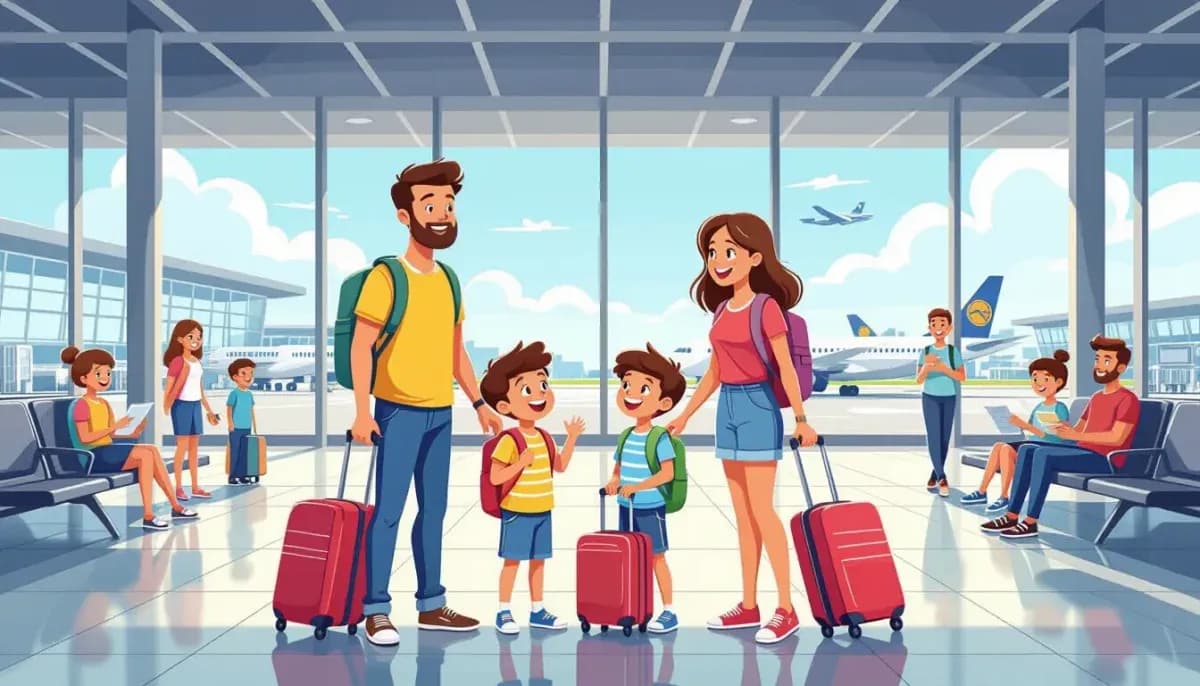
Summer Trips Abroad for Heritage Language Immersion
Discover how summer trips abroad can powerfully boost your child's heritage language in Japan. Research-backed strategies, program types, and planning tips for expat families.
Read more →
How to Assess Your Child's Heritage Language Level
Learn practical methods to assess your child's heritage language proficiency level in Japan. Includes home tests, formal assessments, proficiency frameworks, and action steps for bilingual families.
Read more →
Balancing Japanese and Heritage Language Time
Learn how to balance Japanese and heritage language time for your children in Japan. Practical strategies, daily routines, and time allocation frameworks for bilingual families.
Read more →
Heritage Language Books and Media Resources for Kids
Discover the best heritage language books and media resources for kids in Japan. From classic Japanese picture books to streaming shows and apps, help your child stay connected to their mother tongue with our curated guide for bilingual families.
Read more →
Community Groups for Heritage Language Practice in Japan
Discover the best community groups, Saturday schools, and online resources for heritage language practice in Japan. A practical guide for multilingual and bilingual families raising children in Japan.
Read more →