
Popular Apps and Games for Children in Japan

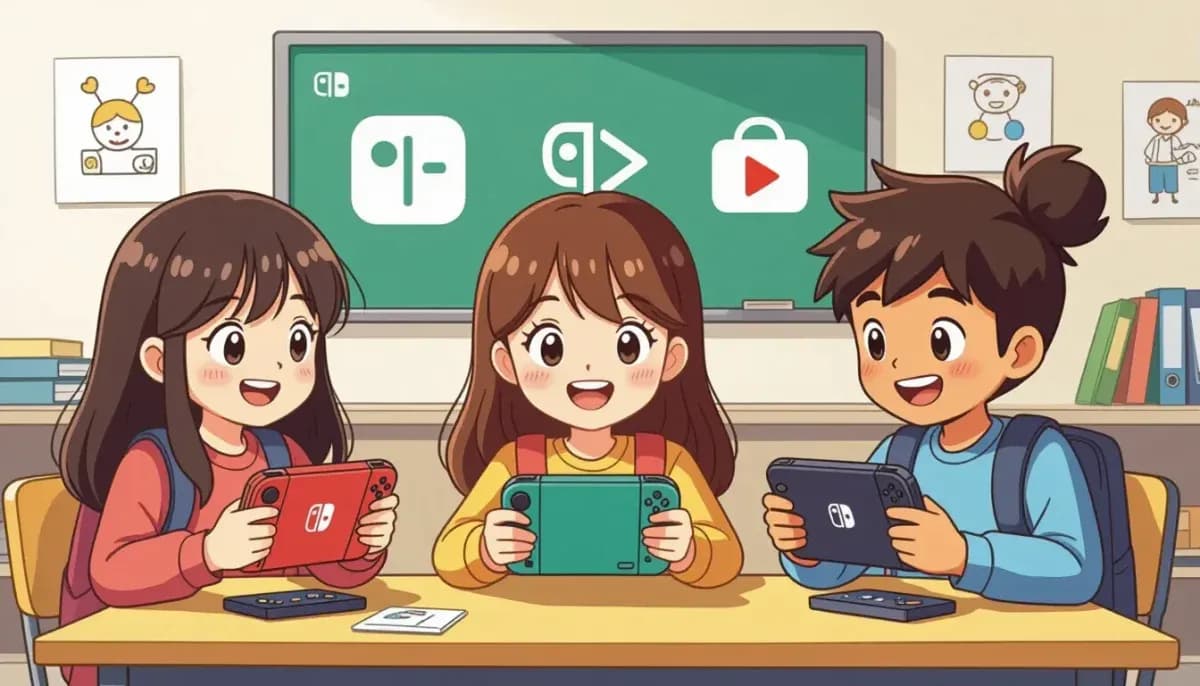
Discover the most popular video games, mobile apps, and educational tools for children in Japan. A practical guide for expat families covering everything from Minecraft to traditional karuta.
Popular Apps and Games for Children in Japan: A Complete Guide for Expat Families
If you're raising children in Japan, you've probably noticed that gaming culture here is uniquely vibrant and deeply embedded in daily life. From Nintendo Switch sessions after school to mobile apps on the train, children in Japan have access to a rich ecosystem of digital entertainment and educational tools. As a foreign parent, understanding what your child is playing — and how to use these platforms to your advantage — can help you bond with your kids, support their Japanese language development, and navigate the local tech landscape.
This guide covers the most popular video games, mobile apps, educational tools, and traditional games for children in Japan, with practical tips for expat families.
What Games Are Japanese Children Playing Right Now?
According to a September 2025 survey by GameTrainer of 324 elementary school children in Japan, the most popular game series are overwhelmingly dominated by sandbox and Nintendo titles:
| Rank | Game Series | Popularity (%) |
|---|---|---|
| 1 | Minecraft | 28.4% |
| 2 | Splatoon | 16.9% |
| 3 | Animal Crossing | 12.0% |
| 4 | Mario Kart | 9.3% |
| 5 | Pokémon | 8.0% |
| 6 | Fortnite | 6.8% |
| 7 | Super Smash Bros | 5.6% |
| 8 | Roblox | 1.5% |
| 9 | Suika Game | 1.2% |
| 10 | The Legend of Zelda | 1.2% |
Minecraft leads by nearly 12 percentage points, reflecting its global dominance among younger players. It's commonly called マイクラ (Maikura) by Japanese kids — a handy nickname for expat parents to know. Four of the top seven titles are Nintendo exclusives, reinforcing Japan's identity as Nintendo's home turf.
Notably, Roblox significantly underperforms compared to its global popularity. Japan's mobile-first and console gaming preferences, combined with the platform's relatively weak Japanese language support historically, may contribute to this gap.
The Japan Times separately confirmed in 2023 that Minecraft, Fortnite, and Pokémon consistently rank among the top games played by elementary-age children. Many parents report that gaming together — even without being an expert player — creates natural opportunities for Japanese conversation and parent-child bonding.
For more context on how digital life fits into children's daily routines in Japan, see our guide on Elementary School in Japan: A Complete Guide for Foreign Parents.
Top Educational Mobile Apps for Children in Japan
Japan is a mobile-first gaming market, with average mobile gaming sessions lasting nearly 27 minutes. For children, educational apps have become a significant part of learning outside the classroom — approximately 90% of students aged 9–12 used computers or tablets at primary school in Japan as of 2021 (Benesse/Statista survey of 10,532 students).
Here are the standout educational apps currently popular on Google Play Japan:
| App | Category | Best For |
|---|---|---|
| Pokémon Smile | Dental hygiene + gaming | Ages 3–10: gamifies tooth brushing |
| BabyBus Kids: Play & Learn | Multi-subject learning | Ages 2–8: songs, stories, mini-games |
| English Quiz (Eigomonogatari) | English vocabulary | Ages 6–12: quiz-based learning |
| Calculation Training | Math skills | Elementary school age |
| Kanji writing apps | Japanese literacy | Primary school learners |
| Tropical Aquarium / Axolotl Pet | Pet simulation | Ages 5+: responsibility, creativity |
Pokémon Smile deserves a special mention. This free app turns brushing teeth into a mini-game where children catch Pokémon by brushing correctly. It's wildly popular among Japanese families and extremely effective at making an otherwise dreaded chore enjoyable. Even non-Japanese-speaking children quickly pick it up.
BabyBus Kids offers a massive library of age-appropriate content with a Japanese-language interface, making it excellent for children who are working on Japanese immersion while learning through play.
For structured academic learning, many Japanese families also use subscription platforms like Benesse's Shimajiro series and Just Systems' educational software, which was used by 85% of public elementary schools in Japan as of 2019.
Best Apps for Children Learning Japanese
For expat families focused on Japanese language acquisition, targeted apps can be a game-changer. These work well alongside everyday school and social exposure:
| App | Platform | Price | Best For |
|---|---|---|---|
| Trace and Learn Hiragana/Katakana | iOS/Android | Free | Beginners learning to write kana |
| Dr. Moku's Hiragana Mnemonics | iOS/Android | Free (with paid upgrade) | Visual memory aids for character recognition |
| Writing Order FREE Hiragana/Katakana | iOS/Android | Free (with ads) | Gamified stroke order practice |
| Flashcards by NKO | iOS/Android | Free | 27 study game modes: matching, quizzes, more |
| Learn Japanese by Mindsnacks | iOS/Android | Free / $7.99 | Post-basics listening comprehension |
| Professor Ninja Japanese for Kids | iOS/Android | $1.49 | Ages 9+: immersive 1,000-word vocabulary builder |
A tip from GaijinPot: combine Flashcards by NKO with Animal Crossing: Pocket Camp — learn vocabulary in the flashcard app, then reinforce it organically during gameplay. Children absorb language much faster when they encounter it in a meaningful, enjoyable context.
You can also leverage popular games your child already plays. Setting a Nintendo Switch or smartphone to Japanese, then playing alongside your child, is one of the most effective dual-purpose strategies for expat families. Pokémon Go is particularly good for this — names of locations, items, and Pokémon are all in Japanese when the device language is set accordingly.
For more strategies on supporting Japanese language development, read our article on Teaching Japanese to Foreign Children: Methods and Resources.
Free Mobile Games That Double as Japanese Learning Tools
If budget is a concern, you don't need to spend anything to find high-quality Japanese-language games for children. These free apps are recommended by expat communities and language educators:
Neko Atsume: Kitty Collector — A relaxing cat-collection game where children leave food out for virtual cats. The item names and cat names are written in katakana, making it a gentle, low-pressure introduction to the script. Start in English, then switch the language to Japanese once your child gets comfortable.
Animal Crossing: Pocket Camp — The mobile version of Nintendo's beloved franchise. It contains conversational Japanese, hiragana, katakana, and kanji (with furigana in many places). Ideal for children already familiar with the Animal Crossing universe.
Pokémon Go — Set the device to Japanese and turn everyday walks into language-learning adventures. Transit vocabulary, location names, and item descriptions all become incidental Japanese practice.
Study Stack — Offers hangman, matching games, crosswords, and more. Supports custom flashcard decks, making it useful for vocabulary tied to school subjects.
These tools work best as supplements to real-world Japanese exposure. For a broader discussion of bilingual strategies, see our guide on Raising Bilingual Children in Japan: Strategies and Best Practices.
For additional resources and insights for expat families in Japan, Living in Nihon is an excellent English-language resource. If you're working in Japan and managing family life, For Work in Japan provides practical guides for navigating professional and family life. For academic support and study resources, Chuukou Benkyou covers educational strategies for children in Japan.
Traditional Japanese Games Children Still Play
Not everything is digital. Japan has a rich tradition of physical games that children still enjoy — at school, during festivals, and at home. These are worth knowing both as cultural context and as activities to try with your own children:
| Game | Description | Cultural Context |
|---|---|---|
| Karuta (かるた) | Card-matching game: listen to a poem, grab the matching card | Dates to the Heian period; teaches reading, reflexes, and poetry |
| Kendama (けん玉) | Wooden ball-and-cup toy on a string | ~30,000 skill combinations; currently experiencing a global revival |
| Fukuwarai (福笑い) | Blindfold face-assembly game | Edo period; the name means "lucky laugh" — great for New Year |
| Hanetsuki (羽根突き) | Paddle-and-shuttlecock game (net-free badminton) | Nara period; hagoita paddles are sold as decorative New Year items |
| Ohajiki (おはじき) | Flattened disc game similar to marbles | Edo period; traditionally popular among girls |
| Takoage (たこあげ) | Kite flying | New Year tradition; believed to promote good health for the coming year |
| Origami (折り紙) | Paper folding | Practiced year-round; New Year themes include zodiac animals and kadomatsu |
Karuta is especially worth exploring. There are many versions — from Hyakunin Isshu (classical poetry) to character karuta featuring popular anime or educational themes. It's played in many elementary schools and is a fantastic way for foreign children to practice listening comprehension in a competitive but friendly setting.
Kendama has seen a major global comeback and is enjoyed by children and adults alike. You can find kendama at toy shops throughout Japan, often at very reasonable prices.
For ideas on seasonal activities and cultural integration, see our guide on Heritage Language Maintenance for Children in Japan.
Screen Time and Digital Wellbeing in Japan
Japanese parents and educators take screen time management seriously. A few things expat families should know:
- Spending limits for minors are enforced by many mobile game publishers in Japan, especially for gacha (random reward) games. JOGA (Japan Online Game Association) requires publishers to disclose drop rates.
- Many school districts in Japan have voluntary agreements (取り決め) about smartphone use after certain hours — typically no devices after 9pm for elementary students.
- Japan's GIGA School Initiative has accelerated 1:1 device distribution in public schools, meaning most elementary and junior high students now have school-issued tablets (typically iPad or Chromebook) for coursework. These are school property and generally cannot be used for personal gaming.
- The Japan Times has reported that gaming together as a family is increasingly seen as a healthy way to maintain communication with children and support language development.
Getting Started: Practical Tips for Expat Parents
- Ask your child's classmates what they're playing — Japanese kids are usually delighted to share. This is one of the quickest ways to find out what's actually trending at their specific school.
- Visit a local electronics store (Yodobashi, Bic Camera, Yamada Denki) to see the physical game display. Seeing what's prominently featured and discounted tells you a lot about current popularity.
- Join local expat parent groups (Facebook groups, Meetup, school WhatsApp chats) — other foreign parents are an invaluable source of app recommendations tailored to bilingual households.
- Start with free apps before purchasing. Japan's App Store and Google Play have excellent free educational content; paid apps are usually worth it only if your child is actively engaged with a specific learning goal.
- Play together. Whether it's a round of Animal Crossing, a game of karuta at New Year, or ten minutes with Pokémon Smile before bed, shared screen time creates language practice opportunities and strengthens family bonds.
For more on supporting your child's overall wellbeing as a foreign family in Japan, see our guide on Mental Health and Emotional Wellbeing for Foreign Children in Japan.
Popular apps and games in Japan aren't just entertainment — they're a window into the culture your child is growing up in. Embracing them thoughtfully, and using them as bridges to language learning and cultural connection, can make a meaningful difference in how comfortably your child navigates life in Japan.
For additional research and data on mobile gaming in Japan, My Nintendo News publishes regular surveys on what Japanese children are playing, and GaijinPot has an excellent roundup of free mobile games that support Japanese language learning.

Originally from Vietnam, living in Japan for 16+ years. Graduated from Nagoya University, with 11 years of professional experience at Japanese and international companies. Sharing practical information for foreign parents raising children in Japan.
View Profile →Related Articles
Impact of Technology on Child Development in Japan
A comprehensive guide for foreign parents on screen time, AI use, and digital education in Japan. Backed by Japanese research data and practical parenting tips for expat families.
Read more →
Balancing Digital and Outdoor Activities for Children
Practical guide for expat families on balancing screen time and outdoor play in Japan. Research-backed strategies, Japanese seasonal activities, and school-level tips for raising healthy, balanced children.
Read more →
Coding and Programming Classes for Kids in Japan
Find the best English-friendly coding classes for kids in Japan. Compare Tokyo Coding Club, Little Hackers, Coding Lab Japan, and more — with prices, ages, and enrollment tips for foreign families.
Read more →
Parental Controls and Monitoring Tools Available in Japan
Complete guide to parental controls and monitoring tools for families in Japan. Covers Apple Screen Time, Google Family Link, LINE safety, Japanese regulations, and expert tips for foreign parents raising kids in Japan.
Read more →
Cyberbullying Prevention and Online Safety for Kids
Learn how to protect your child from cyberbullying in Japan. Covers warning signs, laws, English-language resources, and practical online safety rules for foreign families.
Read more →
Digital Literacy Education in Japanese Schools
Complete guide to digital literacy education in Japanese schools for foreign families. Covers GIGA School initiative, mandatory programming, Information I entrance exam, and tips for expat children.
Read more →